
What Are the Quality Standards for Gr5 Titanium Bars?
- Gr5 Titanium Bars
1. Introduction
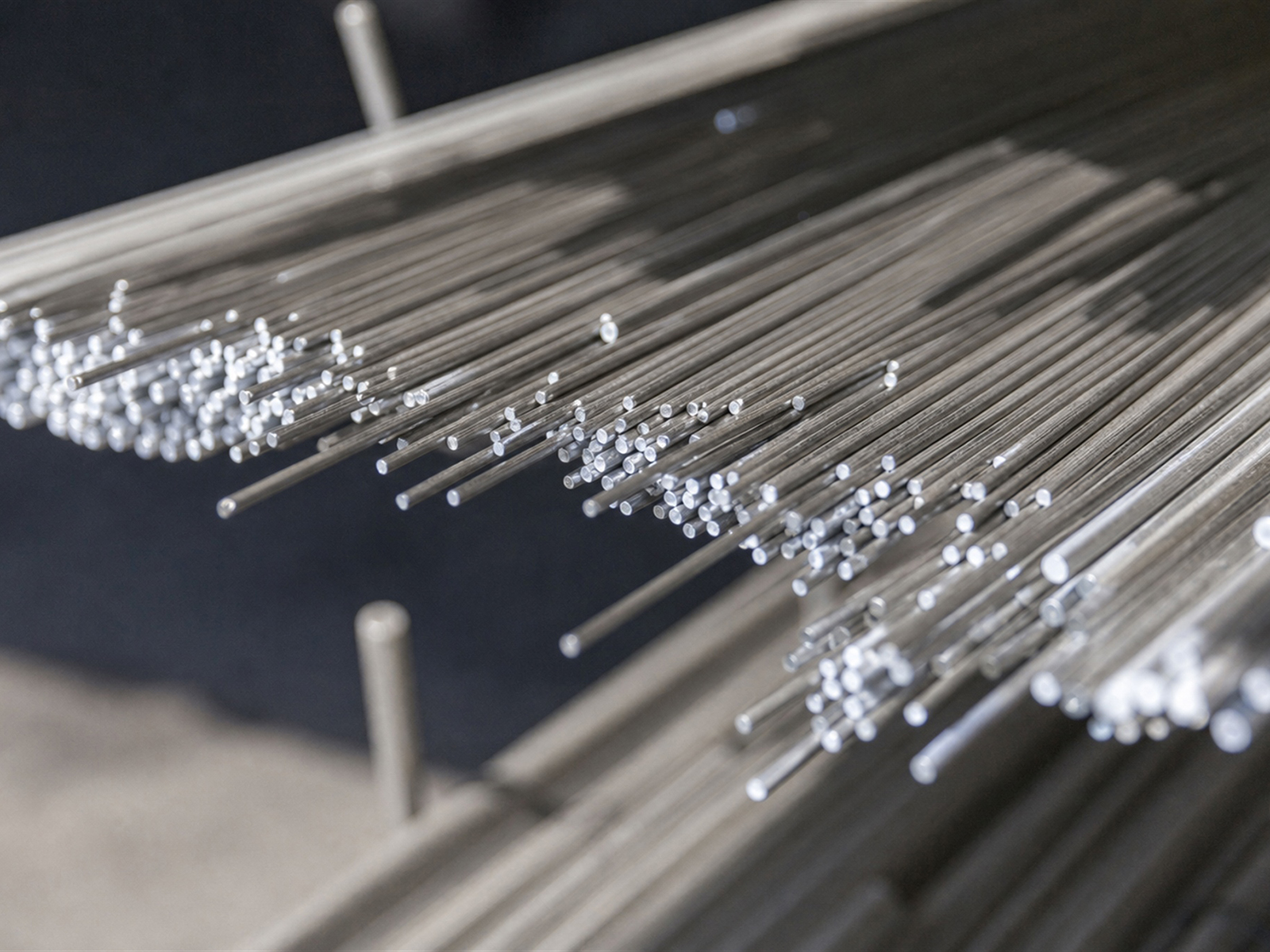
Gr5 titanium bars (Ti-6Al-4V), as the most widely applied titanium alloy material globally, have quality standards that encompass chemical composition, mechanical properties, dimensional tolerances, surface quality, non-destructive testing, and multiple other aspects. Mainstream international standards include ASTM B348 (American), AMS 4908 (aerospace material specification), EN 2222 (European), and GB/T 3620.1 (Chinese). These standards specify critical parameters such as aluminum content (5.5–6.7%), vanadium content (3.5–4.5%), oxygen content (≤0.20%), and tensile strength (≥895 MPa). This article systematically elaborates on the quality standards for Gr5 titanium bars, covering material standard systems, chemical composition requirements, mechanical property specifications, dimensional tolerance norms, surface quality criteria, and inspection methodologies.
2. Primary International Standard Systems for Gr5 Titanium Bars
(1) ASTM B348 Standard
ASTM B348 is the standard specification for titanium and titanium alloy bars and ingots, established by ASTM International. It is currently the most widely adopted quality standard for Gr5 titanium bars worldwide. The standard defines the chemical composition ranges, mechanical property requirements, dimensional tolerances, and delivery conditions for Gr5 titanium bars. According to ASTM B348, the tensile strength of Gr5 titanium bars shall not be less than 895 MPa, the yield strength shall not be less than 825 MPa, and the elongation shall not be less than 10%.
(2) AMS 4908 Standard
AMS 4908 is an aerospace material specification for Gr5 titanium alloy bars, developed by SAE International (Society of Automotive Engineers). Building upon ASTM B348, it imposes stricter requirements for ultrasonic testing (UT) and eddy current testing (ET). This standard is extensively applied in fields demanding extremely high material reliability, such as aircraft engine components and airframe structural parts.
(3) EN 2222 Standard
EN 2222 is the European standard for titanium and titanium alloy bars, established by CEN (European Committee for Standardization). Its technical requirements are essentially consistent with ASTM B348, with slight differences in dimensional tolerances and surface quality criteria. EN 2222 specifies that Gr5 titanium bars (corresponding grade: Ti-6Al-4V) must hold mandatory certification status in the European Union market.
(4) GB/T 3620.1 Standard
GB/T 3620.1 is the Chinese national standard specifying chemical composition and mechanical property requirements for titanium and titanium alloy bars. In terms of Chinese grade nomenclature, Gr5 titanium bars correspond to the TC4 alloy. The chemical composition controls under the national standard are basically harmonized with ASTM standards, although certain mechanical property requirements are slightly relaxed.
3. Chemical Composition Standards for Gr5 Titanium Bars
Chemical composition is the core element determining the quality of Gr5 titanium bars. The standard-specified composition ranges are as follows:
| Element Symbol | Content Range (%) | Function | Inspection Method | Consequence of Exceeding Limit |
| Aluminum (Al) | 5.50–6.70 | α-stabilizer; solid-solution strengthening matrix | Direct-read spectrometer | Insufficient strength at low levels |
| Vanadium (V) | 3.50–4.50 | β-stabilizer; improves heat-treatment response | Direct-read spectrometer | Reduced corrosion resistance at high levels |
| Oxygen (O) | ≤0.20 | Interstitial strengthening element | Gas analysis | Decreased ductility at high levels |
| Iron (Fe) | ≤0.30 | Common impurity element | Spectral analysis | Adverse effect on weldability at high levels |
• Nitrogen (N): ≤0.05% — Interstitial element, strictly controlled
• Carbon (C): ≤0.08% — Interstitial element
• Hydrogen (H): ≤0.015% — Strictly controlled to prevent hydrogen embrittlement
• Titanium (Ti): Balance — Base element
4. Mechanical Property Standards for Gr5 Titanium Bars
(1) Room-Temperature Mechanical Properties
The typical mechanical properties of annealed Gr5 titanium bars are as follows:
| Property | Standard Requirement | Typical Measured Value | Test Method |
| Tensile Strength (MPa) | ≥895 | 920–960 | ASTM E8 |
| Yield Strength (MPa) | ≥825 | 850–880 | ASTM E8 |
| Elongation (%) | ≥10 | 12–15 | ASTM E8 |
| Reduction of Area (%) | ≥12 | 14–18 | ASTM E8 |
| Hardness (HB) | 330–392 (or HRC 32–40) | 345–370 | ASTM E140 |
These values serve as the core criteria for determining whether Gr5 titanium bars meet qualification requirements.
(2) High-Temperature Mechanical Properties
Gr5 titanium bars maintain excellent mechanical properties in the 300–400°C range. At 400°C, tensile strength can be retained at 85–90% of the room-temperature value. This characteristic makes Gr5 titanium bars an ideal material for compressor disks and blades in aircraft engines.
(3) Low-Temperature Mechanical Properties
Gr5 titanium bars exhibit superior toughness at –196°C (liquid nitrogen temperature), with impact energy absorption not less than 35 J. At –253°C (liquid hydrogen temperature), Gr5 titanium bars still maintain sufficient strength and ductility, making them suitable for cryogenic storage tanks and piping systems.
5. Dimensional Tolerance Standards for Gr5 Titanium Bars
(1) Diameter Tolerances
According to ASTM B348, diameter tolerances for Gr5 titanium bars vary by size range:
| Diameter Range (mm) | Diameter Tolerance (mm) | Out-of-Roundness Requirement | Straightness Requirement |
| φ6–30 | ±0.15 | ≤0.12 mm | ≤1.5 mm/m |
| φ30–50 | ±0.20 | ≤0.16 mm | ≤1.5 mm/m |
| φ50–80 | ±0.25 | ≤0.20 mm | ≤1.5 mm/m |
| φ80–120 | ±0.30 | ≤0.24 mm | ≤1.5 mm/m |
(2) Out-of-Roundness and Straightness
Out-of-roundness (ovality) shall not exceed 80% of the diameter tolerance; straightness shall not exceed 1.5 mm/m. For high-precision applications (e.g., aerospace), out-of-roundness may be required to be within 50% of the diameter tolerance, and straightness within 0.5 mm/m.
6. Surface Quality Standards for Gr5 Titanium Bars
(1) Surface Roughness
The surface roughness Ra of bars generally shall not exceed 3.2 μm. For aerospace-grade Gr5 titanium bars, the surface roughness Ra requirement shall not exceed 1.6 μm.
(2) Surface Defect Restrictions
Gr5 titanium bars shall not exhibit cracks, laps, scale, or hairline defects on the surface. Minor allowable scratches shall not exceed 50% of the diameter tolerance in depth, and the cumulative length shall not exceed 10% of the total bar length.
(3) Oxide Color Control
Slightly discolored surfaces (pale yellow, light blue) are permissible on annealed Gr5 titanium bars. However, severe black or gray oxide scale is not allowed. Excessively dark oxidation colors may indicate overheating during heat treatment or inadequate protective atmosphere.
7. Inspection Methods for Gr5 Titanium Bars
| Inspection Item | Standard Requirement | Inspection Method | Acceptance Criteria |
| Ultrasonic Testing (UT) | No defect indications | UT per ASTM E114 | No indication equivalent to φ1 mm flat-bottom hole |
| Eddy Current Testing (ET) | No surface defects | ET | No signal exceeds threshold |
| Metallographic Examination | α+β dual-phase microstructure | Optical microscopy | Grain size ≥ ASTM Grade 5 |
| Surface Inspection | No cracks or laps | Visual + Magnetic particle | Surface roughness Ra ≤ 3.2 μm |
Chemical Composition Analysis: Spectrometric analysis (direct-read spectrometer or ICP-OES) is employed to determine chemical composition. Aluminum and vanadium contents are confirmed by arbitration analysis methods; oxygen, nitrogen, and hydrogen contents are measured using gas analyzers.
Mechanical Property Testing: Room-temperature tensile tests are conducted per ASTM E8, with elongation measured using an extensometer. Hardness testing employs Brinell (HB) or Rockwell (HRC) methods, with at least 3 specimens sampled per test type.
Non-Destructive Testing: Ultrasonic testing (UT) is performed per ASTM E114, with detection sensitivity equivalent to a φ1 mm flat-bottom hole. Eddy current testing (ET) is used for surface and near-surface defect detection, with test frequency adjusted according to bar diameter.
Metallographic Examination: Representative specimens are prepared for metallography and observed under an optical microscope. The standard microstructure of Gr5 titanium bars is an α+β dual-phase structure, with α phase appearing as white blocky or acicular structures distributed within the β matrix. Grain size shall meet ASTM Grade 5 or finer.
8. Conclusion
The quality standards for Gr5 titanium bars constitute a comprehensive system covering chemical composition, mechanical properties, dimensional tolerances, surface quality, and inspection methods. ASTM B348 is the most widely adopted standard globally, while AMS 4908 imposes stricter requirements in the aerospace sector. Selecting appropriate quality standards and inspection methods is fundamental to ensuring the reliability of Gr5 titanium bars in critical applications.
FAQ
Q1: What is the difference between ASTM B348 and AMS 4908 for Gr5 titanium bars?
AMS 4908 imposes stricter non-destructive testing requirements (ultrasonic and eddy current testing) beyond ASTM B348, and provides more explicit limits on grain size and inclusion ratings. Aerospace applications typically require compliance with the AMS 4908 standard.
Q2: Can Gr5 titanium bars be strengthened by heat treatment?
Yes. Gr5 titanium bars can undergo solution treatment plus aging (e.g., aging at 550–700°C) to further enhance strength, though this comes at the expense of some ductility. Conventional annealing (750–850°C) is primarily used to relieve processing stresses and improve toughness.
Q3: What is the shelf life of Gr5 titanium bars?
Under dry, well-ventilated storage conditions, the quality of Gr5 titanium bars can remain stable for extended periods. A recommended storage period of no more than 3 years is advised; after 3 years, mechanical properties and chemical composition should be re-inspected.
Finding a Reliable Gr5 Titanium Bar Supplier
Baoji Titanium Valley Titanium Nickel Zirconium Material Processing Co., Ltd. is a specialized manufacturer of high-end rare metal processing products. Equipped with an Italian Danieli rolling production line, the company produces over 10,000 metric tons of titanium bars annually and offers full-size customization with EN 10204 3.1 certification services. Contact them for technical support and quotation:
Email: sales@titaniumvalleys.com
For a broader view of available grades, supply forms, and related specifications, explore our Titanium Rod category.
For product-level details and supply options, you can also review our ASTM F136 Gr5 Eli (Gr23) Titanium Rod page.
References
ASTM International. ASTM B348-22 Standard Specification for Titanium and Titanium Alloy Bars and Ingots. West Conshohocken: ASTM International, 2022.
SAE International. AMS 4908: Titanium Alloy Bars and Forgings, Solution Treated and Overaged, Ti-6Al-4V. Warrendale: SAE International, 2020.
GB/T 3620.1-2016 Titanium and Titanium Alloy Designations and Chemical Composition. Beijing: Standards Press of China, 2016.