
What Are the Main Advantages of Gr4 Titanium Foil in Industrial Applications?
- Gr4 Titanium Foil
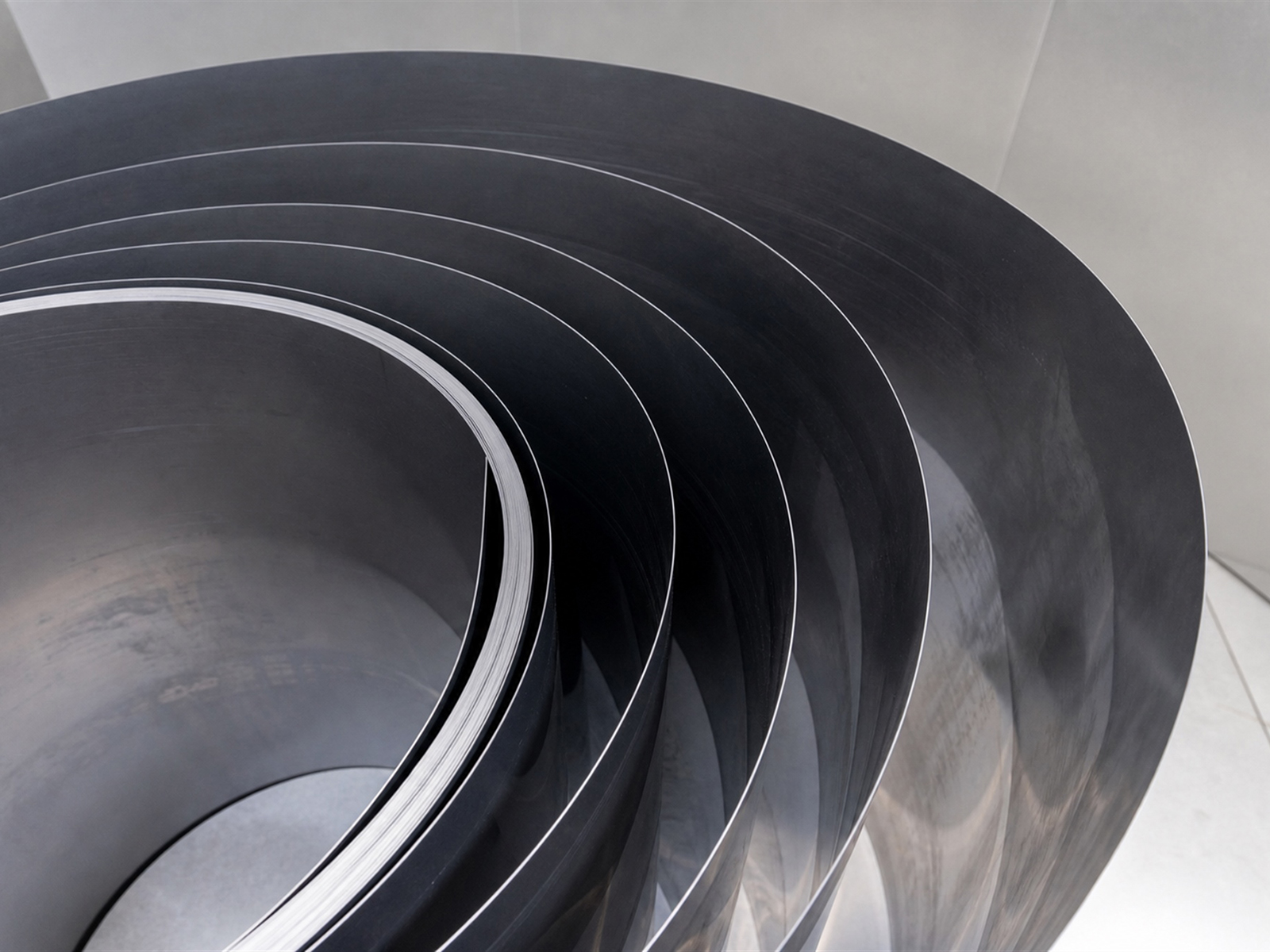
Gr4 titanium foil (Grade 4 Titanium Foil), as the highest-strength grade among commercially pure titanium alloys, demonstrates unique application value across numerous industrial sectors thanks to its exceptional corrosion resistance, superior mechanical strength, and favorable formability. Compared to Gr1/Gr2 titanium foils, Gr4 titanium foil achieves significantly improved yield and tensile strengths through the addition of controlled amounts of oxygen and iron (with oxygen content reaching up to 0.40%), while retaining the inherent corrosion-resistant advantages characteristic of titanium materials. This article systematically analyzes the core advantages of Gr4 titanium foil in industrial applications across four dimensions: corrosion resistance, strength performance, processability, and economic value.
Performance Comparison Across Titanium Grades
| Performance Indicator | Gr1 Foil | Gr2 Foil | Gr4 Foil |
| Yield Strength (MPa) | ≥170 | ≥275 | ≥450 |
| Tensile Strength (MPa) | ≥240 | ≥340 | ≥550 |
| Elongation (%) | ≥24 | ≥20 | ≥15 |
| Oxygen Content (%) | ≤0.10 | ≤0.18 | ≤0.40 |
Table 1: Mechanical Property Comparison of Commercially Pure Titanium Foils
1. Corrosion Resistance Advantages of Gr4 Titanium Foil
(1) Enhanced Protective Effect of the Oxide Film
A natural TiO2 oxide film forms on the surface of Gr4 titanium foil with a thickness of 5–10 nanometers, which is denser than that on standard Gr2 titanium foil. The higher oxygen content enables the oxide film to exhibit greater stability in acidic environments (pH 2–12). In chloride-containing environments, Gr4 titanium foil rarely experiences pitting or crevice corrosion, with corrosion rates below 0.001 mm/year.
(2) Resistance to Reducing Acids
Gr4 titanium foil demonstrates good corrosion resistance in most inorganic acids except hydrofluoric acid. In dilute sulfuric acid (concentration <5%) at temperatures below 50°C, the corrosion rate of Gr4 titanium foil is only 0.05 mm/year, significantly superior to stainless steel (corrosion rate >2 mm/year). In phosphoric acid production, Gr4 titanium foil can serve as reactor linings and heat exchange tubes, with a service life exceeding 15 years.
(3) Resistance to High-Temperature Chloride Corrosion
In high-temperature, chloride-containing environments such as seawater desalination and chlor-alkali industry, Gr4 titanium foil does not experience stress corrosion cracking (SCC). By contrast, 316L stainless steel may suffer SCC failures in chloride-containing water above 60°C. This characteristic makes Gr4 titanium foil an ideal material selection for high-temperature chloride environments.
2. Strength Performance Advantages of Gr4 Titanium Foil
(1) Significant Improvement in Yield Strength
The yield strength of Gr4 titanium foil (≥450 MPa) is approximately 1.6 times that of Gr2 titanium foil (≥275 MPa), and its tensile strength (≥550 MPa) is about 1.3 times that of Gr2. This strength improvement is primarily attributed to the solid-solution strengthening effect of oxygen. The high yield strength of Gr4 titanium foil enables it to withstand greater operating pressures in thin-walled structural components.
(2) Superior Strength-to-Weight Ratio
With a density of only 4.51 g/cm³, Gr4 titanium foil weighs approximately 56% as much as stainless steel. Under equivalent strength requirements, Gr4 titanium foil can be 30–50% thinner than stainless steel, significantly reducing equipment weight. This characteristic is particularly important in aerospace, marine engineering, and mobile equipment applications.
(3) Engineering Value of Fatigue Strength
The fatigue limit of Gr4 titanium foil is approximately 350–400 MPa (about 65–70% of its tensile strength), outperforming Gr1/Gr2 titanium foils. In heat exchangers and pressure vessels subjected to cyclic loading, the fatigue life of Gr4 titanium foil can exceed 10⁶ cycles.
3. Processability Advantages of Gr4 Titanium Foil
(1) Balanced Cold Formability
Gr4 titanium foil exhibits good cold formability in the annealed condition and can undergo deep drawing, bending, and flanging operations. Although its formability is slightly lower than that of Gr1/Gr2 titanium foils, complex forming processes can still be accomplished through appropriate intermediate annealing. A typical data point: the minimum bend radius for Gr4 titanium foil is 2–3 times the sheet thickness.
(2) Weldability
Gr4 titanium foil can be welded using conventional processes such as TIG, MIG, and laser welding, with weld joint strength reaching 85–90% of the base metal. Welding must be performed under argon shielding to prevent high-temperature oxidation. The weldability of Gr4 titanium foil surpasses that of titanium alloys (e.g., Gr5), making it a preferred material for welded structural components.
(3) Surface Treatment Adaptability
The surface of Gr4 titanium foil can undergo various treatments including shot blasting, pickling, electropolishing, and anodizing. Anodizing can produce colored oxide films (gold, blue, black, etc.) on the surface, enhancing both aesthetic appeal and corrosion resistance.
4. Typical Industrial Applications of Gr4 Titanium Foil
| Application Field | Specific Components | Advantage of Gr4 Foil | Alternative Materials |
| Chemical Reactor Linings | Reaction vessel plates | Resistant to wet chlorine corrosion | 316L Stainless Steel |
| Medical Devices | Orthopedic implant plates | High strength + biocompatibility | Cobalt-Chromium Alloys |
| Electronic Sputtering Targets | Semiconductor targets | High purity + uniformity | Sintered Titanium Powder |
| Architectural Curtain Walls | Exterior cladding panels | 50-year maintenance-free | Aluminum Panels |
Table 2: Typical Industrial Applications and Advantages of Gr4 Titanium Foil
(1) Chemical Equipment Linings
Gr4 titanium foil is widely used for linings and heat exchange tubes in chemical reactors. In highly corrosive processes such as wet chlorine handling, bromine extraction, and fluorosilicic acid production, the service life of Gr4 titanium foil linings is 5–10 times that of stainless steel.
(2) Medical Implant Devices
In the medical field, Gr4 titanium foil can be used to manufacture orthopedic implants, dental prosthetics, and surgical instruments. Its higher strength allows for the design of thinner implant components, reducing the stress-shielding effect on surrounding tissues. Furthermore, the biocompatibility of Gr4 titanium foil has been certified under ISO 10993.
(3) Sputtering Targets for Electronics
After vacuum melting and hot working, Gr4 titanium foil can be fabricated into titanium sputtering targets used in semiconductor and display panel manufacturing. The high purity (titanium content ≥99.2%) and low impurity content of Gr4 titanium foil ensure the uniformity and adhesion of sputtered thin films.
(4) Architectural Decoration Materials
After surface treatment, Gr4 titanium foil can be used as cladding panels and roofing materials for high-end buildings. The natural silver-gray tone of titanium foil harmonizes well with modern architectural aesthetics, and its 50-plus-year service life eliminates maintenance costs.
Corrosion Rate Comparison
| Corrosion Medium | Temperature | Gr4 Foil Corrosion Rate | 316L SS Corrosion Rate |
| Seawater (Room Temp.) | 25°C | <0.001 mm/year | 0.05–0.1 mm/year |
| 5% Sulfuric Acid | 50°C | 0.05 mm/year | >2 mm/year |
| Phosphoric Acid | 100°C | <0.001 mm/year | 0.5–1.0 mm/year |
| Wet Chlorine Gas | Room Temperature | No corrosion | Severe corrosion |
Table 3: Corrosion Rate Comparison Between Gr4 Titanium Foil and 316L Stainless Steel
Processing Parameters
| Processing Method | Recommended Parameters | Gr4 Foil Performance | Precautions |
| Cold Stamping | Die angle 8–10° | Single-pass forming | Requires lubricant |
| Bending | Min. bend radius 2–3x thickness | No cracking | Intermediate annealing if needed |
| TIG Welding | Argon purity ≥99.99% | Weld strength 85–90% | Back-side shielding required |
Table 4: Recommended Processing Parameters for Gr4 Titanium Foil
5. Conclusion
Gr4 titanium foil demonstrates irreplaceable advantages across numerous industrial sectors due to its unique balance of strength, corrosion resistance, and processability. From corrosion-resistant linings in chemical equipment to high-strength components in medical implants, from electronic sputtering targets to architectural decoration materials, the application scope of Gr4 titanium foil continues to expand. With advancements in materials science and optimization of manufacturing processes, the economic viability and functionality of Gr4 titanium foil will continue to improve.
FAQ
Q1: What is the main difference between Gr4 and Gr2 titanium foils?
The maximum oxygen content of Gr4 titanium foil can reach 0.40% (compared to 0.18% for Gr2), resulting in yield and tensile strengths approximately 60% and 30% higher, respectively. However, Gr4 has slightly lower plasticity than Gr2, making it somewhat more challenging to form.
Q2: Can Gr4 titanium foil be strengthened through heat treatment?
Gr4 titanium foil cannot be significantly strengthened through heat treatment. Its strength improvement primarily relies on cold work hardening and solid-solution strengthening by oxygen elements. For further strength enhancement, Gr5 titanium alloy foil may be considered.
Q3: Why is Gr4 titanium foil more expensive than Gr2?
The production of Gr4 titanium foil requires more precise composition control and stricter heat treatment processes, combined with relatively smaller production volumes. Consequently, its price is typically 10–20% higher than that of Gr2 titanium foil.
Finding a Reliable Gr4 Titanium Foil Supplier
Baoti Titanium Valley Titanium Nickel Zirconium Material Processing Co., Ltd. is a professional manufacturer of high-end rare metal processing products. Equipped with a Danieli rolling production line from Italy, the company produces over 2,000 metric tons of titanium foil annually and offers full-size customization with EN 10204 3.1 certification services. Contact us now for technical support and quotation:
For a broader view of available grades, supply forms, and related specifications, explore our Titanium Foil category.
For product-level details and supply options, you can also review our AMS 4901 Gr4 Titanium Foil page.
References
[1] GB/T 3622.1-2017 Titanium and Titanium Alloy Plates and Sheets – Part 1: Dimensions, Shapes, and Tolerances [S]. Beijing: Standards Press of China, 2017.
[2] Sun Wei. Research on the Application of Titanium Foil in Chemical Equipment [J]. Materials Review, 2021, 35(12): 120–127.
[3] ASTM International. ASTM B265-21 Standard Specification for Titanium and Titanium Alloy Sheet and Plate [S]. West Conshohocken: ASTM International, 2021.