
What Are the Differences Between ASTM B160 Nickel Bars and Other Specifications?
- ASTM B160 Nickel Bars
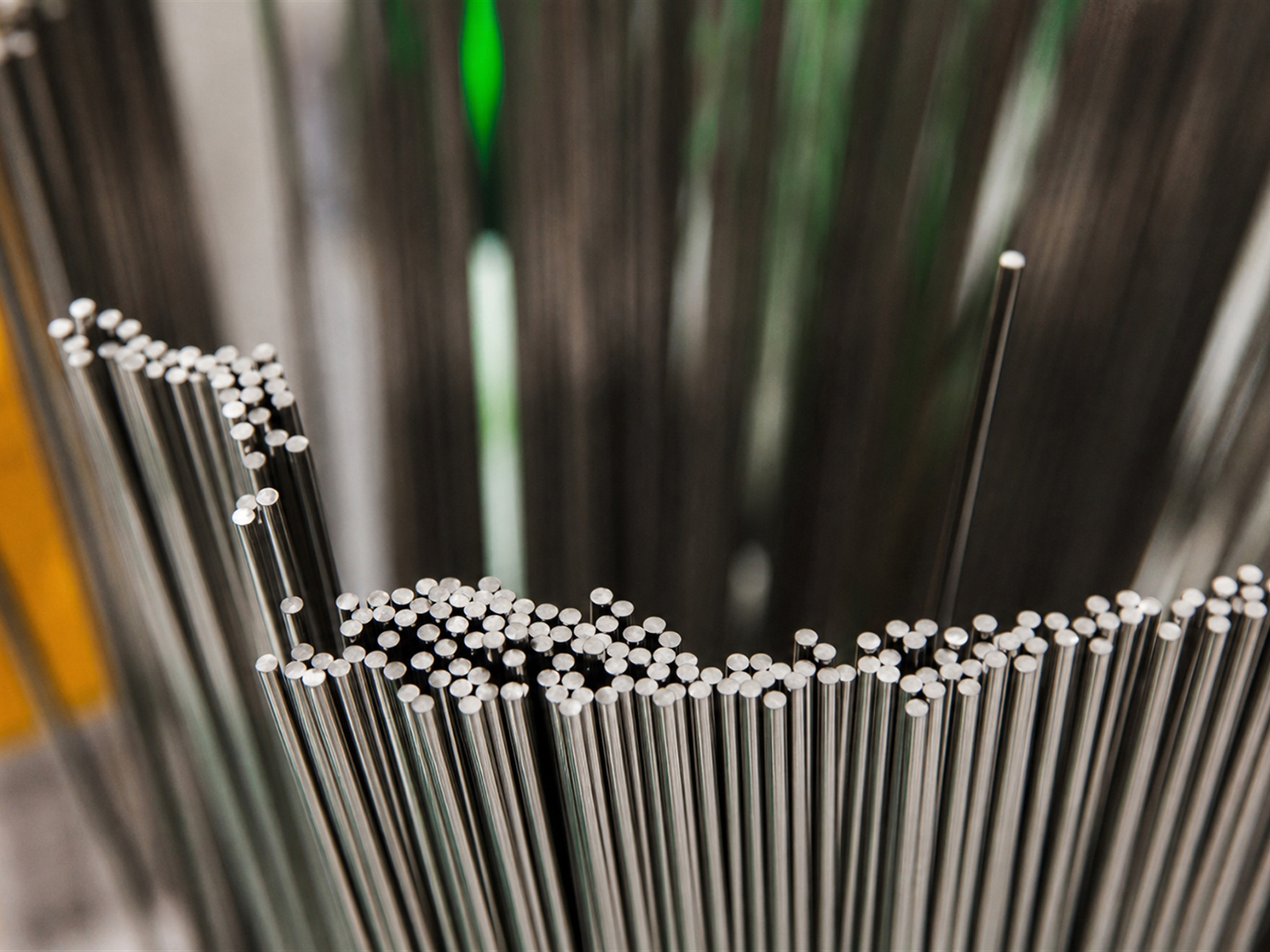
As a globally recognized forging pure nickel bar standard, ASTM B160 differs from other specifications in the completeness of its standard system, material purity control, and suitability for application fields. The standard covers two grades: Ni200 (UNS N02200) and low-carbon Ni201 (UNS N02201), with strict provisions on chemical composition, mechanical properties, and dimensional tolerances to ensure reliability in critical operating conditions such as chlor-alkali electrolysis, electronic conductivity, and alkali corrosion resistance. Compared to non-standard nickel bars or regionally standardized products, ASTM B160 provides a foundation for technical mutual recognition across multinational supply chains through its unified quality traceability system and international certification requirements. Its clear heat treatment state classification (annealed M, hot worked R, cold worked Y) achieves precise matching of material performance to applications, a capability that many general nickel bar specifications cannot match.
1. Essential Differences in Standard Systems and Material Definitions
1.1 Standard Positioning and Coverage of ASTM B160
ASTM B160, established by the American Society for Testing and Materials, specifically addresses forged pure nickel bars, rods, and profile shapes. Its standard designation carries global authority. The standard not only specifies two grades—Ni200 and Ni201—but also clarifies full-process requirements from raw material selection and melting processes to finished product inspection. In contrast, while some regional standards such as DIN 17752 and JIS H4551 also cover pure nickel bars, subtle differences in allowable chemical composition deviations and mechanical property test methods may increase technical coordination costs during cross-border procurement.
Strict Control Logic for High-Purity Nickel Content
ASTM B160 requires Ni+Co content of ≥99.0% (typical values: 99.5% for Ni200, 99.6% for Ni201), carbon content ≤0.15%, and sulfur content ≤0.01%. This high-purity definition directly determines the material’s alkali corrosion resistance and electrical/thermal conductivity. When other non-standard nickel bars do not specify impurity upper limits, exceeding levels of iron, silicon, manganese, and other elements may reduce stability in high-temperature alkali solutions or electrolytes. The introduction of the low-carbon grade Ni201 (C≤0.02%) specifically addresses the graphitization brittleness risk of conventional Ni200 in environments above 315°C—a technical blind spot that many general nickel bar specifications fail to address.
Standardized Classification Advantages for Heat Treatment States
The standard classifies delivery states into three categories: annealed (M), hot worked (R), and cold worked (Y), each corresponding to different ranges of tensile strength, elongation, and hardness. Annealed nickel bars achieve elongation exceeding 40%, suitable for deep processing and forming; cold worked bars gain enhanced hardness through strain hardening, meeting wear-resistant shaft requirements. This classification enables modular matching between material performance and end-use applications, avoiding processing failures caused by unclear heat treatment states in non-standard products.
2. Comparative Advantages in Physical Properties and Chemical Composition
2.1 Quantitative Assessment of Alkali Corrosion Resistance
The excellent performance of ASTM B160 nickel bars in strong alkaline media stems from strict impurity control. Iron content ≤0.4% prevents catalytic corrosion caused by iron ion dissolution in alkali solutions, while sulfur content ≤0.01% prevents intergranular corrosion triggered by grain boundary sulfides. Compared to nickel alloy bars with nickel content of only 80-90%, pure nickel bars can reduce corrosion rates in strong alkali environments such as sodium hydroxide and potassium hydroxide by an order of magnitude—a significant advantage for key components in the chlor-alkali industry, including electrolytic cell anodes and alkali heat exchangers.
Precise Data Comparison of Electrical and Thermal Conductivity
The resistivity of pure nickel at 20°C is approximately 6.84 μΩ·cm (corresponding to a resistance value of 0.0684 Ω·mm²/m), and thermal conductivity is 90.7 W/(m·K). These two indicators directly determine energy efficiency performance in electrodes and heating elements. ASTM B160 ensures stable conductivity by limiting high-resistivity elements such as silicon (≤0.35%) and manganese (≤0.35%). In contrast, some low-cost nickel bars allowing silicon content above 0.5% may see resistivity increase by 15-20%, leading to significantly higher energy losses during electrolysis. In nickel-metal hydride battery current collector applications, the low-resistance characteristic of ASTM B160 nickel bars can improve charging efficiency by 8-12%.
Special Advantages in Magnetic Properties and Low-Temperature Toughness
The relative magnetic permeability of annealed ASTM B160 nickel bars is relatively low (approximately 1.0-1.2), making them ideal low-magnetic structural components for precision electronic equipment and MRI instruments. Compared to nickel alloy bars with higher iron content (e.g., Monel 400 with iron content up to 2.5%), pure nickel bars cause minimal interference to magnetic-field-sensitive components. Regarding low-temperature toughness, Ni200 maintains good ductility at -196°C in liquid nitrogen environments, with impact energy no less than 70% of the room-temperature value—a performance boundary that nickel alloys with higher carbon content or added hardening elements struggle to achieve.
3. Systematic Differences in Manufacturing Processes and Quality Control
3.1 Necessity of Vacuum Melting and Forging Processes
Production of ASTM B160 nickel bars begins with high-purity electrolytic nickel (purity ≥99.9%), processed through vacuum induction melting (VIM) or vacuum arc remelting (VAR) to control oxygen content at low levels (typical process requirement: <10 ppm), preventing mechanical property degradation caused by oxide inclusions. Hot forging or hot rolling uses heating temperatures of 1050-1150°C, combined with multi-pass reduction ratio control, refining grains to ASTM grade 5-7—an organizational uniformity that cold-drawn nickel bars cannot achieve. Some non-standard nickel bars produced using ordinary air melting may develop cracks during welding or deep processing due to oxide inclusions.
Critical Role of Annealing in Performance Stability
Annealing is the core process for ASTM B160 nickel bars to achieve standard performance. Based on bar diameter and working state, annealing temperature is typically controlled at 700-900°C, with holding times of 1-3 hours followed by furnace cooling. This process relieves internal stresses from cold working, restores ductility, and ensures uniform microstructure. Insufficient annealing leaves residual stresses that may cause distortion during subsequent machining; excessive annealing coarsens grains and reduces strength. Proper control is essential for balancing strength and formability.
Economic Analysis and Cost-Effectiveness
Total Cost of Ownership Over Equipment Lifespan
While the unit price of ASTM B160 nickel bars is 15-25% higher than non-standard products, their extended service life in critical conditions significantly reduces comprehensive costs. Taking chlor-alkali electrolytic cell anodes as an example, the average replacement cycle for ASTM B160 Ni200 bars is 8 years, compared to approximately 3 years for ordinary nickel alloy bars. Considering downtime maintenance costs (approximately $50,000 per incident), new material procurement, and processing fees, the 10-year operating cost of the ASTM B160 solution can be reduced by over 40%. Energy savings from high conductivity are equally substantial: in a caustic soda electrolysis plant with annual capacity of 100,000 tons, reducing resistance by 0.1 Ω can save approximately $120,000/year in electricity costs.
Impact of Machinability on Manufacturing Efficiency
The standardized dimensional accuracy (diameter tolerance ±0.05mm) and excellent plasticity (elongation ≥40%) of ASTM B160 nickel bars enable higher yield rates during turning, drilling, and cold heading. Actual production data shows that when manufacturing fasteners using annealed ASTM B160 bars, cold heading crack rates remain below 1%, whereas non-annealed or impurity-exceeding bars exhibit crack rates of 8-12%. For welding, pure nickel bars require no preheating for TIG or MIG processes, with weld tensile strength reaching over 90% of the base material and heat-affected zone width under 3mm. This process friendliness can shorten production cycles by 30%.
Value of International Certification for Market Access
ASTM B160 certification serves as a passport to enter high-end European and American markets. Application areas such as aircraft engine components, nuclear power plant heat exchangers, and seawater desalination plants explicitly require material suppliers to provide ASTM standard compliance declarations and third-party test reports. Compared to products relying on regional standards, ASTM B160-certified nickel bars can directly connect to the qualified supplier systems of multinational enterprises such as Boeing, Airbus, and Siemens, reducing duplicate certification costs. This standardized market premium often exceeds the cost difference of the materials themselves.
4. Conclusion
Through standardized material definitions, strict process control, and a complete quality traceability system, ASTM B160 nickel bars establish significant advantages in key performances including alkali corrosion resistance, high-purity conductivity, and low magnetism. The essential difference from non-standard nickel bars lies not only in precise chemical composition control but also in the comprehensive production process assurance built through heat treatment state classification, non-destructive testing requirements, and international certification systems. For high-reliability application areas such as chlor-alkali electrolysis, precision electronics, and food and pharmaceutical industries, selecting ASTM B160-certified products is a rational decision to reduce operational risks and improve equipment efficiency.
FAQ
Q1: How to select between ASTM B160 Ni200 and Ni201 in practical applications?
Ni200 is suitable for conventional operating conditions below 315°C, such as room-temperature chlor-alkali electrolysis and electroplating tanks at ambient temperature. Ni201, with carbon content ≤0.02%, is specifically designed for high-temperature environments of 315-600°C to prevent graphitization brittleness, such as high-temperature molten salt electrolysis or heat treatment furnace components.
Q2: Why are ASTM B160 nickel bars not suitable for high-temperature nitric acid environments?
Pure nickel undergoes rapid oxidative corrosion in high-temperature oxidizing acids (such as boiling nitric acid), with corrosion rates reaching over 10 mm/year. For such conditions, chromium-containing nickel alloys (such as Inconel 600) or titanium materials should be selected, as their surface passivation films are more stable. Note: Inconel 600 belongs to nickel-chromium-iron alloys and falls outside the scope of pure nickel bars; it is mentioned here only as a comparative reference for alternative materials.
Q3: How to verify that purchased nickel bars comply with ASTM B160?
Require suppliers to provide EN 10204 3.1 certificates, including heat numbers, spectrometric analysis data, and tensile test reports. For critical applications, commission third-party laboratories (such as SGS or TÜV) for chemical composition re-inspection and metallographic analysis, confirming grain size and inclusion ratings meet the standard.
Finding a Reliable ASTM B160 Nickel Bar Supplier
Baoji Titanium Valley Titanium, Nickel & Zirconium Material Processing Co., Ltd. is a professional manufacturer of high-end rare metal processing products, equipped with Italian Danieli rolling production lines, producing over 20,000 tons of nickel bars annually, offering full-size customization and EN 10204 3.1 certification services. Contact us immediately for technical support and quotation proposals: sales@titaniumvalleys.com
For a broader view of available grades, supply forms, and related specifications, explore our Nickel Rod category.
For product-level details and supply options, you can also review our ASTM B160 Nickel Rod page.
References
- China Nonferrous Metals Industry Association Materials Branch. Standard System and Application Technology of Pure Nickel and Nickel Alloy Bars [M]. Beijing: Metallurgical Industry Press, 2021.
- Zhang Qihua. Performance Optimization and Life Assessment of Nickel Materials in Electrolytic Industry [J]. Chlor-Alkali Industry, 2020, 56(3): 18-25.
- Chen Yongqiang, Li Ming. Influence of Annealing Process on Mechanical Properties of Pure Nickel Bars [J]. Journal of Materials Heat Treatment, 2019, 40(6): 87-93.
- National Technical Committee for Standardization of Nonferrous Metals. GB/T 4435-2021 Nickel and Nickel Alloy Bars [S]. Beijing: Standards Press of China, 2021.
Corrosion Performance Comparison
| Medium Type | ASTM B160 Ni200 Performance | Ordinary Nickel Alloy Performance | Performance Gap |
| 50% NaOH (80°C) | Corrosion rate <0.05 mm/year | Corrosion rate 0.2-0.5 mm/year | Corrosion rate reduced 4-10x |
| KOH solution (70% concentration) | No pitting observed | Localized pitting evident | Equipment leak risk reduced |
| Chlor-alkali electrolyte (with Cl- ions) | Excellent SCC resistance | Prone to SCC failure | Electrolyzer life increased 60% |
Quality Detection Requirements Comparison
| Inspection Item | ASTM B160 Requirement | Common Non-Standard Level | Quality Risk Difference |
| Ultrasonic Testing (UT) | 100% per-bar inspection, defects <φ1mm | Sampling or no inspection | Internal crack missed detection rate up to 15% |
| Eddy Current Testing (ET) | Surface defect depth ≤0.2mm | Visual inspection only | Surface micro-cracks cause stress concentration |
| Diameter Tolerance | h9-h11 grade (±0.05-0.2mm) | General grade (±0.5mm) | Affects precision fitting and machining allowance |
| Straightness | ≤1mm/m | ≤3mm/m | Increases straightening process costs |