
What Are the Characteristics of UNS R60702 Foil?
- UNS R60702 Foil
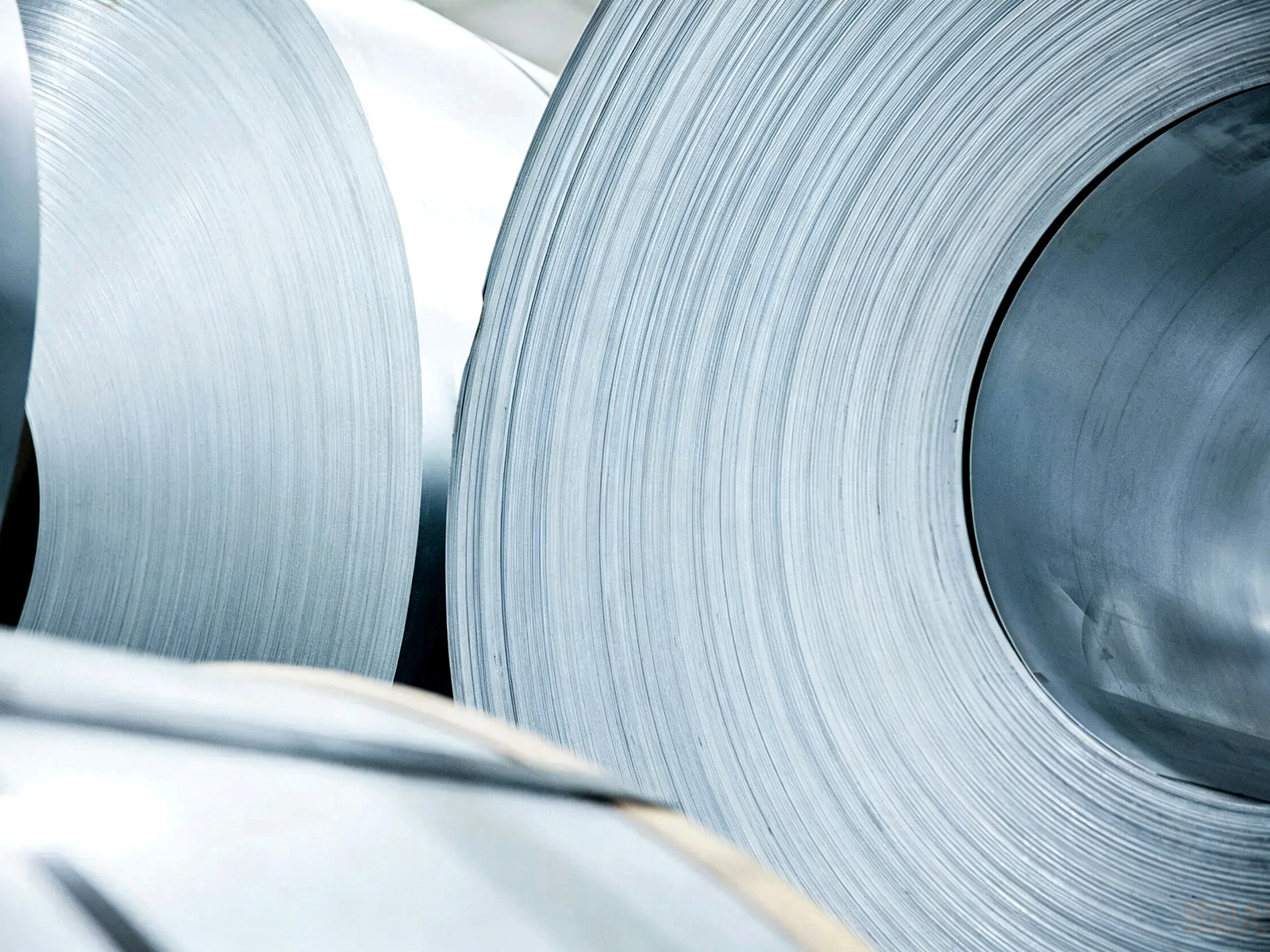
UNS R60702 (corresponding to Nickel 200) foil is a high-purity, commercially pure nickel material widely used across industrial applications due to its excellent corrosion resistance, formability, and electrical conductivity. With a nickel content of 99.0 pct or higher, this material demonstrates superior corrosion performance in alkaline environments, organic acids, and seawater media. This article provides a comprehensive overview of UNS R60702 foil characteristics across six key areas: chemical composition, physical properties, mechanical properties, corrosion resistance, fabrication performance, and typical applications.
1. Chemical Composition Characteristics
The nickel content of UNS R60702 foil is 99.0 pct or higher, with a typical value of 99.6 pct. Carbon content is 0.15 pct or less, iron 0.4 pct or less, copper 0.2 pct or less, manganese 0.35 pct or less, silicon 0.35 pct or less, and sulfur 0.01 pct or less. The high-purity nickel matrix endows the material with outstanding chemical stability and corrosion resistance. Unlike alloyed nickel materials, UNS R60702 contains no chromium, molybdenum, or other alloying elements; therefore, its corrosion resistance in oxidizing acids is limited, but it performs exceptionally well in caustic solutions and neutral media.
| Element | Content (%) | Role | Test Method | Standard Limit |
| Nickel (Ni) | 99.0 or higher | Base element | Spectrographic analysis | 99.0 or higher |
| Carbon (C) | 0.15 or less | Interstitial element | Infrared method | 0.15 or less |
| Iron (Fe) | 0.40 or less | Impurity element | Spectrographic analysis | 0.50 or less |
| Copper (Cu) | 0.20 or less | Impurity element | Spectrographic analysis | 0.20 or less |
| Sulfur (S) | 0.01 or less | Harmful element | Infrared method | 0.01 or less |
2. Physical Properties
UNS R60702 foil has a density of 8.90 g/cm3 and a melting point of 1,446 degC. Its thermal conductivity is 90.7 W/(m.K), and its electrical resistivity is 6.84 x 10⁻⁸ ohm.m (at 20 degC). These physical properties give UNS R60702 distinct advantages in heat exchange and electrical conduction applications. The coefficient of linear thermal expansion is 13.0 x 10⁻⁶ /degC (20-100 degC), comparable to stainless steel, facilitating compatibility with other metallic materials.
3. Mechanical Properties
Typical mechanical properties of annealed UNS R60702 foil are: tensile strength 380-480 MPa, yield strength (0.2 pct offset) 125-170 MPa, elongation 35 pct or higher, and hardness HB 70-90. After cold working, tensile strength can increase to 600-700 MPa, while elongation correspondingly decreases to 15-25 pct. The high elongation of UNS R60702 gives it a significant advantage in deep-drawing and complex forming applications.
| Property | Annealed | 1/4-Hard | Full-Hard |
| Tensile Strength (MPa) | 380-480 | 500-600 | 600-700 |
| Elongation (pct) | 35 or higher | 20-25 | 10-15 |
| Hardness (HB) | 70-90 | 100-130 | 130-160 |
4. Corrosion Resistance
UNS R60702 exhibits exceptional corrosion resistance in alkaline solutions. In sodium hydroxide solutions with concentrations up to 50 pct, the corrosion rate remains below 0.01 mm/year even at boiling temperatures. In seawater and chloride-containing environments, the material does not suffer from pitting or crevice corrosion. However, in reducing acids such as hydrochloric acid and sulfuric acid, corrosion resistance is poor, with rates reaching 1-5 mm/year. In organic acids (acetic acid, citric acid), the corrosion rate is below 0.1 mm/year.
| Corrosive Medium | Concentration | Temperature | Corrosion Rate (mm/year) |
| 50 pct NaOH | 50 pct | Boiling | <0.01 |
| Seawater | – | Ambient | <0.001 |
| 5 pct H2SO4 | 5 pct | Ambient | 0.5-1.0 |
| Acetic Acid (ambient) | 10 pct | Ambient | <0.05 |
5. Fabrication and Machining Performance
UNS R60702 foil possesses excellent cold-forming capability and can be subjected to deep drawing, bending, flanging, and other complex operations. Welding performance is good; conventional processes such as TIG, MIG, and resistance welding are all suitable. During machining, the material’s tendency to build up on cutting tools should be noted. The use of appropriate cutting fluids and coated tooling is recommended.
6. Typical Applications
UNS R60702 foil is widely used in chemical equipment linings, electroplating tanks, heat exchangers, food and pharmaceutical processing equipment, electronic industry conductive components, and marine engineering applications. In the chlor-alkali industry, UNS R60702 foil is the material of choice for caustic evaporators. In the electronics industry, its favorable electrical conductivity makes it an ideal selection for resistance heating elements.
7. Conclusion
UNS R60702 foil plays an important role in numerous industrial sectors thanks to its high purity, excellent alkali-corrosion resistance, and good formability. Although its corrosion resistance in reducing acids is limited, it performs outstandingly in alkaline, neutral, and organic acid environments. Proper material selection and correct application enable UNS R60702 foil to deliver maximum economic benefit across a wide range of corrosive conditions.
FAQ
Q1: What is the difference between UNS R60702 and UNS R60703?
UNS R60702 corresponds to Nickel 200 (carbon content 0.15 pct or less), while UNS R60703 corresponds to Nickel 201 (carbon content 0.02 pct or less). The primary difference lies in carbon content; UNS R60703 is better suited for high-temperature applications.
Q2: What is the maximum thickness of UNS R60702 foil?
The standard thickness range for UNS R60702 foil is 0.05-3.0 mm. Products exceeding 3 mm are typically classified as sheet rather than foil.
Q3: Can UNS R60702 foil be recycled?
Yes. UNS R60702 foil has excellent recyclability; scrap material can be remelted into the same grade of nickel with a recovery rate approaching 100 pct.
Finding a Reliable UNS R60702 Foil Supplier
Baoti Titanium Valley Titanium Nickel Zirconium Material Processing Co., Ltd. is a professional manufacturer of high-end rare metal processed products. Equipped with a Danieli rolling production line from Italy, the company produces over 1,000 metric tons of nickel foil annually and offers full-size customization with EN 10204 Type 3.1 certification. Contact us now for technical support and quotation: sales@titaniumvalleys.com
For a broader view of available grades, supply forms, and related specifications, explore our Zirconium Foil category.
References
ASTM International. ASTM B90-21 Standard Specification for Nickel Sheet, Strip, and Foil. West Conshohocken: ASTM International, 2021.
GB/T 5231-2012 Chemical Composition of Processed Nickel and Nickel Alloys. Beijing: Standards Press of China, 2012.