
How Does Gr2 Titanium Wire Improve Mechanical Properties?
- Gr2 Titanium Wire
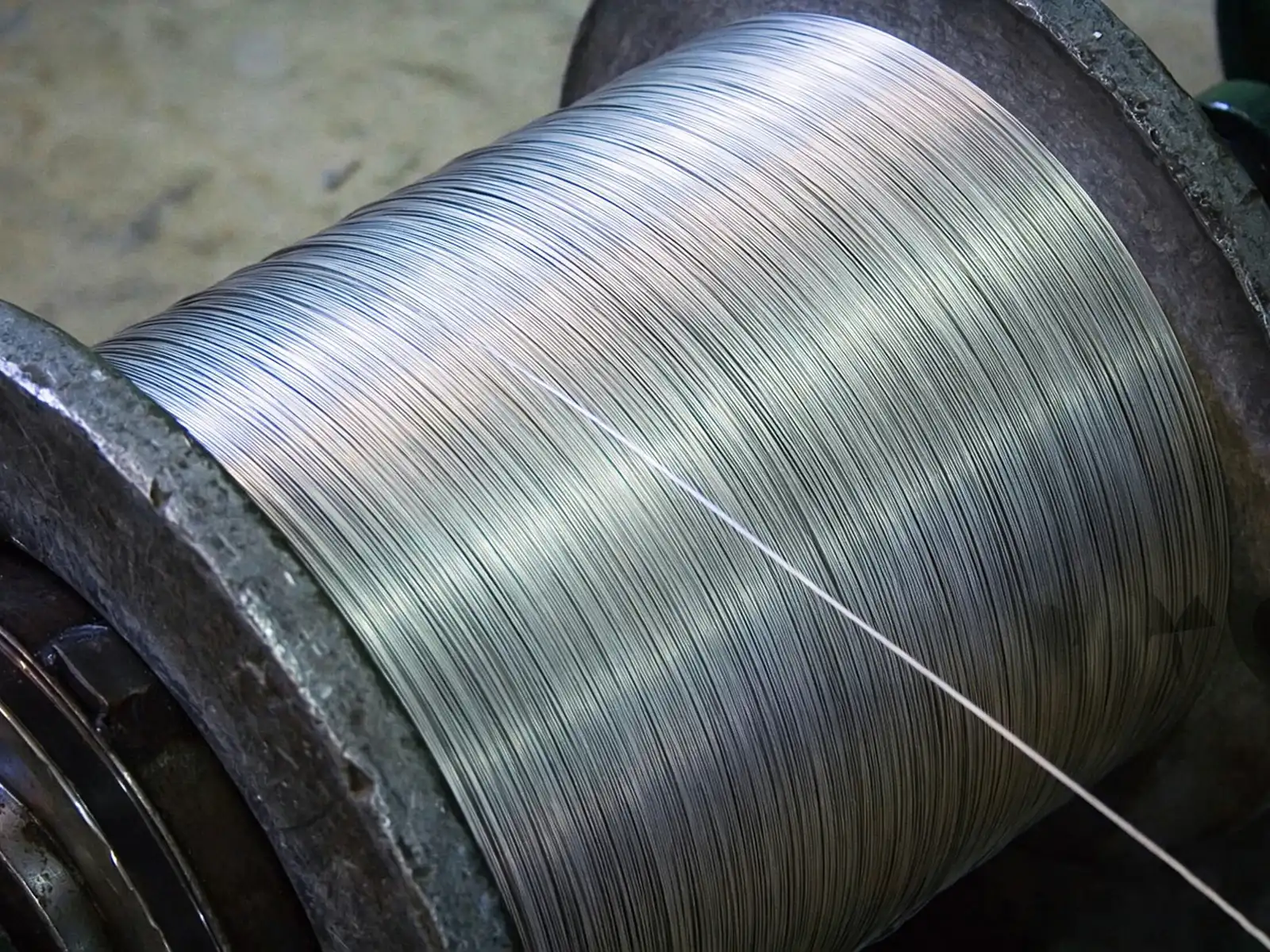
The improvement of the mechanical properties of Gr2 titanium wire is mainly achieved through three major paths: cold working deformation, heat treatment process optimization and surface strengthening treatment. The cold drawing process can increase the tensile strength from 345MPa in the annealed state to 550-750MPa, and the yield ratio is significantly increased; controlling the annealing temperature and time can accurately adjust the grain size and obtain higher strength while maintaining an elongation of more than 15%; mechanical strengthening treatments such as surface rolling and shot peening can form a compressive stress layer on the surface of the wire, increasing the fatigue life by 30-50%. These methods not only retain the excellent corrosion resistance and biocompatibility of Gr2 titanium wire, but also meet the needs for higher mechanical properties in chemical anti-corrosion, marine engineering, medical equipment and other fields, and solve the problem of insufficient strength of ordinary industrial pure titanium.
1. What Are the Cold Working Deformation Strengthening: a Cost-effective Way to Improve Performance?
(1) What Should You Know About Work Hardening Mechanism of Multi-pass Cold Drawing?
During the cold drawing process of Gr2 titanium wire, the dislocation density inside the metal increases sharply and the degree of lattice distortion increases. The work hardening effect caused by this plastic deformation is the core mechanism for improving strength. When the compression rate of each pass is controlled between 15-25%, the tensile strength can be increased by 80-120MPa. When the cumulative deformation reaches more than 60%, the semi-hard wire strength can reach 480-620MPa and the hard wire strength can reach 550-750MPa. This strengthening method does not require additional equipment investment, and performance customization can be achieved only by adjusting process parameters.
(2) What Are the Precise Control of Performance Through Inter-pass Annealing?
The intermediate annealing links interspersed during the cold working process determine the balance of the final mechanical properties. The annealing temperature is set at 550-650℃ and held for 30-45 minutes, which can partially eliminate the processing stress without completely recrystallizing, allowing the wire to maintain high strength while restoring the necessary plasticity. The elongation of this semi-rigid product is maintained at 8-12%, which not only satisfies applications such as springs and fasteners that require high elastic modulus, but also ensures sufficient molding and processing performance.
(3) What Should You Know About Cooperative Optimization of Drawing Speed and Die Angle?
When the mold half angle is controlled at 6-8 degrees and the drawing speed is maintained at 15-30m/min, the surface quality of the wire and the uniformity of the internal structure will reach the best state. Excessively fast drawing speed will lead to local temperature rise, triggering dynamic recrystallization and reducing the strengthening effect; too large a mold angle will increase deformation unevenness, resulting in performance differences between the surface layer and the core. The precision roll die cold drawing process controls the diameter tolerance within +/-0.02mm and the roundness deviation less than 0.01mm. This high-precision processing itself is a guarantee of performance stability.
2. What Are the Heat Treatment Process Optimization: Key Technology to Balance Strength and Toughness?
(1) What Should You Know About the Profound Impact of Vacuum Annealing on Tissue Structure?
The annealing environment with a vacuum degree controlled below 10⁻³Pa can effectively prevent the surface of the titanium wire from absorbing oxygen and nitrogen and avoid the formation of a brittle hardened layer. The annealing temperature is increased from 650℃ to 750℃, the grain size increases from 5um to 15um, the tensile strength is correspondingly reduced by 60-80MPa, but the elongation is increased to more than 20%. This structure control technology allows the same batch of raw materials to produce products with three mechanical specifications: annealed, semi-hard, and hard according to application requirements, meeting different scenarios such as welding wires, elastic components, and structural parts.
(2) What Should You Know About Stress Homogenization Treatment of Segmented Gradient Heating?
Using induction heating combined with a segmented heating system of a reheating furnace, the process of raising the wire from room temperature to annealing temperature is more uniform, and the concentration of thermal stress is alleviated. The heating rate is controlled at 3-5℃/s, and the temperature fluctuation in the insulation section does not exceed +/-5℃. During the cooling stage, an inert atmosphere is used to protect and slowly cool to below 300℃. This precise temperature curve management significantly improves the consistency of the structure after annealing, and the standard deviation of the tensile strength of the same batch of products is controlled within 15MPa.
(3) What Should You Know About Stabilizing Effect of Low-temperature Recovery Treatment on Metastable Tissue?
There are a large number of metastable dislocation structures inside the cold-worked Gr2 titanium wire. Low-temperature recovery treatment at 300-400℃ for 2-4 hours can promote the rearrangement of dislocations and form a stable substructure, increasing the yield strength by 20-35MPa without elongation loss exceeding 2%. This recovery and strengthening effect is particularly obvious on φ0.5-2.0mm filaments, which solves the contradictory needs of high strength and good bending properties for wires used in precision electronic components.
| Heat treatment status | Annealing temperature (C) | Keeping time (min) | Tensile strength (MPa) | Elongation (%) | Typical applications |
| Completely annealed state (M) | 700-750 | 45-60 | 400-450 | 18-22 | Welding wire, deep drawing parts |
| Semi-hard state (Y2) | 550-650 | 30-45 | 480-620 | 8-12 | springs, fasteners |
| Hard state(Y) | Cold working without annealing | – | 550-750 | 5-8 | Braided mesh, electrode wire |
3. What Are the Surface Strengthening Treatment: an Effective Means to Improve Fatigue Life?
(1) What Should You Know About Residual Compressive Stress Layer Induced by Mechanical Shot Peening?
When 0.2-0.4mm ceramic pellets are used, the spray pressure is 0.3-0.5MPa, and the coverage reaches 200%, a compressive stress zone with a depth of 50-80um will be formed on the surface of the wire, and the residual compressive stress value can reach -200 to -350MPa. This layer of compressive stress effectively inhibits the initiation and expansion of surface cracks, increasing the fatigue limit of titanium wire in an alternating stress environment by 35-50%. Components subject to cyclic loads, such as offshore engineering mooring ropes and chemical equipment elastic seals, especially benefit from this process.
(2) What Should You Know About the Cold Work Hardening and Smoothness of Surface Rolling Are Dually Improved?
When the linear pressure exerted by the precision rolling head is controlled at 800-1200N/mm, the surface roughness of the wire material is reduced from Ra 1.6um to below Ra 0.4um, and the hardness within the depth range of 10-20um on the surface increases by 15-25HV. This cold work strengthening does not change the overall chemical composition of the wire, but significantly improves the surface micro-geometry, reduces stress concentration points, and enables the corrosion and fatigue resistance of medical device wire to meet the strict requirements of the ISO 5832-2 standard.
(3) What Should You Know About Synergistic Protection and Efficiency of Chemical Passivation Film?
The dense TiO2 passivation film formed on the surface of the wire after pickling is only 2-5nm thick, but it can improve the corrosion resistance by an order of magnitude. Combined with surface mechanical strengthening treatment, the bonding strength and integrity of this passivation film were further improved, and no corrosion points appeared after 480 hours of salt spray testing. The dual protection system extends the service life of Gr2 titanium wire by 2-3 times in harsh media environments such as seawater desalination devices and electrolyzers.
4. What Are the Composition Control: Directional Performance Optimization Based on Pure Titanium?
(1) What Are the Strengthening Effect of Trace Elements Added?
Although Gr2 is defined as industrial pure titanium, the control of impurity elements itself is a means of performance control. By increasing the oxygen content from 0.15% to the upper limit of 0.25%, the tensile strength can be increased by 40-60MPa, which is the most economical way of interstitial solid solution strengthening. When the iron content is controlled at 0.25-0.30%, sufficient strength can be ensured without excessive damage to plasticity. This interstitial element control makes Gr2 the most cost-effective in pure titanium systems and is suitable for medium-intensity industrial scenarios.
(2) What Are the Contribution of Grain Refinement to Overall Performance?
By optimizing the smelting process and deformation parameters, the average grain size is refined from 15 um to less than 8 um. According to the Hall-Petch relationship, the yield strength can be increased by 30-50MPa, while the elongation does not decrease but increases. The fine-grained structure makes the deformation more uniform, the crack expansion path is more tortuous, and the fracture toughness is improved by 15-20%. The grain control of φ0.1-0.3mm ultra-fine wire is particularly critical. Multiple passes of small rolling reduction can be used to avoid strength fluctuations caused by coarse-grained structures.
(3) What Should You Know About Texture Control Optimization of Anisotropy?
Gr2 titanium wire easily forms a <10-10> wire texture after cold drawing, resulting in differences in axial and radial properties. Through rotating die design and cross-rolling process, the texture strength can be weakened, reducing the difference in performance in each direction from 25% to less than 10%. This isotropic improvement is crucial for products that require multi-directional force, such as braided meshes and springs, to avoid local failures caused by directional differences during use.
| Performance improvement methods | Strength increase (MPa) | plastic influence | cost increase | Applicable diameter range (mm) |
| Cold drawn work hardened | +205-405 | Elongation reduced by 50% | Low | 0.1-6.5 |
| Vacuum annealing and tempering | -60 to +40 | Elongation increased by 40% | middle | full range |
| Surface shot peening | Fatigue strength +35% | No impact | middle | >0.5 |
| Roll finishing | +20-40(surface layer) | Slightly lower plasticity | Low | >0.8 |
| Low temperature recovery treatment | +20-35 | Elongation loss <2% | Low | 0.3-3.0 |
5. What Are the Quality Control and Performance Verification: a Reliable Guarantee for Improving Mechanical Performance?
(1) What Should You Know About Establishment of Full-process Automated Testing System?
The production line with a 90% automation rate is equipped with online eddy current flaw detection, laser diameter measurement, and ultrasonic detection systems. Each meter of wire is monitored with 2, 000+ data points. The diameter fluctuation is controlled within +/-0.005mm, and the surface defect detection rate is over 99.5%. This real-time quality feedback system can instantly adjust rolling parameters to ensure performance consistency between batches, and the standard deviation is controlled within 1/3 of the industry average.
(2) What Are the Statistical Process Control for Random Inspection of Mechanical Properties?
Three samples are taken from every 500kg product for tensile, bending and fatigue testing, and the data is uploaded to the SPC system in real time. When the strength or elongation deviates from the target value by 1.5 times the standard deviation, the system automatically warns and initiates a process parameter review. This statistical quality management method has increased the qualification rate of Gr2 titanium wire from 92% in the traditional process to 98.5%, and reduced the performance failure rate during customer use by 70%.
(3) What Are the Accelerated Evaluation of Corrosion Fatigue Performance?
For marine engineering and chemical industry applications, a cyclic loading test platform in 3.5% NaCl solution was established. The stress amplitude was set to 60% of the yield strength and the frequency was 20Hz. The surface-strengthened Gr2 titanium wire did not break after 10⁷ cycles, while the untreated sample developed cracks after 5×10⁶ cycles. This comparative verification provides reliable data support for customer selection and reduces on-site trial and error costs.
6. What Is the Conclusion?
The improvement of mechanical properties of Gr2 titanium wire is a systematic project. Cold working deformation provides the strength foundation, heat treatment process achieves performance balance, surface strengthening enhances fatigue life, and composition control meets orientation needs. These technical paths work together to increase the tensile strength from 345MPa in the annealed state to 750MPa, while maintaining the necessary plasticity and corrosion resistance. Strict quality control ensures performance stability, making Gr2 titanium wire the cost-effective material of choice in chemical, marine, medical and other fields.
FAQ
Q1: Will the cold-drawn reinforced Gr2 titanium wire become brittle?
Cold drawing does reduce the elongation, but by controlling the cumulative deformation to 60-70% and performing moderate annealing, the elongation of the hard wire can be maintained at 5-8%, meeting the needs of most machining and weaving applications without brittle fracture problems.
Q2: Will surface shot peening affect the dimensional accuracy of titanium wire?
Using a precisely controlled low-pressure shot peening process, the surface plastic deformation depth is only 50-80um, and the impact on the diameter of wires above φ1.0mm is less than 0.01mm, which is completely within the tolerance range, and can be further corrected by subsequent precision alignment.
Q3: Can Gr2 titanium wires with different heat treatment conditions be welded?
It can be welded, but it is recommended to use annealed or semi-hard state as welding material. The heat-affected zone of hard wire material will soften after welding, and the properties need to be restored through post-weld heat treatment. Welding parameters need to be adjusted according to the condition of the base metal to ensure that the joint strength reaches more than 85% of the base metal.
How Can You Contact Us?
As a professional Gr2 titanium wire manufacturer and supplier, Baoji Titanium Valley Titanium Nickel Zirconium Material Processing Co., Ltd. is equipped with an Italian Danieli continuous rolling production line with an annual production capacity of over 10, 000 tons. We provide customized processing services for titanium wire in full specifications of φ0.1-6.5mm, and can provide EN 10204-3.1 material certification. For technical consultation or sample testing, please contact: sales@titaniumvalleys. com
For a broader view of available grades, supply forms, and related specifications, explore our Titanium Wire category.
For product-level details and supply options, you can also review our AMS 4956 aerospace Gr23 titanium wire page.
References
[1] Zhang Xiyan, Zhao Yongqing, Bai Chenguang. Titanium alloys and applications[M]. Beijing: Chemical Industry Press, 2005.
[2] Zhao Yongqing, Hong Quan, Ge Peng. Metallographic diagram of titanium and titanium alloys[M]. Changsha: Central South University Press, 2011.
[3] Li Liang, Sun Jianke, Meng Xiangjun. Development and research status of medical titanium alloys [J]. Materials Herald, 2003, 17(2): 28-31.
[4] Chen Yuhua, Cheng Congqian, Zhao Jie. Research on cold working and heat treatment processes of industrial pure titanium [J]. Rare Metal Materials and Engineering, 2018, 47(5): 1532-1536.