
What Are the Challenges with Using GR5 Titanium Wire?
- Gr5 titanium wire
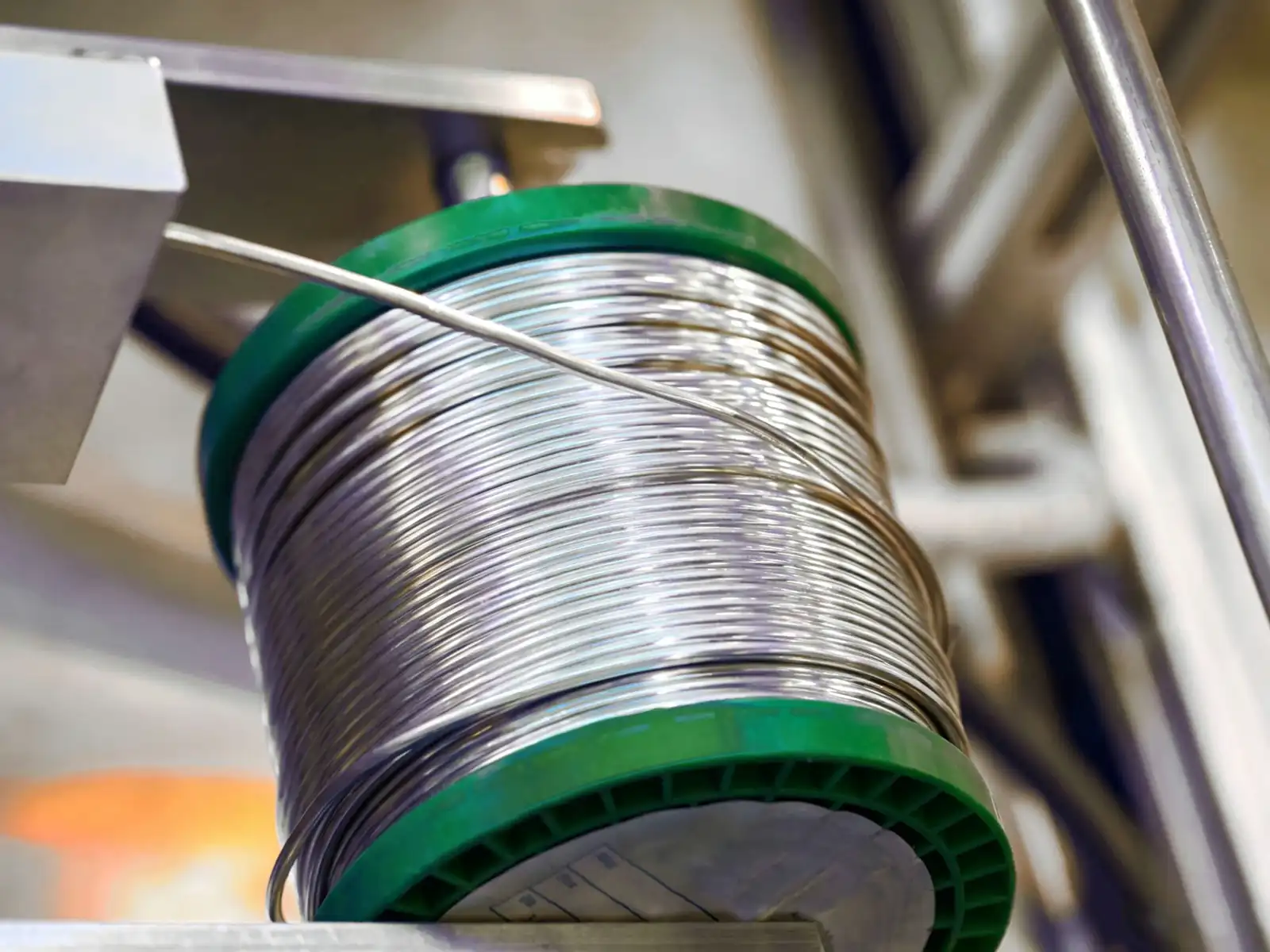
When using GR5 titanium wire (Ti-6Al-4V), companies often face core pain points such as quality fluctuations, processing difficulties, cost control, and supply chain stability. Precision manufacturing companies have high technical thresholds in terms of dimensional accuracy, welding performance consistency, and batch stability. However, the material quality in the market is uneven, compliance certification is complex, and subsequent maintenance costs are difficult to predict, all of which bring operating pressure to high-end equipment manufacturers, aerospace suppliers, and medical device manufacturers. This article will systematically sort out these challenges and explore solutions from five dimensions: material quality, precision processing, application adaptation, supply chain and technology iteration.
1. What Should You Know About Material Quality and Batch Stability Challenges?
(1) What Should You Know About Stringent Requirements for Ingredient Control?
Ti-6Al-4V alloy has strict limits on aluminum (5.5%-6.75%) and vanadium (3.5%-4.5%) content. Small deviations will affect strength, plasticity and heat treatment response. Due to the unstable smelting process of some suppliers, the difference in oxygen content between batches exceeds 0.05%, which directly reduces the ductility of the wire and increases the risk of wire breakage in subsequent processing. The aerospace industry has extremely high requirements for material traceability, and any fluctuation in composition may cause the entire batch of products to be scrapped.
(2) What Should You Know About Microstructure Uniformity Problem?
The quality of vacuum melting directly determines the microstructure uniformity of GR5 titanium wire. The grain size and phase distribution of the α+β dual-phase structure directly affect fatigue strength and welding performance. Some manufacturers improperly control the continuous annealing process, resulting in internal hardness differences of more than 15HV in the same batch of wires, resulting in inconsistent rebound rates during precision spring manufacturing and scrap rates of up to 12%-18% (based on production statistics of some companies).
(3) What Should You Know About Surface Quality and Impurity Control?
The thickness of the oxide film on the surface of the wire, the depth of scratches, and the risk of hydrogen embrittlement are all key control points. If there are micro-cracks on the surface of corrosion-resistant springs used in the chemical industry, the stress corrosion rate can be accelerated by 3-5 times in a chloride ion environment. The field of medical devices requires surface cleanliness to reach Ra ≤ 0.4 um, which is difficult to meet with ordinary pickling processes and requires electrolytic polishing, which increases the unit cost by 15%-20%.
quality index | Standard requirements | Common deviations | Areas of influence |
oxygen content | ≤ 0.20% | 0.18%-0.25% | Plasticity and welding properties |
Tensile strength (annealed state) | 895-930 MPa | ± 50 MPa fluctuation | Safety factor of structural parts |
surface roughness | Ra≤ 0.8um | Actual 1.2-1.5um | Medical device compliance |
2. What Should You Know About Precision Machining and Dimensional Control Challenges?
(1) What Should You Know About Process Complexity of the Cold Drawing Process?
Cold drawing of GR5 titanium wire usually requires 8-12 passes, and the deformation in each pass must be controlled at 10%-15% to avoid brittle fracture caused by excessive work hardening. The intermediate annealing temperature window is narrow (700-800℃), and a deviation of 5 minutes in the holding time may lead to incomplete recrystallization and residual stress exceeding the standard by 30%, ultimately affecting the straightness of the product.
(2) What Should You Know About Technical Bottlenecks in Micro-sized Wires?
φ0.1-0.5mm ultra-fine titanium wire is used for medical suturing and precision sensor manufacturing, but the production yield is generally lower than 65%. Wear of the wire drawing die and temperature fluctuation of the cooling medium of ± 3℃ will cause the wire diameter tolerance to exceed the ± 0.01mm standard. The 3℃ electronics industry requires the ovality of φ0.3mm titanium wire to be ≤ 0.005mm. It needs to be equipped with an online laser diameter measuring system and closed-loop feedback control, and the equipment investment is relatively high.
(3) What Should You Know About Unpredictability of Heat Treatment Response?
The difference in yield strength between annealed (M) and cold-worked (Y) GR5 titanium wire can reach 300MPa, but the temperature uniformity (± 5℃), vacuum degree (≤ 5×10⁻³Pa), and cooling rate in the heat treatment furnace all affect the final performance. Corrosion-resistant springs used in petrochemical equipment need to retain part of the cold work strengthening effect and require the Y+M composite process, but the number of companies that can stably control this process is relatively limited.
Processing link | Key parameters | Consequences of loss of control |
Multi-pass drawing | Deformation 12%-15% | Wire breakage rate increased by 40% |
intermediate annealing | Keep warm at 750℃ for 60 minutes | Residual stress exceeds standard |
Precision alignment | Straightening force ± 0.5N | Straightness out of tolerance |
3. Why Is Application Scenario Adaptability Challenges Important?
(1) What Should You Know About the Complexity of Welding Performance?
As the mainstream welding wire for TA15 and Gr5 base materials, Ti-6Al-4V needs to perfectly match the composition of the base material. If the protective atmosphere (argon purity ≥ 99.99%) is insufficient, excessive oxygen content in the weld will cause brittle fracture. When welding aircraft engine casings, the rework cost can reach US$8, 000-12, 000 per piece.
(2) What Should You Know About the Fatigue Life Dilemma of Elastic Components?
Automobile valve springs and medical implant springs require the fatigue strength of GR5 titanium wire to be ≥ 600MPa (10⁷ cycles). If the thickness of the α-photograph layer exceeds 2 um, the crack initiation rate can be increased by 60%. If corrosion-resistant springs used in marine engineering are exposed to salt spray environments, if the surface passivation film (TiO2) has insufficient integrity, pitting pits will become a source of stress concentration, and the fatigue life may be shortened to 45% of the design value.
(3) What Should You Know About Performance Degradation Under Compound Operating Conditions?
GR5 titanium wire fasteners used in chemical reactors need to withstand 200℃ high temperature, pH=2 strong acid and 15MPa pressure at the same time. When the hydrogen content approaches the upper limit of 0.015%, the plasticity of the material decreases by 22% and the creep rate increases by three times. In deep-sea equipment (low temperature of -196℃ + 35MPa pressure), if the β phase content is less than 8%, the low-temperature brittle transition temperature moves up to -120℃, exceeding the safety margin.
(4) What Should You Know About Multi-industry Standard Compatibility Issues?
Aerospace follows AMS 4955, medical devices must comply with ASTM F136, and chemical industry refers to ASTM B863. The three have different requirements for oxygen content, inclusion ratings, and surface treatment. If a company stocks multiple specifications to meet cross-industry needs, the inventory turnover rate will decrease and capital usage will increase, but it may still face the risk of delivery delays.
Application areas | core requirements | Common failure modes |
Aviation welding | Weld coefficient ≥ 0.9 | Porosity, not fused |
Precision spring | Fatigue life 10⁷ times | Surface crack propagation |
Chemical fasteners | stress corrosion resistance | Hydrogen induced delayed cracking |
4. What Should You Know About Supply Chain and Cost Control Challenges?
(1) What Should You Know About Raw Material Prices Fluctuate Violently?
The price of titanium sponge is affected by upstream resources such as magnesium and chlorine, and the price fluctuation range will reach 35% from 2022 to 2023. As a deep-processed product, GR5 titanium wire accounts for 60%-65% of the cost per ton of raw materials, and there is a 2-3 month lag in price transmission. Small and medium-sized manufacturing companies lack hedging capabilities, and order profit margins may be compressed from the expected 12% to 3%-5%.
(2) What Should You Know About High-end Equipment Relies on Imports?
Key equipment such as Italian Danieli continuous rolling line, Swiss wire drawing machine, and German annealing furnace dominate the market, and the investment in a single production line is relatively high. There is a certain gap in dimensional accuracy and automation rate between domestic equipment, which affects product qualification rate and delivery cycle.
(3) What Should You Know About Quality Inspection Is Expensive?
Aviation grade GR5 titanium wire requires 100% eddy current testing and ultrasonic testing, and medical grade also requires biocompatibility testing. The cost of testing a single batch accounts for 8%-15% of the selling price. EN 10204 3.1 certificate requires third-party witness sampling, which takes 7-10 working days. The intergranular corrosion test (ASTM A262) in the chemical industry takes 72 hours per test, and testing capacity may become a bottleneck during mass production.
(4) What Should You Know About the Dilemma of Responding to Customized Needs?
The proportion of customized demand in the semiconductor equipment, medical equipment, and automobile industries has increased to 35%. However, production line switching costs are high, small batch orders (<500kg) are economically uneconomical, and minimum order quantity restrictions may lead to customer loss.
(5) What Should You Know About Inventory Management Dilemmas?
The shelf life of titanium wire is affected by humidity (≤ 60%RH) and temperature (15-25℃). It must be used within 30 days after the vacuum packaging is damaged. Enterprises need to balance safety inventory with capital occupation and expiration risks. Inventory turns may be lower for niche materials.
cost elements | Proportion | Optimization difficulties |
raw materials | 60-65% | Uncontrollable price fluctuations |
Processing energy consumption | 12-15% | Equipment efficiency solidification |
Quality inspection | 8-12% | Certification requirements are rigid |
Inventory shrinkage | 5-8% | demand forecast bias |
5. What Should You Know About Technology Iteration and Certification Barrier Challenges?
(1) Why Is Exploring the Performance Limits of Emerging Applications Important?
The hydrogen energy industry has put forward anti-hydrogen embrittlement performance requirements for GR5 titanium wire (hydrogen content <0.008%), which is nearly 50% stricter than traditional standards. The battery industry requires elastic contacts that can withstand 200℃ + 5, 000 cycles. The existing annealing process cannot meet both strength (≥ 950MPa) and plasticity (elongation ≥ 12%). Titanium wire for 3D printing requires a sphericity of ≥ 95% and an oxygen content of <0.12%, and the preparation process is still in the laboratory stage.
(2) What Should You Know About Time Cost of Multi-standard Certification?
Obtaining triple certification of AS9100D (aviation), ISO 13485 (medical), and PED 2014/68/EU (pressure equipment) takes 18-24 months and requires a large investment. Every process change needs to be re-verified, and the single test cycle is 8-12 weeks. When emerging markets require localized test reports, the product launch cycle may be extended to more than 30 months.
(3) What Should You Know About Compliance Pressure From Environmental Regulations?
The EU REACH regulations limit the amount of nickel release (<0.5μg/cm²/week), and chromium-containing passivation liquid cannot be used for surface treatment of medical grade titanium wire. The US FDA requires endotoxin of implant materials to be ≤ 0.5EU/device and requires a sterile production environment (ISO Class 7 clean room). Under the trend of carbon neutrality, companies need to use green electricity smelting to reduce their carbon footprint.
6. What Is the Conclusion?
The application challenges of GR5 titanium wire involve the intertwining of the material’s essential characteristics, the complexity of the processing technology, and the diversity of market demands. To solve these problems, the upstream smelting end needs to improve the stability of vacuum melting, the midstream processing link needs to introduce intelligent equipment to achieve precise control, and the downstream application side needs to establish a cross-industry material database. Enterprises should focus on core application scenarios and balance cost and performance through deep supply chain binding, process standardization and modular customization to gain an advantage in high-end manufacturing competition.
FAQ
Q1, How to Judge the Batch Stability of GR5 Titanium Wire Suppliers?
It is required to provide at least 3 batches of material reports to compare the aluminum and vanadium content deviations (should be <0.15%), check the tensile property dispersion coefficient (Cv value ≤ 5%), and request photos of the metallographic structure to verify the consistency of the grain size. If possible, small batch trials can be conducted to verify the repeatability of the welding performance.
Q2: Why do titanium wires for precision springs frequently experience inconsistent rebound?
The main reason is that improper control of the annealing process leads to uneven distribution of residual stress. Check whether the supplier uses vacuum heat treatment to avoid hydrogen embrittlement, whether the furnace temperature uniformity is ≤ ± 5℃, and require a stress test report (residual stress should be <150MPa), and verify whether the hardness difference of the same batch of wire is <10HV.
Q3: How to troubleshoot premature failure of GR5 fasteners used in chemical environments?
It is necessary to systematically analyze the matching degree of hydrogen content (should be <0.012% to avoid hydrogen embrittlement), surface passivation film integrity (verified through electrochemical testing) and actual working conditions parameters (temperature, pH, stress level). It is recommended to select wire materials that have been pre-treated under simulated working conditions and conduct regular non-destructive testing to monitor the initiation of fatigue cracks.
How Should Looking for Professional Suppliers of GR5 Titanium Wire?
Titanium Valley (Baoji Titanium Valley Titanium Nickel and Zirconium Materials Processing Co., Ltd.) is a professional manufacturer with vacuum consumable arc melting, multi-pass precision cold drawing and fully automatic vacuum annealing production lines. It can stably supply φ0.1-6.0mm GR5 titanium wire (Ti-6Al-4V). The oxygen content deviation between batches is <0.02%, and the strength dispersion coefficient Cv≤ 5%. We provide aerospace, medical equipment, chemical equipment and precision spring customers with customized products that comply with international standards such as AMS 4955 and ASTM F136, complete with complete material certification and non-destructive testing reports. Contact sales@titaniumvalleys.com immediately to obtain technical solutions and samples.
References
- Xingli, Li Zhiqiang, Zhang Fan. Research on cold drawing process and microstructure evolution of Ti-6Al-4V alloy wire [J]. Rare Metal Materials and Engineering, 2021, 50(6): 2034-2040.
- Wang Jun, Liu Jianmin, Zhao Xiaodong. Quality control and detection technology of titanium alloy wire for aviation [J]. Materials Herald, 2020, 34(15): 15120-15126.
- Chen Wei, Yang Ming, Zhou Qiang. Matching analysis of titanium alloy welding performance and filler materials [J]. Journal of Welding, 2019, 40(8): 112-118.
- Sun Hao, Li Hua. Fatigue performance and failure mechanism of titanium alloy wire for aerospace [J]. Mechanical Engineering Materials, 2022, 46(3): 56-62.