
What Are the Differences in Cold Rolled Vs. Heat Treated Ti-15-3 Titanium Foil, Main Differences?
- Ti-15V-3Al-3Cr-3Sn Titanium Foil
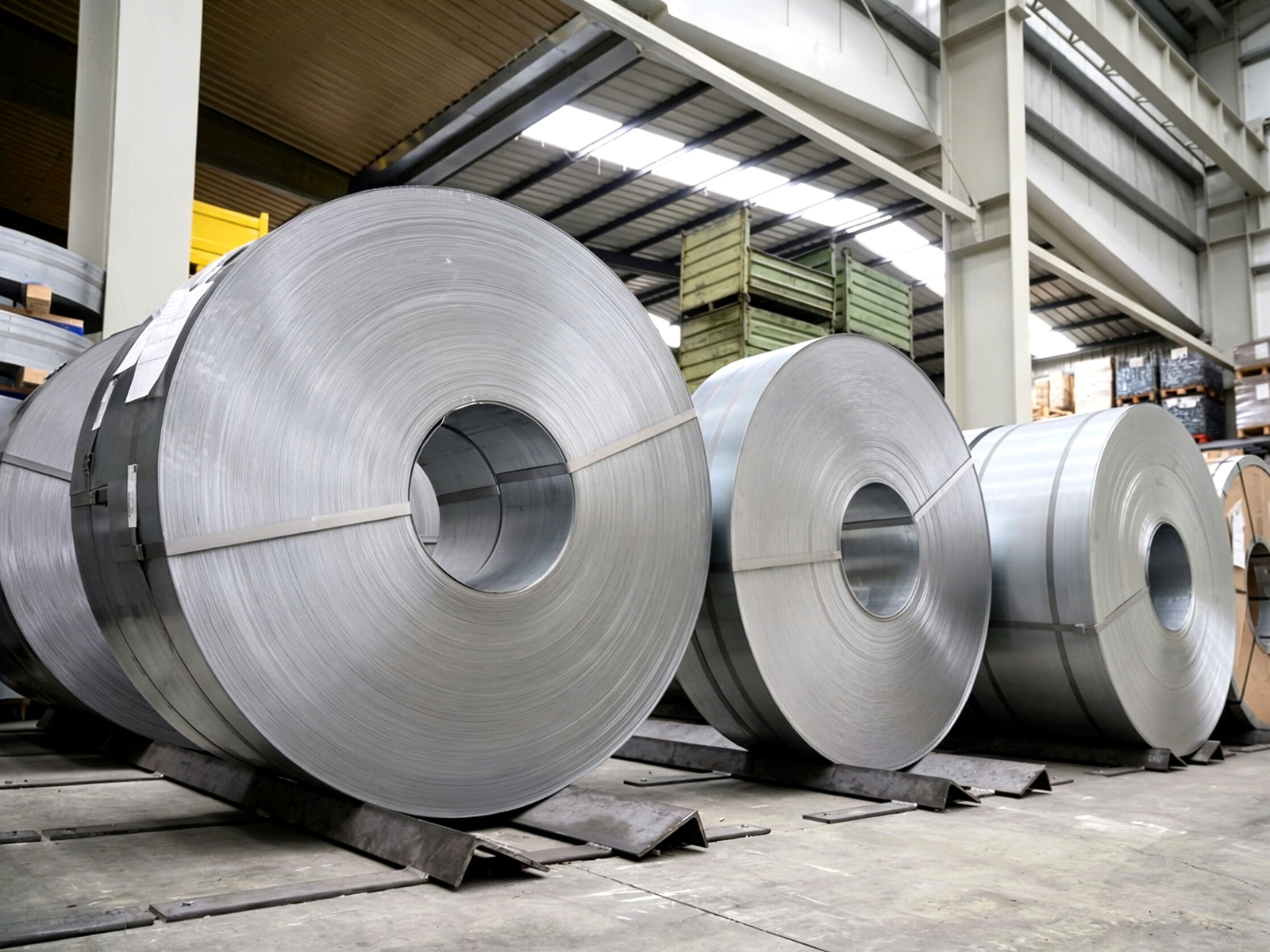
Ti-15V-3Al-3Cr-3Sn titanium foil (Ti-15-3 for short), as a representative material of near-β titanium alloy, is unique in that it achieves separate control of formability and strength through the synergy of cold rolling and heat treatment processes. Cold rolling gives the material ultra-thin specifications and precise dimensions, while heat treatment controls the final mechanical properties through age strengthening. The two are not isolated processes, but form a complete process chain of “soft forming-hard service”. Understanding the differences and connections between these two key links is of great value to engineers in aerospace, precision electronics and other fields to optimize product design and process routes. This article will provide an in-depth analysis of the core differences between cold rolling and heat treatment in the production of Ti-15-3 titanium foil.
1. What Should You Know About Cold Rolling Process, the Core Method of Precision Dimensional Forming?
(1) What Should You Know About Physical Nature and Microscopic Evolution of Cold Rolling?
Cold rolling is a plastic processing process that achieves thickness reduction through multiple passes below the recrystallization temperature. For Ti-15-3 titanium foil, the β-phase grains undergo severe elongation deformation during the cold rolling process, the dislocation density increases sharply, and the material exhibits work hardening characteristics. Unlike hot processing, cold rolling does not undergo dynamic recrystallization, which allows the material to maintain a high degree of tissue orientation and internal stress state, providing a controllable microstructure basis for subsequent heat treatment.
(2) What Should You Know About the Implementation Path of Ultra-thin Specifications?
The production of Ti-15-3 titanium foil with a thickness of 0.02-1.0 mm requires the powerful capability of a 20-roll precision rolling mill. Through the multi-level configuration of work rolls, intermediate rolls and backup rolls, this equipment evenly distributes the rolling force of 3, 500 kN and achieves a maximum reduction rate of 30% in a single pass. Coupled with a high-precision closed-loop thickness control system, the thickness tolerance can be controlled within ± 0.005 mm, meeting the stringent requirements for material consistency for microelectronic packaging and precision sensors.
(3) What Should You Know About Surface Quality and Flatness Control?
The surface of cold-rolled titanium foil carries a rolling oil film and a trace oxide layer, which needs to be processed by an ultrasonic cleaning line. The equipment operates at a speed of 30 meters/minute, and the surface dyne value after cleaning can exceed 40, ensuring the interface bonding strength of subsequent coating or bonding processes. The flatness eliminates residual stress through the tension-bending compound action of the precision flattening machine, so that the material can still maintain excellent geometric stability during high-speed processing of 150 meters/minute.
2. What Should You Know About Heat Treatment Process, a Key Link in Performance Control?
(1) What Should You Know About Tissue Recovery Mechanism in Annealed State?
The cold-rolled Ti-15-3 titanium foil is in a high internal energy state. It is heated to 750-850℃ through the 7-zone electric heating system of the continuous annealing line, and the material undergoes static recrystallization. At this time, the β-phase grains become equiaxed again, the dislocation density is greatly reduced, and the material regains its excellent plasticity. This annealed state is a necessary prerequisite for complex stamping, deep drawing and bending of titanium foil. Its elongation can reach more than 20%, far exceeding α+β titanium alloy.
(2) What Should You Know About the Strengthening Principle of Aging Treatment?
After the annealed titanium foil is formed, it is aged at 480-540℃ to precipitate nanoscale α-phase particles from the supersaturated β phase. These second-phase particles effectively pin the dislocation movement, increasing the material strength by 40-60%. Precise control of aging temperature and time is key: low temperature will lead to insufficient precipitation, and too high temperature will cause α-phase coarsening, both of which will damage the final performance. Temperature control accuracy of ± 2℃ ensures high consistency in performance from batch to batch.
(3) What Should You Know About Mapping Relationship Between Heat Treatment Parameters and Performance?
Heat treatment status | Tensile strength (MPa) | Yield strength (MPa) | Elongation (%) | Typical application scenarios |
Annealed state | 620-760 | 520-650 | ≥ 18 | Complex formed parts, deep drawn parts |
semi-aging state | 860-1000 | 780-900 | 8-12 | Structural parts that take into account both forming and load-bearing |
Fully aged | 1100-1200 | 1000-1100 | 4-8 | High-strength fasteners and load-bearing frames |
Note: There is no overlap between the upper limit of semi-aged tensile strength of 1000 MPa and the lower limit of fully aged tensile strength of 1100 MPa. In actual production, they are clearly distinguished according to the heat treatment system. This table shows the control range of heat treatment parameters on the performance of Ti-15-3 titanium foil. Engineers can choose the appropriate heat treatment system according to actual needs.
3. What Should You Know About Process Correlation Analysis of Cold Rolling and Heat Treatment?
(1) What Should You Know About Logical Dependencies of Process Sequences?
The production of Ti-15-3 titanium foil usually follows the standard process of “cold rolling → annealing → forming → aging”. Cold rolling provides precise dimensions and initial structural state, annealing eliminates work hardening and restores plasticity, forming achieves product geometry, and aging imparts final use performance. The typical process sequence is the distinguishing feature of near-β titanium alloys from pure titanium and α+β alloys. In actual production, aging can be omitted in some scenarios (as described in Section 5.3).
(2) What Should You Know About Continuity Characteristics of Organizational Evolution?
From the deformed β phase of cold rolling, to the equiaxed β crystal after annealing, to the α+β dual-phase structure precipitated by aging, the microstructure of the material shows a continuous gradient process. The high-density dislocations introduced by cold rolling can provide additional nucleation sites for aging precipitation. However, α-phase precipitation in Ti-15-3 is mainly controlled by diffusion, and the contribution of dislocations in accelerated nucleation needs to be comprehensively evaluated based on specific temperature and time conditions. The annealing temperature determines the β grain size and thus affects the α phase distribution after aging. The continuity of this organizational evolution requires fine matching of process parameters, and any parameter deviation in a single process will affect the final performance through tissue transmission.
(3) What Should You Know About Synergy Mechanism for Performance Control?
key performance indicators | The influence mechanism of cold rolling | Influence mechanism of heat treatment | Synergy |
Thickness accuracy | Directly determines thickness control accuracy | Annealing has little effect on thickness stability | Achieve ultra-high accuracy of ± 5 microns |
surface roughness | Roll finish determines the initial state (dominant) | Annealing oxidation can be removed by pickling or cleaning | Bright surface with Ra≤ 0.2um |
residual stress | The reduction rate and pass allocation are generated | Annealing temperature and cooling rate release (dominant) | Stress reduction by more than 90% |
final intensity | Work hardening contributes 15-20% | Aging precipitation contributes 80-85% (leading) | Tensile strength reaches 1100MPa |
This table reveals the contribution weight of cold rolling and heat treatment in different performance dimensions, providing a quantitative basis for process optimization.
4. What Are the Differences in Process Comparison Perspective of Different Titanium Foil Materials?
(1) What Should You Know About Single Process Characteristics of Pure Titanium Foil?
Gr1 and Gr2 pure titanium foils (thickness range 0.02-0.5mm) mainly rely on cold rolling to control thickness, and annealing is only used to restore plasticity rather than strength control. Its α single-phase structure determines that heat treatment cannot produce significant strengthening effects, and the final performance is mainly determined by the cold rolling reduction rate and annealing temperature. This simple process is suitable for general industrial applications, but it cannot meet the high specific strength requirements of aerospace.
(2) What Should You Know About the Intermediate Form of Α+β Titanium Alloy?
Ti-6Al-4V (Gr5) titanium foil has poor cold rolling performance at room temperature. It usually needs to be hot rolled or warm rolled in the β phase zone to improve the workability and then cold rolled, and the cold rolling reduction rate is limited (usually 60-70%). Its heat treatment achieves strength improvement through α-phase morphology control, but the control range is smaller than that of near-β-type alloys. This intermediate form allows Gr5 to occupy a place in high-strength applications, but it is gradually being replaced by Ti-15-3 in scenes requiring complex forming.
(3) Why Is Double Advantages of Near-beta Alloys Important?
Contrast Dimensions | Pure titanium foil (Gr1/Gr2) | α+β type (Gr5) | Near beta type (Ti-15-3) |
Maximum reduction rate of cold rolling (when thickness ≥ 0.05mm) | More than 85% | 60-70% | 75-80% |
Annealed elongation | 30-40% | 12-18% | 18-25% |
Time-effective strengthening amplitude | Basically invalid | 20-30% | 50-70% |
Forming complexity adaptability | Medium | Low | high |
final intensity level | Low (≤ 550 MPa) | High (≥ 900 MPa) | High (≥ 1100 MPa) |
Ti-15-3 titanium foil obtains formability equivalent to that of pure titanium through cold rolling, and achieves a strength level exceeding Gr5 through heat treatment. This “separation control” strategy is the core reason for its rapid promotion in the high-end manufacturing field.
5. Why Is Process Selection Strategies in Industrial Applications Important?
(1) What Should You Know About Full Process Requirements for Aerospace Structural Parts?
Large thin-walled skin parts require wide width (≥ 500 mm) ultra-thin (0.05-0.2 mm) titanium foil, and cold rolling requires a 750 mm 20-roll mill for stable production at a speed of 400 m/min. After annealing, the material completes superplastic forming (SPF) in a soft state, and is subsequently aged to reach service strength. Inert gas protection is used throughout the entire process to avoid oxygen contamination and ensure fatigue performance that meets the 100, 000 flight cycle requirements.
(2) What Should You Know About Surface Functionalization of Electronic Shielding Materials?
The thickness of Ti-15-3 titanium foil for EMI shielding is usually 0.02-0.05 mm. After cold rolling, it needs to be roughened through a surface grinding line to increase the roughness from Ra 0.2 microns to Ra 0.8 microns to enhance the adhesion of the conductive coating. The annealing temperature needs to be strictly controlled below 780℃ to avoid excessive grain growth, and the aging temperature is selected to be 500℃ to balance strength and conductivity, ultimately achieving a shielding effectiveness of more than 60 decibels.
(3) What Should You Know About Integrated Forming of Chemical Corrosion-resistant Equipment?
The lining of large-scale reactors needs to be integrally rolled and welded with 0.5-1.0 mm thick titanium foil. During the cold rolling stage, the width is precisely controlled to ± 0.1 mm through the slitting line to reduce the number of welds. After annealing, the material has the ability to bend 180 degrees without cracking, meeting the needs of complex curved surfaces. After forming, choose whether to perform aging treatment according to the actual corrosion resistance requirements. Under certain working conditions, the corrosion resistance of the annealed state may be better than that of the aged state (it needs to be verified with the actual corrosive medium. The difference in corrosion resistance of Ti-15-3 in the annealed state and the aged state depends on the specific environment). This “semi-finished state” application is a special mode of Ti-15-3 that distinguishes it from structural materials.
6. What Is the Conclusion?
The cold rolling and heat treatment process of Ti-15-3 titanium foil constitutes a complete technical chain of “dimensional accuracy-structural control-performance realization”. Cold rolling creates ultra-thin specifications and surface quality through precision equipment and multi-pass deformation, while heat treatment relies on precise management of temperature and time to achieve the transition from soft to hard. The essential difference between the two lies in the different mechanisms of physical forming and phase change strengthening, and their synergistic effect makes Ti-15-3 a new generation aerospace material with both processability and high performance.
FAQ
Q1: Can Ti-15-3 titanium foil be directly aged and strengthened without annealing?
Not feasible. The internal stress of the material after cold rolling is high (typical value is greater than 600MPa, this data comes from experimental measurement, the actual value varies depending on the process), and direct aging will cause cracking due to stress concentration. The stress must be released through annealing at 750-850℃ and the β-phase equilibrium structure must be restored before subsequent aging treatment can be carried out. This is the rigid requirement of the near-β titanium alloy process.
Q2: How to judge whether the titanium foil has completed the aging treatment?
It can be quickly judged through hardness testing: the typical Vickers hardness value in the annealed state is about 260-290HV (data comes from typical process tests), and the fully aged state reaches 340-380HV. A more accurate method is to observe the precipitation form of α phase metallographically, or to verify whether the yield strength reaches the design index of more than 1000MPa through tensile testing.
Q3: How to solve edge cracking during cold rolling of wide-width titanium foil?
Edge cracks originate from uneven stress in the width direction and edge oxidation. Three measures are required: grinding to remove the oxide layer before rolling, optimizing the roll shape to achieve a convex amount of ≤ 20 microns, and matching the tension and slitting parameters to control the edge scrap rate within 3%. This is the key to stable production of 680 mm width.
How Should Looking for Reliable Ti-15V-3Al-3Cr-3Sn Titanium Foil Supplier?
As a professional manufacturer, Baoji Titanium Valley Titanium Nickel Zirconium Material Processing Co., Ltd. has an annual ultra-thin wide foil production capacity of 3, 000 tons and a full-process quality control system. We provide customized products to global aerospace medical, high-end manufacturing and precision electronics customers. Contact sales@titaniumvalleys.com today for technical solutions.
References
- Qu Hennglei, Zhu Zhishou, Wang Xinnan. Research on the microstructure, properties and heat treatment process of nearly β-type titanium alloy cold-rolled sheets. Rare Metal Materials and Engineering, 2019, 48(6): 1823-1829.
- Zhao Yongqing, Ge Peng. Microstructure and mechanical properties of Ti-15V-3Cr-3Sn-3Al alloy cold-rolled sheets. Chinese Journal of Nonferrous Metals, 2018, 28(3): 447-454.
- Zhang Xiyan, Zhou Wei, Zhao Xiangmiao. Cold rolling process of titanium alloy sheets and its microstructure evolution rules. Progress in Titanium Industry, 2020, 37(2): 24-29.
- Li Peng, Liu Zhenhua. Effect of near-β titanium alloy heat treatment process on mechanical properties. Journal of Materials Heat Treatment, 2021, 42(5): 68-75.