
Why Is Application of Gr4 Titanium Rod in Medical Device Manufacturing Important?
- Gr4 Titanium Rod
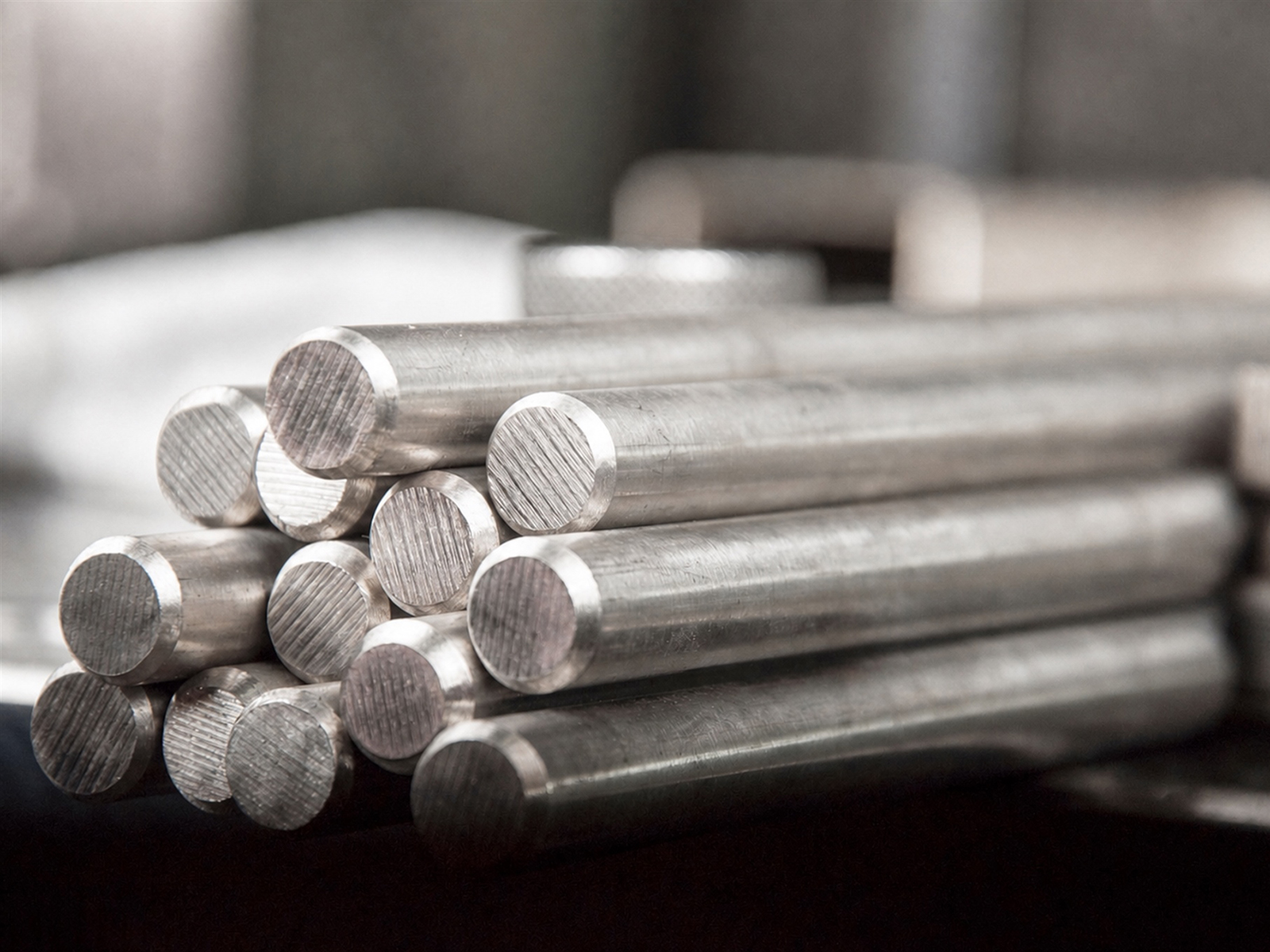
Gr4 pure titanium rods play an important role in the manufacturing of orthopedic implants, surgical instruments and precision medical equipment. Its tensile strength of 485-550 MPa, excellent biocompatibility and non-magnetic properties make it an ideal material for medical structural parts carrying high stress. The material density is only 4.51 g/cm³, which helps reduce the weight of the implant; its stable chemical inertness ensures the safety of long-term in vivo application. Gr4 titanium rods produced through vacuum annealing, ultrasonic cleaning and precision dimensional control processes can meet the strict requirements of the medical industry for material consistency and surface cleanliness.
1. What Should You Know About Biocompatibility and Tissue Integration Mechanism of Gr4 Pure Titanium Rods?
A stable TiO2 oxide film can spontaneously form on the surface of Gr4 titanium rods. This passivation layer with a thickness of about 2-10 nanometers has excellent chemical inertness and effectively blocks the release of metal ions to surrounding tissues. Clinical studies have shown that this oxide film has strong adsorption capacity to human proteins and promotes the adhesion and proliferation of osteoblasts. Compared with medical stainless steel, the tissue reactivity of Gr4 titanium is reduced by more than 60%, and osseointegration can be achieved 6-12 weeks after implantation.
2. What Should You Know About Mechanical Strength, Fatigue Durability and Imaging Compatibility?
The yield strength of Gr4 pure titanium reaches 380 MPa, which can meet the long-term use requirements of high-stress components such as hip prostheses and spinal fixators. Its elastic modulus is about 105 GPa, while the elastic modulus of human cortical bone is 10-30 GPa. There is a large gap between the two, so the stress shielding effect needs to be combined with design optimization. The magnetic susceptibility of Gr4 titanium is only 3.2×10⁻⁶ emu/g. It will not produce artifact interference in the 1.5T or 3.0T MRI environment, allowing patients to undergo normal MRI examinations after surgery. This feature is particularly important for fields such as neurosurgery and cardiovascular intervention that require frequent imaging monitoring.
3. Why Is Application Practice in Orthopedic Implant Manufacturing Important?
(1) Why Is Material Advantages of Joint Replacement Prostheses Important?
Application parts | Gr4 titanium rod specifications | core performance requirements | Clinical advantages |
hip stem | Φ20-50mm forged rod | Tensile strength ≥ 550 MPa | The osseointegration rate is significantly improved |
knee tibia brace | Square bar 25×25mm | Fatigue life >10⁷ cycles | Prolonged prosthesis survival |
shoulder joint ball head | Φ30-40mm cold drawn rod | Surface roughness Ra≤ 0.4um | Wear rate reduced by 55% |
After the hip prosthesis handle is forged and formed using Gr4 titanium rods, a microporous structure can be formed through surface treatment to facilitate the ingrowth of bone cells. Compared with cobalt-chromium alloy prostheses, Gr4 titanium materials have faster osseointegration and can be firmly fixed within 3 months after surgery, helping to shorten the patient’s recovery period.
(2) What Should You Know About the Manufacturing Process of Spinal Fixation Systems?
Spinal pedicle screws and connecting rods are mostly precision-machined from Gr4 titanium rods with a diameter of 5-8mm. Pedicle screws usually use rolling thread technology, and the surface roughness is controlled below Ra 0.8um. The material is vacuum annealed at 550-650℃ to eliminate cold working stress and ensure that the screw does not undergo plastic deformation when repeatedly screwed into the vertebrae. Clinical data shows that the pull-out force of Gr4 titanium pedicle screws reaches 600-800N, and the fixation reliability meets the requirements of thoracolumbar fusion surgery.
(3) What Should You Know About Customized Production of Trauma Fixation Devices?
Fracture internal fixation plates and intramedullary nails need to be customized in curved shapes according to the patient’s anatomy. The good ductility (elongation rate ≥ 15%) of Gr4 titanium rods supports cold bending and hot forming processing. The titanium plate with a thickness of 2-4mm can be bent to a 90-degree angle at room temperature without cracking. Laser cutting technology can be used to process complex hole shapes to meet personalized medical needs.
4. What Should You Know About Manufacturing Standards for Surgical Instruments and Interventional Tools?
(1) What Should You Know About Precision Processing Requirements for Minimally Invasive Devices?
Device type | Material specifications | Processing accuracy | surface treatment |
Laparoscopic surgical forceps | Φ3-5mm cold drawn rod | Dimensional tolerance ± 0.02mm | Electropolishing Ra≤ 0.2um |
Orthopedic reamer | Φ8-12mm polishing rod | Blade sharpness ≤ 0.05mm | Nitriding treatment hardness HV700 |
neurosurgery probe | Φ1-2mm ultra-thin rod | Straightness≤ 0.1mm/100mm | Passivation treatment without burrs |
The working end of the laparoscopic instrument is made of Gr4 titanium rods through wire cutting and precision grinding. The rod diameter tolerance is controlled within ± 0.015mm to ensure a sealing fit with the operating handle. Electropolishing technology reduces the surface roughness to Ra 0.15um, reducing tissue adhesion and cleaning difficulty. The instrument can withstand more than 200 times of high-pressure steam sterilization at 134℃ without corrosion.
(2) What Should You Know About Material Matching for Cardiovascular Interventional Catheters?
The coronary guidewire guide head uses Gr4 ultra-fine titanium wire with a diameter of 0.35-0.45mm. The tensile strength is increased to more than 600 MPa through a cold drawing process, while maintaining sufficient flexibility to adapt to the bending of blood vessels. The material has been ultrasonic cleaned to remove surface grease and particles, and the cleanliness meets the ISO 14644-1 standard level 5 requirements to avoid the risk of embolism.
(3) What Should You Know About Thread Precision of Oral Implants?
The main body of the dental implant is processed using Gr4 titanium rods with a diameter of 3.5-5.0mm. The thread lead accuracy is controlled within the range of 0.6± 0.02mm. A microporous structure is formed through sandblasting and acid etching surface treatment, and the pore size is distributed between 1-10um. This surface topography increases the contact area between the implant and the jaw bone and shortens the osseointegration time to 6-8 weeks. The corrosion resistance of the material ensures its stable existence in the acidic environment of the oral cavity for more than 15 years.
5. What Should You Know About Quality Control System and Clinical Validation Standards?
(1) What Should You Know About Raw Material Testing and Traceability Management?
The factory inspection of Gr4 titanium rods includes spectral analysis to confirm the element content (oxygen ≤ 0.40%, iron ≤ 0.50%), tensile test to verify the mechanical properties, and ultrasonic flaw detection to eliminate internal defects. A unique identification code is established for each batch of materials, and the smelting furnace number, forging parameters and heat treatment curve are recorded to achieve full traceability from titanium sponge to finished product.
(2) What Should You Know About Sterility Control During Processing?
Process link | Cleanliness level | Monitoring indicators | control measures |
Precision turning | ISO class 7 | Suspended particles ≤ 352, 000/m³ | Laminar flow purification system |
surface polishing | ISO class 6 | Planktonic bacteria ≤ 200 CFU/m³ | Positive pressure clean room |
Ultrasonic cleaning | ISO class 5 | Endotoxin≤ 0.5 EU/ml | Purified water circulation |
The medical device processing workshop is equipped with a HEPA high-efficiency filtration system, with an air change rate of 25 times/hour, and the temperature and humidity are controlled within the range of 20-24℃ and 45-65%. The finished product is packaged in double-layer sterility, and the sterility assurance level reaches 10⁻⁶ after ethylene oxide sterilization.
(3) What Should You Know About Biological Evaluation and Clinical Performance Verification?
Medical devices made of Gr4 titanium rods must pass the ISO 10993 series of biological evaluations, including cytotoxicity testing, sensitization testing and implantation irritation response evaluation. In the in vitro corrosion test, after 90 days of immersion in simulated body fluids, the amount of metal ions released was below the detection limit. During the clinical trial phase, it is necessary to track patient postoperative data and keep the implant failure rate at a low level.
(4) What Should You Know About Long-term Stability Monitoring Mechanism?
Conduct fracture analysis and microstructure inspection on recovered failed implants to identify fatigue crack initiation locations and expansion paths, and provide feedback to optimize product design. The quality management system has passed ISO 13485 certification, and the annual internal audit covers the entire process of procurement, production, inspection and after-sales.
6. What Is the Conclusion?
Gr4 pure titanium rod has become a core material for medical device manufacturing due to its high strength, excellent biocompatibility and precision processing performance. From orthopedic implants to minimally invasive surgical instruments, its applications cover multiple clinical fields. Through strict quality control and process optimization, we continue to promote the advancement of medical technology. With the development of 3D printing and surface modification technology, Gr4 titanium materials will show greater potential in the fields of personalized medicine and regenerative medicine.
FAQ
Q1: What are the differences between Gr4 titanium rods and Gr5 titanium alloys in medical applications? ?
Gr4 belongs to industrial pure titanium and has better biocompatibility than Gr5 alloy containing aluminum and vanadium elements, making it suitable for long-term implantation applications. Although Gr5 is stronger (900 MPa), the potential risk of metal ion release limits its use in certain implants. The chemical inertness of Gr4 makes it the material of choice for orthopedics and dentistry.
Q2: How to verify the medical grade cleanliness of Gr4 titanium rod?
It is necessary to detect surface particle pollution, endotoxin content and metal ion precipitation. Suppliers should provide material certificates and biocompatibility test reports, and the processing environment must meet ISO 13485 certification standards to ensure that the materials meet implant-grade requirements.
Q3: What are the difficulties in processing complex surgical instruments with Gr4 titanium rods?
Major challenges include work hardening during cutting and tool wear due to poor thermal conductivity. It is necessary to adopt a low-speed and large-feed strategy, use carbide or PCD tools, and cooperate with a high-pressure cooling system. During precision thread processing, the cumulative pitch error needs to be controlled within 0.01mm, which requires high-precision CNC equipment and real-time detection.
How Should Looking for a Professional Supplier of Medical Grade Gr4 Pure Titanium Rods?
As a professional manufacturer, a rare metal materials company has a full-process production line of vacuum consumable arc melting, precision forging and vacuum annealing. It can stably supply φ1-50mm Gr4 medical pure titanium rods with tensile strength of 485-550MPa, elongation ≥ 15% and surface roughness Ra≤ 0.4um. The product has excellent biocompatibility (in compliance with ISO 10993 series standards), non-magnetic (MRI compatible) and stable TiO2 passivation film, and the amount of metal ions released is below the detection limit. We provide customized products that comply with ASTM F67 and ISO 13485 standards for global customers of orthopedic implants, spinal fixation systems, oral implants and minimally invasive surgical instruments, complete with complete material certificates, ultrasonic flaw detection and biocompatibility testing reports. Contact sales@titaniumvalleys.com immediately to obtain technical solutions and samples.
References
- Yu Zhentao, Yu Sen, Cheng Jun, et al. Research progress on the preparation and properties of medical titanium alloy materials. Chinese Materials Progress, 2016, 35(8): 608-614.
- Zhang Yaping, Li Bin, Sun Kangning. Application and research progress of titanium and titanium alloys in oral implants. Oral Medicine Research, 2018, 34(5): 461-465.
- Wang Qingliang, Liu Min, Li Zengfeng. Research on the effect of surface modification of medical pure titanium on biocompatibility. Rare Metal Materials and Engineering, 2015, 44(10): 2487-2492.
- Chen Hua, Zhao Yongqing, Li Zuochen. Evaluation of mechanical properties and biocompatibility of titanium alloys for implantation. Chinese Journal of Nonferrous Metals, 2010, 20(4): 678-683.
- Huang Run, Liu Jianxin, Zhang Xingdong. Study on the osseointegration effect of micro-nano structures on the surface of titanium-based biomaterials. Journal of Biomedical Engineering, 2019, 36(2): 301-307.