
What Should You Know About Zirconium 705 Wire Composition, Properties, and Industrial Uses?
- Zirconium 705 Wire
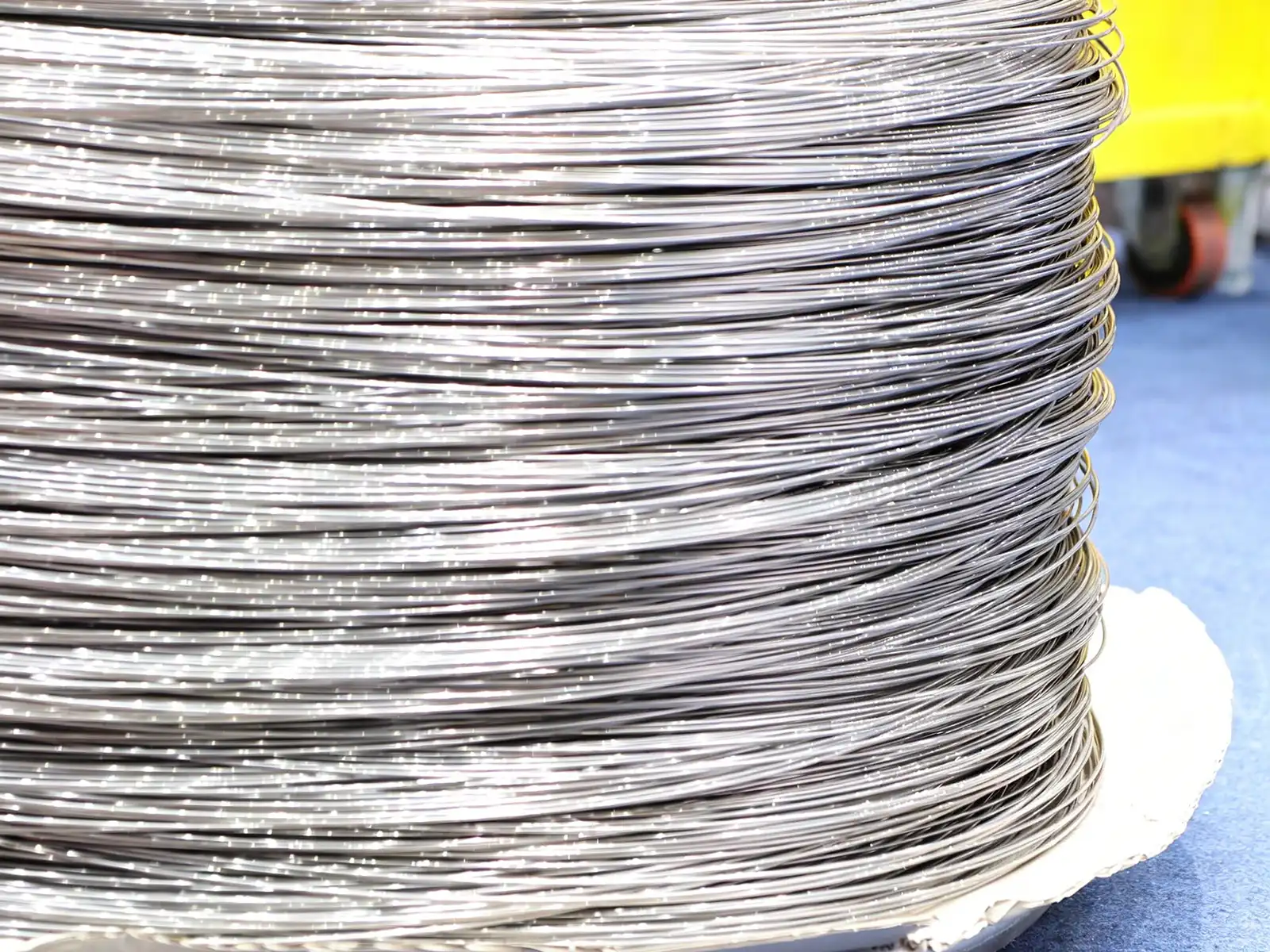
Zirconium 705 wire (UNS R60705) is a zirconium-niobium alloy wire containing 2.0-3.0% niobium. This alloy design gives it both excellent corrosion resistance and high mechanical strength. Compared with pure zirconium materials, zirconium 705 wire has significantly improved structural strength and high-temperature stability while maintaining excellent corrosion resistance. It is especially suitable for extreme working conditions such as nuclear power equipment, chemical plants, medical equipment, and aerospace. This material complies with ASTM B550 standards (American Society for Testing and Materials standards). Its unique alloy composition gives it long-term reliability in strong acids, strong alkali, high temperatures and chlorine-containing environments. It has become an irreplaceable key material in high-end industrial fields.
1. What Should You Know About Chemical Composition and Alloy Design Principles of Zirconium 705 Wire?
(1) What Should You Know About Core Element Ratio and Mechanism of Action?
The matrix of zirconium 705 alloy is composed of zirconium and hafnium (Zr+Hf), in which the niobium (Nb) content is strictly controlled within the range of 2.0-3.0%. This ratio has been optimized and designed. The addition of niobium element significantly improves the yield strength and creep resistance of the material through a strengthening mechanism. As a natural associated element of zirconium, hafnium has a content of no more than 4.5% and must be strictly limited in alloys because hafnium has a high neutron absorption cross-section and reducing its content is beneficial to nuclear applications. This alloy design allows the zirconium 705 wire to maintain stable mechanical properties under high stress conditions.
(2) What Should You Know About Strict Control of Impurity Elements?
To ensure the high purity and stability of the material, zirconium 705 alloy imposes strict restrictions on impurity elements. The iron content is controlled below 0.20% to prevent local corrosion; the carbon content does not exceed 0.05% to avoid embrittlement caused by carbide precipitation; the oxygen content is limited to 0.18% to maintain good plasticity. Interstitial elements such as nitrogen and hydrogen are controlled below 0.025% and 0.005% respectively. This ultra-low impurity level ensures the application safety of the material in high-purity industries such as medicine and semiconductors.
(3) What Should You Know About Comprehensive Effect of Alloy Composition on Properties?
The following table shows the main components of zirconium 705 wire and their specific impact on performance:
element | Content range | Main function |
Niobium (Nb) | 2.0-3.0% | Strengthen the matrix, increase the yield strength by 30-40%, and enhance creep resistance |
Hafnium (Hf) | ≤ 4.5% | The content needs to be strictly controlled to reduce the neutron absorption cross section |
Oxygen (O) | ≤ 0.18% | Appropriate amount to strengthen the matrix, excessive amount will reduce the plasticity |
Iron (Fe) | ≤ 0.20% | Strict controls to prevent pitting and crevice corrosion |
Hydrogen (H) | ≤ 0.005% | Ultra-low content avoids the risk of hydrogen embrittlement |
This precise composition control enables zirconium 705 wire to achieve a balance of strength and toughness while maintaining excellent processing properties.
2. What Should You Know About Key Performance Characteristics of UNS R60705 Zirconium Wire?
(1) What Should You Know About Excellent Corrosion Resistance Performance?
Zirconium 705 wire performs well in a variety of extremely corrosive environments. In strong acidic media such as hydrochloric acid, wet chlorine, and organic acids, its corrosion resistance far exceeds that of titanium alloy and stainless steel materials. A dense zirconium oxide protective film can be quickly formed on the surface of the material to effectively prevent the penetration of corrosive media. In high-temperature aqueous solutions containing chloride ions, zirconium 705 wire almost does not suffer from pitting and crevice corrosion. This characteristic makes it an ideal material for seawater desalination, hydrometallurgy and other industries.
(2) What Should You Know About Excellent Mechanical Strength and High Temperature Stability?
Compared with pure zirconium R60702 material, the tensile strength of zirconium 705 wire is increased by about 35-50%, and the yield strength can reach 450-550 MPa. This high-strength characteristic allows it to withstand higher working stresses and avoid problems such as deformation and bending in filament manufacturing or high-voltage equipment. When the material works for a long time below 350℃, its mechanical properties remain relatively stable, which is crucial for high-temperature applications such as chemical heat exchangers and nuclear reactor components. It should be noted that phase changes may occur in materials at higher temperatures, and this needs to be evaluated based on specific working conditions.
(3) What Should You Know About Physical Properties and Processing Properties?
The density of zirconium 705 wire is 6.51 g/cm³, which is a medium-density metal and facilitates lightweight design. The material is completely non-magnetic and will not cause electromagnetic interference to precision instruments, nuclear power equipment or medical devices. The elastic modulus is about 95 GPa, has good elastic recovery ability, and is suitable for manufacturing corrosion-resistant springs, seals and other elastic components. The material has excellent ductility and can be processed by cold drawing, bending, welding and other processes to meet the manufacturing needs of complex-shaped parts.
The following table compares the key properties of zirconium 705 wire with other commonly used corrosion-resistant materials:
Performance indicators | Zirconium 705 wire | Pure Zirconium R60702 | Titanium alloy | 316 stainless steel |
Tensile strength (MPa) | 520-690 | 380-480 | 480-620 | 515-690 |
Hydrochloric acid resistance (normal temperature) | good | good | Difference | Difference |
Resistance to wet chlorine | good | good | medium | Very bad |
High temperature stability | 350℃ | 300℃ | 300℃ | 280℃ |
magnetic | Completely non-magnetic | Completely non-magnetic | Non-magnetic | Micromagnetic |
relative cost | high | high | middle | Low |
3. What Should You Know About Production Process and Quality Control of Zirconium 705 Wire?
(1) What Should You Know About Advanced Production Process System?
The production of zirconium 705 wire adopts a full-process intelligent production line to achieve continuous processing from raw materials to finished products. The production process starts with high-purity zirconium-niobium alloy rods, which are precision peeled or pickled to remove the surface oxide layer. Then it enters a multi-pass cold drawing process, during which intermediate annealing is used to eliminate work hardening and restore the material’s plasticity. The final annealing process ensures structural uniformity and stable mechanical properties. Pickling or polishing removes surface defects and obtains a smooth finished surface.
(2) What Should You Know About Vacuum Melting and Purity Assurance?
Vacuum arc melting technology is used to prepare alloy ingots to ensure high purity of materials and low impurity content. The smelting process is carried out in a high vacuum environment, which can effectively remove some volatile impurities and reduce the formation of inclusions. Gas impurities such as hydrogen and nitrogen need to be further controlled in combination with processes such as vacuum degassing or electron beam melting. Multiple remelting processes ensure uniformity of ingredients and eliminate segregation. This high-purity basis enables zirconium 705 wire to meet the stringent requirements for zero metal precipitation pollution in the pharmaceutical, semiconductor and other industries.
(3) What Should You Know About Precision Dimensional Control and Surface Treatment?
Modern wire drawing equipment achieves dimensional accuracy control of ± 0.01 mm to meet precision manufacturing needs. The straightness is controlled at ≤ 1 mm per meter to ensure the applicability of the wire in automated assembly. The surface treatment provides a variety of options: the black leather state retains the original oxide layer, suitable for subsequent welding; the pickled surface removes the oxide layer, showing a silver-white metallic luster; the bright and polished surface has a higher finish and is suitable for medical devices; the mirror surface treatment reaches the highest surface quality and is used for special precision parts.
(4) What Should You Know About Whole Process Quality Inspection System?
Each batch of products undergoes strict quality inspection. Chemical composition analysis uses spectrometers and mass spectrometers to ensure that the content of each element meets standard requirements. Mechanical property testing includes tensile testing, hardness testing and bending testing. Dimensions are measured using precision micrometers and optical measuring instruments. The surface quality is ensured through visual inspection and eddy current testing to ensure that there are no defects such as cracks, pitting, burrs, etc. The complete 3.1 test report provides material traceability and meets international quality certification requirements.
4. Why Is Industrial Application Fields and Practical Value Important?
(1) Why Is Key Applications in the Chemical and Petrochemical Industries Important?
Zirconium 705 wire has solved the corrosion problem that ordinary materials are difficult to deal with in the chemical industry. The fasteners and valve stems of hydrochloric acid storage tanks are made of zirconium 705 wire, which has a service life that is 5-10 times longer than that of stainless steel. The heat exchange tube bundles and filters in organic acid production equipment use this material to effectively resist corrosion from acetic acid, formic acid and other media. The wet chlorine environment in the chlor-alkali industry has extremely high requirements on materials. Pump shafts and seals made of zirconium 705 wire can operate stably for a long time, significantly reducing maintenance costs and downtime losses.
(2) What Should You Know About Special Materials for the Nuclear Power Industry?
Nuclear power plants have strict requirements on the neutron absorption cross-section, radiation resistance and high-temperature corrosion resistance of materials. Zirconium 705 wire is widely used in reactor core components and non-fuel cladding connectors due to its low neutron absorption properties (thanks to the strict restrictions on hafnium content). The material maintains stable mechanical properties and corrosion resistance in high-temperature and high-pressure water environments, ensuring the long-term safe operation of nuclear power plants. Key components such as heat exchanger tube bundles and control rod guide tubes also use zirconium 705 wire, whose reliability is directly related to the safety and economy of nuclear power plants.
(3) What Should You Know About Medical and Precision Instrument Field?
The medical device industry has special requirements for materials to be biocompatible, non-magnetic and of high purity. Zirconium 705 wire has good biocompatibility and will not cause rejection in the human body. It can be used to manufacture surgical instruments, interventional guide wires, and connectors for orthopedic implants. The material’s completely non-magnetic properties make it ideal for use in nuclear magnetic resonance equipment and precision measuring instruments without causing signal interference. Ultra-fine specification (0.06-0.4 mm) zirconium 705 wire is used in precision components such as electronic connectors and micro springs to meet the lightweight and high reliability requirements of 3℃ electronic products.
(4) Why Is Marine Engineering and Aerospace Applications Important?
Desalination equipment faces serious problems of seawater corrosion and biological pollution. Seawater pump components and reverse osmosis membrane support structures made of zirconium 705 wire have excellent resistance to seawater corrosion, significantly extending the service life of the equipment. Fasteners used on offshore drilling platforms use this material, which can withstand harsh environments such as salt spray and high humidity. The aerospace field has strict requirements on the strength-to-weight ratio and high-temperature performance of materials. Zirconium 705 wire is used to manufacture corrosion-resistant pipelines for aircraft hydraulic systems and high-temperature components for spacecraft propulsion systems. Its lightweight and high-strength characteristics help reduce the overall weight and improve aircraft performance.
The following table summarizes the typical applications of zirconium 705 wire in different industrial fields and the core problems it solves:
Application areas | Typical products | Core issues to be solved | value brought |
Chemical and petrochemical | Heat exchanger tubes, pump shafts, valve stems, fasteners | Strong acid corrosion, chloride ion pitting corrosion, high temperature aging | Equipment life is extended by 3-10 times and maintenance costs are reduced |
Nuclear power industry | Reactor components, non-fuel assembly connectors, heat exchange tubes | Neutron absorption, radiation embrittlement, high temperature water corrosion | Improved nuclear safety and extended fuel cycle |
medical device | Surgical instruments, guide wires, implant accessories | Biocompatibility, metal precipitation, magnetic interference | Improved surgical safety and extended equipment life |
Marine Engineering | Seawater pumps, desalination unit components, platform fasteners | Seawater corrosion, biological pollution, crevice corrosion | Improved reliability of marine equipment and extended replacement cycle |
Aerospace | Hydraulic pipelines, high temperature parts of propulsion system | High temperature corrosion, lightweight requirements, extreme environments | Reduced structural weight and enhanced system reliability |
5. How Should Material Selection Guide and Technical Service Support?
(1) Why Is Specification Selection for Different Application Scenarios Important?
For welding applications, it is recommended to use zirconium 705 welding wire with a size of 0.8-3.0 mm. These sizes have good wire feeding stability and weld formability. Structural parts and electrode applications are suitable for wire materials in the range of 0.5-6.0 mm, which can meet load-bearing requirements and processing needs. Precision medical devices and electronic connectors require ultra-fine wire materials of 0.06-0.4 mm. These specifications require extremely high production processes and quality control. Choose the surface treatment method according to the specific working conditions: pickled surface is suitable for general corrosion-resistant applications, bright and polished surfaces are used for occasions with high cleanliness requirements, and black skin is suitable for subsequent heat treatment or welding processes.
(2) What Are the Differences in Material Performance Evaluation and Comparison?
When making material selection decisions, the corrosive environment, stress level, temperature range and cost budget need to be considered comprehensively. For strong reducing acid environments such as hydrochloric acid and wet chlorine, zirconium 705 wire is the preferred solution. Titanium alloy and stainless steel usually cannot meet the requirements. Under high stress conditions, zirconium 705 wire has obvious strength advantages and avoids the problem of easy deformation of pure zirconium materials. Although the initial purchase cost is higher, considering the ultra-long service life and low maintenance costs, the full life cycle economics of zirconium 705 wire is generally better than conventional materials.
(3) What Should You Know About Customized Processing and Technical Services?
Some professional suppliers (such as Baoji Titanium Valley Titanium Nickel Zirconium Material Processing Co., Ltd.) have advanced continuous rolling production lines and can supply various specifications of zirconium 705 wire. The production line is equipped with induction heating system, reversible rolling mill, continuous rolling main unit and other equipment to realize full process automation control. Provide full-process customized processing services from raw materials to finished products, including personalized needs for special diameters, tolerances, lengths and surface treatments. The technical team can provide material selection suggestions, process parameter optimization and application technical support according to the customer’s specific working conditions.
(4) What Should You Know About Quality Certification and After-sales Guarantee?
All products comply with ASTM B550 standards and ISO 5832-3 standards, and provide complete material testing reports and quality certificates. Products undergo strict chemical composition analysis, mechanical property testing and dimensional inspection to ensure the stability and consistency of each batch. Support sample orders and mass production to meet the needs of different stages from R&D verification to large-scale application. A complete after-sales service system provides technical consultation, application training and quality traceability support to ensure that customers can give full play to material performance and achieve project success.
6. What Is the Conclusion?
As a high-performance representative of the zirconium-niobium alloy family, zirconium 705 wire has become a key material in high-end industrial fields such as nuclear power, chemical industry, and medical care due to its unique composition design, excellent corrosion resistance, and excellent mechanical strength. Its long-term reliability and full life cycle economy under extreme working conditions provide an ideal way to solve the problems of corrosion, strength and purity of traditional materials. With the continuous advancement of industrial technology and the continuous expansion of application fields, the market demand for zirconium 705 wire will continue to grow, becoming an important support for promoting high-end equipment manufacturing and technological innovation.
FAQ
Q1: What are the main differences in performance and application between zirconium 705 wire and pure zirconium (R60702)?
Zirconium 705 wire (UNS R60705) adds 2.0-3.0% niobium element to pure zirconium. The tensile strength is increased by about 35-50%, and the yield strength can reach 450-550 MPa, while pure zirconium is only 380-480 MPa. The high strength characteristics enable zirconium 705 wire to withstand higher working stress and avoid deformation failure in high-stress fasteners, springs and structural parts. In terms of corrosion resistance, both show excellent acid corrosion resistance, but zirconium 705 wire has better structural stability and creep resistance at high temperatures (350℃). Pure zirconium is suitable for low stress and normal temperature corrosion environments due to its relatively low cost. When selecting, zirconium 705 wire is preferred for high stress or high temperature conditions. Pure zirconium can be considered for general corrosive environments and no high strength requirements.
Q2: In which media is the corrosion resistance of zirconium 705 wire most outstanding?
Zirconium 705 wire performs well in a variety of highly corrosive media. In environments such as hydrochloric acid (all concentrations), wet chlorine, nitric acid, organic acids (acetic acid, formic acid), its corrosion resistance far exceeds that of titanium alloy and 316 stainless steel, and almost no pitting or crevice corrosion occurs. This is due to the rapid formation of a dense and strong zirconium oxide protective film on the surface of the material, and the film has excellent chemical stability in strong reducing acids. In high-temperature aqueous solutions containing chloride ions (such as seawater, salt water), zirconium 705 wire also exhibits extremely low corrosion rates, making it an ideal material for seawater desalination, chlor-alkali industry, hydrometallurgy and other industries. It should be noted that in hydrofluoric acid, concentrated sulfuric acid (>70%) and concentrated phosphoric acid, the corrosion rate of zirconium 705 wire will increase significantly and its use should be avoided.
Q3: What are the special requirements for zirconium 705 wire in the nuclear power field?
The core requirements for zirconium 705 wire in nuclear power applications focus on two aspects: one is low neutron absorption cross-section, and the other is high radiation resistance. The hafnium element associated with natural zirconium ore has an extremely high neutron absorption cross-section and must be strictly controlled at ≤ 4.5% in the alloy. Therefore, the hafnium content of nuclear-grade zirconium 705 wire needs to be further narrowed to a lower level (usually ≤ 0.01%). This indicator is achieved through a special selective reduction and separation process. In addition, the material needs to maintain long-term stability of mechanical properties and corrosion resistance in a boron-containing water environment at high temperature and high pressure (about 350℃, 15 MPa) without radiation embrittlement or hydrogen embrittlement. All nuclear-grade products must undergo batch-by-batch testing of chemical composition, mechanical properties, grain size and ultrasonic flaw detection, and complete traceability quality documents must be provided.
Q4: How to weld zirconium 705 wire? What are the changes in performance after welding?
Zirconium 705 wire has good weldability, and it is recommended to use gas tungsten arc welding (GTAW), plasma arc welding or vacuum electron beam welding. When welding, high-purity argon (purity ≥ 99.999%) must be used as a protective gas to fully protect the front and back of the weld to prevent embrittlement caused by reaction with oxygen and nitrogen in the air at high temperatures. The filling material should be zirconium 705 welding wire of the same brand. Before welding, the oil stain and oxide layer on the surface of the welding area must be completely removed. It is recommended to use mechanical cleaning or pickling. Post-weld heat treatment (annealing at about 580-620℃) can eliminate residual stress, restore plasticity and refine grains, but it will reduce the strength to a certain extent. It should be noted that the corrosion resistance of the weld area is equivalent to that of the base metal, but the strength is usually slightly lower than that of the base metal, and this factor should be considered during design.
7. What Should You Know About Get Customized Zirconium 705 Wire Now?
As a professional manufacturer and supplier of zirconium 705 wire (UNS R60705), Baoji Titanium Valley Titanium Nickel Zirconium Material Processing Co., Ltd. is equipped with a full-process intelligent wire drawing production line and vacuum melting system, with an annual production capacity of 800 tons, and can provide customized services for zirconium wire in full specifications of Φ0.06-6.0mm. The products comply with ASTM B550 and ISO 5832-3 standards, and the surface supports black leather, pickling, bright, polished and mirror treatments. They are widely used in nuclear power, chemical industry, medical and aerospace fields. Each batch of products comes with a complete chemical composition analysis, mechanical property test report and EN 10204 3.1 material certificate. Welcome to send technical requirements to sales@titaniumvalleys.com to obtain sample testing and professional technical support.
References
- Zhang Weiming, Li Junhua. Zirconium and Zirconium Alloy Materials Manual[M]. Beijing: Metallurgical Industry Press, 2019.
- Chen Guoliang, Wang Xiaofeng. Advanced Nuclear Materials Science and Engineering[M]. Beijing: Science Press, 2021.
- Liu Zhenyu, Zhao Jianhua. Application and corrosion protection of zirconium alloys in chemical equipment [J]. Corrosion Science and Protection Technology, 2020, 32(4): 315-322.
- Yang Xiaodong, Wu Zhiqiang. Research progress on zirconium alloy materials for nuclear power[J]. Nuclear Science and Engineering, 2022, 42(1): 1-10.