
What Should You Know About Ti-10V-2Fe-3Al Titanium Foil, Ideal Material for Precision Stamping Parts?
- Ti-10V-2Fe-3Al Titanium Foil
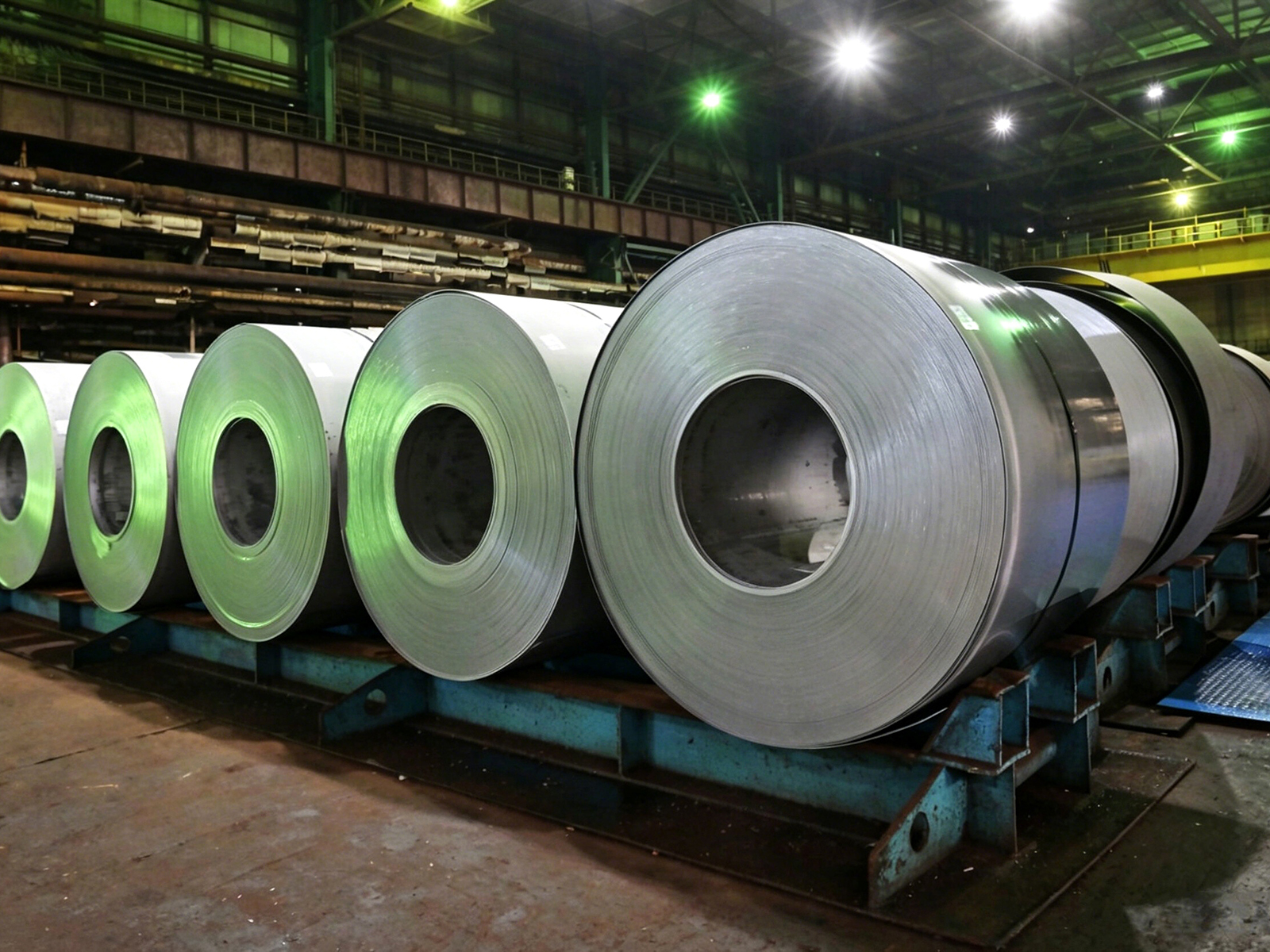
In the fields of aerospace, medical equipment and high-end electronics manufacturing, precision stamping parts must withstand complex forming processes while providing excellent strength and reliability during the service phase. Ti-10V-2Fe-3Al titanium foil, as a nearly β-type titanium alloy, perfectly solves this contradiction through its unique “separate control of formability and strength” characteristics. The material has excellent ductility in the solid solution state and can easily complete complex stamping, bending and other cold forming processes. After aging treatment, the strength can reach 1100-1300MPa, significantly surpassing the traditional Ti-6Al-4V alloy. With a low density of 4.65 g/cm³, excellent specific strength, and thickness accuracy of ± 0.001mm achieved by precision rolling process, Ti-10V-2Fe-3Al titanium foil is becoming a key material for high-end manufacturing to break through performance bottlenecks.
1. Why Is Ti-10V-2Fe-3Al the First Choice for Stamping Among Near-beta Titanium Alloys?
(1) Why Is Unique Phase Structure Imparts Performance Advantages and Age Enhancement Important?
Ti-10V-2Fe-3Al titanium foil is a nearly β-type titanium alloy. Its microstructure is dominated by β phase with a small amount of α phase precipitated. This phase structure gives the material excellent plasticity in the solid solution state (ST), with a room temperature elongation of up to 15-25%, making it very suitable for multi-pass stamping and deep drawing. Compared with α+β alloys such as Gr5 (Ti-6Al-4V), Ti-10V-2Fe-3Al has a β-phase stabilizing element vanadium content as high as 9.0-11.0%, which significantly reduces the phase transformation temperature, making it less likely to cause cracks or excessive springback during cold forming.
After solution treatment, the material can be stamped at relatively low temperatures. Subsequently, through aging treatment at 480-540℃, the fine α phase is uniformly precipitated from the β matrix, forming a dispersion strengthening effect. This process increases the yield strength from 700-850MPa in solid solution state to 1100-1300MPa (STA state), and the tensile strength simultaneously increases to 1150-1350MPa. This path of “forming first and then strengthening” completely changes the dilemma of traditional high-strength materials “the harder they are to process, the higher their strength”.
(2) What Are the Differences in Key Differences Compared to Traditional Materials?
Material type | Density (g/cm³) | Solid solution yield strength (MPa) | Yield strength after aging (MPa) | Cold forming properties | Main limitations |
Ti-10V-2Fe-3Al | 4.62 | 700-850 | 1100-1300 | Excellent | higher cost |
Ti-6Al-4V (Gr5) | 4.43 | 830-950 | 900-1050 | medium | Cold forming is difficult |
17-7PH stainless steel | 7.80 | 1100-1350 | 1400-1600 | good | Too much weight |
Aluminum alloy 7075-T6 | 2.81 | 460-510 | 460-510 | limited | Insufficient strength (compared to titanium alloys) |
> Note: 7075-T6 is in an age-strengthened state, and its solid solution strength data are not listed separately; this alloy can be subjected to limited cold forming under specific conditions.
2. What Should You Know About a Technological Breakthrough for Stable Mass Production of Ultra-thin and Wide Widths?
(1) What Should You Know About 20-roll Finishing Rolling Process Overcomes the Problem of Soft Rolling?
When producing 0.03-0.8mm ultra-thin titanium foil, the near-beta alloy has high plasticity in the solid solution state, and problems such as plate wavy, thickness deviation and edge cracking are prone to occur during the multi-pass cold rolling process (the core challenge of “soft rolling”). We use the Italian Danieli 20-high Sendzimir rolling mill to evenly distribute the rolling pressure to extremely thin materials through precise regulation of the intermediate rollers and support rollers. Cooperating with the real-time thickness detection system, the rolling parameters are dynamically adjusted to finally achieve a thickness tolerance of ± 0.001mm. This accuracy is more than 5 times that of ordinary 4-high rolling mills.
(2) What Should You Know About Continuous Vacuum Annealing Ensures Structural Uniformity?
There are a large number of dislocations and residual stress inside the cold-rolled titanium foil, and ductility must be restored by annealing. The temperature distribution of traditional box annealing furnaces is uneven, which can easily lead to local performance fluctuations. The continuous vacuum annealing furnace we introduced accurately controls the temperature at 780-820℃ under a vacuum of 10⁻³Pa (close to but not exceeding the β phase transformation point to avoid grain coarsening), ensuring that the β phase grain size difference in each part of the foil is less than 5%. Ultrasonic cleaning and argon gas protection completely eliminate surface oxidation pollution, making the surface roughness Ra≤ 0.4um, meeting the requirements of subsequent coating and bonding processes.
(3) What Should You Know About Industrialization Capability with a Maximum Width of 670mm?
Specifications | Numeric range | Process guarantee |
Thickness (mm) | 0.03 – 0.8 | ± 0.001mm accuracy |
Width (mm) | 350 – 670 | Edge quality ≥ 95% of central area |
Length (m) | Customizable | The whole roll without joints |
Flatness (I unit) | ≤ 8 | Laser smoothing + tension control |
Annual production capacity (tons) | 3000 | Automated production line |
The difficulty in wide-width titanium foil production lies in edge quality control. The “segmented tension + laser smoothing” composite technology we developed controls the micro-area stress of the full-width foil before slitting, so that the performance difference between the edge and the center area of the 670mm wide foil is less than 5%. This breakthrough makes possible applications such as large-area electromagnetic shielding covers and composite prepreg layers, and a single batch can provide a full roll of continuous foil of more than 500 meters.
3. Why Is Performance Verification in Complex Forming Applications Important?
(1) What Should You Know About Stamping Practice of Aviation Thin-walled Structural Parts?
The titanium alloy door frame of a commercial aircraft requires the material to be able to complete a small radius bending of R/t=2.5 and to withstand a cyclic stress of 400MPa during service. Using 0.5mm thick Ti-10V-2Fe-3Al foil, complex profiles can be completed in one step through hydroforming in a solid solution state without cracking or springback defects. Then the whole body is aged at 520℃ for 8 hours. The longitudinal tensile strength of the finished product reaches 1180MPa. The fatigue life exceeds 10⁷ cycles under the condition of stress ratio R=0.1. Compared with the Gr5 material, the weight is reduced by 12% and the processing cost is reduced by 30%.
(2) What Should You Know About High Consistency Requirements for Electronic Shielding Covers?
The 5G base station radio frequency module requires that the thickness uniformity of the shielding cover is better than ± 3%, and there must be no scratches or pinholes on the surface. The 0.08mm ultra-thin Ti-10V-2Fe-3Al foil we supply has undergone precise slitting and surface inspection, and its shielding efficiency reaches over 80dB. The non-magnetic properties of the material (magnetic permeability μr≤ 1.003) avoid signal interference, and the excellent corrosion resistance allows it to serve in high-humidity environments for 10 years without performance degradation. Batch stability testing shows that the standard deviation of the mechanical properties of 20 consecutive rolls of products is less than 2%.
(3) What Should You Know About Biocompatible Processing of Medical Implants?
The porous scaffold for orthopedic implants needs to be formed by photochemical etching or laser micromachining, and the material must not precipitate harmful phases during the processing. The Fe and Al element contents in Ti-10V-2Fe-3Al are precisely controlled (Fe 1.5-2.5%, Al 2.0-3.5%) to avoid the formation of intermetallic compounds during high-temperature processing. After laser micro-hole processing, the 0.2mm foil has no recast layer or micro-cracks on the surface, and the hole diameter accuracy is ± 5um, fully meeting the ISO 5832-11 biocompatibility standard. The high strength after aging treatment increases the safety margin of the implant by 40% when bearing body weight load.
4. What Should You Know About Whole Process Quality Assurance System?
(1) What Should You Know About Precise Batch Control of Chemical Composition?
The properties of titanium alloys are extremely sensitive to composition fluctuations. For every 0.5% deviation in V content, the aging strength can change by 50MPa. We use an ICP-OES spectrometer to conduct a full analysis of 25 elements on each batch of titanium ingots, and the V, Fe, and Al content accuracy reaches ± 0.05%. The oxygen content is strictly controlled at ≤ 0.18% (standard is ≤ 0.20%), and the hydrogen content is ≤ 0.012% (standard is ≤ 0.015%). This strict control makes the material’s heat treatment responsiveness highly predictable, allowing customers to stably reproduce target properties based on our process window parameters.
(2) What Should You Know About Multi-dimensional Mechanical Property Verification (including Surface and Non-destructive Testing)?
test items | Standard requirements | Actual measurement range (vertical) | Actual measurement range (horizontal) | Test method |
Tensile strength (STA state) | ≥ 1100 MPa | 1120-1280 MPa | 1100-1250 MPa | ASTM E8 Tensile Test |
Yield strength (STA state) | ≥ 1050MPa | 1080-1260 MPa | 1050-1220 MPa | 0.2% bias method |
Elongation (ST state) | ≥ 15% | 18-26% | 16-24% | Gauge length 50mm |
Fatigue strength (10⁷ times, R=0.1) | ≥ 600MPa | 650-720 MPa | 620-700 MPa | rotational bending |
Fracture toughness (KIC) | ≥ 60 MPa·m^0.5 | 65-80 MPa·m^0.5 | 62-78 MPa·m^0.5 | Compact tensile specimen |
Each roll of foil comes with a complete material report, including tensile curves, microstructure photos, and ultrasonic flaw detection reports. For aerospace customers, a full set of certification documents in compliance with AMS 4983/AMS 4998 can be provided, including heat treatment curve records, batch traceability codes and third-party testing certificates.
A high-resolution optical scanning system is used to detect the entire surface of the foil and can identify scratches, pinholes and inclusions ≥ 0.05mm. Ultrasonic flaw detection (frequency 10MHz) detects internal defects with a depth of ≥ 0.02mm. For key batches, eddy current testing and fluorescence penetration are used to ensure that the surface defect rate is less than 0.1/m². This strict testing reduces the scrap rate of materials during the stamping process to less than 0.3%, which is far lower than the industry average of 2-5%.
5. What Should You Know About Customized Supply and Technical Support Services?
(1) What Should You Know About Multi-state Supply Meets Differentiated Needs?
We provide three standard states: solid solution state (ST) is suitable for customers who require a large amount of cold working, with elongation ≥ 20%; solid solution aging state (STA) directly meets high strength requirements without secondary heat treatment; annealed state (M) is used for special forming processes, with a hardness HV ≤ 280. For OEM customers, Ti-10V-2Fe-3Al titanium foil can be customized with a special aging system, such as double-stage aging (480℃×4h + 520℃×4h) to achieve a balance between strength and toughness. The coiled material can be slit, cross-cut or punched according to customer requirements, and the tolerance accuracy reaches ISO 2768-f level.
(2) What Should You Know About Process Parameter Database Sharing?
Based on the accumulation of 3, 000 tons of annual production capacity, we have established a forming process database covering 12 thicknesses and 8 widths. After the customer provides the part drawings, our technical team can provide the recommended blank size, stamping speed, lubrication scheme and aging parameters within 48 hours. A German auto parts company used our parameter package to shorten the trial production cycle of a complex bracket from 6 weeks to 10 days, and the one-time forming pass rate increased to 92%.
(3) What Should You Know About Rapidly Responsive Global Logistics Network?
Regular inventory covers three mainstream thicknesses of 0.1mm, 0.2mm, and 0.5mm, and ST foil materials with widths of 450mm and 600mm, and can be shipped within 72 hours. For North American aviation customers, we set up a front-end warehouse in Los Angeles and complete replenishment within 2 weeks; the European market is distributed through the Port of Hamburg and delivered within 10 working days. Supports VMI (Vendor Managed Inventory) mode to automatically trigger replenishment according to customer production plans to ensure zero waiting on the production line. Special line production can be started for urgent orders, and customized specifications can be delivered within 15 days at the earliest.
6. What Is the Conclusion?
Ti-10V-2Fe-3Al titanium foil achieves decoupled control of formability and strength through a near-β phase structure. Coupled with ultra-thin wide-width stable mass production technology and a full-process quality assurance system, it provides a reliable path to break through the performance bottleneck of traditional materials for the fields of aerospace, medical equipment, and high-end electronics manufacturing. Its excellent specific strength, precise thickness tolerance and flexible supply status simultaneously improve the design freedom and reliability of complex precision stamping parts.
FAQ
Q1: What are the essential differences in stamping performance between Ti-10V-2Fe-3Al titanium foil and Ti-6Al-4V?
Ti-10V-2Fe-3Al is a nearly β-type alloy. The β phase accounts for more than 90% in the solid solution state. The elongation can reach 20-25% during cold forming, and it can complete small radius bending and deep drawing. Ti-6Al-4V is an α+β type, with low room temperature plasticity and easy cracking during stamping. It usually needs to be heated for forming.
Q2: Will the size of the material change after aging treatment?
During the aging process at 480-540℃, the linear expansion rate of the material is about 0.15-0.25%, and the dimensional shrinkage after cooling is 0.08-0.12%. We recommend leaving a 0.3% dimensional margin when stamping, or performing precise calibration after aging to control the final dimensional accuracy to ± 0.05mm.
Q3: Can ultra-thin foil (0.03-0.1mm) withstand multiple bends?
The 0.05mm foil in the solid solution state can withstand more than 10 repeated bends without breaking when the bending radius R ≥ 0.5mm. Although the strength increases after aging, the elongation drops to 8-12%. It is recommended that the key bending areas adopt a differentiated treatment process that locally maintains the solid solution state.
What Should You Know About Contact Us?
Baoji Titanium Nickel Zirconium Materials Processing Co., Ltd. is a professional manufacturer and supplier of Ti-10V-2Fe-3Al Titanium Foil, with an annual production capacity of 3, 000 tons, and provides full-specification customization and technical support services. Welcome to inquire: sales@titaniumvalleys.com
References
- Zhang Xiaoming, Zhao Yongqing, Li Xingwu. Titanium Alloy Materials Handbook. Beijing: Chemical Industry Press, 2005.
- Liu Kun, Wang Dongsheng. Titanium Alloy Engineering and Application. Beijing: Science Press, 2012.
- Huang Boyun, Li Chenggong, Shi Likai. Titanium Alloy Technology Guide. Beijing: Metallurgical Industry Press, 2008.
- Li Zhiguang, Chen Changrong. Titanium alloys and titanium-based composite materials for aerospace. Beijing: National Defense Industry Press, 2010.