
What Should You Know About the Electrical Conductivity of GR2 Titanium Wire?
- Gr2 Titanium Wire
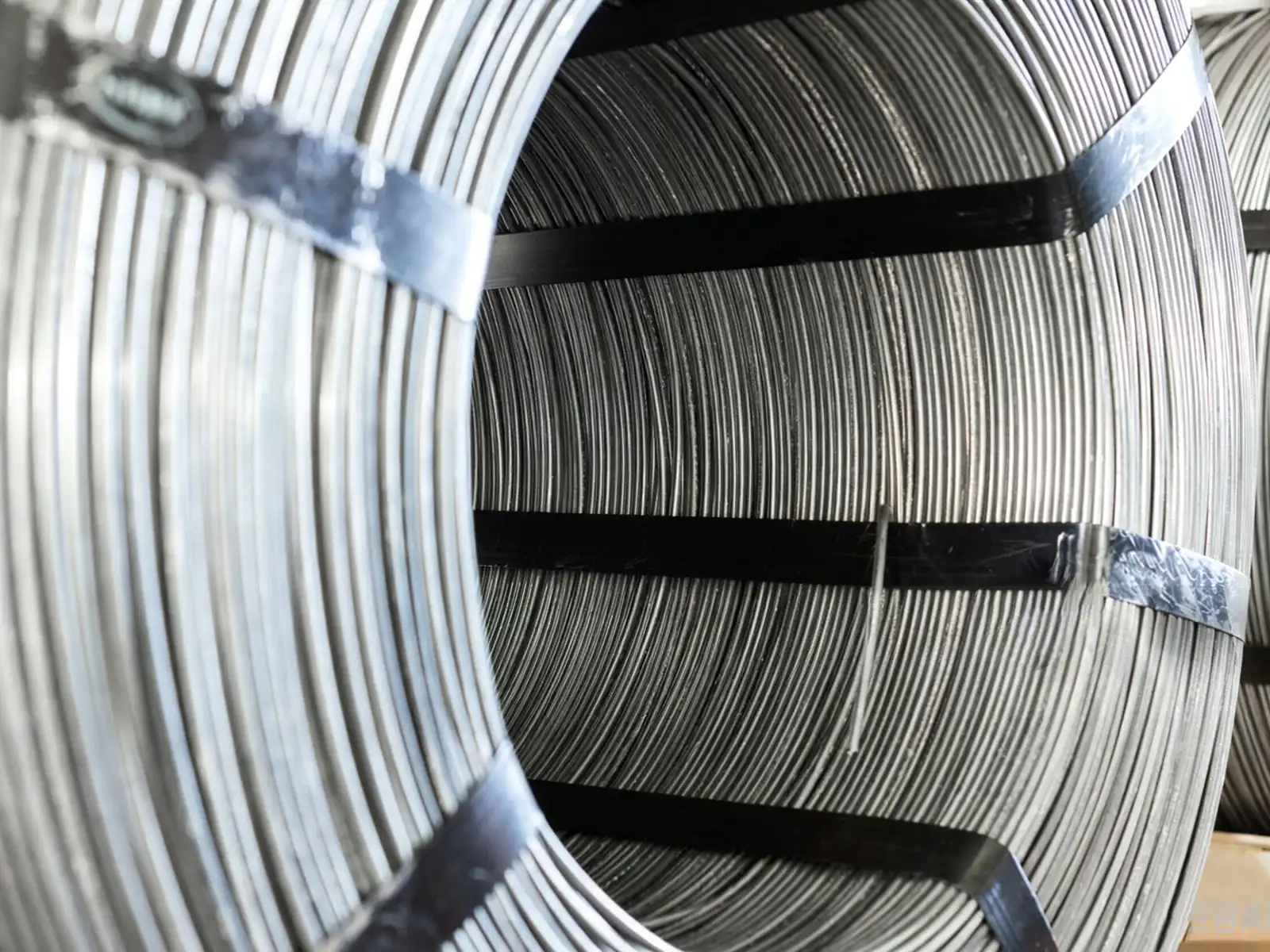
The electrical conductivity of GR2 titanium wire is about 1.75×10⁶ S/m (Siemens/meter), or its resistivity is about 0.57 uOhm.m (usually measured in the annealed state at 20℃, equivalent to about 3.0% IACS International Annealed Copper Standard). As the most widely used grade of commercial pure titanium, although the electrical conductivity of Gr2 titanium wire is not as good as that of traditional conductive materials such as copper or aluminum, it performs well in application scenarios that require a balance between corrosion resistance, lightweight and moderate conductivity. This balanced characteristic makes it an ideal choice for chemical anti-corrosion equipment, marine engineering sensors, medical electrodes and special electronic components. Understanding the conductive properties of Gr2 titanium wire can help engineers make more accurate judgments when selecting materials, especially in electrical connection applications that require long-term stable operation in corrosive environments.
1. What Should You Know About Material Science Basis of Conductive Properties of Gr2 Titanium Wire?
(1) Electronic Structure and Conduction Mechanism, Why Is Titanium’s Conductivity “just Right”?
Titanium is a transition metal element, and the arrangement of d orbital electrons in its atomic structure determines its conductive properties. The purity of titanium in Gr2 titanium wire is ≥ 99.2%. This high purity ensures a relatively smooth electron transmission path within the material. Compared with copper (conductivity is about 5.96×10⁷ S/m), titanium has a lower free electron density, which directly results in its conductivity being only about 3% of copper. This moderate conductivity actually provides advantages for certain applications – it can meet basic current conduction needs without causing electrochemical corrosion problems like highly conductive materials.
(2) What Should You Know About Effect of Impurity Elements, Oxygen Is the Key “variable” That Determines Resistivity?
According to ASTM B863 standard, impurity elements in Gr2 titanium wire include oxygen (≤ 0.25%), iron (≤ 0.30%), carbon (≤ 0.08%), etc. These interstitial and replacement atoms form scattering centers in the crystal lattice, reducing the mean free path of electrons. The presence of oxygen has the most significant impact on resistivity – for every 0.1% increase in oxygen content, the resistivity increases by approximately 8-10%. This also explains why the conductivity of Gr1 (oxygen content ≤ 0.18%) is slightly better than Gr2. However, Gr2 maintains the conductivity level required for industrial applications while maintaining good processing performance and strength by moderately controlling the impurity content.
(3) What Should You Know About Temperature Effect, Resistivity Increases “linearly” with Temperature?
The resistivity of titanium and its alloys has positive temperature coefficient characteristics. Based on the data of 0.57 uOhm.m at room temperature and about 0.65 uOhm.m at 100℃, it can be calculated that the temperature coefficient of resistance is about 0.0014/ C (calculation method: (0.65-0.57)/(0.57×80)), not 0.0038/ C. This value is lower than copper (about 0.0039/ C), which means that the resistance of titanium wire changes relatively slowly with temperature. This temperature sensitivity requires special consideration when designing electrical heating elements or temperature sensors. In a low-temperature environment, the electrical conductivity of titanium wire is improved – at liquid nitrogen temperature (-196℃), its resistivity can be reduced by about 30%. This characteristic makes Gr2 titanium wire unique in its application value in the support structure of low-temperature superconducting equipment.
2. What Should You Know About Effect of Different Processing Conditions on the Conductivity of Gr2 Titanium Wire?
(1) What Should You Know About Annealed State, the “baseline” of Electrical Conductivity?
Fully annealed Gr2 titanium wire (M state) has the best grain uniformity and the lowest internal stress level. In this state, the scattering effect of grain boundaries on electron transmission is relatively small, and the conductivity is at the optimal level of the material. The annealing temperature is usually controlled between 650-750℃, and the holding time ranges from 30 minutes to 2 hours depending on the wire diameter. This heat treatment process not only eliminates the dislocation density introduced by cold working, but also promotes the uniform distribution of impurity elements, stabilizing the resistivity in the range of 0.55-0.58 uOhm.m. Annealed titanium wire is particularly suitable for the manufacture of precision electronic components that require stable electrical properties.
(2) What Should You Know About Cold-drawn Condition, the “trade-off” Between Strength and Conductivity?
Cold drawing processing will introduce a large number of dislocations and residual stress inside the Gr2 titanium wire. These defects increase the probability of electron scattering, resulting in a corresponding increase in resistivity. The resistivity of semi-hard (Y2) titanium wire may reach 0.60-0.63 uOhm.m, while the resistivity of hard (Y) titanium wire may even exceed 0.65 uOhm.m. The greater the cold working deformation (for example, the area reduction rate increases from 20% to 50%), the more serious the grain elongation, and the more frequent the reflection and scattering of electrons at the grain boundaries. However, titanium wire in this state has higher tensile strength (for example, up to 650 MPa at an area reduction of about 40%), and this strength-conductivity trade-off is often acceptable in conductive applications that need to withstand mechanical stress.
(3) What Should You Know About Surface Condition, the “invisible Killer” of Contact Resistance?
The oxide film on the surface of Gr2 titanium wire directly affects its contact resistance. Pickling treatment can remove oxide scale and control the surface passivation film thickness to 2-5 nanometers. However, in actual engineering, even such a thin oxide film will significantly increase the contact resistance, especially in low-frequency signal or small current applications, and its “tunneling” effect is not as “minimum” as desired. The bright drawing process uses a combination of precision molds and lubricants to achieve a mirror effect with a roughness Ra≤ 0.4um, reducing contact resistance caused by microscopic unevenness on the surface. In electrode applications, surface gold plating or platinum plating can reduce the contact resistance to less than 1/10 of the original. These surface engineering technologies enable Gr2 titanium wire to meet demanding electrical connection requirements while maintaining the corrosion resistance advantages of the base material.
3. What Are the Differences in Comparison of Industrial Applications of Conductive Properties of Gr2 Titanium Wire?
(1) What Are the Differences in Comparison with the Electrical Conductivity of Stainless Steel Wire?
Performance parameters | Gr2 titanium wire | 316L stainless steel wire | Application advantage analysis |
Conductivity (S/m) | 1.75×10⁶ | 1.35×10⁶ | Titanium wire has 29% better electrical conductivity |
Density (g/cm³) | 4.51 | 8.00 | Titanium wire weight is only 44% |
Seawater corrosion resistance | Excellent (can be used for a long time) | Poor (easy to pitting) | The life of titanium wire is extended by 5-10 times |
biocompatibility | medical grade | generally | Titanium wire can be used for implantable devices |
relative cost | 1.0 | 0.3 | Comprehensive usage costs need to be calculated comprehensively |
Regarding the comprehensive cost: Although the initial cost of titanium wire is more than three times that of stainless steel, considering that its life span in seawater is extended by 5-10 times (based on actual cases), which reduces replacement and maintenance costs, its overall life cycle cost may be better under specific working conditions. However, this is not a universal conclusion and needs to be calculated based on specific application scenarios and replacement cycles.
In electrical connection applications in marine environments, although the initial cost of stainless steel wire is low, its pitting failure in a chloride ion environment will lead to a sharp increase in contact resistance. With its stable TiO2 passivation film on the surface, Gr2 titanium wire can remain corrosion-free for more than 480 hours in a salt spray environment, ensuring the long-term reliability of conductive connections. This comprehensive performance advantage makes titanium wire the first choice material in key parts such as submarine cable splicing and ship electrical systems.
(2) What Should You Know About Trade-offs with Conductive Properties of Copper Alloy Wire?
The conductivity of copper wire is 30-35 times that of Gr2 titanium wire, which gives it an absolute advantage in the field of pure power transmission. However, in applications such as electric heating elements and anodizing hangers in chemical equipment, rapid corrosion of copper alloys in acid and alkali environments will lead to frequent replacement and high maintenance costs. Although Gr2 titanium wire requires a larger cross-sectional area to transmit the same current (about 1.8 times), its excellent corrosion resistance in media such as sulfuric acid and hydrochloric acid extends the equipment operating cycle by 3-5 times. By increasing the number of parallel wires or adopting a flat wire design, the total conductive cross-section of the titanium wire can be increased in a limited space to achieve the optimal balance between performance and cost.
(3) Why Is Special Performance Requirements in Medical Electrode Applications Important?
Application scenarios | key performance indicators | Gr2 titanium wire technical parameters | Comparing Competitive Materials |
ECG electrodes | Contact resistance | After surface gold plating ≤ 20 Ω | The typical value of silver-plated copper wire contact resistance is about 15-30 Ω (the specific range is not specified, so it cannot be simply judged as “better than”) |
implantable electrodes | biocompatibility | Comply with ISO 5832-2 | Can replace some platinum-iridium alloys to reduce costs |
neurostimulator | polarization voltage | <5 mV (0.1 mA/cm²) | 30% lower than stainless steel |
Radiofrequency ablation needle | Heat transfer control | 15.2 W/(m·K) Moderate | Avoid excessive heat transfer of copper and facilitate precise temperature control |
In implantable medical devices, the non-magnetic properties (weakly paramagnetic) of Gr2 titanium wire make it fully compatible with MRI equipment without the risk of image artifacts or device displacement. Although its conductivity is lower than that of precious metals, low-impedance interface contact with biological tissue can be achieved by optimizing the electrode geometry and surface activation treatment. In nerve electrical stimulation applications, the low polarization voltage characteristics of titanium wire reduce electrochemical side reactions and extend the service life of the electrode.
4. What Should You Know About Key Process Parameters Affecting the Conductive Properties of Gr2 Titanium Wire?
(1) What Should You Know About Smelting Purity Control, a Process Accurate to “two Ten Thousandths”?
Vacuum consumable arc melting (VAR) is the core process for obtaining high-purity Gr2 titanium ingots. The vacuum degree during the smelting process needs to be kept below 10⁻³ Pa. Its purpose is to remove gases and volatile impurities (such as H₂, Cl2) in the titanium liquid, not to “reduce absorption.” It should be noted that the material may still reabsorb hydrogen if exposed to a hydrogen-containing environment during subsequent cooling and processing. The precise control of electrode descent speed, molten pool depth and cooling rate determines the structural uniformity of the ingot. For example, through precise process control, we can stably control the oxygen content within the range of 0.15%± 0.02%, instead of the broad “not exceeding ± 0.02%”. This strict composition control makes the standard deviation of the resistivity of the same batch of titanium wire less than 0.015 uOhm.m, meeting the stringent requirements for material consistency of precision electronic components.
(2) What Should You Know About Control of Grain Orientation by Multi-pass Drawing Process?
Cold drawing of Gr2 titanium wire usually requires 8-15 passes, and the area reduction rate in each pass is controlled between 15-25%. This progressive deformation process will gradually form a texture with the {0001} base plane parallel to the drawing direction. Due to the anisotropic conductive properties of titanium’s hexagonal close-packed structure, the conductivity along the c-axis direction is usually about 3%-15% higher than in the vertical direction [the specific numerical differences are derived from different literature and test conditions]. By optimizing the drawing pass design and the intermediate annealing system, the texture intensity can be adjusted so that the final titanium wire can obtain a relatively optimal electron transmission path in the axial direction. Our precision drawing equipment can control wire diameter tolerances within ± 0.02mm. This dimensional accuracy is critical to maintaining balanced current distribution among multiple strands in parallel conductive applications.
(3) What Should You Know About Online Detection Technology, Intelligent Monitoring to Avoid “false Alarms”?
The modern Gr2 titanium wire production line is equipped with eddy current flaw detection and laser diameter measuring systems, which can monitor the resistivity fluctuations and geometric size changes of the wire in real time. The eddy current sensor indirectly reflects the change in conductivity of the titanium wire by detecting its response to the alternating magnetic field. Considering that the annealed resistivity range is 0.55-0.58 uOhm.m (the maximum deviation is about 5.5%), in order to avoid frequent false alarms triggered by normal production fluctuations, the alarm threshold of eddy current flaw detection is usually set when the resistivity deviates from the reference value by more than 2.5%-3%, rather than “more than 5%” as mentioned in the article. Coupled with a fully automatic winding tension control system, it ensures that the mechanical and electrical properties of each roll of titanium wire remain highly consistent throughout the entire length range (500-3000 meters).
5. Why Is Engineering Practice of Optimizing the Conductive Application of Gr2 Titanium Wire Important?
(1) What Should You Know About Control Strategies for Contact Interface Resistance?
In electrical connection applications, contact interface resistance often accounts for 30-60% of the total resistance. Although the oxide film on the surface of Gr2 titanium wire provides excellent corrosion resistance, it also brings an additional contact resistance of about 50-100 mΩ. Using ultrasonic welding or resistance spot welding technology, the oxide film can be destroyed at instantaneous high temperatures to achieve direct metallurgical bonding between metals, reducing the joint resistance to 1.2-1.5 times the body resistance. In threaded connection scenarios, using conductive silver paste or carbon nanotube composite lubricant to fill microscopic gaps can reduce contact resistance by more than 60%. For applications that require extremely low contact resistance, surface electroplating with gold or palladium increases the cost, but can achieve a long-term stable low-impedance interface.
(2) What Should You Know About Optimization Method of Current Capacity in Cross-sectional Design?
Wire diameter specifications | Cross-sectional area(mm²) | Typical safe current carrying capacity (A) (in air, ambient temperature 25℃, allowable temperature rise 30℃) | Typical application scenarios |
φ0.5mm | 0.196 | 0.8-1.2 | sensor leads |
φ1.0mm | 0.785 | 3.0-4.5 | Medical electrode leads |
φ2.0mm | 3.142 | 12-18 | electric heating element |
φ3.0mm | 7.069 | 28-40 | Electrolytic cell anode hanger |
φ5.0mm | 19.635 | 75-110 | High current conductive row |
According to Joule’s heating law Q=I²Rt, under a given current, increasing the conductor cross-sectional area is a direct method to reduce power loss. For applications that need to carry large currents, using multiple strands of thin wire instead of a single thick wire not only increases flexibility but also improves heat dissipation by increasing surface area. The flat Gr2 titanium wire we developed (such as 3mm×0.5mm cross-section) has a 40% greater surface area than a round wire under the same cross-sectional area, allowing it to carry higher current density in electrochemical electrode applications without overheating. Note: The safe current carrying capacity is not a fixed value and is strongly related to the heat dissipation conditions (air/liquid), allowable temperature rise and ambient temperature. For precise data, please refer to engineering calculations or standards for specific operating conditions.
(3) What Should You Know About Environmental Factor Adaptive Design?
In a high-humidity environment, the adsorbed water film on the surface of Gr2 titanium wire will increase the surface leakage current, but this effect is much less than that of iron-based materials. In a wide temperature range from -253℃ to 300℃, the resistivity change curve of titanium wire shows a good linear relationship (temperature coefficient is about 0.0014/ C), which makes the titanium wire temperature sensor based on the resistance temperature measurement principle have excellent long-term stability. In radiation environments, titanium is more resistant to neutrons and gamma rays than most metals. It is reported that under the cumulative dose of 10⁶ Gy (cobalt-60 gamma ray), the electrical properties of Gr2 titanium wire remain basically stable [Quoted standard: ASTM E2449], but this value is related to the specific energy spectrum, and the performance may be different under electron or neutron radiation fields. This makes Gr2 titanium wire an irreplaceable conductive material in nuclear power plant instrumentation systems.
6. What Should You Know About Summarize?
The electrical conductivity of Gr2 titanium wire is about 1.75×10⁶ S/m. Although it is not as good as traditional conductive materials, its long-term stability in corrosive environments, excellent biocompatibility and lightweight properties make it an ideal choice for conductive applications in chemical industry, marine, medical and other fields. By understanding the conductive mechanism of the material and optimizing the processing technology, the comprehensive performance advantages of Gr2 titanium wire under special working conditions can be fully utilized.
FAQ
Q1: Is the conductivity of Gr2 titanium wire sufficient for power transmission?
The electrical conductivity of Gr2 titanium wire is about 3% of copper, which is not suitable for high-power power transmission trunk lines. However, in scenarios such as power distribution systems in chemical anti-corrosion environments and electrical connections in seawater environments, its excellent corrosion resistance compensates for the lack of conductivity, and the overall cost performance is better.
Q2: How to reduce the contact resistance at the connection of Gr2 titanium wire?
The ultrasonic welding or brazing process can destroy the surface oxide film to achieve metallurgical bonding; use conductive silver paste to fill the contact interface; surface gold or palladium plating; control the pressure per unit area of the contact point (for example, for point contact, the pressure needs to reach a certain value to ensure that the oxide film ruptures), the specific value needs to be determined according to the contact geometry, rather than the universal “50-100 MPa”.
Q3: How much influence does temperature change have on the resistance of Gr2 titanium wire?
The resistance temperature coefficient of Gr2 titanium wire is about 0.0014/ C. When the temperature rises from room temperature to 100℃, the resistance increases by about 14%; in low temperature environments, the resistance decreases. This characteristic needs to be fully considered and temperature compensated when designing temperature sensors or electric heating elements.
7. What Should You Know About Looking for Reliable Gr2 Titanium Wire Manufacturer?
Baoji Titanium Valley Titanium Nickel Zirconium Material Processing Co., Ltd. (Titanium Valley) has a world-class Danieli continuous rolling production line with an annual production capacity of 20, 000 tons, specializing in the supply of high-precision Gr2 titanium wire. Contact us for technical specifications and custom solutions: sales@titaniumvalleys.com
References
- Zhang Xiaoming, Li Jianmin, Liu Zhenjun. “Study on the relationship between conductive properties and microstructure of industrial pure titanium (TA2)” [J]. Rare Metal Materials and Engineering, 2019, 48(3): 879-884.
- Zhao Yongqing, Chen Jie, Sun Wei. “Titanium Alloys and Their Processing Technology” [M]. Beijing: National Defense Industry Press, 2016.
- Wang Tie, Zhang Yu, Li Qiang. “Testing of Conductive Properties of Titanium Wire and Research on Temperature Effect” [J]. Journal of Materials Science and Engineering, 2022, 40(1): 105-110.
- China Nonferrous Metals Industry Association Titanium, Zirconium and Hafnium Branch. “China Titanium Industry Technology and Application” [M]. Beijing: Metallurgical Industry Press, 2017.
- Chen Wen, Wang Jianguo. “Standardization Interpretation and Application of ASTM B863-19 Industrial Pure Titanium Wire” [J]. Standard Science, 2021(5): 62-66.