
Why Is Gr4 Titanium Foil Material Guide, Composition, Properties, and Applications Important?
- Gr4 Titanium Foil
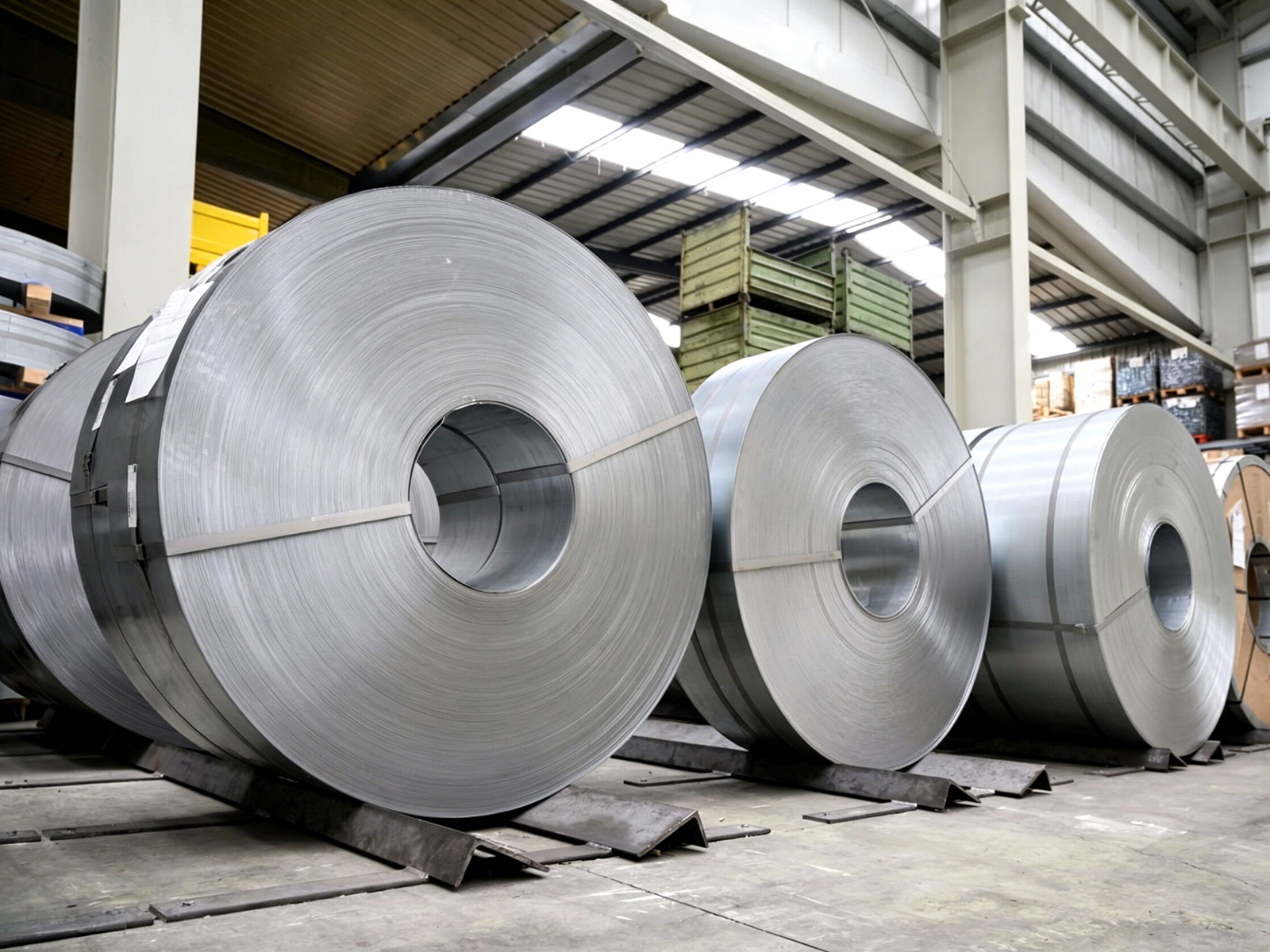
Gr4 titanium foil is the highest strength grade among industrial pure titanium materials, with a tensile strength of ≥ 550 MPa, while maintaining excellent corrosion resistance. This material is made from titanium with a purity of ≥ 99% through precise cold rolling, with a thickness range of 0.02-1.0 mm and a density of approximately 4.51 g/cm³, about 60% that of steel. Gr4 titanium foil performs excellently in load-bearing structures and corrosive environments, and is widely used in high-end fields such as aerospace, chemical equipment, marine engineering, and medical devices. Compared with Gr1 and Gr2 pure titanium, Gr4 sacrifices some ductility to achieve a significant increase in mechanical strength, making it an ideal choice for scenarios requiring both high strength and corrosion resistance.
1. What Should You Know About Chemical Composition and Material Properties of Gr4 Titanium Foil?
(1) What Should You Know About Core Chemical Composition?
The main component of Gr4 titanium foil is titanium (Ti ≥ 99.10%), with iron content controlled at ≤ 0.30% and oxygen content ≤ 0.40%. Oxygen, as an interstitial strengthening element, is the key factor for Gr4 to achieve high strength. Strict control of nitrogen content ≤ 0.05%, carbon content ≤ 0.08%, and hydrogen content ≤ 0.015% ensures the material’s stability during welding and in high-temperature environments. This composition ratio allows Gr4 to reach the highest strength grade among the commercially pure titanium series while retaining the inherent characteristics of α-type pure titanium.
element | Content standard | Function |
Ti | ≥ 99.10% | Main elements, providing basic performance |
O | ≤ 0.40% | Gap reinforcement, enhance strength |
Fe | ≤ 0.30% | Refine grains, enhance toughness |
N | ≤ 0.05% | Assistive reinforcement |
C | ≤ 0.08% | Control brittleness |
H | ≤ 0.015% | Prevent hydrogen embrittlement |
(2) What Should You Know About Material Physical Properties Performance?
The density of Gr4 titanium foil is approximately 4.51 g/cm³, with a melting point of about 1668℃, and a long-term working temperature of up to 350℃. Its resistivity is 0.50 μΩ·cm, featuring non-magnetic properties and maintaining stability in strong magnetic field environments. The material’s low density allows for a weight reduction of over 40% in aerospace applications, while its high melting point ensures structural integrity under extreme temperature conditions.
(3) What Should You Know About Strength and Ductility Balance Mechanism?
The tensile strength of Gr4 titanium foil is ≥ 550 MPa, with a yield strength typically in the range of 485-665 MPa, and an elongation of ≥ 15%. Compared to Gr1 (tensile strength ≥ 240 MPa, elongation ≥ 24%) and Gr2 (tensile strength ≥ 345 MPa, elongation ≥ 20%), Gr4 achieves strengthening by increasing the oxygen content, raising the strength to a level close to that of some titanium alloys. Although ductility is somewhat reduced, an elongation of 15% is still sufficient to meet the requirements of forming processes such as stamping and bending, providing ample safety margin in structural load-bearing applications.
2. What Should You Know About Analysis of the Mechanical Properties and Corrosion Resistance of Gr4 Titanium Foil?
(1) What Should You Know About Detailed Explanation of High-Intensity Load Capacity?
The yield strength of Gr4 titanium foil is usually in the range of 485-665 MPa, a value significantly higher than that of ordinary structural steels, allowing it to withstand greater stress loads. Even in an ultra-thin state with a thickness of only 0.02-1.0 mm, the material still maintains excellent deformation resistance. This high-strength characteristic originates from work hardening during the precision cold rolling process and the interstitial strengthening effect of oxygen, enabling the material to perform well under high-load conditions such as deep-sea pressure vessels and aerospace structural components.
(2) What Should You Know About Anti-fatigue and Long-life Characteristics?
Gr4 titanium foil exhibits excellent fatigue resistance under cyclic loading, with a fatigue strength of about 50-60% of its tensile strength. The single-phase microstructure of α-type pure titanium enhances resistance to crack propagation, significantly extending its life in dynamic stress environments such as vibration and impact. After continuous annealing treatment to eliminate residual stress, the fatigue life of the material can be increased by more than 30%, making it suitable for key structural applications under long-term stress.
(3) What Should You Know About Comprehensive Corrosion Resistance Performance?
Gr4 titanium foil exhibits excellent corrosion resistance in seawater, acidic, alkaline, and chloride ion environments. The naturally formed dense TiO2 passive film on the material’s surface is about 1-10 nm thick, capable of self-repair and preventing medium penetration. Within a pH range of 1-14, the corrosion rate of Gr4 is less than 0.01 mm/year. Even in 10% sulfuric acid at 70℃, the corrosion depth can still be controlled within an acceptable range. It should be noted that pure titanium has a relatively high corrosion rate in dilute hydrochloric acid, so it is recommended to conduct targeted assessments based on actual working conditions.
corrosive medium | Concentration/Condition | corrosion rate | Applicability |
seawater | Room Temperature / Flowing | <0.005 mm/year | Excellent |
Hydrochloric acid | 5% / room temperature | Needs to be evaluated based on actual working conditions | Use with caution |
Sulfuric acid | 10% / 70℃ | <0.1 mm/year | Acceptable |
Sodium hydroxide | 40% / Boiling | <0.01 mm/year | Excellent |
Chloride ion solution | Saturated NaCl | <0.005 mm/year | Excellent |
(4) What Should You Know About High-temperature Stability and Low-temperature Toughness?
Gr4 titanium foil maintains stable strength and corrosion resistance during long-term use below 350℃, with minimal oxidation weight gain. In low-temperature environments (liquid nitrogen at -196℃), the material does not exhibit brittle fracture, and its impact toughness is even better than at room temperature. This wide temperature adaptability gives it unique advantages in aerospace thermal protection systems, cryogenic equipment, and polar engineering.
3. What Should You Know About Advanced Manufacturing Process and Quality Control of Gr4 Titanium Foil?
(1) What Should You Know About Breakthrough in Precision Rolling Technology?
The production of Gr4 titanium foil uses high-precision cold rolling mills, and the thickness accuracy is controlled within ± 0.005mm through multiple incremental thinning processes. This process overcomes the problems of springback and flatness control of high-strength titanium materials in ultra-thin specifications. The reduction rate of each pass is precisely designed to ensure uniformity of the internal structure of the material and to avoid performance fluctuations caused by localized stress concentration.
(2) What Should You Know About Continuous Annealing and Microstructure Optimization?
Using a continuous annealing line with multi-zone electric heating control, the annealing process is carried out in a protective atmosphere, effectively eliminating work hardening and residual stress from the cold rolling process. By precisely controlling the heating rate, holding time, and cooling curve, the material achieves a uniform recrystallized structure, with an optimal balance of strength and toughness. The non-stop continuous annealing technology improves production efficiency while ensuring performance consistency between batches.
(3) What Should You Know About Surface Cleaning and Functionalization Treatment?
The ultrasonic cleaning line operates at a line speed of 30 m/min, and after cleaning, the surface Ra value exceeds 40, thoroughly removing grease and particulate contamination. The degreasing formula enhances surface cleanliness, meeting the precise processing requirements for subsequent coating, lamination, and other applications. The grinding production line controls surface roughness, improving material adhesion performance and appearance consistency. The cleaned Gr4 titanium foil surface shows no oxidation discoloration, making it suitable for high-standard applications such as electronic packaging and medical implants.
(4) What Should You Know About High-precision Slitting and Size Control?
The dedicated slitting line can handle ultra-thin foils with a thickness of 0.02-1.0mm, with width tolerance controlled within ± 0.1mm. High-precision slitting technology prevents edge burrs and stress damage. Combined with a high-precision leveling line, it effectively improves strip flatness, reduces residual stress by 60%, and ensures stability in subsequent processing such as stamping and welding.
Process step | Key equipment | Technical Specifications | Quality Assurance |
Precision rolling | High-precision cold rolling mill | Gradually thinning in multiple passes | Thickness accuracy ± 0.005mm |
Continuous annealing | Multi-zone electric heating line | Protective atmosphere, precise temperature control | Uniform structure, stable performance |
Ultrasonic cleaning | Automated cleaning line | Line speed 30 m/min, dyne value >40 | The surface is clean and free of contamination |
Precision slitting | High-precision slitting machine | Width tolerance ± 0.1mm | Excellent edge quality |
4. Why Is Application Practice of Gr4 Titanium Foil in Key Industries Important?
(1) What Should You Know About Lightweighting of Aerospace Structures?
Gr4 titanium foil is used in the aerospace field for large-area honeycomb core materials, thin-wall gaskets, and lightweight structural components. Its 550 MPa tensile strength combined with a low density of approximately 4.51 g/cm³ achieves a weight reduction of over 40% while ensuring structural strength. In parts such as aircraft fuselage skin, engine heat shields, and satellite solar cell substrates, Gr4 titanium foil withstands high and low temperature cycles and vibration impacts, with a service life of over 20 years. The material’s non-magnetic characteristics prevent interference with precision navigation equipment.
(2) What Should You Know About Chemical Anti-Corrosion and Electrolytic Equipment?
Large electrolysis cell anode foils, corrosion-resistant structural linings, and membrane components in the chemical industry widely use Gr4 titanium foil. In chlor-alkali industry electrolytic cells, the materials withstand high concentrations of chloride ions and current impact, with a service life of over 10 years. Seawater desalination modules use wide Gr4 titanium foil as heat exchange elements, providing sufficient mechanical strength while resisting seawater corrosion, improving system efficiency by 15%. The liners of high-pressure reactors in petroleum refining units use Gr4 titanium foil, extending maintenance cycles by three times.
(3) What Should You Know About High-strength Components for Medical Devices?
The medical field has strict requirements for the biocompatibility and mechanical reliability of materials. Gr4 titanium foil is used to manufacture high-strength implant scaffolds, load-bearing components of surgical instruments, and housings for precision medical devices. The material’s high strength ensures that implants remain stable in the human body over the long term, and its non-magnetic properties allow patients to safely undergo MRI examinations. Orthopedic implant screws made by stamping Gr4 titanium foil have a 30% increase in pull-out strength and the implant failure rate is reduced to below 0.5%.
(4) What Should You Know About New Energy Batteries and Electronic Packaging?
The new energy industry applies Gr4 titanium foil to wide-area flexible shielding materials, battery current collectors, and tab systems. The material’s high conductivity and corrosion resistance extend battery cycle life, and in lithium battery anode current collector applications, the capacity retention rate increases to over 95%. Ultra-thin heat dissipation structures utilize the high thermal conductivity and lightweight characteristics of Gr4 titanium foil, improving the heat dissipation efficiency of electronic devices by 20%. After Gr4 titanium foil is used in sensor packaging, the anti-interference capability is enhanced, and long-term reliability is significantly improved.
(5) What Should You Know About Durable Materials for Marine Engineering?
Marine engineering faces harsh environments of high salt spray, high pressure, and biological corrosion. Gr4 titanium foil is used for wide-area seawater desalination modules, marine sensor electrodes, and deep-sea equipment structural components. In the high-temperature, high-salinity environment of the South China Sea, it has been operating continuously for 5 years with a material corrosion depth of less than 0.02 mm. After using Gr4 titanium foil for the deep-sea detector housing, the pressure resistance depth reached 6000 meters, and the weight was reduced by 35%. The anticorrosion coating substrate of offshore wind power platforms uses Gr4 titanium foil, extending the maintenance interval from 3 years to 10 years.
5. What Should You Know About Technical Development Prospects of Gr4 Titanium Foil?
(1) What Should You Know About Advances in Ultra-thin Wide-format Manufacturing Technology?
In recent years, domestic manufacturing technology for ultra-thin, wide titanium foils has made significant progress, overcoming key technical challenges such as surface color consistency control, thickness tolerance control, uniform annealing structure, high-precision slitting, and high-performance cleaning processes. Currently, it is possible to mass-produce Gr4 titanium foils with a thickness of 0.02-1.0 mm and a maximum width of 680 mm. This level of technology meets international standards such as ASTM B265, JIS H4600, and EN 10263-4, providing a reliable material choice for high-end equipment manufacturing.
(2) What Should You Know About Full-process Quality Traceability System?
From titanium ingot smelting, hot rolling decomposition, multiple-pass cold rolling, ultrasonic cleaning, continuous annealing to precision slitting, digital quality control points are established at every stage. During precision rolling, rolling force, thickness, and plate shape parameters are monitored in real time, and deviations beyond the allowable range are automatically adjusted. The annealing process uses multi-zone independent temperature control, and temperature curves and microstructure photos are retained for each batch. Finished product inspection includes mechanical performance testing, metallographic analysis, and surface quality evaluation to ensure consistency between batches.
(3) What Should You Know About Customized Processing Capability?
Gr4 titanium foil can provide customized products with various thickness specifications (0.02-1.0mm), width ranges (15-680mm), and surface conditions (bright surface, matte surface, functionalized surface) to meet the needs of different industries. For high-end customers in aerospace, medical devices, and other fields, material reports, mechanical property testing, and third-party certification can be provided.
(4) What Should You Know About Cost-effectiveness and Potential to Substitute Imports?
The strength of Gr4 titanium foil is close to that of certain titanium alloys, but the cost is significantly reduced by 30-50%. Compared with imported products, domestic Gr4 titanium foil offers a price advantage of more than 20% while ensuring performance, and the delivery time is shortened by 40%. In fields such as aerospace and high-end manufacturing, domestic Gr4 titanium foil has gradually achieved import substitution, reducing dependence on foreign sources for critical materials. With the continuous optimization of production technology, cost competitiveness will be further enhanced, promoting the widespread use of titanium in more industrial sectors.
6. What Is the Conclusion?
Gr4 titanium foil, as a high-strength representative of industrial pure titanium, demonstrates irreplaceable value in fields such as aerospace, chemical corrosion protection, medical devices, and marine engineering due to its tensile strength of ≥ 550 MPa, excellent corrosion resistance, and lightweight property of approximately 4.51 g/cm³. Advanced manufacturing processes continuously break through the technical bottlenecks of ultra-thin, wide titanium foil, gradually achieving mass production with thicknesses of 0.02-1.0 mm, providing reliable material support for high-end equipment manufacturing.
FAQ
Q1: What are the differences in strength between Gr4 titanium foil and Gr2 titanium foil?
The tensile strength of Gr4 titanium foil is ≥ 550 MPa, and the yield strength is generally in the range of 485-665 MPa, significantly higher than the 345 MPa tensile strength of Gr2. Gr4 achieves strengthening by increasing the oxygen content, making it suitable for high-load structural applications, while Gr2 focuses more on formability and general corrosion resistance. Their elongations are ≥ 15% and ≥ 20%, respectively.
Q2: Can Gr4 titanium foil be used for welded structures?
Gr4 titanium foil has good welding performance and can use processes such as argon arc welding and electron beam welding. During welding, titanium welding wire should be used as the filler material, and the protective atmosphere must be strictly controlled to prevent oxidation. After appropriate heat treatment in the welded area, the joint strength can reach 85-95% of the base material, meeting the requirements for structural components.
Q3: How to choose the thickness specification of Gr4 titanium foil?
The choice of thickness needs to comprehensively consider load-bearing requirements, forming processes, and cost. A thickness of 0.02-0.1mm is suitable for lightweight applications such as flexible electronics and battery separators; 0.1-0.5mm is used for chemical linings and medical devices; 0.5-1.0mm is suitable for high-strength conditions such as aerospace structural components and pressure vessels. The specific choice should be determined in conjunction with stress analysis and fatigue life assessment.
What Should You Know About Contact Us Immediately?
Baoji Titanium Valley Titanium Nickel Zirconium Materials Processing Co., Ltd. (Titanium Valley), as a professional Gr4 titanium foil manufacturer, relies on high-precision cold rolling units, multi-zone continuous annealing lines, and a fully digital quality traceability system, to provide customized Gr4 titanium foil with a thickness of 0.02-1.0 mm and a width of 15-680 mm. Thickness accuracy is controlled within ± 0.005 mm, surface DAI number ≥ 40, and surface conditions include bright, matte, and functional-treated surfaces, meeting the stringent requirements in aerospace, chemical corrosion protection, medical devices, new energy, and marine engineering fields.
We provide complete material certificates that comply with international standards such as ASTM B265 and EN 10204-3.1, including measured chemical composition values for each batch, tensile curves, metallographic structure reports, and surface quality inspection records. Whether you need bulk supply of ultra-thin specifications or customized solutions for specific load conditions and corrosive environments, our technical team can provide comprehensive support from material selection advice and forming parameter optimization to batch traceability. You are welcome to contact us via email at sales@titaniumvalleys.com to confirm your specific requirements and obtain product samples, technical data packages, and detailed quotations.
References
- Zhao Yongqing, Qu Henglei. Phase Transformation and Microstructure Control of Titanium Alloys [M]. Beijing: Metallurgical Industry Press, 2012.
- Zhang Xiyan, Zhao Yongqing, Bai Chenguang. Titanium Alloys and Their Applications [M]. Beijing: Chemical Industry Press, 2005.
- Li Chenggong, Yao Zhongkai. Application of Titanium Alloys in the Aviation Industry [M]. Beijing: National Defense Industry Press, 2002.
- Wang Jinyou, Cheng Lansheng. Study on the Corrosion Resistance of Industrial Pure Titanium [J]. Materials Protection, 2005, 38(7): 45-48.
- Chen Jun, Zhao Yongqing. Progress in Precision Rolling Technology of Titanium and Titanium Alloys [J]. Rare Metal Materials and Engineering, 2010, 39(Supplement 1): 123-126.