
Why Is Gr4 Titanium Foil Widely Used in the Medical and Industrial Fields?
- Gr4 Titanium Foil
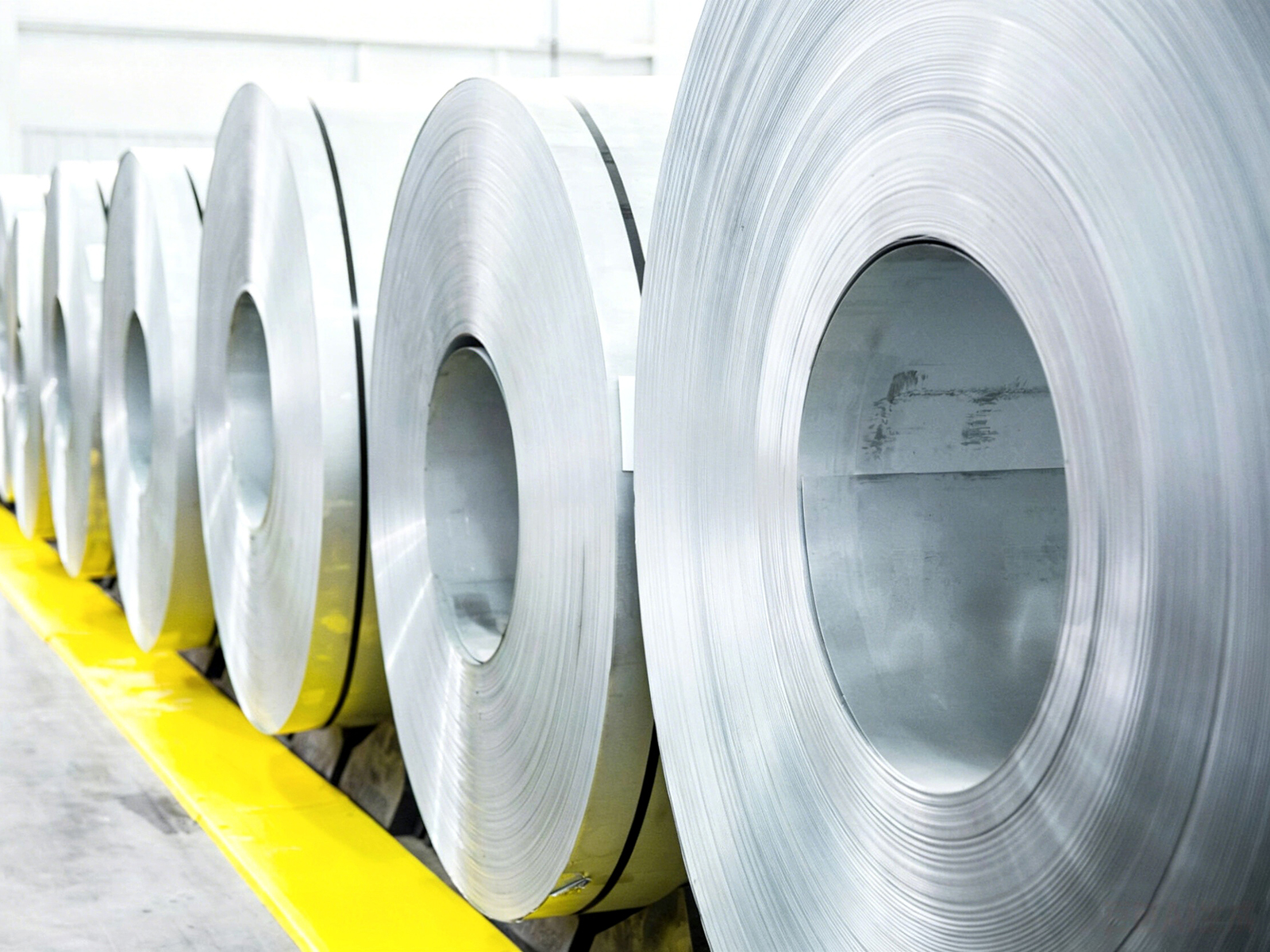
Gr4 titanium foil, as the highest strength grade among industrial pure titanium, has become an indispensable key material in the medical and industrial fields. This material has a density of only 60% that of steel, yet it possesses a tensile strength of ≥ 550 MPa, while maintaining the excellent corrosion resistance of pure titanium. In extreme environments such as seawater and acidic or alkaline conditions, Gr4 titanium foil can work stably for a long time without failure. Medical device manufacturers require materials that can bear loads and have biocompatibility, chemical equipment needs to maintain structural integrity in corrosive environments, and the aerospace field pursues a balance of light weight and high strength-Gr4 titanium foil precisely meets these demanding requirements. With precise cold rolling technology, modern production lines can stably produce ultra-thin, wide titanium foil with a thickness of 0.02-1.0 mm and a maximum width of up to 670 mm, providing reliable material support for high-end manufacturing.
1. Why Is Material Characteristics and Advantages of Gr4 Titanium Foil Important?
(1) What Should You Know About Engineering Balance of Strength and Toughness?
Gr4 titanium foil demonstrates the highest mechanical strength performance in the industrial pure titanium series. Its tensile strength reaches over 550 MPa, and the yield strength ranges from 480 to 665 MPa, providing sufficient safety margin in load-bearing structural design. Compared with Gr1 (tensile strength ≥ 240 MPa) and Gr2 (tensile strength ≥ 345 MPa), Gr4’s strength increases by more than 50%, capable of meeting higher load demands. However, the increase in strength is usually accompanied by a reduction in ductility as an engineering trade-off. Although the elongation decreases to ≥ 15%, it still retains moderate plastic deformation capability, which can meet the requirements of processing operations such as stamping and bending.
(2) What Should You Know About the Ideal Choice for Lightweight Design?
The density of 4.51 g/cm³ makes Gr4 titanium foil more than 40% lighter than traditional steel, a feature that is particularly valuable in weight-sensitive applications such as aerospace and medical implants. When honeycomb core materials are manufactured using Gr4 titanium foil, the structural weight can be significantly reduced while maintaining stiffness. In battery current collector applications, the lightweight characteristic directly improves energy density performance. Deep-sea exploration equipment benefits from reduced overall weight by using titanium foil, thereby extending operational endurance.
(3) What Should You Know About Excellent Corrosion Resistance Stability?
The surface of titanium can rapidly form a dense oxide film, and this self-passivating protective layer gives Gr4 titanium foil excellent corrosion resistance. In corrosive media such as seawater, chloride solutions, sulfuric acid, and nitric acid, the material can maintain structural integrity for a long time. When Gr4 titanium foil is used for electrode plates in seawater desalination modules, the service life is 3-5 times longer than that of ordinary stainless steel. Using this material for the lining of chemical reactors can effectively resist alternating corrosion from strong acids and strong alkalis. This combination of corrosion resistance and high strength solves the problem of material failure in high-load corrosive environments.
Performance indicators | Gr1 | Gr2 | Gr4 |
Tensile Strength (MPa) | ≥ 240 | ≥ 345 | ≥ 550 |
Yield Strength (MPa) | 140-310 | 275-450 | 480-665 |
Elongation (%) | ≥ 24 | ≥ 20 | ≥ 15 |
Density (g/cm³) | 4.51 | 4.51 | 4.51 |
Application Positioning | Pursuing ultimate formability | Achieve general balance | Meet structural load requirements |
2. Why Is Key Application Scenarios in the Medical Field Important?
(1) What Should You Know About Implants and Surgical Instrument Manufacturing?
The biocompatibility of Gr4 titanium foil makes it the preferred material for medical implants. Orthopedic fixation plates need to withstand cyclic loads generated by human movement, and the high-strength characteristics of Gr4 ensure that they do not suffer fatigue fractures during long-term use. Dental implant abutments require materials that can withstand chewing pressure without triggering immune rejection, and the non-magnetic and chemically stable properties of titanium foil meet these stringent requirements. Minimally invasive surgical instruments pursue lightweight design to reduce the operational burden on doctors, and endoscope components made of ultra-thin titanium foil are both strong and flexible.
(2) Why Is Medical Electronic Packaging Applications Important?
The casing of a cardiac pacemaker requires materials that provide electromagnetic shielding while maintaining biocompatibility. The thickness of Gr4 titanium foil can be precisely controlled to below 0.05mm and is formed through precision stamping to provide a thin protective layer for electronic components. After the packaging of a neurostimulator uses titanium foil, the overall weight is reduced by 30%, significantly improving patient wearing comfort. Medical sensor electrodes utilize the conductivity and corrosion resistance of titanium foil, allowing them to operate stably in bodily fluid environments for years without failing.
(3) What Should You Know About Precision Components of Diagnostic Equipment?
The X-ray collimator blades in imaging equipment are made of Gr4 titanium foil, and the material’s high strength ensures that the blades do not deform during high-frequency opening and closing. The microfluidic chip substrate of the blood analyzer is made of ultra-thin titanium foil, with a surface wetting tension of ≥ 40 mN/m, ensuring the accuracy of biological sample testing. The laboratory centrifuge rotor is designed with titanium foil to reduce weight and still maintains structural integrity at high speeds of 12, 000 rpm.
3. Why Is the Core Application Value in the Industrial Field Important?
(1) What Should You Know About Corrosion-resistant Components of Chemical Equipment?
Electrolytic cell anode plates are a typical application of Gr4 titanium foil. In the chlor-alkali industry, anode plates need to be soaked for long periods in high-concentration sodium chloride solutions and chlorine environments; ordinary metal materials are corroded and perforated within months, whereas titanium foil anodes have a service life of 5-8 years. Acid-resistant linings for pickling equipment use 0.5mm thick Gr4 titanium foil, which can resist corrosion from medium-concentration sulfuric acid while providing sufficient mechanical strength to prevent impact damage. After using titanium foil for heat exchanger tube sheets, there have been no leakage records after ten years of operation in seawater cooling systems.
(2) What Should You Know About Marine Engineering Structural Materials?
The outer shell of deep-sea exploration equipment faces the dual challenges of high pressure and salt spray. The pressure chamber wall made of Gr4 titanium foil is only 40% the thickness of steel, yet it can withstand the static pressure load at a depth of 3, 000 meters. The support mesh for seawater desalination reverse osmosis membranes is made from precisely slit titanium foil, with mesh uniformity controlled within ± 0.1mm to ensure even water flow distribution. After using titanium foil for the sealing gaskets of subsea cable junction boxes, fatigue resistance has doubled, and the maintenance cycle has been extended to 5 years.
(3) Why Is Electronics and New Energy Applications Important?
Lithium battery current collectors are a rapidly growing application area for Gr4 titanium foil. The anode current collector uses 0.02mm ultra-thin titanium foil, which has higher corrosion resistance and thermal stability compared to copper foil, and does not suffer lithium plating short circuits under fast-charging conditions. Fuel cell bipolar plates use polished titanium foil with a surface roughness of Ra<0.4um, reducing contact resistance by 15% and significantly improving stack power density. Electromagnetic shielding materials utilize the non-magnetic properties of titanium foil to provide stable shielding performance in sensitive electronic devices.
Application field | Typical component | Thickness Specification (mm) | Core Performance Requirements |
Medical implants | Orthopedic fixation plate | 0.3-0.8 | High strength biocompatibility |
Chemical equipment | Electrolytic cell anode | 0.5-1.0 | Chloride ion corrosion resistant |
Marine Engineering | pressure hull | 0.4-0.8 | Saltwater-resistant, high strength |
New energy | Battery current collector | 0.02-0.1 | Conductivity Lightweight |
Aerospace | Honeycomb core material | 0.05-0.15 | High specific strength |
4. What Should You Know About Precision Manufacturing Processes Ensure Stable Performance?
(1) What Should You Know About 20-Roll Precision Cold Rolling Technology?
The 750mm wide 20-roll cold rolling mill is the core equipment for producing ultra-thin titanium foil. Through multiple successive passes, the hot-rolled billet is reduced from 3mm to 0.02mm, with thickness tolerances controlled within ± 0.005mm. When the rolling force reaches 3500 kN, stable output can still be maintained, ensuring uniform thickness across the wide material. The roll system’s stiffness is optimally designed to effectively suppress plate waviness and edge cracking defects during rolling, and the finished product’s flatness meets high-precision processing requirements.
(2) What Should You Know About Continuous Annealing Microstructure Control?
The 7-stage electric heating annealing furnace achieves precise temperature gradient control. Segmented heating within the 500-850℃ range eliminates cold work hardening stress, and α-phase grain size is controlled to 8-15 um, ensuring both strength and moderate ductility. Temperature control accuracy of ± 2℃ (achieved through multi-stage PID adjustment across the 500-850℃ wide temperature range) ensures consistency of material properties between batches, with a yield strength standard deviation of <10 MPa. Argon protective atmosphere prevents high-temperature oxidation, and after annealing, the surface oxygen content is <0.35%, maintaining a silvery metallic luster.
(3) What Should You Know About Ultrasonic Cleaning Surface Treatment?
The 30 m/min continuous ultrasonic cleaning line removes rolling oil and metallic particles. The 40 kHz ultrasonic cavitation penetrates microscopic pores, with a surface wetting tension ≥ 40 mN/m and water contact angle <10°. Our independently developed degreasing formula is adapted to the surface characteristics of titanium materials, leaving residuals <5 mg/m² after cleaning. The highly clean surface provides a high-quality substrate for subsequent coating, lamination, welding, and other processes, improving bonding strength by more than 20%.
(4) What Should You Know About High-precision Slitting and Leveling Process?
The slitting line adopts a hydraulic tracking guidance system, with width tolerance controlled within ± 0.1mm, and can slit as narrow as 15mm without burrs on the edges. The 150 m/min high-speed leveling machine eliminates residual stress in the material through precise tension control, achieving flatness up to I-3 grade standard. The production line is equipped with ceramic grinding rollers, with an adjustable surface roughness range of Ra 0.2-1.6um, meeting the requirements for friction coefficient and adhesion in different application scenarios.
Process step | Key equipment | Technical Specifications | Quality control point |
Cold Rolling | 20-roll finishing mill | Rolling force 3500 kN | Thickness tolerance ± 0.005mm |
Cleaning | Ultrasonic Cleaning Line | Frequency 40 kHz | Wetting tension ≥ 40 mN/m |
Annealing | 7-stage electric heating furnace | Temperature control accuracy ± 2℃ | Grain size 8-15 um |
Itemized | Hydraulic tracking system | Speed 150 m/min | Width tolerance ± 0.1mm |
smooth | High-Precision Leveling Machine | Automatic tension adjustment | Straightness I-3 level |
5. What Should You Know About Technological Breakthroughs That Address Industry Pain Points?
(1) What Should You Know About Overcoming the Challenges of Forming High-strength Materials?
Traditional concepts suggest that high strength and workability are difficult to achieve simultaneously, but Gr4 titanium foil achieves a balance through annealing process optimization. By controlling the annealing temperature within the 650-750℃ range, part of the dislocation structure is retained to provide strength, while fine secondary phase particles precipitate to improve plasticity. In actual production, the optimized annealed Gr4 titanium foil can achieve a bending radius up to three times its thickness without cracking, meeting the stamping and forming requirements of complex parts. Medical device manufacturers report that the service life of stamping dies using this material is 40% longer than that of non-optimized materials.
(2) What Should You Know About Improvement of Fatigue Performance in Welding Areas?
Grain coarsening in the heat-affected zone of welding is a common problem in titanium applications. By using pulsed laser welding technology (compared to traditional TIG welding), the heat input is reduced by 60%, the weld width is controlled within 0.5 mm, and the grain size in the heat-affected zone is less than 30 um. Post-weld local annealing eliminates residual tensile stress, and the fatigue strength of the welded joint reaches more than 85% of the base material. Chemical pipeline welds can operate under cyclic pressure for 5000 hours without crack propagation, significantly improving reliability.
(3) What Should You Know About Batch Stability System Assurance?
Establish a full-process quality traceability system from raw materials to finished products. Titanium ingots are inspected for oxygen, nitrogen content, and impurity elements upon arrival, with the rejection rate for non-conforming batches controlled below 0.5%. Mechanical properties are tested for each roll during the rolling process, with data uploaded to the MES system in real time. Annealing furnaces are equipped with 16-point temperature monitoring, and curve deviations trigger automatic alarms. Finished product sampling inspection covers 100%, with tensile tests, metallographic inspections, and three-dimensional evaluation of surface quality ensuring that each roll meets performance standards. Client-side data shows that the coefficient of variation of yield strength between batches is less than 3%.
(4) What Should You Know About Long-term Reliability Verification Under Extreme Conditions?
Simulate actual working conditions to carry out accelerated aging tests. Continuous spraying in a salt spray corrosion chamber for 3000 hours shows that the surface of Gr4 titanium foil has no pitting or stress corrosion cracks (but attention should be paid to the possibility of crevice corrosion of titanium in chloride environments, and sealing protection should be considered during design). High and low temperature cycling test from -50℃ to 150℃ for 500 cycles results in material strength degradation of less than 5%. Fatigue testing machine applies cyclic load at 0.8 times the yield stress, with a lifespan exceeding 10⁷ cycles. These verification data provide design engineers with reliable material selection references and reduce product development risks.
6. What Should You Know About Global Supply Chain and Customized Service Capabilities?
(1) What Should You Know About Annual Production Capacity of 3, 000 Tons?
The automated production line, built with an investment of 362 million yuan, has achieved stable mass production. Two rolling lines operate in parallel, with a single-line daily production capacity of 12 tons, and annual production capacity exceeding 3, 000 tons. Raw material inventory is maintained at a safe reserve of 500 tons, ensuring quick response to large-volume orders. The finished product warehouse covers an area of 6, 000 square meters and stores products divided by specifications and models, reducing the outbound cycle to 48 hours. The logistics network covers major industrial areas worldwide, and orders from German customers are delivered within 7 days.
(2) What Should You Know About Flexible Customization Meets Diverse Needs?
Supports custom thicknesses starting from 0.005mm, providing ultra-thin materials for microelectronic packaging. Width specifications range from 15 to 680mm, with narrow strips used for medical catheters and wide sheets used for chemical liners. Surface treatments include options such as bright finish, matte finish, brushed texture, and mirror polishing. Delivery conditions can be selected as annealed (M) or cold-worked (Y) to match different processing requirements. A U.S. aerospace customer ordered custom 0.08mm × 450mm honeycomb core material, with a single batch delivery of 2 tons and excellent performance consistency.
(3) Why Is Collaboration Between Technical Support and Application Development Important?
Equipped with a team of materials engineers to provide material selection consulting services. Recommend the optimal specification combinations based on the client’s operating conditions, and verify the design rationality through finite element analysis (using software such as ANSYS). Provide free sample testing, with mechanical performance reports including detailed data such as tensile curves, hardness distribution, and metallographic photographs. Assist clients in developing new application scenarios and jointly optimize process parameters. A medical device company, through technical collaboration, reduced the weight of implants by 25% and obtained FDA certification.
(4) What Should You Know About Quality Certification and Standards Compliance?
The products meet international standards such as ASTM B265, JIS H4600, and EN 10263-4. They have obtained ISO 9001 quality management system certification and ISO 13485 medical device quality management certification. Each batch of products comes with a material certificate that indicates key information such as chemical composition, mechanical properties, and heat treatment status. Test reports issued by the third-party testing agency SGS can be used as proof for export customs clearance. Japanese customers have been purchasing continuously for five years without any quality complaints, with a customer satisfaction rating of 98 points.
7. What Is the Conclusion?
Gr4 titanium foil, with the highest strength grade among industrial pure titanium, excellent corrosion resistance, and lightweight characteristics, has become a core material in medical implants, chemical equipment, marine engineering, aerospace, and new energy fields. Precision cold rolling technology enables stable mass production of ultra-thin specifications from 0.02 to 1.0 mm, and full-process quality control ensures batch consistency. It addresses industry pain points such as forming difficulties of high-strength materials, welding fatigue, and reliability under extreme conditions, providing reliable material support for high-end manufacturing.
FAQ
Q1: How large is the strength difference between Gr4 titanium foil and Gr2 titanium foil?
The tensile strength of Gr4 is ≥ 550 MPa, about 60% higher than Gr2 (≥ 345 MPa), and the yield strength is also significantly improved. This makes Gr4 suitable for load-bearing structural components, while Gr2 is more focused on general corrosion-resistant applications.
Q2: Why are medical implants made with Gr4 rather than titanium alloy?
Gr4 retains the excellent biocompatibility and corrosion resistance of pure titanium, while its strength is close to that of some titanium alloys, yet its cost is more than 30% lower than TC4 titanium alloy. In applications such as orthopedic fixation plates, it offers outstanding cost-effectiveness, and its long-term implantation safety has been clinically verified.
Q3: What are the advantages of ultra-thin titanium foil in battery applications?
Gr4 titanium foil with a thickness of 0.02-0.1mm is used as a current collector. Compared to copper foil, it has stronger corrosion resistance and does not cause lithium deposition short circuits under high voltage conditions. Its lightweight characteristics increase battery energy density and extend driving range, making it suitable for high-end power battery requirements.
How Should Looking for Reliable Gr4 Titanium Foil Suppliers?
Titanium Valley (Baoji Titanium Valley Titanium-Nickel-Zirconium Materials Processing Co., Ltd.) is a professional manufacturer with an annual production capacity of 3, 000 tons and an advanced 20-roll precision rolling production line, providing full-range custom services from 0.02 to 1.0mm. Compliant with ASTM B265 international standards, we serve customers in the aerospace, medical, and chemical industries. Contact us for technical support and sample testing: sales@titaniumvalleys.com
References
- Wang Jianjun, Li Ming. Properties and Applications of Industrial Pure Titanium Materials [M]. Beijing: Metallurgical Industry Press, 2021.
- Zhang Wei, Liu Qiang. Precision Rolling Technology and Equipment of Titanium Foil [M]. Shanghai: Shanghai Science and Technology Press, 2022.
- Chen Zhigang, Zhao Xiaodong. Clinical Application and Performance Evaluation of Medical Titanium and Titanium Alloys [J]. Chinese Journal of Medical Devices, 2023, 47(2): 89-95.
- Liu Haiyang, Wang Li. Research Progress of Industrial Pure Titanium in the Field of Chemical Corrosion Resistance [J]. Corrosion Science and Protection Technology, 2022, 34(5): 412-418.
- Li Hua, Sun Ming. Current Status and Prospects of Titanium Foil in New Energy Batteries [J]. Power Supply Technology, 2024, 48(1): 56-62.