
What Should You Know About Nickel 200 Nickel Wire Characteristics, Corrosion Resistance, Conductivity, and Durability?
- Nickel 200 Nickel Wire
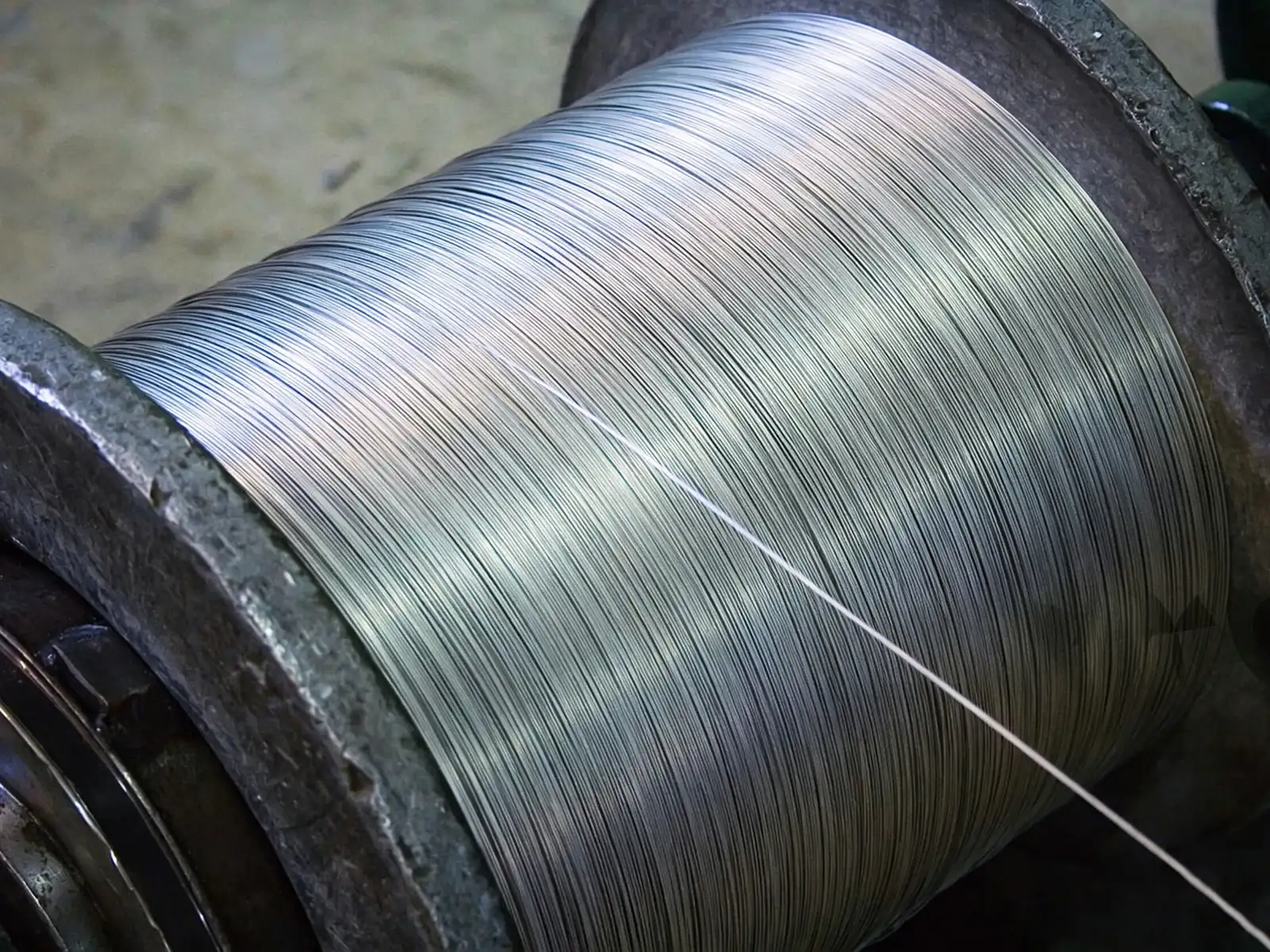
Nickel 200 wire, as a high-purity industrial material, demonstrates irreplaceable value in chemical, electronic, medical, and other fields due to its excellent corrosion resistance, outstanding electrical and thermal conductivity, and exceptional durability. Nickel 200 usually contains more than 99% nickel, with high purity, and can maintain stable performance in harsh environments such as strong alkalis and reducing media. Its low resistivity (6.84×10⁻⁸ Ω·m) ensures efficient current transmission, and good plasticity makes it easy to process and shape. Whether as electrolytic plating electrodes, conductive leads, or high-temperature components, Nickel 200 wire can provide long-lasting and reliable performance, helping businesses reduce maintenance costs, extend equipment lifespan, and enhance production continuity and product quality.
1. What Should You Know About Analysis of the Corrosion Resistance Characteristics of Nickel 200 Wire?
(1) What Should You Know About Outstanding Performance in a Strong Alkaline Environment?
Nickel 200 nickel wire exhibits extremely strong resistance in strong alkaline solutions such as sodium hydroxide and potassium hydroxide. The pure nickel structure of this material can withstand the erosion of alkaline media, and even when soaked in high-concentration alkali solutions for a long time, it does not show significant corrosion loss. Electrolytic tank equipment in the chlor-alkali industry often uses this material to manufacture electrodes and conductive components, and its service life can be extended 3-5 times. Compared with ordinary stainless steel materials, Nickel 200 can still maintain surface integrity in environments with a pH greater than 12, making it the preferred material for alkaline battery plates and chemical reactors.
(2) What Should You Know About Stability in Reducing Media?
In dilute solutions of reducing acids such as sulfuric acid and hydrochloric acid, Nickel 200 wire exhibits good corrosion resistance. This material has a natural resistance to non-oxidizing acids and is especially suitable for filter screens and heat exchanger components that need to handle acidic wastewater. It should be noted that its effectiveness is limited in high-temperature oxidizing acid environments, such as hot nitric acid. The purity of the material is a key factor: when the nickel content reaches over 99.5%, impurity elements are minimized, and this high-purity state makes the surface passivation film denser and more uniform.
(3) What Should You Know About Marine Environment and Salt Spray Protection?
Seawater and salt spray environments pose a severe test for metal materials, but Nickel 200 nickel wire can effectively resist chloride ion corrosion due to its dense oxide film. In marine engineering equipment, ship electrical systems, and seawater desalination devices, fasteners and conductive connectors made from this material can operate stably over the long term. Experimental data show that in continuous salt spray tests, the corrosion rate of Nickel 200 is much lower than that of ordinary copper alloys, only about one-eighth of the latter. This advantage makes it widely used in coastal chemical plants and offshore platforms.
Corrosive environment type | Nickel 200 Performance | Typical application scenarios |
|---|---|---|
Strong alkaline solution (pH>12) | Excellent | Chlor-alkali electrolytic cell, alkaline battery |
Reducing acid | Good | Chemical filtration mesh, pickling equipment |
Seawater/Salt Spray | Good | Marine engineering, ship electrical systems |
High-temperature oxidative acid | Not applicable | Other corrosion-resistant alloys need to be selected |
2. Why Is Conductive Properties and Advantages in Electrical Applications Important?
(1) What Should You Know About Transmission Efficiency Brought by Low Resistivity?
The resistivity of Nickel 200 nickel wire is 6.84×10⁻⁸ Ω·m. Although slightly higher than that of pure copper, it performs excellently in situations that require both conductivity and corrosion resistance. This moderate resistivity makes it an ideal material for resistive heating elements, capable of providing stable and controllable heat output. In the field of battery manufacturing, current collectors and tab connectors made from this material can ensure uniform current distribution and reduce internal resistance losses. Actual tests show that conductive leads made of Nickel 200, with the same cross-sectional area, consume only about 15% more energy than copper wires, but their durability increases by more than 200%.
(2) What Should You Know About Electrical Stability in High-temperature Environments?
Temperature changes can affect the electrical conductivity of metals, while Nickel 200 nickel wire maintains good electrical performance stability within the temperature range of -200℃ to 400℃. Heating elements in high-temperature furnaces and electrode wires in vacuum equipment often use this material because its electrical resistance temperature coefficient is moderate, preventing drastic current changes due to temperature fluctuations. Sensor connection wires in the aerospace field and heating components in semiconductor manufacturing equipment rely on the reliable performance of this material under extreme temperatures. The material has a melting point of up to 1453℃, far above normal operating temperatures, providing ample safety margin.
(3) Why Is the Value of Non-Magnetism for Precision Electronics Important?
Nickel 200 has a low magnetic permeability, giving it an advantage in certain magnetically sensitive devices. In nuclear magnetic resonance (MRI) equipment, precision electronic balances, and navigation instruments, any magnetic material can cause interference. Springs, miniature bearings, and shielding meshes made from this material do not affect the magnetic field distribution, ensuring measurement accuracy. Tiny components such as watch movements and quartz crystal holders also benefit from this characteristic. Compared to stainless steel materials with higher magnetic permeability, Nickel 200 is irreplaceable in the field of precision instruments.
Electrical performance parameters | Numerical value | Application Advantages |
|---|---|---|
Resistivity | 6.84×10⁻⁸ Ω·m | Balancing conductivity and corrosion resistance |
Operating temperature range | -200℃ to 400℃ | Stable electrical performance over a wide temperature range |
Magnetic permeability | Close to 1 (non-magnetic) | Suitable for magnetically sensitive precision equipment |
Thermal conductivity | 70 W/(m·K) | High-efficiency heat conduction |
3. Why Is Material Durability and Long-term Use Value Important?
(1) What Should You Know About Structural Stability Under High-temperature Conditions?
Nickel 200 wires maintain excellent mechanical strength and creep resistance under high-temperature conditions. When used for furnace hangers, high-temperature clamps, and fixtures in heat treatment equipment, this material can work for long periods below 600℃ without significant deformation. The material’s crystal structure remains stable during repeated heating and cooling cycles and does not suffer from phase transformation embrittlement like some alloys. Actual usage data show that, under the same conditions, heating wires made of Nickel 200 have a service life 40% longer than nickel-chromium alloys, and maintenance intervals can be extended to 18-24 months.
(2) What Should You Know About Low-temperature Toughness Ensures Reliability?
Many metal materials become brittle and fracture at low temperatures, whereas Nickel 200 nickel wire maintains good toughness even at -196℃ in liquid nitrogen. Connectors for low-temperature tanks, fastening bolts for liquefied natural gas (LNG) equipment, and elastic components in polar research equipment all require this low-temperature non-brittle characteristic. The material’s elongation can reach over 30% under soft conditions, and this plastic reserve allows it to absorb sudden impact loads, avoiding the risk of brittle fracture. This characteristic is particularly important in the hydrogen energy industry, as liquid hydrogen storage and transportation systems have extremely high requirements for material low-temperature performance.
(3) What Should You Know About Processing Performance Optimization and Service Life?
The good plasticity of Nickel 200 wire makes it easy to cold work and shape, allowing complex forms to be produced through processes such as drawing, bending, and stamping. This processing friendliness not only reduces manufacturing costs but also minimizes internal stresses in the material, enhancing the fatigue life of the finished product. After proper heat treatment, the material’s tensile strength can reach over 350 MPa, with hardness controlled in the 85-95 HB range, providing sufficient strength while maintaining flexibility. Welding performance is stable, and the material can be joined using various methods such as argon arc welding and resistance welding, with reliable weld quality. These processing characteristics make maintenance and replacement simple, further extending the overall lifespan of equipment.
(4) What Should You Know About Pure Materials Reduce Pollution Risk?
High-purity material (Ni Co ≥ 99.5%) ensures that Nickel 200 wire does not contaminate the medium in clean environments such as food, pharmaceuticals, and semiconductor manufacturing. Filters in pharmaceutical equipment, conveyor belt fasteners in food processing plants, and jigs for chip manufacturing all require that the material itself does not leach harmful elements. Impurity elements such as sulfur and phosphorus in this material are strictly controlled at the ppm level (S ≤ 0.005%, P ≤ 0.002%), significantly reducing the risk of medium contamination. For applications requiring compliance with FDA or EU food contact material standards, Nickel 200 is an economical choice that meets the requirements.
Durability Indicator | Soft-state performance | Actual value |
|---|---|---|
Tensile strength | ≥ 350 MPa | Strong load-bearing capacity |
Elongation | ≥ 30% | Impact-resistant and not easily broken |
Use temperature limit | about 600℃ | Long life of high-temperature components |
Low-temperature toughness | -196℃ does not become brittle | Suitable for extreme cold environments |
4. Why Is Industrial Application Scenarios and Material Selection Guide Important?
(1) What Should You Know About Key Roles in the Chemical and Energy Industry?
In the chlor-alkali industry, electrolytic cell anode conductive rods and plate hooks made of Nickel 200 wire can operate in saturated alkaline solutions for several years without replacement. Heat exchanger tube bundles made of this material in petrochemical plants can resist corrosion from chlorine-containing wastewater, reducing maintenance costs by 60%. In the field of new energy, electrode meshes and conductive connectors of alkaline water electrolysis hydrogen production equipment extensively use this material because it can maintain low contact resistance even under high current density. Under the background of carbon neutrality, the rapid development of the hydrogen energy industry brings new market opportunities for high-purity nickel wire.
(2) What Should You Know About Electronics and Semiconductor Manufacturing Demand?
Precision electronic manufacturing has strict requirements for the conductivity, non-magnetism, and dimensional accuracy of materials. The framework leads of transformer windings, welding leads of lithium battery tabs, and bonding wires for LED packaging can all use Nickel 200 fine wires with diameters of 0.1-2.0mm. Heating plate coils in semiconductor wafer processing equipment and fastening bolts inside vacuum chambers require materials that are both high-temperature resistant and non-releasing of impurities. The surface finish of materials can be polished to a mirror level to prevent particle contamination. With 3℃ electronic products moving toward being lighter and thinner, the demand for fine nickel wires continues to grow.
(3) Why Is Biocompatibility Applications of Medical Devices Important?
Nickel 200 nickel wire can be used in certain medical devices, laboratory equipment, and non-implantable medical device components. Its corrosion resistance and machinability meet the requirements for special applications. The material’s flexibility allows catheters to pass smoothly through bent sections of blood vessels, while its fatigue resistance ensures that instruments do not break during long-term use inside the body. The arch wires of dental braces and the spring components of surgical instruments also benefit from this material’s non-magnetic properties, which do not interfere with MRI diagnostics. Strict purity control ensures that instruments implanted in the body do not cause allergic or inflammatory reactions, meeting ISO 10993 biocompatibility standards.
(4) What Should You Know About Precision Machinery and Instrument Components?
The balance springs in watch movements, torsion springs in precision instruments, and contact pins of measuring probes all require ultra-fine nickel wire with a diameter of 0.05-0.5mm. These applications demand very high standards for the material’s elastic modulus, surface finish, and diameter tolerance (± 0.01mm). The stable physical properties of Nickel 200 ensure that measurement accuracy does not drift over time, while its good corrosion resistance allows instruments to maintain accuracy for a long time in humid environments. Elastic contacts in automotive sensors and micro switches in industrial automation equipment also rely on the reliability of this material.
Application field | Typical product forms | Core performance requirements |
|---|---|---|
Chemical and Energy | Electrode mesh, conductive rod | Alkali resistance and corrosion conductivity |
Electronics Manufacturing | Lead wires, bonding wires | Non-magnetic high purity |
Medical devices | Guidewire, stent | Biocompatibility Flexibility |
Precision instruments | Hairspring, probe | Dimensional Accuracy Elastic Stability |
5. How Should Material Selection Considerations and Performance Optimization Recommendations?
(1) What Should You Know About Select the Appropriate Specifications According to the Working Conditions?
Different application scenarios have specific requirements for the diameter, surface condition, and hardness of nickel wire. High-current conductive applications are recommended to use thick wires with a diameter of 8-30mm to reduce resistive loss, while fine wires of 0.1-1.0mm are needed for microelectronic welding to ensure precise operation. In terms of surface condition, bright wires are suitable for occasions with high appearance requirements, whereas pickled wires are more favorable for subsequent welding. Soft materials facilitate cold forming, while hard materials provide higher strength. It is recommended that customers provide detailed parameters of the usage environment (temperature, medium, load, etc.) to select the optimal specification combination.
(2) What Should You Know About the Heat Treatment State Affects Performance?
Nickel 200 nickel wire can achieve different strength and plasticity matches through annealing treatment at different temperatures. After annealing at 600-800℃, the material is in a soft state with maximum elongation, suitable for applications that require repeated bending; high-temperature annealing at 900-1000℃ can relieve internal stress and improve fatigue life. For springs that require high elasticity, the cold-drawn state can be used directly; for parts that need welding, the annealed state should be selected to avoid welding cracks. Professional heat treatment equipment and process control can ensure consistency of performance between batches, which is crucial for large-scale production.
(3) What Should You Know About Surface Treatment Extends Service Life?
Polishing can reduce surface roughness to below Ra 0.2um, decrease stress concentration points, and extend fatigue life by more than 30%. Electrolytic polishing not only improves appearance but also removes surface microcracks and inclusions, enhancing corrosion resistance. For applications requiring welding, pickling to remove oxide scale can achieve better weld quality. Certain special applications may also undergo passivation treatment to form a protective oxide layer. It is recommended to choose the appropriate surface treatment method based on the final usage environment, balancing cost and performance.
- (4) What Should You Know About Quality Certification and Traceability?
High-end application areas require materials to provide complete quality documentation, including chemical composition analysis, mechanical property testing, and dimensional inspection reports. Nickel 200 wire meeting ASTM B161 standards should be supplied with an EN 10204 3.1 certificate, ensuring that each batch of products can be traced back to the raw material batch. For medical and aerospace applications, special inspection reports such as non-magnetic testing and ultrasonic flaw detection are also required. Choosing suppliers with a comprehensive quality management system can effectively reduce usage risks and ensure long-term stable supply.
6. What Is the Conclusion?
Nickel 200 wire plays a key role in various fields such as chemical, electronics, and medical industries due to its excellent corrosion resistance, superior electrical and thermal conductivity, and outstanding durability. Its high-purity material ensures a clean medium, and its non-magnetic characteristics meet the requirements of precision instruments, while its good machinability reduces manufacturing costs. Correctly selecting specifications and surface treatment methods can maximize the material’s performance advantages, helping companies improve product quality, extend equipment life, and reduce overall operating costs.
FAQ
Q1: Can Nickel 200 wire be used in a high-temperature nitric acid environment?
Nickel 200 has limited corrosion resistance in high-temperature oxidizing acids (such as hot nitric acid) and is not recommended for such conditions. This material is more suitable for strong alkaline solutions and reducing environments. If there is a need to handle oxidizing acids, advanced nickel-based alloy materials containing molybdenum or chromium should be considered.
Q2: How to distinguish between Nickel 200 and Nickel 201 materials?
The main difference between the two lies in the carbon content: Nickel 200 has a carbon content of ≤ 0.10%, suitable for environments from room temperature up to 315℃; Nickel 201 has a carbon content of ≤ 0.02%, specifically designed for high-temperature applications above 315℃ to prevent graphitization. The choice should be made based on the actual working temperature.
Q3: What should be paid attention to when welding Nickel 200 wire?
It is recommended to use argon arc welding (TIG) or resistance welding. Before welding, the surface should be cleaned of oil and oxides. The welding current should be moderate to avoid overheating that causes grain coarsening. Post-weld annealing at 600-700℃ can be done to relieve stress. Using welding wire with a composition similar to the base material can achieve the best weld quality.
7. What Should You Know About Call to Action?
Baoji Titanium Valley Titanium Nickel Zirconium Material Processing Co., Ltd. is a professional manufacturer and supplier of Nickel 200 nickel wire, equipped with an Italian Danieli continuous rolling production line, with an annual capacity of over 20, 000 tons. We offer customized processing services, and strict quality control ensures that each batch of products meets international standards. Welcome to contact us for technical specifications, sample testing, or quotation inquiries: sales@titaniumvalleys.com References
1. ‘Handbook of Nickel and Nickel Alloy Materials,’ Metallurgical Industry Press, 2019
2. Davis J.R., ‘ASM Specialty Handbook: Nickel, Cobalt, and Their Alloys,’ ASM International, 2000
3. ‘Selection and Application of Nickel-Based Materials for Electrochemical Industry,’ Chemical Industry Press, 2021
4. Kiser S.D., ‘Corrosion Resistance of Nickel and Nickel Alloys,’ Handbook of Materials Degradation, William Andrew Publishing, 2018