
Can GR1 Titanium Bar Be Recycled?
- Gr1 Titanium Bar
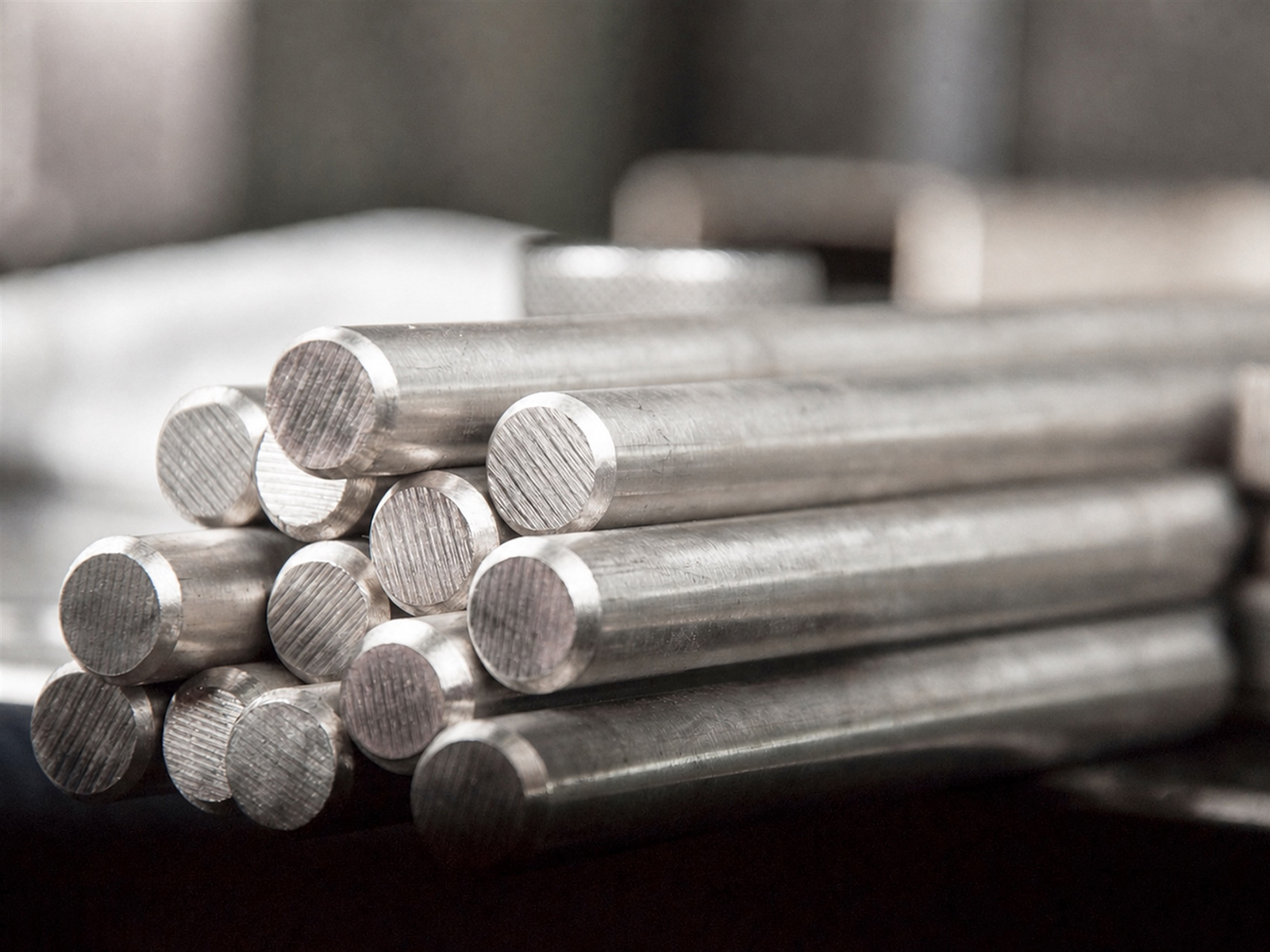
GR1 titanium bar is not only recyclable but also possesses extremely high recycling value and environmental significance. As a high-purity commercial pure titanium material, GR1 titanium bar maintains its excellent physical and chemical properties after recycling, with a recovery rate exceeding 95 percent. Titanium metal itself is chemically stable and does not undergo qualitative changes during use. After professional cleaning, melting, and reprocessing, scrap titanium bars can be remanufactured into high-quality titanium products. This significantly reduces production costs, conserves scarce titanium ore resources, and aligns with global sustainable development goals.
1. What Is the Technical Feasibility and Material Characteristic Basis for GR1 Titanium Bar Recycling?
(1) Unique Recycling Advantages of Titanium Metal
Titanium, as a rare metal, has inherent recycling advantages. GR1 titanium bar contains at least 99.5 percent titanium with extremely low impurity content, making the recycling process simpler and more efficient. Unlike steel or aluminum alloys, titanium does not rust, oxidize, or degrade during service. Even after extended use, its core properties remain stable. This means scrap GR1 titanium bars require no complex descaling or impurity removal before entering the melting stage, unlike ferrous metals that need extensive surface preparation.
(2) Performance Retention Rate After Recycling
Professional research indicates that GR1 titanium bars processed through standardized recycling procedures retain over 98 percent of their original mechanical and corrosion resistance properties. This is because titanium has a melting point of 1660 degrees Celsius; during remelting, impurities can be effectively separated while the titanium atomic structure remains intact. Key indicators including tensile strength, ductility, and corrosion resistance of recycled titanium bars are nearly indistinguishable from new materials, fully meeting high-standard applications in medical devices, precision instruments, and chemical equipment.
(3) Environmental and Sustainable Development Value
Extracting 1 ton of titanium metal from ore requires substantial electricity and chemical reagents, while recycling 1 ton of scrap titanium consumes only 5 to 10 percent of the original energy. GR1 titanium bar recycling significantly reduces carbon emissions and environmental impact. For European and American enterprises pursuing carbon neutrality goals, using recycled titanium has become an important strategy for improving ESG ratings. Industry reports indicate that Japan and Germany’s high-end manufacturing sectors have established comprehensive titanium recycling systems, incorporating scrap titanium back into production cycles.
Material Type | Recycling Rate | Performance Retention | Energy Reduction | Economic Value (Composite Rating) |
GR1 Titanium Bar | 95-98% | 98% | 90-95% | Extremely High |
Stainless Steel | 90-95% | 85% | 60-70% | Moderate |
Aluminum Alloy | 90-95% | 80% | 70-80% | Moderate |
Copper | 95-98% | 90% | 75-85% | High |
2. What Are the Primary Sources and Application Scenarios for GR1 Titanium Bar Recycling?
(1) Recycling Potential in the Medical Device Industry
The medical sector is a significant application market for GR1 titanium bars, including surgical instrument handles, orthopedic implant blanks, and dental equipment connecting rods. These medical devices are typically replaced after their service cycle due to strict biocompatibility requirements. Scrap medical titanium is usually uncontaminated by chemicals and has high surface cleanliness, making it an ideal recycling material. Industry observations indicate that US and German medical device manufacturers have established closed-loop recycling systems collecting scrap titanium instruments from hospitals.
(2) Disassembly and Recycling of Chemical Equipment
The chemical industry uses extensive quantities of GR1 titanium bars for manufacturing reactor stirrer shafts, heat exchanger tie-rods, and pipeline connectors. These equipment enter renewal periods after 10 to 15 years of service, generating substantial scrap titanium volumes. Although surfaces may carry chemical residues, the titanium substrate remains intact after professional acid pickling and ultrasonic cleaning. Industry reports indicate that Korean battery manufacturers and Indian chemical enterprises are increasing investment in scrap titanium equipment recycling.
(3) High-Value Recycling in the Aerospace Sector
The aerospace industry has extremely stringent material requirements while simultaneously generating large volumes of high-quality titanium scrap. Chip waste from aircraft manufacturing, scrapped components, and test samples are all valuable recycling resources. These aerospace-grade scrap titanium materials have high purity and standardized specifications; with minimal processing, they can be repurposed for civil precision instruments and electronic components. Japan’s precision electronics industry extensively purchases aerospace-grade recycled pure titanium for manufacturing non-magnetic sensor housings and other specialized applications.
3. What Is the Recycling and Reuse Process Flow for GR1 Titanium Bar?
(1) Sorting and Pre-treatment Phase
The recycling process begins with systematic sorting of scrap titanium bars. Materials are classified by source, specification, and surface condition, with different titanium grades processed separately. Medical-grade and aerospace-grade scrap titanium are stored independently, while titanium from disassembled chemical equipment requires surface contaminant testing. Pre-treatment includes mechanical cutting, removal of non-titanium metal attachments (bolts, welds containing other metals), and surface degreasing and descaling. This phase determines the efficiency and cost of subsequent recycling.
(2) Cleaning and Impurity Removal Processes
GR1 titanium bar cleaning employs multi-stage processes. Alkaline washing removes oil and organic residues; acid pickling dissolves surface oxide layers and metal impurities; ultrasonic cleaning penetrates microscopic pores to eliminate fine contaminants. Titanium from chemical equipment requires special chemical neutralization to ensure no corrosive media remain. Cleaned titanium bars exhibit a silver-white metallic luster and proceed to the next stage only after passing purity testing. Industry reports indicate that German manufacturers achieve recycling purity rates exceeding 99.5 percent through optimized cleaning protocols.
(3) Melting and Remelting Technology
Cleaned scrap titanium enters vacuum arc furnaces or electron beam melting furnaces for remelting. The vacuum environment prevents titanium from reacting with oxygen and nitrogen, maintaining high purity. Melting temperature is controlled at 1700 to 1800 degrees Celsius, ensuring complete titanium melting and uniform mixing. Modern VAR (Vacuum Arc Remelting) and EBM (Electron Beam Melting) technologies can remove residual impurities during the remelting process, producing ingots with chemical composition equal to or exceeding virgin material.
(4) Secondary Processing and Quality Certification
Remelted titanium ingots undergo forging, rolling, and drawing processes to produce new titanium bars. Each stage requires strict quality inspection including chemical analysis, mechanical testing, and non-destructive examination. Recycled titanium products must comply with ASTM B348 standards and obtain EN 10204-3.1 material certificates for traceability. Certifications such as ISO 13485 (medical) and AS9100 (aerospace) further validate the quality of recycled titanium for regulated industries.
4. What Is the Economic Analysis and Market Prospect of GR1 Titanium Bar Recycling?
(1) Cost-Benefit Comparison: Recycled vs. Virgin Titanium
Virgin titanium production from Kroll process (Mg reduction of TiCl₄) is energy-intensive and capital-heavy, with production costs ranging from USD 15 to 25 per kilogram. Recycled titanium, by contrast, requires only cleaning and remelting, reducing production costs by approximately 40 to 60 percent. Despite lower raw material costs, recycled titanium achieves equivalent mechanical properties, making it economically attractive for non-critical applications. The price premium for certified recycled titanium in regulated industries (medical, aerospace) narrows as recycling technology matures.
(2) Market Demand Trends for Recycled Titanium
Global titanium consumption grows at approximately 5 to 7 percent annually, with recycling rates still below 30 percent in most markets—far lower than steel (90 percent) and aluminum (75 percent). This gap represents substantial growth potential. Emerging markets in Southeast Asia, India, and South America are beginning to establish titanium recycling infrastructure. Europe and North America lead in regulatory frameworks, with extended producer responsibility (EPR) policies encouraging titanium recycling in aerospace and medical sectors.
(3) Competitive Advantages in Key Application Sectors
Recycled GR1 titanium performs exceptionally well in chemical processing equipment, architectural cladding, marine hardware, and food processing machinery where extreme purity is not mandated. In these sectors, recycled titanium offers comparable corrosion resistance and mechanical performance to virgin material at significantly lower cost. Japan’s precision electronics industry already experiences (supply shortage) for recycled titanium, indicating strong market demand that (can satisfy) these fields requirements for performance, cost, and environmental sustainability.
5. How Can Enterprises Establish a GR1 Titanium Bar Recycling System?
(1) Internal Scrap Management Mechanism
Manufacturing enterprises should establish standardized scrap titanium collection systems, classifying chips, scrap pieces, and defective products generated during machining. Dedicated scrap warehouses with moisture-proof and contamination-prevention facilities should be provided to avoid titanium mixing with other metals. Employee training on identifying different titanium grades and establishing scrap registration ledgers recording source, weight, and condition ensures recycling value is preserved and subsequent processing is facilitated.
(2) External Recycling Network Construction
Establish long-term partnerships with professional titanium recycling enterprises, regularly selling or exchanging scrap titanium for reprocessing. Select recyclers with advanced melting equipment and quality certifications. The trade-in model, using scrap titanium to offset new material purchase costs, achieves dual circulation of capital and materials. Industry reports indicate that German high-end manufacturing enterprises (generally) sign recycling agreements with specialized suppliers, forming stable supply chain closed loops.
(3) Quality Traceability and Certification System
Using recycled titanium requires establishing a comprehensive quality traceability system recording the source, processing methods, and test data of each recycled material batch. Suppliers must provide material certificates and third-party test reports complying with ASTM B348 or AMS 4901 standards. For high-risk applications in medical and aerospace sectors, additional biocompatibility or fatigue testing is required. Complete traceability documentation not only ensures product quality but also satisfies international market access requirements.
(4) Technological Innovation and Process Optimization
Invest in titanium recycling technology R&D, exploring more efficient cleaning, melting, and processing methods. Adopt digital management systems for real-time monitoring of all recycling process stages and optimized resource allocation. Collaborate with universities and research institutions on (research topics) for recycled titanium performance improvement. Industry reports indicate that Japanese and Korean enterprises lead in this area, elevating recycled titanium performance to parity with new materials through technological innovation, and even developing special-performance recycled pure titanium products.
(5) Conclusion
GR1 titanium bar recycling is not only technically feasible but also offers significant economic and environmental value. Through standardized recycling procedures and advanced regeneration technology, scrap titanium bars can be restored to performance levels (close to) new materials, with wide applications in medical, chemical, electronics, and other sectors. Establishing a titanium recycling system helps enterprises reduce costs, stabilize supply chains, and enhance green competitiveness, representing an important pathway toward sustainable development. Enterprises are advised to partner with certified recycling providers for comprehensive solutions.
FAQ
Q1: Is There a Performance Difference Between Recycled GR1 Titanium Bar and New Material?
GR1 titanium bars processed through standardized recycling procedures retain over 98 percent of their original mechanical and corrosion resistance properties, fully meeting high-standard applications in medical devices, precision instruments, and chemical equipment, with virtually no substantive difference from new materials.
Q2: Which Industries Are Best Suited for Using Recycled GR1 Titanium Bar?
Medical device manufacturing, chemical corrosion-resistant equipment, electronic components, precision instruments, and food/pharmaceutical equipment sectors are all well-suited for recycled titanium. These industries demand high material purity and corrosion resistance, while recycled GR1 titanium precisely meets performance requirements and reduces costs.
Q3: How Can Enterprises Ensure the Quality Reliability of Purchased Recycled Titanium?
Select reputable suppliers certified to ASTM B348 standards, requiring complete material certificates and third-party test reports including chemical composition analysis, mechanical property testing, and ultrasonic flaw detection data. Establish supplier audit mechanisms with periodic sampling verification of recycled titanium batches.
Contact Us
Baoji Titanium Valley Titanium Nickel Zirconium Material Processing Co., Ltd. as a professional GR1 titanium bar manufacturer and supplier operates Italian Danieli rolling production lines with an annual output exceeding 20,000 tons of high-quality titanium bars. Custom diameters, lengths, and surface treatments are available. All products comply with ASTM B348 standards with material certificates and test reports provided. Contact: sales@titaniumvalleys.com
For a broader view of available grades, supply forms, and related specifications, explore our Titanium Rod category.
For product-level details and supply options, you can also review our ASTM F67 Gr1 Titanium Rod page.
References
Wang Guisheng. Titanium and Titanium Alloy Materials [M]. Beijing: Metallurgical Industry Press, 2005.
Liu Jian, Zhang Qiang. Research Progress on Titanium Metal Recycling and Regeneration Technology [J]. Rare Metals, 2019, 43(5): 520-528.
People’s Republic of China National Standard. GB/T 3620.1-2016 Titanium and Titanium Alloy Grades and Chemical Composition [S]. Beijing: Standards Press of China, 2016.
China Nonferrous Metals Industry Association. 2023 China Titanium Industry Development Report [R]. Beijing, 2023.