
An In-Depth Analysis of GR4 Titanium Foil Tensile and Yield Strength
- Gr4 Titanium Foil
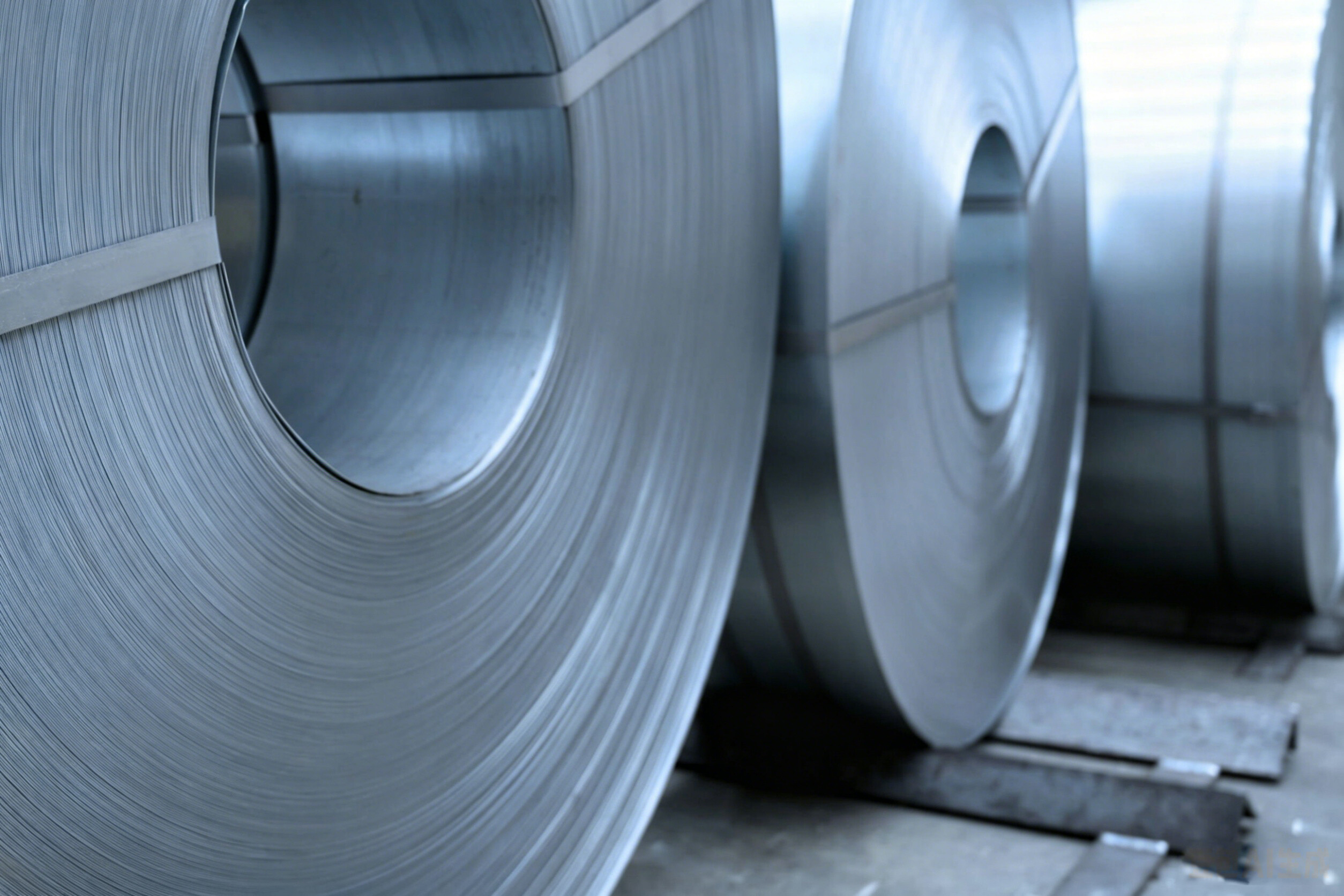
GR4 titanium foil represents the highest strength grade among industrial pure titanium materials, with tensile strength reaching 550 MPa or greater and yield strength of 450 MPa or greater, significantly exceeding Grades 1 and 2. This enhanced strength derives from higher oxygen content (up to 0.40 percent) and iron content (up to 0.30 percent), which produce solid-solution strengthening effects in the alpha-phase lattice. Compared with conventional titanium foil, GR4 demonstrates superior resistance to deformation and fatigue under high-load conditions, making it suitable for aerospace honeycomb cores, chemical industry high-pressure equipment linings, and load-bearing medical implants. With a density of only 4.51 g/cm3, it combines high strength with lightweight advantages.
Performance Indicator | GR1 Foil | GR2 Foil | GR4 Foil |
Tensile Strength | >= 240 MPa | >= 345 MPa | >= 550 MPa |
Yield Strength | 140-310 MPa | 275-450 MPa | 480-665 MPa |
Elongation | >= 24% | >= 20% | >= 15% |
Oxygen Content | <= 0.18% | <= 0.25% | <= 0.40% |
Primary Application | Extreme Forming | General Corrosion Resistance | Structural Load-Bearing |
1. Materials Science Fundamentals of GR4 Titanium Foil Mechanical Properties
(1) Alloy Element Strengthening Mechanisms for Enhanced Tensile Strength
GR4 titanium foil achieves precise control of oxygen and iron content, creating lattice distortion in the hexagonal close-packed alpha-phase titanium crystal structure through interstitial and substitutional atoms. Oxygen atoms embedded in lattice interstitial positions cause point-lattice distortion that significantly impedes dislocation motion. This microstructural change translates directly into improved macroscopic mechanical performance, with tensile strength approximately 60 percent higher than GR2. During cold rolling, cumulative strain from multi-pass 20-roll finishing further refines grain structure and forms high-density dislocation entanglements, enabling the material to exhibit greater resistance to fracture under tensile loads.
(2) Hall-Petch Relationship Between Yield Strength and Grain Size
Yield strength of GR4 titanium foil is dominated by grain size, following the Hall-Petch relationship. Continuous annealing lines with 7-zone electric heating maintain temperature accuracy within plus or minus 2 degrees Celsius, ensuring uniform grain growth to 5-15 micrometers. Smaller grain sizes provide more grain boundaries to act as dislocation motion barriers, achieving yield strength above 480 MPa. In comparison, GR2 starts at only 275 MPa yield strength; at identical thickness, GR4 can sustain higher initial plastic deformation loads, meeting the stringent demands of deep-sea engineering supports and aerospace structural components.
(3) Balancing Ductility and Strength Through Design
Although GR4 elongation decreases to 15 percent or greater, compared with 24 percent or greater for GR1, optimized annealing processes still maintain sufficient formability. Ultrasonic cleaning lines elevate surface tension values above 40 dynes per cm, removing rolling oil films and oxide layers to prevent micro-crack propagation into macroscopic defects. Tension annealing applies precise tension control to eliminate residual stresses while retaining partial work-hardening effects. This process balance enables GR4 titanium foil to withstand secondary processing such as stamping and bending while maintaining structural stability during long-term service, particularly suited for composite applications including battery tab welding and chemical diaphragm forming.
2. Comparative Mechanical Performance Analysis: GR4 Versus GR1 and GR2 Titanium Foil
(1) Strength Gradient Impact on Application Scenarios
The tensile strength differences among the three grades directly define application boundaries. GR1 is suitable for scenarios requiring repeated bending such as heat exchanger bellows, where its low yield point permits plastic deformation to absorb stress. GR2, as the general-purpose grade, demonstrates balanced performance in seawater desalination membranes and electrolytic cells. GR4 specializes in high-stress applications: aircraft engine heat shields must withstand vibration and impact, deep-sea submersible hulls face hydrostatic pressure, and medical orthopedic screws require long-term fatigue resistance. In these domains, GR4 tensile strength of 550 MPa provides an irreplaceable safety margin.
(2) Cost-Effectiveness Logic in Engineering Selection
Application Field | Typical Operating Parameters | GR4 Performance Advantage | Alternative Material Comparison |
Aerospace Honeycomb Core | Compression strength 3-8 MPa, temperature -50 to 200C | Lightweight + high stiffness, buckling load increased by 40% | Aluminum honeycomb prone to corrosion, stainless steel overweight |
Chemical Electrolytic Cell | Current density 5000 A/m2, pH 1-14 | Resistance to polarization corrosion, diaphragm life > 5 years | GR2 susceptible to hydrogen embrittlement in alkaline environments |
Marine Sensors | Hydrostatic pressure 10 MPa, salinity 3.5% | Resistance to stress corrosion cracking, signal stability +/- 0.2% | Titanium alloys cost 3 times higher |
Although GR4 yield strength falls below certain titanium alloys such as Ti-6Al-4V at 830 MPa, its cost is only 60 to 70 percent of alloy materials. For structural parts not requiring ultra-high-temperature performance at or below 350 degrees Celsius, GR4 offers optimal cost-performance ratio. The thickness range of 0.02 to 1.0 mm covers all requirements from flexible electrodes to rigid support plates, and widths from 15 to 680 mm meet manufacturing demands for large chemical equipment and aerospace honeycomb panels. Annual production capacity of 3,000 metric tons ensures stable supply with consistent delivery schedules and quality for bulk orders.
(3) Fatigue Resistance Advantages in Dynamic Load Environments
The high yield strength of GR4 translates to a higher fatigue limit, approximately 50 to 60 percent of tensile strength. During electrochemical electrode charge-discharge cycles, alternating thermal and mechanical stresses arise from current density fluctuations. The grain-boundary reinforced structure of GR4 suppresses crack initiation, extending service life by 30 to 50 percent compared to GR2. Aircraft fastener washers undergo periodic shear forces during takeoff and landing; the high-strength matrix of GR4 reduces creep deformation and maintains connection reliability. This stability in dynamic environments represents a core competitiveness that GR1 and GR2 cannot match.
3. Precision Rolling Processes for Stable Mechanical Performance Control
(1) Micron-Level Thickness Control Capability of 20-Roll Finishing Mills
The 750mm 20-roll finishing mill distributes rolling force to 3,500 kN through staged loading of intermediate and backup rolls, achieving single-pass thickness reduction of 0.02mm. Optimized roll stiffness distribution eliminates edge thinning defects common in conventional 4-roll mills, controlling width-direction thickness deviation within plus or minus 0.001mm. This precision is critical for mechanical performance, as thickness variation directly affects stress distribution uniformity. In 0.1mm battery current collector applications, local thickness deficiency may cause overcurrent burn-through; GR4 precision rolling ensures tensile strength deviation of 5 percent or less per square meter of material.
(2) Microstructural Uniformity Assurance by Continuous Annealing Lines
The 7-zone electric heating continuous annealing line operates according to a temperature profile of heating zone, soaking zone, and cooling zone, reaching maximum temperature of 1,100 degrees Celsius. GR4 titanium foil is held at 650-750 degrees Celsius for 20-40 minutes in the soaking zone, followed by controlled cooling. This thermal cycle produces uniform recrystallized microstructure with equiaxed alpha grains, eliminating directional anisotropy that could cause uneven deformation during forming. Consistent mechanical properties across the coil width and length enable predictable behavior in downstream fabrication operations.
(3) Pressure Vessel Design Implications
In pressure vessel design, allowable stress is typically taken as 60 to 80 percent of yield strength. With a yield point of 480 MPa, GR4 allows allowable stress of 288 to 384 MPa, compared with only 165 to 360 MPa for GR2. For titanium reaction vessels operating at 10 MPa internal pressure, GR4 foil thickness can be reduced by 25 percent compared to GR2, lowering cost while improving heat transfer efficiency. However, temperature effects must be considered: at 350 degrees Celsius continuous service, strength retention is approximately 75 percent, requiring a design safety margin of 20 percent or greater. Tensile test data show that although post-fracture elongation of GR4 is 15 percent, its consistent strength profile across thickness ranges ensures reliable performance in structural applications where dimensional stability is paramount.
(4) Constraint Relationship Between Thickness Tolerance and Forming Limits
Tolerance control capability across the full thickness range of 0.02 to 1.0 mm determines the processing window. A deviation of plus or minus 0.01mm represents 2 percent on 0.5mm substrate, which may cause bending radius calculation errors. Titanium Valley slitting lines regulate tension roll gap through laser thickness feedback, achieving bidirectional precision of plus or minus 0.1mm in width and plus or minus 0.005mm in thickness. This stability allows customers to operate automated stamping lines without frequent die gap adjustments. For 0.08mm GR4 foil in 90-degree V-bending, the minimum bending radius is 2 times the sheet thickness, or 0.16mm, enabling complex geometries without cracking.
(5) Hidden Influence of Surface Condition on Welding Performance
Bright-finish GR4 foil after argon arc welding exhibits a heat-affected zone width of approximately 2-3mm, with weld tensile strength reaching 85 to 90 percent of the base material. However, if surface carbon-hydrogen contaminants exceed 5mg per square meter, weld porosity rises to 0.3 percent and joint fatigue strength drops by 40 percent. The 40 dyne per cm surface tension specification from ultrasonic cleaning lines ensures pre-weld cleanliness, complemented by argon back-side shielding to produce an alpha-case thickness below 10 micrometers. In resistance spot welding applications, the high yield strength of GR4 requires welding current 15 to 20 percent higher than GR2; otherwise insufficient heat input results in undersized nugget dimensions.
4. Conclusion
GR4 titanium foil establishes a high-strength benchmark among industrial pure titanium with tensile strength of 550 MPa or greater and yield strength ranging from 480 to 665 MPa. Its mechanical properties originate from precise alloy composition control and advanced rolling and annealing processes, enabling stable mass production at ultra-thin specifications from 0.02 to 1.0mm. Compared with GR1 and GR2, GR4 demonstrates irreplaceable load-bearing capacity and fatigue resistance in aerospace, deep-sea engineering, and medical implant applications with high load demands, while maintaining excellent corrosion resistance and lightweight advantages, providing a cost-effective material solution for critical industrial applications.
FAQ
Q1: Is the 480 MPa yield strength of GR4 titanium foil suitable for all high-strength applications?
Evaluation must consider temperature and corrosion environment. Below 350 degrees Celsius, GR4 retains over 75 percent of its strength, but above this temperature titanium alloys are recommended. In strong acid and alkali environments, GR4 corrosion resistance exceeds high-strength steel, but welded joints require stress relief treatment to avoid intergranular corrosion risk.
Q2: How do you verify that GR4 titanium foil thickness precision meets requirements?
Request a full-panel thickness distribution map from the supplier with detection point spacing of 50mm or less. Key areas can be verified with ultrasonic thickness gauges; plus or minus 0.005mm precision is suitable for battery tab applications. Batch-to-batch deviation should be less than 3 percent, with mechanical property consistency verified through first-piece tensile testing.
Q3: What is the essential difference between GR4 titanium foil and titanium alloys in load-bearing capacity?
GR4 belongs to alpha-phase pure titanium; its strength comes from solid-solution strengthening with lower cost but limited high-temperature performance. Titanium alloys such as TC4 achieve higher strength (900 MPa or greater) and heat resistance (up to 500 degrees Celsius) through beta-phase control, but at higher price and greater welding difficulty. For moderate-load applications at or below 350 degrees Celsius, GR4 provides the best cost-performance ratio.
5. Finding a Reliable GR4 Titanium Foil Manufacturer
Baoji Titanium Valley, as a specialized high-strength titanium foil supplier, is equipped with a world-class 20-roll finishing production line with annual capacity of 3,000 metric tons, offering full-spec customization from 0.02 to 1.0mm. Our GR4 titanium foil has passed ASTM B265 certification and serves the aerospace and advanced manufacturing sectors. Contact us immediately for technical parameters and quotations: sales@titaniumvalleys.com
For a broader view of available grades, supply forms, and related specifications, explore our Titanium Foil category.
For product-level details and supply options, you can also review our AMS 4901 Gr4 Titanium Foil page.
References
GB/T 3620.1-2016, Titanium and Titanium Alloy Grades and Chemical Composition. Standards Press of China, 2016.
GB/T 3621-2007, Titanium and Titanium Alloy Plates. Standards Press of China, 2007.
Zhang Xiyan, Zhao Yongqing, Bai Chenguang. Titanium Alloys and Their Applications. Beijing: Chemical Industry Press, 2005.
Wang Xiangdong, Liu Baozhong, et al. Study on Mechanical Properties and Strengthening Mechanisms of Industrial Pure Titanium GR4. Rare Metal Materials and Engineering, 2018, 47(12): 3720-3725.