
Can the Grain Size of Gr1 Titanium Wire Be Controlled During the Production Process?
- Gr1 Titanium Wire
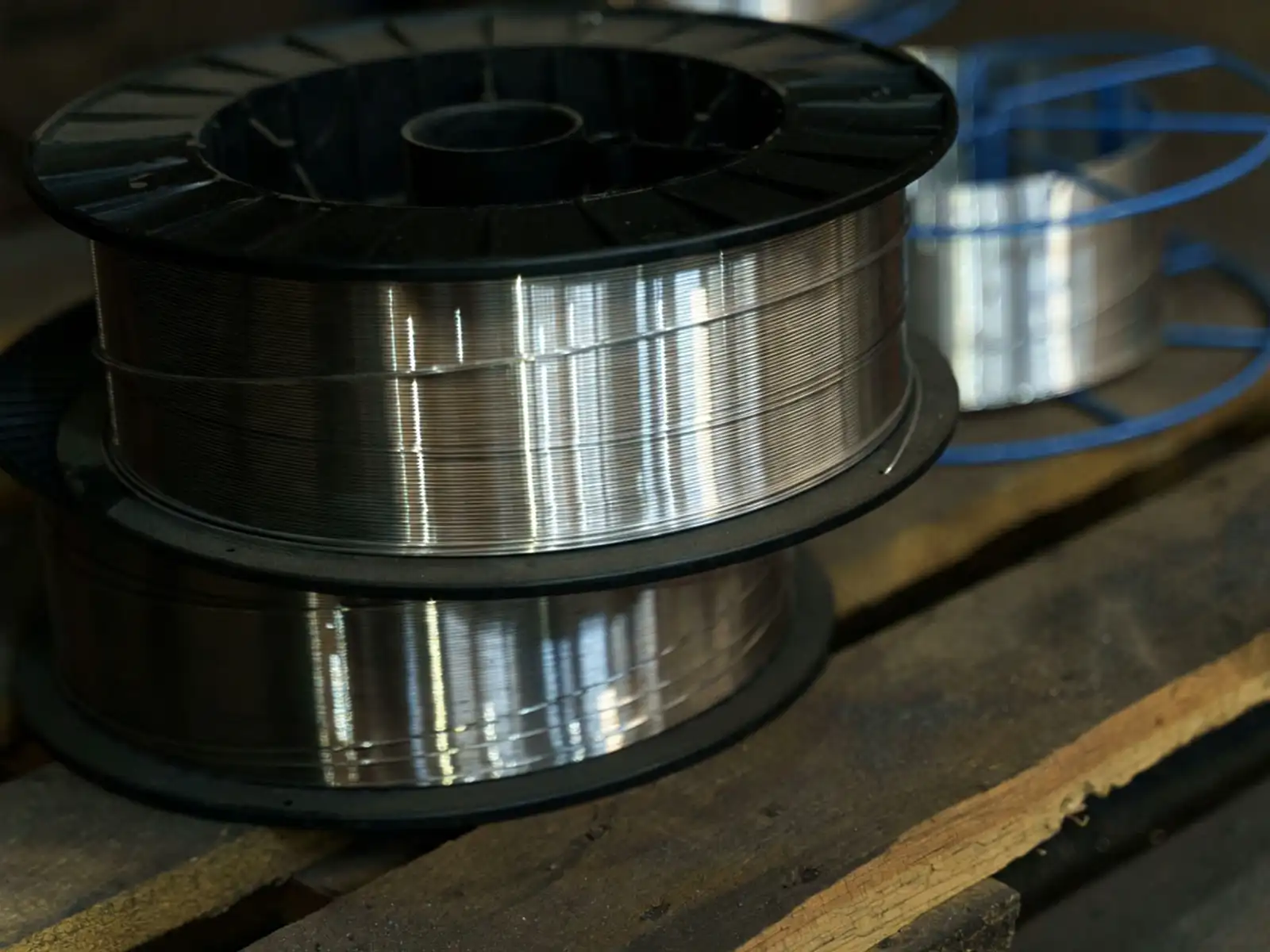
In the field of high-performance titanium wire manufacturing, precise control of grain size has always been the core technical barrier that determines the final performance of the material. The modern production line can stably control the grain diameter of Gr1 titanium wire within a specific range through the synergy of the four major links of vacuum melting purity assurance, multi-pass cold drawing and deformation, graded annealing heat treatment, and roll die cold drawing and finishing. This control ability directly affects the plasticity, strength, fatigue life and corrosion resistance of Gr1 titanium wire. Especially in application scenarios that have strict requirements on the microstructure of materials, such as medical implant devices, aviation fasteners, and marine engineering, the controllability of the grain size of Gr1 titanium wire has become a key indicator to measure the technical strength of the manufacturer.
1. What Should You Know About the Key Influence of Grain Size on the Performance of Gr1 Titanium Wire?
(1) What Should You Know About Microstructure Determines Macroscopic Mechanical Behavior?
The relationship between grain size and material strength follows the classic Hall-Petch relationship. When the grains are refined to the range of 5-15 microns, the yield strength of Gr1 titanium wire can be increased by 20-35% while maintaining good elongation. The fine and uniform grain structure can effectively hinder dislocation movement and improve deformation resistance. This microscopic improvement is particularly critical in the production of ultra-fine titanium wires below φ0.5mm, and is directly related to the control of the wire breakage rate during the drawing process.
(2) What Should You Know About Grain Boundary Density Affects Corrosion Resistance Performance?
The excellent corrosion resistance of pure titanium comes from the dense oxide film on the surface, and the grain boundaries, as high-energy regions, will affect the formation rate and integrity of the oxide film. The pitting corrosion potential of Gr1 titanium wire with a grain size controlled at 8-12 microns can be increased by 40-60mV in a simulated seawater environment (3.5% NaCl solution). This improvement is of great significance for corrosion-resistant mesh materials used in marine engineering and elastic components used in chemical equipment.
(3) What Should You Know About Fatigue Life Is Governed by Grain Uniformity?
Medical devices and aerospace fasteners have extremely high requirements on fatigue performance. A homogenized structure with a standard deviation of grain size less than 1.5 microns can increase the fatigue limit of titanium wire under alternating stress by more than 25%. This consistency requires the temperature field and deformation field to remain highly stable during the production process, which is a technical level that is difficult to achieve with traditional processes.
Grain size range | Tensile strength (MPa) | Elongation (%) | Fatigue strength (MPa) | Typical application areas |
3-5 microns | 390-440 | 15-18 | 230-270 | Precision spring, medical wire |
6-10 microns | 340-390 | 18-25 | 200-240 | Welding materials, electronic components |
12-18 micron | 280-340 | 25-32 | 170-210 | Structural brackets, woven mesh |
2. What Should You Know About the Regulation Mechanism of Grain Growth by Heat Treatment Process?
(1) What Should You Know About Precision Zone Control of Annealing Temperature?
Grain growth follows the law of thermal activation, and a temperature deviation of ± 10℃ can cause the grain size to fluctuate by more than 30%. Using a production line with segmented induction heating capabilities, precise temperature control of 1200℃± 5℃ can be achieved. Titanium wires of different specifications need to be matched with differentiated annealing systems: φ0.5-1.5mm thin wires are rapidly annealed at 630-680℃ (heat preservation for 10-15 minutes) to obtain 5-8 micron fine grains; φ3.0-6.5mm thick wires are subjected to 720-780℃ graded annealing (heat preservation for 30-45 minutes) to form a 10-15 micron uniform structure.
(2) What Should You Know About Scientific Calculation of Holding Time Window?
Research on the dynamics of grain growth shows that the holding time is proportional to the square of the grain diameter. By establishing a process database, the optimal holding time can be back-calculated based on the target grain size. Medical grade ultra-fine titanium wire (φ0.06-0.2mm) needs to be strictly controlled for a holding time of 5-8 minutes to prevent excessive growth leading to a decrease in plasticity. This precise control relies on a fully automated temperature control system, and the error rate of manual operation is as high as 15-20%.
(3) What Should You Know About the Inhibitory Effect of Cooling Rate on Recrystallization?
The cooling process after annealing also affects the final grain state. Rapid cooling (>50℃/min) can freeze high-temperature structures and retain fine grains; slow cooling may trigger secondary recrystallization, leading to grain coarsening. Semi-hard (Y2) titanium wire for high-strength applications uses forced air cooling and atomized water quenching to lock the grain size in the 6-9 micron range and stabilize the hardness in the 180-220HV range.
3. What Should You Know About the Synergistic Relationship Between Cold Drawing Deformation and Grain Refinement?
(1) What Should You Know About Cumulative Strain-Induced Dynamic Recrystallization?
During the multi-pass cold drawing process, the cumulative true strain endured by the material can reach 1.0-1.5. This deformation activates the dynamic recrystallization mechanism, and the original coarse grains are broken into submicron-scale deformation bands. When the cumulative area reduction rate exceeds 75%, the grains of Gr1 titanium wire can be refined to 3-5 microns. However, excessive deformation (area reduction rate >85%) will lead to severe work hardening, and abnormal growth may occur during subsequent annealing. The residual stress needs to be released through intermediate annealing.
(2) What Should You Know About Texture Optimization Strategies for Inter-pass Annealing?
Traditional single annealing is difficult to balance grain size and mechanical properties. The gradient process of “large deformation + low temperature annealing + small deformation + medium temperature annealing” can achieve directional control of grain morphology. After the first drawing of electronic grade titanium wire (φ0.3-0.8mm) with 70% area reduction, it is annealed at 580℃ for 15 minutes to form a fine grain base of 5 microns. It is then subjected to 20% fine drawing and annealing at 680℃ to obtain a final uniform structure of 6-8 microns, with a surface roughness Ra≤ 0.4um.
(3) What Should You Know About Optimization of Grain Orientation by Roll Die Cold Drawing?
Compared with traditional wire drawing dies, roller die cold drawing technology can apply three-dimensional compressive stress and improve the grain orientation distribution. This process enables the long axes of the grains to be arranged preferentially along the drawing direction, forming a <10-10> texture, and the yield-to-strength ratio is increased by 12-18%. The φ5.0mm structure titanium wire produced has a grain aspect ratio controlled within 2.5: 1 and an ellipticity of only 0.15-0.2mm, which is far better than the industry standard level of 0.3mm.
Cold drawing process parameters | Pass area reduction rate | intermediate annealing temperature | final grain size | product status |
Medical grade precision wire | 15-20% × 4 passes | 630℃×10min | 4-6 microns | Soft state (M) |
wire for welding | 25-30% × 3 passes | 680℃×15min | 7-10 microns | Soft state (M) |
Elastic element wire | 30-40% × 2 passes | No intermediate annealing | 12-15 microns | Hard state(Y) |
4. What Should You Know About Microscopic Impact of Ingredient and Impurity Control?
(1) What Should You Know About the Hindering Effect of Oxygen Content on Grain Boundary Migration?
As an element that exists in the titanium lattice gap in an atomic state, the oxygen content directly affects the mobility of grain boundaries. The Gr1 titanium wire standard stipulates that the oxygen content is ≤ 0.18%, but in actual production, it is controlled within the range of 0.12-0.15%, which can effectively suppress abnormal grain growth at high temperatures. Vacuum melting technology ensures that the oxygen content fluctuates <0.02%, making the grain size consistency between batches within ± 1 micron. This stability is critical for high-volume supply to aerospace customers.
(2) What Should You Know About the Second Phase Pinning Effect of Iron Element?
Trace amounts of iron (0.10-0.15%) form fine FeTi precipitates during the annealing process, which pinning the grain boundaries. These nanoscale second phase particles effectively prevent grain growth and reduce the grain size by 20-30% under the same annealing conditions. However, if the iron content exceeds 0.20%, the brittle phase will increase and the elongation will decrease by more than 15%, which needs to be strictly controlled below the upper limit of the standard.
(3) What Should You Know About Grain Boundary Embrittlement Risk of Carbon and Nitrogen Impurities?
Although the contents of carbon and nitrogen are extremely low (≤ 0.08% and ≤ 0.03% respectively), they tend to segregate at grain boundaries to form brittle compounds. Using vacuum consumable arc melting combined with multiple remelting technology, the nitrogen content can be controlled at a low level and the hidden danger of grain boundary embrittlement can be eliminated. This is particularly critical for low-temperature titanium wire used in -253℃ liquid hydrogen environment to ensure that brittle fracture does not occur under extreme conditions.
5. What Should You Know About the Ability of Production Equipment to Support Grain Control?
(1) Why Is Advantages of Temperature Field Uniformity in Heating Systems Important?
The induction heating system equipped with the advanced continuous rolling line adopts multi-frequency segmented heating technology to control the temperature difference between the surface layer and the core of the φ200mm titanium billet within the range of 0-8℃. This uniform heating lays the foundation for subsequent grain homogenization. The matching trolley-type annealing furnace uses argon gas protective atmosphere, the oxidation weight gain is <0.5mg/cm², and the size difference between surface grains and internal grains is <10%, far exceeding the 30% deviation level of traditional box-type furnaces.
(2) What Should You Know About Full-process Automated Data Closed-loop Management?
An automation rate of more than 90% enables millisecond-level response to process parameters. Through online temperature measurement, diameter measurement, and flaw detection systems, the temperature curve, deformation history, and grain size data of each titanium wire can all be traced. The established process knowledge base contains more than 5, 000 sets of parameter-tissue correspondence relationships, which can quickly generate customized process paths according to customer needs. This intelligent manufacturing capability increases the achievement rate of special grain size requirements (such as the narrow range of 4-5 microns) from 60% in traditional processes to more than 95%.
(3) What Should You Know About Real-time Feedback Adjustment for Online Detection?
The integrated metallographic analysis system can extract samples during the production process and complete the grain size determination within 15 minutes. When the detection value deviates from the target by ± 0.5 microns, the system automatically adjusts the subsequent annealing parameters. This real-time correction mechanism ensures that the standard deviation of the grain size of a single batch of 5, 000kg titanium wire is <1.2 microns, meeting the semiconductor industry’s stringent requirements for material consistency.
Production line type | Temperature control accuracy | Grain size deviation | Batch consistency | annual production capacity |
Fully automatic production line | ± 5℃ | ± 1.0 micron | >95% | 5, 000 tons |
Semi-automatic production line | ± 15℃ | ± 2.5 microns | 75-80% | 1, 200 tons |
Manual small production line | ± 25℃ | ± 4.0 micron | <60% | 300 tons |
6. What Is the Conclusion?
The precise control of grain size of Gr1 titanium wire has transformed from empirical trial and error to data-driven scientific engineering. Through precise matching of heat treatment temperature and time, gradient design of cold drawing deformation, strict control of impurity components, and full-process monitoring of intelligent production lines, modern manufacturers can stably control the grain size within ± 1 micron accuracy. This controllability of microstructure directly translates into reliability of macroscopic performance, meeting the needs of diverse applications from deep-sea exploration to biomedicine.
For Gr1 titanium wire procurement projects that require strict grain size control, it is recommended to give priority to professional manufacturers with full-process automated production lines and supporting online inspection systems, and to provide a complete inspection report including average grain diameter, standard deviation, measurement method and metallographic photos. φ0.06-10mm full specification customization service can usually be provided with material certification documents.
FAQ
Q1: How to choose Gr1 titanium wire with different grain sizes?
Medical implants and precision springs should choose 4-6 micron fine grain structures to obtain high strength and fatigue resistance; welding filler materials are suitable for 8-10 micron medium grains to ensure good plasticity; structural scaffolds can use 12-15 micron coarse grains to reduce costs. The specifics need to be comprehensively evaluated based on service stress, corrosive environment and processing technology.
Q2: What information should be included in the grain size inspection report?
The standard inspection report must indicate the average grain diameter, standard deviation, measurement method (such as cross-section method or area method), inspection location (surface/center), metallographic photos and magnification. Medical grade products also need to provide grain size rating and grain boundary cleanliness analysis to ensure compliance with ISO 5832-2 biocompatibility requirements.
Q3: Will long-term storage cause grain growth?
The grain structure of Gr1 titanium wire is extremely stable at room temperature, and the grain size change is <3% after 3-5 years of storage at room temperature. However, if the storage environment temperature continues to exceed 200℃ (such as close to a heat source), grain boundary migration may be activated and cause slow growth. It is recommended to store in a dry and cool place to avoid high temperature and high humidity environment.
7. What Should You Know About Looking for Gr1 Titanium Wire Manufacturers with the Ability to Precisely Control Grain Size?
As a professional manufacturer, Baoji Titanium Valley Titanium Nickel Zirconium Materials Processing Co., Ltd. has a full-process production line of vacuum consumable arc melting, multi-pass cold drawing and elongation, graded vacuum annealing and roll die cold drawing and finishing. It can stably control the grain diameter of Gr1 titanium wire in the range of 4-15 microns, with an accuracy of ± 1 micron. We provide φ0.06-10mm full-specification customized services for global medical equipment, aerospace fasteners, marine engineering and semiconductor customers, complete with complete grain size testing reports. Contact sales@titaniumvalleys.com immediately to obtain technical solutions and samples.
References
- Zhao Yongqing, Ge Peng. Structure control and performance optimization of titanium alloy. Metallurgical Industry Press, 2019.
- Li Miaoquan, Wang Kru. Theory and technology of plastic forming of refractory metals. Science Press, 2016.
- Wu Yinshun, Cao Bei. Corrosion and protection of titanium and its alloys. Chemical Industry Press, 2008.
- Liu Jianzhang. Heat treatment process and microstructure properties of titanium alloy. National Defense Industry Press, 2012.