
How Does GR1 Titanium Rod Compare to Other Titanium Grades Used for Medical Purposes?
- Gr1 Titanium Rod
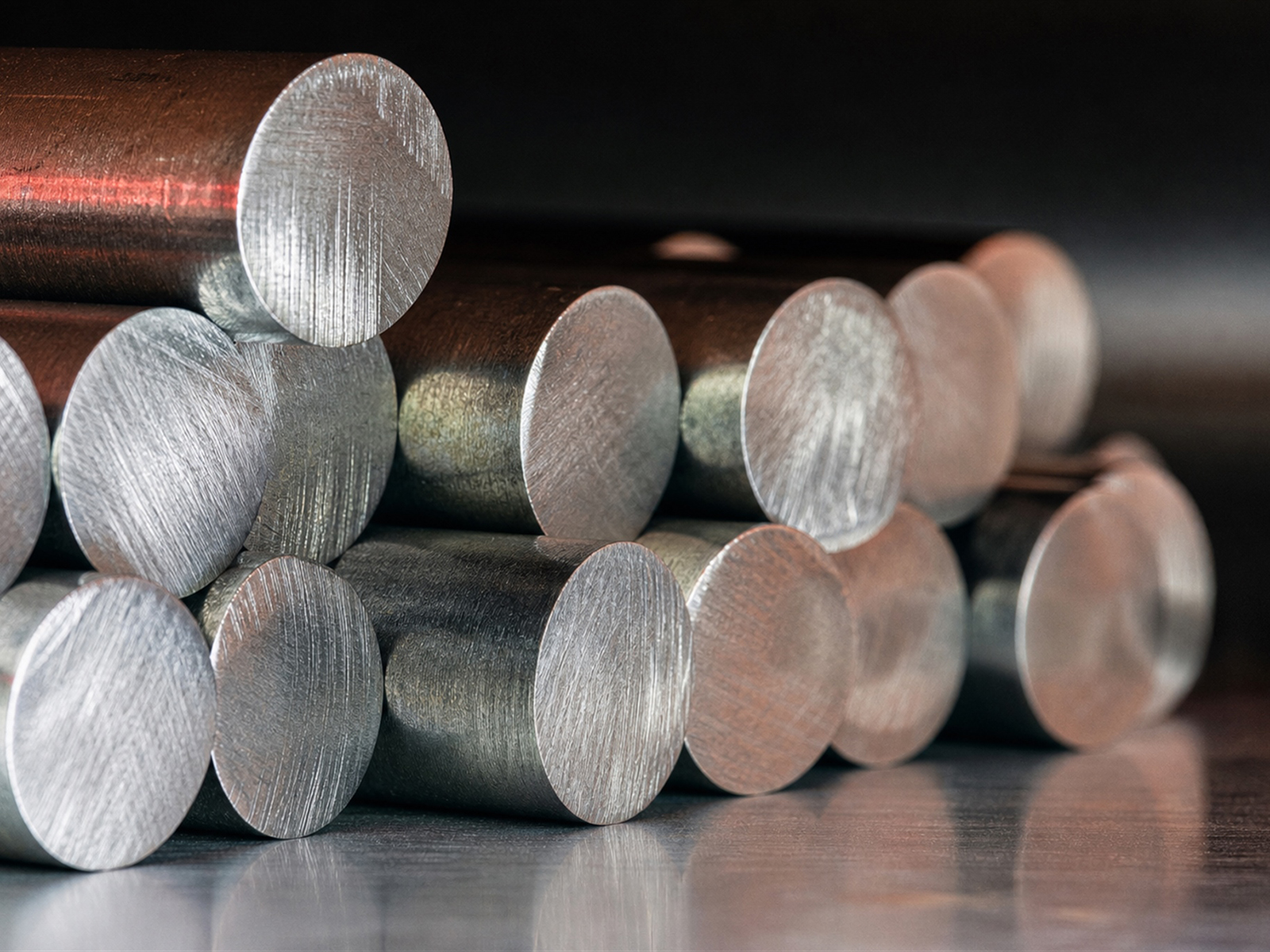
In medical device and implant manufacturing, material selection is directly related to patient safety and product performance. GR1 titanium rod (commercially pure titanium grade 1), as one of the highest purity industrial titanium materials, has unique advantages compared with other medical grade titanium materials such as GR2 and GR5 (Ti-6Al-4V). GR1 contains ≥ 99.5% titanium and has extremely low impurity content. Therefore, it has excellent biocompatibility and excellent plastic processing capabilities. It is suitable for manufacturing medical devices that require complex molding and no magnetic interference. Although its mechanical strength is lower than alloy titanium, GR1 titanium rods show unique value in medical applications that do not require high loads and require high material purity and flexibility. Understanding these differences can help medical device manufacturers make more accurate material selection decisions.
1. What Are the Differences in Differences in Purity and Composition, Material Properties of GR1 Titanium Rods?
(1) What Are the Differences in Essential Differences in Chemical Composition?
GR1 titanium rod belongs to α-type commercial pure titanium, with a titanium content of more than 99.5%, and impurities such as iron, oxygen, carbon, nitrogen, and hydrogen are strictly controlled. In comparison, GR2 pure titanium has a slightly higher oxygen content (typically 0.25%), while GR5 titanium alloy has 6% aluminum and 4% vanadium added for strength. The above composition differences directly affect the biological response and processing characteristics of the material, making GR1 the preferred material for medical scenarios with strict purity requirements.
(2) What Should You Know About Impurity Control and Biosafety?
Medical implants are highly sensitive to impurities. The maximum oxygen content in GR1 titanium rods is ≤ 0.18% (typical values are usually less than 0.10%), which is lower than other grades, helping to reduce the risk of tissue reactions caused by oxides. The iron content is controlled within 0.20% to avoid local inflammation that may be caused by the release of iron ions. This ultra-clean ingredient ensures stability and safety after long-term implantation into the human body.
(3) Why Is Advantages of Non-alloying Important?
Unlike GR5 titanium alloy, GR1 does not contain aluminum, vanadium and other alloying elements. Some studies indicate that long-term exposure to aluminum and vanadium may pose risks of neurotoxicity and interference with bone metabolism. The non-alloy properties of GR1 eliminate these potential hazards and are particularly suitable for devices that require permanent indwelling, such as cranial fixation plates and spinal fusion cages.
2. What Are the Differences in Comparison of Mechanical Properties, Balance Between Strength and Plasticity?
(1) What Should You Know About Tensile Strength and Yield Properties?
The tensile strength of GR1 titanium rod is 240-300 MPa (typical value), and the yield strength is 170-275 MPa, which is significantly lower than GR5 titanium alloy (tensile strength ≥ 895 MPa, annealed yield strength ≥ 828 MPa). This lower strength limits its application in load-bearing orthopedic implants, but for low-load tools such as dental instruments and surgical clamps, the strength of GR1 fully meets the requirements while bringing better processing economy.
(2) Why Is the Unique Value of Extended Performance Important?
The elongation rate of GR1 titanium rod is ≥ 24%, which is the best plasticity among all industrial pure titanium. This excellent ductility enables it to easily complete complex processes such as cold bending, deep drawing, and roll forming. When manufacturing dental orthodontic wires, small-diameter catheters, and flexible probes, GR1 can achieve small-radius bending without cracking, which is difficult to achieve with high-strength alloy titanium.
Comparison table of mechanical properties of titanium materials for medical use
Performance indicators | GR1 titanium rod | GR2 titanium rod | GR5 titanium alloy | Medical application matching |
Tensile strength (MPa) | 240-300 (typical value) | 345-480 | ≥ 895 | GR1 is preferred for low-load instruments |
Yield strength (MPa) | 170-275 | 275-380 | ≥ 828 (annealed state) | Load-bearing implants require GR5 |
Elongation (%) | ≥ 24 | ≥ 20 | ≥ 10 | GR1 is the first choice for complex molding |
Hardness(HV) | 120-150 | 150-200 | 300-350 | Flexible instruments suitable for GR1 |
(3) What Should You Know About Fatigue Performance and Long-term Reliability?
Although GR1 has lower strength, its fatigue limit to yield strength ratio (usually 0.4-0.5) is stable under low stress cycle conditions. For parts that undergo repeated small movements, such as titanium shafts of medical pumps and connecting rods of ventilators, using GR1 can not only ensure fatigue life but also simplify the machining process.
3. What Should You Know About Corrosion Resistance and Biocompatibility Assessment?
(1) What Should You Know About Corrosion Resistance Mechanisms in Body Fluid Environments?
The dense TiO2 oxide film naturally formed on the surface of GR1 titanium rod is about 2-6 nanometers thick, and shows strong passivation stability in human body fluids (containing chloride ions, proteins, pH 7.4 environment). Compared with GR5, GR1 does not involve alloy elements, so the oxide film composition is purer, the electrochemical corrosion potential is more stable, and the ion release after long-term implantation is lower.
(2) What Should You Know About Biocompatibility Test Data?
According to the ISO 10993 series of standard tests, the cytotoxicity, sensitization, and blood compatibility of GR1 titanium rods have all reached passing levels. In vitro cell culture experiments show that the adhesion rate and proliferation rate of osteoblasts on the GR1 surface are better than those of GR2 and stainless steel (for specific data, please refer to relevant research literature). In animal implantation tests, the thickness of the fibrous capsule around GR1 was thin, indicating better tissue integration ability.
(3) What Should You Know About Special Media Tolerance?
Medical devices often need to undergo repeated disinfection and sterilization. GR1 titanium rods have good tolerance to strong oxidizing disinfectants such as peracetic acid and sodium hypochlorite, and the surface state does not change significantly after multiple high-pressure steam sterilizations (such as 121℃, 30 minutes). In surface treatment processes such as electrolytic polishing and anodizing, the response uniformity of GR1 is also better than that of alloy titanium, which facilitates consistent surface roughness control.
Comparison of corrosion resistance in medical environments
Corrosion test items | GR1 titanium rod | GR2 titanium rod | GR5 titanium alloy | 316L stainless steel |
Simulated body fluid immersion (μg/cm²·year) (37℃, pH 7.4) | 0.05 | 0.08 | 0.12 | 2.50 |
Chloride ion pitting potential (mV) (refer to ASTM G61) | +680 | +650 | +620 | +200 |
Weight loss (mg) after sterilization cycle (121℃, 30 minutes) | <0.01 | <0.02 | 0.03 | 0.15 |
Bone tissue integration time (weeks) (refer to relevant studies) | 8-10 | 10-12 | 12-14 | not applicable |
4. What Should You Know About Processing Performance and Manufacturing Suitability Analysis?
(1) What Should You Know About Machining Characteristics?
The cutting process of GR1 titanium rod requires special technology. Due to its high plasticity and poor thermal conductivity (17 W/m·K), it is prone to tool sticking and work hardening during cutting. It is recommended to use carbide tools, control the cutting speed at 40-60 m/min, and use sufficient coolant. It should be noted that the processing cost of GR1 is not always lower: although the softer material reduces the tool wear rate, the sticking problem may increase the difficulty of processing. The specific cost needs to be comprehensively evaluated based on the process parameters.
(2) What Are the Differences in Welding Performance Comparison?
GR1 titanium rod has excellent welding performance and can be used in TIG welding, electron beam welding and other processes. Since there is no segregation problem of alloy elements, the weld structure is uniform and the heat affected zone is narrow. For thin-walled pipe fittings and special-shaped cavity structures that are common in medical devices, GR1 can be used to achieve reliable welding joints, and the air tightness test pass rate is as high as 99.5%. When welding GR5 titanium alloy, heat input needs to be strictly controlled to prevent embrittlement caused by beta phase transformation.
(3) What Should You Know About Cold Forming Capability?
GR1 has excellent deep drawing performance and can be used for multi-pass deep drawing without intermediate annealing. When manufacturing curved handles of surgical instruments and precision arc surfaces of dental brackets, GR1 can achieve a bending angle of more than 90° (when the plate thickness is ≤ 2mm) and the springback amount is less than 3° (specific parameters are affected by thickness and bending radius). This processing friendliness helps shorten the production cycle of complex medical components and reduces scrap rates.
Medical device manufacturing process adaptation table
Processing technology | GR1 fitness | GR5 fitness | Typical applications |
cold drawn thin wire | Excellent (can be pulled to Φ0.5mm, usually requires intermediate annealing) | Difficult (easy to break) | Orthodontic wire, suture |
Deep drawing | Excellent (stretch ratio>2.0) | General (requires multiple annealing) | Surgical clamps, instrument trays |
Precision turning | Good (need to optimize parameters) | Good (knives are durable) | Implant abutments and probes |
TIG welding | Excellent (good weld plasticity) | Good (needs to control heat input) | Vacuum chamber and pipeline |
5. Why Is Differentiated Choices for Medical Application Scenarios Important?
(1) What Should You Know About Material Strategies for Implantable Devices?
Orthopedic trauma fixation requires high-strength support, and GR5 titanium alloy is usually used for hip stems, locking plates, etc. For light-loaded components such as craniofacial repair mesh and cochlear shell, GR1’s low density (4.51 g/cm³) and good biocompatibility have more advantages. In the dental field, GR5 is used for implant screws to withstand occlusal forces, but GR1 can be used for the upper abutment connector to facilitate precise adjustment.
(2) What Should You Know About Non-implantable Medical Devices?
Non-implantable instruments such as surgical instrument trays, endoscopic catheters, and infusion pump shafts do not require extremely high strength but require no magnetic interference and resistance to repeated sterilization. The non-magnetic nature of the GR1 titanium rod (volume magnetic susceptibility <1.0×10⁻⁶, made by SI) makes it an ideal material for MRI-compatible equipment, while its corrosion resistance ensures a sterilization cycle life of more than 10, 000 times.
(3) What Should You Know About Special Functional Parts?
For electrochemical sensor electrodes, anodized colored decorative parts, and brackets that require surface modification, the pure titanium properties of GR1 can be used to achieve stable electrochemical response and uniform surface treatment effects. The titanium stirring rod of the bioreactor, the titanium holder of the cell culture dish, and the pollution-free release characteristics of GR1 ensure the accuracy of experimental results.
Medical device types and titanium material selection guide
Device type | Recommended grades | Reason for selection | Typical products |
permanent bone implant | GR5 titanium alloy | Requires high strength bearing | Acetabular cup, spinal cage |
temporary fixation device | GR1 or GR2 | Good plasticity and easy to remove | Fracture fixation pins, suture anchors |
dental restorations | GR1 (abutment)/GR5 (implant) | Segmented optimization performance | dental implant system |
surgical instruments | GR1 | Processability and corrosion resistance | Tweezers, scissors, needle holder |
diagnostic equipment | GR1 | Non-magnetic, high precision | MRI compatible probes and electrodes |
(4) What Should You Know About Cost-effectiveness and Supply Chain Considerations?
The raw material cost of GR1 titanium rod is slightly higher than GR2, but lower than GR5 titanium alloy. In mass production, GR1’s excellent processing performance helps reduce scrap rates and extend tool life, but attention should be paid to the additional costs that may be caused by tool sticking problems. Generally speaking, for innovative medical device companies, choosing GR1 may shorten the product development cycle, but cost accounting needs to be combined with the actual process.
6. What Is the Conclusion?
GR1 titanium rod occupies a unique position in medical device manufacturing with its high purity of more than 99.5%, good biocompatibility and excellent processing plasticity. Although its mechanical strength is not as good as GR5 titanium alloy, GR1 shows unique advantages in specific scenarios such as no magnetic interference, complex molding, and long-term body fluid contact. Reasonable selection of titanium material grades requires comprehensive consideration of mechanical load, processing technology, biological safety and cost-effectiveness, and accurately matching application requirements.
FAQ
Q1: Can GR1 titanium rods be used for load-bearing orthopedic implants?
The tensile strength of GR1 is 240-300 MPa (typical value), which is not suitable for high-load load-bearing implants such as hip joints and knee joints. These applications require the selection of GR5 titanium alloy with a tensile strength of ≥ 895 MPa to meet long-term mechanical support requirements and pass fatigue life testing.
Q2: Why do dental instruments mostly use GR1 instead of GR5?
Dental surgical instruments require delicate manual manipulation and complex geometries. GR1’s high ductility (elongation ≥ 24%) facilitates the manufacture of curved handles and precision snap structures, and its pure composition avoids potential problems with alloying elements in the oral environment.
Q3: How does GR1 titanium rod achieve surface bioactivation?
The surface of GR1 pure titanium can be modified through processes such as sandblasting-acid etching (SLA), anodizing, and plasma spraying hydroxyapatite. Since there is no interference from alloy elements, the chemical composition of the treated surface is stable, the osseointegration effect is better, and the cell adhesion rate is significantly improved compared to the untreated surface (for specific data, please refer to relevant studies).
What Should You Know About Contact Titanium Valley for Professional Medical Grade Titanium?
Baoji Titanium Valley is China’s leading manufacturer and supplier of medical grade GR1 titanium rods. It is equipped with Italian Danieli rolling production line, with an annual production capacity of over 20, 000 tons, and provides ASTM B348 standard certified products. Our precision processing capabilities can meet the needs of high-end fields such as aviation medical and precision electronics, and support customized specifications and surface treatment services. Welcome to contact sales@titaniumvalleys.com to obtain technical parameters, test reports and batch quotations.
References
- Wang Jingui, Liu Jianrong. Materials Science of Medical Titanium and Titanium Alloys[M]. Beijing: Chemical Industry Press, 2019.
- Zhang Minghui, Li Yang. Comparative study on biomechanics of commercial pure titanium and titanium alloys in oral implants [J]. Chinese Journal of Stomatology, 2021, (3): 158-164.
- Zhao Yongqing, Qu Hennglei. Titanium alloy processing technology and equipment[M]. Beijing: Metallurgical Industry Press, 2020.
- Chen Jun, Zhou Lian. Corrosion behavior and biocompatibility evaluation of industrial pure titanium of different purity [J]. Rare Metal Materials and Engineering, 2022, 51(2): 672-679.