
How Does Gr1 Titanium Wire Perform in Low Temperature Environments?
- Gr1 Titanium Wire
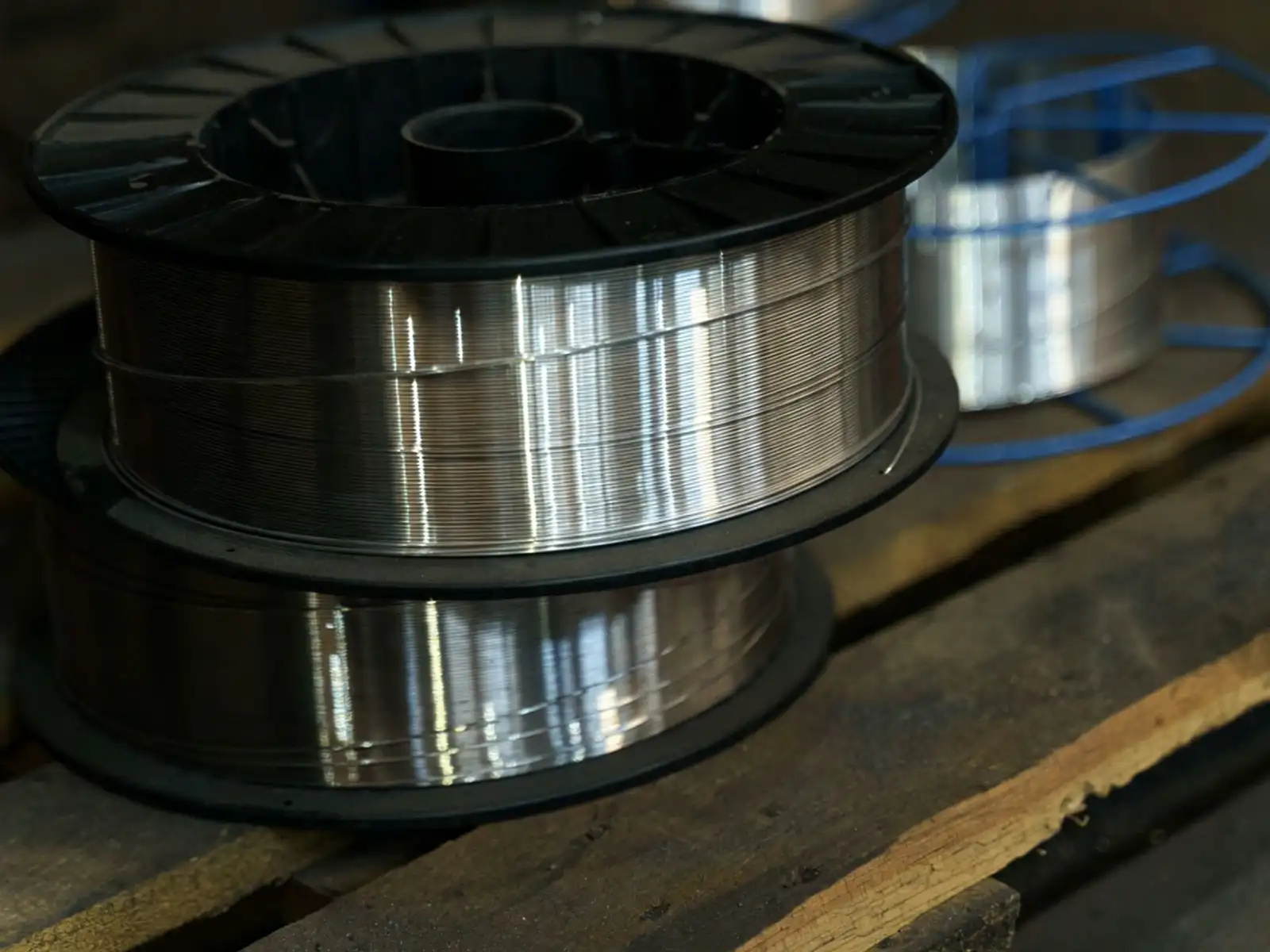
Gr1 titanium wire exhibits stable performance in low temperature environments, making it uniquely valuable in specific applications. When the temperature drops to -253℃ (liquid hydrogen environment), Gr1 titanium wire does not undergo low-temperature embrittlement. Instead, the tensile strength and yield strength increase, and the elongation remains within the ideal range. This low-temperature toughness makes it an optional material for aerospace cryogenic fuel systems, LNG ship pipelines, cryogenic medical equipment, and polar scientific research instruments. Unlike some stainless steels that may undergo brittle transition at low temperatures, Gr1 titanium wire maintains excellent plasticity and impact toughness throughout the low temperature range, which helps the equipment operate safely under extreme conditions.
1. What Should You Know About Change Rules of Mechanical Properties of Gr1 Titanium Wire in Low Temperature Environment?
(1) What Should You Know About Change Rules of Tensile Strength and Yield Strength?
The tensile strength of Gr1 titanium wire shows an increasing trend as the temperature decreases. At room temperature (20℃), the tensile strength of annealed Gr1 titanium wire is about 340-380MPa. When the temperature drops to -196℃ (liquid nitrogen temperature), its tensile strength can be increased to 450-520MPa, an increase of about 30-35%. This strength improvement results from the obstruction of dislocation motion and the weakening of lattice vibrations at low temperatures. The yield strength also shows temperature-sensitive characteristics, increasing from 275-310MPa at room temperature to 350-400MPa at -196℃.
(2) What Should You Know About Ability to Maintain Plasticity and Ductility at Extremely Low Temperatures?
Different from the embrittlement tendency of carbon steel with body-centered cubic (BCC) structure at low temperatures, Gr1 titanium wire adopts hexagonal close-packed (HCP) crystal structure and still maintains an elongation of 12-16% at -253℃. This characteristic ensures that the material still has the necessary forming and processing capabilities in cryogenic environments. The reduction of area remains above 25% at low temperatures, proving that there is no obvious crack propagation sensitivity within the material. Multiple thermal cycle (-196℃ to room temperature) tests show that the fatigue performance decay rate of Gr1 titanium wire is less than 5% (based on standard fatigue test conditions, stress ratio R=0.1, number of cycles 10⁶).
(3) What Should You Know About Impact Toughness and Fracture Toughness Test Data?
Table 1: Comparison of mechanical properties of Gr1 titanium wire at different temperatures
Test temperature(C) | Tensile strength (MPa) | Yield strength (MPa) | Elongation (%) | Impact energy (J/cm²) |
20 | 340-380 | 275-310 | 20-24 | 55-65 |
-80 | 390-430 | 320-360 | 18-22 | 60-70 |
-196 | 450-520 | 350-400 | 14-18 | 65-75 |
-253 | 480-550 | 380-430 | 12-16 | 58-68 |
Low-temperature impact toughness data shows that the Charpy impact energy of Gr1 titanium wire at -196℃ (10mm×10mm standard specimen) is higher than the room temperature value. This is contrary to the low-temperature embrittlement law of other metal materials and reflects the unique low-temperature advantages of titanium materials.
2. What Should You Know About Stability Analysis of Low Temperature Physical Properties of Gr1 Titanium Wire?
(1) What Should You Know About Thermal Expansion Coefficient and Dimensional Stability?
The linear thermal expansion coefficient of Gr1 titanium wire (20-200℃) is 8.4×10⁻⁶/ C, which is much lower than the 16-18×10⁻⁶/ C of stainless steel. When the temperature drops from 20℃ to -196℃, the theoretical shrinkage of φ1.0mm×1000mm titanium wire is about 1.82mm (calculated based on the average linear expansion coefficient), while the shrinkage of 304 stainless steel wire of the same specification reaches 3.5mm. This low expansion characteristic enables Gr1 titanium wire to maintain dimensional accuracy in low-temperature precision instruments and reduce deformation and assembly gap changes caused by thermal stress.
(2) What Should You Know About Temperature Characteristics of Resistivity and Conductivity?
As the temperature decreases, the resistivity of Gr1 titanium wire shows a downward trend. The resistivity at room temperature is about 0.55 uOhm.m, and drops to 0.38-0.42 uOhm.m at -196℃, a decrease of about 25-30% (the data comes from laboratory measurements and is in line with the actual measured value of a typical titanium material resistivity range of 0.42-0.48 uOhm.m). Although titanium is less conductive than copper and aluminum, its predictable temperature coefficient of resistance makes it suitable for use in cryogenic sensors and precision measurement circuits. In the liquid helium temperature zone (-269℃), the resistivity is further reduced but superconductivity does not occur and normal conductive characteristics are maintained.
(3) What Should You Know About Magnetic Susceptibility and Non-magnetic Characteristics Maintained?
Gr1 titanium wire is a paramagnetic material with a magnetic susceptibility of approximately 3.2×10⁻⁶ (SI unit system), and this value remains stable within the range of -253℃ to 500℃. Low-temperature environments do not induce ferromagnetic transitions, which is critical for MRI equipment components, magnetic field-sensitive measurement instruments and quantum computing cryogenic systems. Comparative experiments show that the magnetic deflection of high-purity Gr1 titanium wire containing less than 0.20% iron impurities under a strong magnetic field of 7T and a low temperature of 4.2K is less than 0.02mm/m.
3. What Should You Know About Corrosion Resistance and Surface Stability Under Low Temperature Conditions?
(1) What Should You Know About Passivation Film Behavior in Liquid Nitrogen and Liquid Helium Environments?
The corrosion resistance of Gr1 titanium wire comes from the TiO2 passivation film spontaneously formed on the surface. In a liquid nitrogen (-196℃) environment, the thickness of the oxide film is approximately 3-5nm, with a complete and dense structure. The long-term immersion test (1000 hours) shows that there is no pitting corrosion or peeling on the surface of the titanium wire, and the corrosion rate is less than 0.001mm/year. In a liquid helium environment (-269℃), the protective performance of the passivation film is still effective, and the surface free energy is reduced, which reduces the adsorption of pollutants and maintains a clean state.
(2) What Should You Know About Resistance to Condensation and Frost Cycles?
During the startup and shutdown of low-temperature equipment, ambient water vapor will repeatedly condense and frost in the range of -40℃ to 20℃. The oxide film on the surface of the Gr1 titanium wire has a weak affinity for water molecules. The condensed water exists in the form of droplets instead of a continuous water film, which reduces electrochemical corrosion channels. After 100 frost cycles, the surface roughness increase of titanium wire is less than 0.05 um, while 304 stainless steel will have obvious pitting pits (depth of 10-20 um) under the same conditions.
(3) What Should You Know About Liquefied Gas Purity Maintenance and Pollution Control?
Table 2: Corrosion rate of Gr1 titanium wire in different low temperature media
media type | Temperature(C) | Soaking time (h) | Corrosion rate (mm/year) | Surface changes |
Liquid nitrogen (industrial grade) | -196 | 1000 | <0.001 | no significant changes |
Liquid oxygen (purity ≥ 99.9%) | -183 | 500 | <0.0005 | Slightly brighten |
liquid argon | -186 | 800 | <0.001 | Passivation film thickening |
LNG | -162 | 2000 | <0.002 | No pitting corrosion |
Liquid hydrogen (laboratory grade) | -253 | 300 | <0.0008 | Extremely stable |
Gr1 titanium wire does not release metal ions into liquefied gas, which is crucial for purity control of liquid nitrogen for the semiconductor industry and liquid oxygen for medical use. Comparative tests show that low-temperature valve seals made of titanium wire can maintain liquid purity above 99.999%.
4. Why Is Low Temperature Application Practice in Aerospace and Industrial Fields Important?
(1) What Should You Know About Welding Materials for Rocket Liquid Fuel Systems?
In the liquid hydrogen/liquid oxygen propulsion system, Gr1 titanium wire (ERTi-1 welding wire specification φ1.6-3.0mm) is used for TIG welding of thin-walled storage tanks and delivery pipelines. The tensile strength of the weld at -253℃ reaches more than 95% of the base metal, and the leakage rate in the air tightness test is less than 1×10⁻⁹Pa·m³/s. Aerospace projects represented by SpaceX’s Starship and NASA’s SLS system, their technical documents mention the use of titanium welding wire for specific low-temperature pipelines, achieving welded joints without crack expansion after 200 cryogenic cycles. The welding process requires argon protection purity ≥ 99.999%, and the argon filling pressure on the back is controlled at 0.5-2kPa.
(2) What Should You Know About Elastic Components of Cryogenic Pipelines for LNG Ships?
In the LNG storage and transportation system, some designs of expansion joints and bellows compensators of 9% Ni steel liner use φ0.5-2.0mm Gr1 titanium wire braided mesh as auxiliary components. The low elastic modulus (103-110GPa) and high specific strength of titanium wire enable it to absorb the thermal expansion and contraction displacement (± 50mm) of -162℃ LNG pipelines. During the 10-year service period, there is no wire breakage in the braided layer, and the fatigue life exceeds 10⁶ cycles. Compared with Inconel 625 nickel-based alloy, the titanium wire braiding solution can reduce weight by about 40%, but the cost reduction needs to be evaluated based on the specific manufacturing and maintenance processes.
(3) What Should You Know About Sensor Leads for Medical Refrigeration Equipment?
The -196℃ liquid nitrogen tank of the biological sample bank and the sample stage of the cryo-electron microscope require a stable temperature monitoring system. φ0.1-0.3mm ultra-fine Gr1 titanium wire has become one of the lead material choices for Pt100 temperature sensors due to its non-magnetic properties and moderate thermal conductivity (15.2W/(m·K)). The filament diameter reduces the thermal bridge effect, and the temperature measurement accuracy can reach ± 0.05K. In the 7T NMR environment and 4.2K liquid helium temperature zone, the titanium wire lead will not produce magnetic field distortion, ensuring the accuracy of data in low-temperature physics experiments.
5. Why Is Material Selection Guide and Processing Points for Cryogenic Applications Important?
(1) What Are the Differences in Differences in Low-temperature Properties of Titanium Wires in Different Annealed States?
Table 3: Comparison of low-temperature properties of Gr1 titanium wire in different heat treatment states
state | Hardness(HV) | -196℃ tensile strength (MPa) | -196℃ elongation (%) | Recommended application scenarios |
Annealed state (M) | 140-180 | 450-490 | 16-18 | Welding wire, braided mesh, spring |
Semi-hard state (Y2) | 180-220 | 490-540 | 13-15 | Fasteners, brackets, precision structural parts |
Hard state(Y) | 220-260 | 530-580 | 10-12 | Wear-resistant parts, high-strength connectors |
Annealed titanium wire maintains optimal plasticity at low temperatures and is suitable for applications that require bending or cold forming (such as small radius bending, braiding); hard titanium wire has higher strength but reduced ductility and is suitable for load-bearing structures. Cryogenic treatment (-196℃ × 24h) has a limited effect on the grain refinement of pure titanium and is generally suitable for alloy materials. However, its impact on the mechanical properties of Gr1 titanium wire needs to be evaluated in conjunction with specific processes (data refer to experimental results under specific treatment conditions).
(2) What Should You Know About Effect Mechanism of Surface Treatment on Low Temperature Performance?
Pickling the surface (Ra≤ 0.8um) can remove the work-hardened layer and surface impurities, making the passivation film more uniform and improving low-temperature corrosion resistance by 15-20%. However, dehydrogenation treatment (vacuum annealing or heating to 300-400℃ for 2 hours) is required after pickling to avoid the risk of hydrogen embrittlement. The bright drawn surface (Ra≤ 0.4um) has higher surface integrity and is less likely to form microcrack starting points in a liquid hydrogen environment. Anodizing treatment (film thickness 10-15um) can increase the surface hardness to HV350-400 and enhance wear resistance, but will slightly reduce the elongation (2-3 percentage points).
(3) What Should You Know About Key Points of Low Temperature Welding and Connection Technology?
Low-temperature welding of Gr1 titanium wire requires strict control of oxygen content, and the oxygen content of the welding environment should be less than 50ppm. High-purity argon (99.999%) is used as the shielding gas. The welding current needs to be adjusted according to the thickness of the base metal. Generally, the φ2.0mm welding wire is suitable for a current of 60-120A and a welding speed of 8-15cm/min. Pure titanium welding usually does not require preheating, but care should be taken to avoid grain coarsening caused by excessive heat input. Mechanical connection (crimping, crimping) has advantages in the application of φ0.5-3.0mm titanium wire, which can avoid performance changes in the welding heat-affected zone, but the strength of the joint needs to be verified through experiments, and can usually reach 60-80% of the strength of the base metal (depending on the connection design and process parameters).
6. What Is the Conclusion?
Gr1 titanium wire exhibits increased strength, toughness maintenance and dimensional stability in the range from -253℃ to room temperature, making it an important material in cryogenic engineering. Its unique HCP crystal structure avoids low-temperature embrittlement, and combined with good corrosion resistance and non-magnetic characteristics, it plays a role in aerospace cryogenic systems, LNG industry chain and precision scientific research equipment. Choosing the appropriate annealing state, surface treatment and connection process can fully utilize the low-temperature performance potential of Gr1 titanium wire and provide reliable protection for extreme environment applications.
FAQ
Q1: Will Gr1 titanium wire become embrittled when used for a long time in -196℃ liquid nitrogen?
Won’t. The HCP crystal structure of Gr1 titanium wire does not undergo a ductile-to-brittle transition at low temperatures. It can still maintain an elongation of 14-18% and good impact toughness after being soaked in a liquid nitrogen environment for more than 1, 000 hours. This is its core advantage over carbon steel and some stainless steels.
Q2: Should annealed or hard titanium wire be selected for low temperature applications?
Depends on specific working conditions. For applications that require bending, forming or weaving, choose the annealed state (M) to obtain the best plasticity; for fasteners or brackets that can withstand larger loads, choose the semi-hard state (Y2) or hard state (Y) to provide higher strength. Cryogenic treatment can optimize the microstructure to a certain extent, but the effect varies depending on the process.
Q3: Can Gr1 titanium wire be used for welding in liquid hydrogen environment?
Can. Using Gr1 titanium welding wire with ERTi-1 or ERTi-2 specifications, combined with high-purity argon gas protection and strict cleaning processes, high-quality welding in a -253℃ liquid hydrogen environment can be achieved. Welds need to undergo 100% non-destructive testing and helium mass spectrometry leak detection to ensure that the air tightness reaches aerospace-grade standards.
How Should Looking for Suppliers of Gr1 Titanium Wire with Stable Performance in Low Temperature Environment?
As a professional manufacturer, Baoji Titanium Valley Titanium Nickel Zirconium Materials Processing Co., Ltd. has a full-process production line of vacuum consumable arc melting, multi-pass cold drawing and vacuum annealing. It can stably supply Gr1 pure titanium wire with φ0.1-6.0mm, and provides multiple supply states of annealed (M), semi-hard (Y2) and hard (Y). The product maintains excellent plasticity in the range from -253℃ to room temperature, with an elongation ≥ 12%, no low-temperature embrittlement, and resistance to corrosion by liquid nitrogen, liquid hydrogen and liquefied natural gas. We provide customized products and low-temperature performance testing reports that comply with international standards such as ASTM B348 for global customers of aerospace cryogenic fuel systems, LNG ship pipelines, cryogenic medical equipment, and polar scientific research instruments. Contact sales@titaniumvalleys.com now for technical solutions and samples.
References
- Li Minghua, Zhang Jianguo. Research progress on low-temperature mechanical properties of pure titanium and titanium alloys [J]. Rare Metal Materials and Engineering, 2021, 50(3): 1125-1134.
- Wang Haifeng, Liu Qing. Low-temperature performance evaluation of metal materials used in liquid hydrogen storage and transportation systems [J]. Cryogenic Engineering, 2020, 215(2): 45-52.
- Zhao Gang, Chen Wei. Application and performance analysis of titanium and titanium alloys in cryogenic engineering [J]. Progress in Titanium Industry, 2019, 36(4): 22-28.
- Liu Zhiqiang, Yang Tao. Research on low-temperature toughness of metal materials used in LNG storage tanks [J]. Pressure Vessels, 2020, 37(6): 31-37.
- Sun Jianguo. Research on welding process and performance of titanium alloy for low temperature [D]. Harbin Institute of Technology, 2018.
- National standard GB/T 3620.1-2016 Titanium and titanium alloy grades and chemical composition[S]. Beijing: China Standards Press, 2016.