
Detailed Explanation of the Heat Treatment Process of Gr5 Titanium Rods, How to Improve Strength and Material Properties?
- Gr5 Titanium Rods
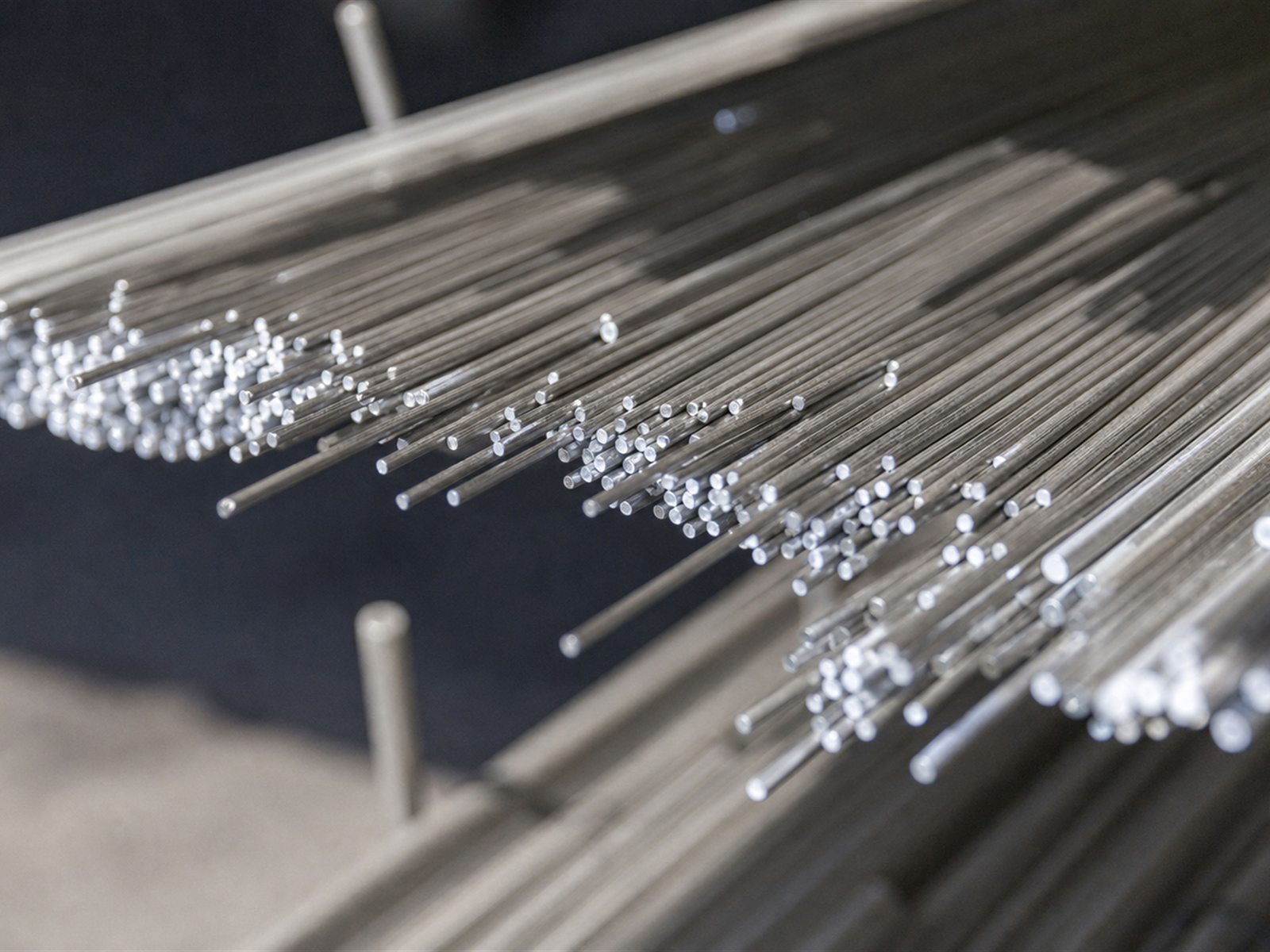
The heat treatment process of Gr5 titanium rod (Ti-6Al-4V) is a key link in determining its final performance. By precisely controlling heat treatment parameters such as annealing, high-temperature homogenization and aging, the microstructure of the material can be significantly optimized, increasing the tensile strength from the conventional 895MPa to more than 1100MPa, while maintaining good toughness and fatigue life. This article will provide an in-depth analysis of the core heat treatment technology route of Gr5 titanium rods, from the organizational evolution mechanism to actual process parameter control, to help precision processing companies and purchasers in the aviation medical industry systematically grasp the underlying logic of material performance improvement, avoid batch performance fluctuations and quality hazards caused by improper processes, and truly achieve the goal of “selecting the right materials, using the right processes, and controlling costs.”
1. Basics of Heat Treatment of Gr5 Titanium Rods: Why Does the Process Directly Determine the Upper Limit of Performance?
(1) What Should You Know About the Uniqueness of Α+β Biphasic Organization?
Gr5 titanium rod is an α+β dual-phase titanium alloy. Its microstructure is composed of a hexagonal close-packed (HCP) α phase and a body-centered cubic (BCC) β phase. During heat treatment, changes in the proportion, morphology and distribution of the two phases directly affect the mechanical properties of the material. The α phase provides basic strength, while the creep resistance is mainly related to the β phase and tissue morphology. The β phase gives the material good plasticity and fracture toughness. By controlling the heating temperature near the β phase transition point (approximately 980-1050℃), the phase ratio can be precisely controlled to achieve the best balance of strength and toughness.
(2) What Should You Know About Effect of Heat Treatment on Grain Size?
Grain size is one of the key factors affecting the strength of titanium alloys. Coarse columnar grains will reduce the fatigue performance and impact toughness of the material, while the uniform equiaxed grain structure can significantly improve the comprehensive mechanical properties. Through multi-pass forging combined with sub-β phase transformation zone annealing (850-920℃), grain refinement can be achieved, so that the average grain size is controlled within the range of 10-30 um, and the fatigue strength is increased by 20-35%.
(3) What Should You Know About Residual Stress and Tissue Uniformity?
Residual stresses generated during thermal processing can lead to processing distortion and dimensional instability. The complete annealing process (700-850℃ for 2-4 hours) can fully eliminate internal stress and make the material reach a stress-relieved state. This is particularly important for titanium rods used in precision mechanical parts and automation equipment, which can effectively avoid warping deformation and tool wear in subsequent processing.
2. What Should You Know About Core Heat Treatment Process Route: From Forging to Final Performance Control?
(1) What Should You Know About Heat Treatment As Forged (pre-treatment Stage)?
The forged Gr5 titanium rod is usually in the hot working state (R state), and there are obvious stress concentrations and uneven microstructure inside. At this time, stress relief annealing is required, the temperature is set at 650-750℃, and the holding time is determined according to the diameter of the rod (about 1 hour per 25mm diameter or thickness). This step can eliminate 50-70% of residual stress and create a stable material state for subsequent precision processing.
(2) What Should You Know About Complete Annealing Process (M-state Standard Process)?
Complete annealing is the most commonly used heat treatment method for Gr5 titanium rods. The process parameters are: heating to 700-850℃, holding time for 2-4 hours, and then air cooling or furnace cooling to room temperature. This process makes the α phase fully spheroidized, the β phase evenly distributed, and the material achieves optimal plasticity and processability. After annealing, the hardness drops to 280-320HB, and the elongation can reach 12-18%, which is especially suitable for applications that require cold forming or complex welding.
(3) Why Is Double Annealing Process (standard for High-end Applications) Important?
For high-reliability applications such as aerospace and medical implants, a double annealing process can be used to obtain more stable structure and performance. The first annealing is performed at 50-80℃ (about 900-950℃) below the β phase transformation point, and is kept for 1-2 hours and then air-cooled. The purpose is to homogenize the β phase distribution; the second annealing is kept at 700-750℃ for 2-3 hours to obtain a fine and uniform α-sheet structure. This process increases material fatigue life by more than 40%, and batch performance fluctuations are controlled within ± 3%.
(4) What Should You Know About High Temperature Homogenization and Aging Treatment (enhanced Technology)?
When higher strength is required, high-temperature homogenization and aging treatment are used: first, keep the temperature at 950-980℃ for 30-60 minutes, quickly cool with water or oil to obtain a supersaturated α’ martensite structure; then age at 500-600℃ for 4-8 hours to precipitate fine α+β mixed phases for strengthening. This process can make the tensile strength exceed 1100MPa and the yield strength reach more than 1000MPa, but the elongation will drop to 8-10%. Suitable for key structural parts such as high-strength fasteners, connecting rods and load-bearing shafts.
3. What Should You Know About Fine Control of Process Parameters: the Golden Combination of Temperature, Time and Cooling Rate?
(1) What Should You Know About Precise Control of Heating Temperature?
A heating temperature deviation of ± 10℃ may lead to a performance difference of 5-8%. If the annealing temperature is too low (less than 700℃), stress relief is insufficient and the material hardness is high; if the temperature is too high (more than 900℃), the grains will become significantly coarsened and the impact toughness will decrease. It is recommended to use a vacuum furnace or atmosphere protection furnace with multi-point temperature measurement and automatic compensation function to ensure that the furnace temperature uniformity is within ± 5℃, especially for large-size titanium rods with a diameter of more than 100mm.
(2) What Should You Know About Matching of Holding Time and Cross-sectional Size?
Insufficient holding time will result in incomplete transformation of the heart tissue, resulting in uneven performance. Recommended holding time calculation formula: T (hour) = D (mm diameter)/25 + reference time (annealing 2h, homogenization 1h). For example, the annealing and holding time of a φ80mm titanium rod should be 80/25+2≈5 hours. For large forgings or parts with complex shapes, the holding time needs to be extended by 15-25% to ensure structural uniformity.
(3) What Should You Know About Effect of Cooling Rate on Tissue?
The cooling rate directly determines the morphology of the phase change products. Furnace cooling (10-30℃/h) obtains coarse α lamellae with moderate strength but the best plasticity; air cooling (50-100℃/h) obtains medium lamellae with balanced strength and toughness; water cooling or oil cooling (>500℃/h) forms a martensitic structure with the highest strength but requires subsequent aging treatment. It is recommended to use program-controlled cooling for precision parts to avoid the risk of deformation and cracking caused by uneven cooling.
Cooling method | Cooling rate (C/h) | organizational characteristics | Tensile strength (MPa) | Elongation (%) | Applicable scenarios |
furnace cold | 10-30 | coarse alpha sheets | 900-950 | 15-18 | Deep processing and welding structure |
air cooling | 50-100 | medium alpha sheet | 950-1000 | 12-15 | General structural parts |
oil cooling | 300-500 | α’ martensite + residual β | 1050-1100 | 10-12 | High strength shaft parts |
Water cooling + aging | >500 | α’ martensite+precipitated phase | 1100-1200 | 8-10 | aviation fasteners |
4. What Should You Know About Co-optimization of Surface Treatment and Heat Treatment?
(1) What Should You Know About Scale Removal and Surface Quality?
During the heat treatment process, 0.05-0.15mm TiO2 oxide scale will be formed on the surface, affecting dimensional accuracy and subsequent processing. It is recommended to use chemical pickling (HF-HNO3 mixture) or mechanical sandblasting to remove the oxide layer. For medical grade and precision electronic titanium rods, the surface roughness needs to be controlled at Ra 0.8-1.6um. The surface roughness can be reduced through centerless grinding or polishing processes to reduce stress concentration points.
(2) Why Is Advantages of Vacuum Heat Treatment Important?
A vacuum furnace with a vacuum degree of ≤ 1×10⁻³Pa can avoid oxygen and nitrogen pollution, maintain the silvery white luster of the surface, and reduce subsequent surface treatment processes. For titanium rods used in medical implants and semiconductor devices with high purity requirements, vacuum heat treatment can control the surface oxygen content below 0.12%, improving biocompatibility and corrosion resistance. The cost increases by about 15-20%, but the comprehensive yield rate and post-processing costs can be saved by more than 25%.
(3) What Should You Know About Surface Strengthening Treatment Combined Process?
After heat treatment, surface strengthening technology can be combined to further improve performance: shot peening can increase surface hardness by 10-15% and fatigue strength by 20-30%; laser surface modification can form a hardened layer, improving wear resistance by 3-5 times; PVD coating (TiN, TiCN) can reduce the friction coefficient and extend the service life of molds and precision shafts. These combined processes are particularly suitable for complex working conditions such as marine engineering and petrochemical equipment.
5. What Should You Know About Quality Inspection and Batch Stability Control?
(1) What Should You Know About Metallographic Structure Testing Standards?
Observe the α phase morphology, size and distribution uniformity under a microscope. Qualification standards: α-sheet thickness 2-8um, β-phase continuously distributed, no coarse grains (>50um) and abnormal structure. EBSD (electron backscatter diffraction) technology can be used to quantitatively analyze texture and grain boundary characteristics to ensure that material anisotropy is controlled within 10%, which is crucial for complex structural parts that bear multi-directional stress.
(2) What Should You Know About Comprehensive Testing of Mechanical Properties?
In addition to standard tensile tests, impact toughness (room temperature ≥ 40J), fatigue performance (107 cycle stress ≥ 450MPa) and fracture toughness (KIC ≥ 55MPa·m½) tests are also required. For aviation medical applications, high-temperature tensile (400℃) and creep performance (450℃/300MPa for 100h) tests are equally important (Note: The long-term use temperature of Gr5 titanium rods usually does not exceed 400℃. The creep test at 450℃ needs to confirm the specific working conditions. The parameters here are based on special application verification). It is recommended that the proportion of random inspections in each batch should not be less than 5%, and 100% ultrasonic flaw detection and eddy current testing should be implemented for key batches.
(3) What Should You Know About Batch Stability Control System?
Establish a heat treatment process card and performance database to record the temperature curve, holding time and performance results of each heat. The SPC (statistical process control) method is used to monitor the fluctuation of key parameters, and timely warning and adjustment are provided when the Cpk value is lower than 1.33. For large-volume supply, first-piece inspection and process inspection systems are implemented to ensure that the tensile strength deviation is ≤ ± 20MPa and the hardness fluctuation is ≤ ± 10HB (based on long-term production statistical experience values), so as to eliminate the problem of unqualified materials from the source.
Test items | Detection method | Qualification standards | Detection frequency | critical control point |
Metallographic organization | Optical microscope + EBSD | α-sheet layer 2-8um, no coarse grains | per heat | Cooling rate, holding time |
tensile strength | National standard tensile test | ≥ 895MPa (annealed state) | per batch | Annealing temperature, cooling method |
hardness | Brinell hardness tester | 280-340HB | Each root (spot inspection) | Heating uniformity |
Impact toughness | Charpy impact test | ≥ 40J (room temperature) | per batch | Grain size control |
Fatigue performance | rotational bending fatigue | 107 cycles≥ 450MPa | critical batch | Surface quality, tissue uniformity |
6. Why Is Industry Application Cases: How Heat Treatment Process Solves Practical Pain Points Important?
(1) What Should You Know About Aviation Fasteners: the Ultimate Balance of Strength and Toughness?
For the Gr5 titanium rod fasteners purchased by an aerospace engine manufacturer, the original process used single annealing, resulting in batch strength fluctuations of ± 50MPa. After assembly, 10% of the bolt pretightening torques were found to be uneven. After switching to the double annealing + surface shot peening process, the yield strength stabilized at 830± 15MPa, the fatigue life increased from 5×10⁶ times to 2×10⁷ times, and there was no failure record within three years, saving about 1.2 million yuan in rework costs every year.
(2) What Should You Know About Medical Implants: Unification of Biocompatibility and Processability?
Gr5 titanium rods for orthopedic implants need to have high strength (tensile strength ≥ 900MPa) and facilitate precision turning and surface polishing. Through the combined process of vacuum annealing (750℃/3h) + chemical polishing, the surface roughness reaches Ra 0.4um, the oxygen content is controlled below 0.12%, and the pass rate of level 0 of the cytotoxicity test is 100%. The life of processing tools is extended by 2 times, the processing time of a single piece is shortened by 30%, and the overall cost is reduced by 18%.
(3) What Should You Know About Marine Engineering Shafts: Long-term Stability Under Complex Working Conditions?
Seawater desalination equipment uses high-pressure pump shafts, and the working environment is high chloride ions + 350℃ steam + alternating stress. The Gr5 titanium rod that adopts high-temperature homogenization and aging treatment (970℃ homogenization + 550℃ aging for 6 hours) has a tensile strength of 1050MPa. After 5000 hours of salt spray corrosion test, the strength attenuation is <3%, and the wear amount of the bearing mating part is only 1/5 of that of 316 stainless steel. The equipment’s trouble-free operation cycle has been extended from 18 months to 48 months, and operation and maintenance costs have been reduced by more than 60%.
7. What Is the Conclusion?
The heat treatment process of Gr5 titanium rod is a precise material science practice, involving system engineering of phase change mechanism, process parameter control and quality inspection. By selecting an appropriate heat treatment route, accurately controlling temperature and time parameters, cooperating with surface treatment and strict quality verification, material performance can be improved by 20-40%, and batch stability can be controlled within ± 3%. This fundamentally avoids equipment failures, project rework and safety hazards caused by fluctuations in material performance, and provides reliable material support for high-end applications such as aerospace medicine, marine engineering and precision manufacturing.
(Note: The technical content of this article is for industry reference only. Please confirm the specific process parameters in conjunction with product standards and supplier technical documents.)
FAQ
Q1: How to choose the annealed state and aging state of Gr5 titanium rod?
The annealed state (M state) has the best plasticity and workability and is suitable for parts that require cold working, welding or complex forming; the aged state (after high-temperature homogenization and subsequent aging treatment) has a strength increase of 15-25% but a reduced elongation, and is suitable for high-stress bearing shafts and fasteners. It needs to be comprehensively evaluated based on the strength requirements and processing difficulty of the actual working conditions.
Q2: Why are there differences in performance between different batches at the same heat treatment temperature?
The main reasons include: fluctuations in raw material composition (deviations in Al and V content), insufficient heating uniformity (uneven distribution of furnace temperature), insufficient holding time (incomplete transformation of the center of large-size bars) and inaccurate cooling rate control. It is recommended to choose heat treatment equipment equipped with multi-point temperature measurement and programmed cooling functions, and establish a strict process parameter record and SPC monitoring system.
Q3: How to prevent cracks or discoloration on the surface after heat treatment?
Surface cracks are usually caused by too fast cooling rate or local stress concentration. Direct water quenching of large-diameter rods should be avoided and oil cooling or program-controlled cooling should be used instead. Surface discoloration (blue, yellow) is caused by high-temperature oxidation. Vacuum furnace or argon protective atmosphere can be used, and timely pickling to remove oxide scale after heat treatment. For precision parts, it is recommended to reserve 0.5-1mm machining allowance.
How Should Looking for a Stable and Reliable Supplier of Gr5 Titanium Rods?
Baoji Titanium Valley Titanium Nickel Zirconium Material Processing Co., Ltd. (Titanium Valley) focuses on precision processing of high-performance titanium alloy bars, with an annual production capacity of over 20, 000 tons. It strictly follows the ASTM B348 standard and provides full-specification customized services from φ4 to φ300mm. From complete annealing to double annealing and enhanced aging treatment, we use precise heat treatment processes to steadily increase the tensile strength of Gr5 titanium rods to more than 1100MPa, while ensuring that batch performance fluctuations are controlled within ± 3%, meeting the stringent requirements of high-end applications such as aviation fasteners, medical implants, and marine engineering. Contact us now for technical specifications and quotations: sales@titaniumvalleys.com.
References
- Cao Chunxiao. Phase transformation and heat treatment of titanium alloy[M]. Beijing: Metallurgical Industry Press, 2019.
- Zhang Qisheng, Wang Hao, Li Tao. Effect of double annealing process on structure and properties of Ti-6Al-4V alloy [J]. Metal Heat Treatment, 2022, 47(5): 12-18.
- Zhu Zhishou, Wang Xinnan, Li Xingwu. Control and application of microstructure and properties of Ti-6Al-4V alloy [J]. Journal of Aeronautical Materials, 2021, 41(3): 1-15.
- Liu Changkui, Zhao Zihua. Effect of titanium alloy heat treatment process parameters on mechanical properties [J]. Rare Metal Materials and Engineering, 2020, 49(8): 2736-2742.
- Chen Yongqiang, Zhang Weiping. Optimization and practice of heat treatment process of titanium alloy fasteners [J]. Mechanical Engineering Materials, 2023, 47(2): 56-61.