
Application Analysis of Ti-15V-3Al-3Cr-3Sn Titanium Foil, Why Has It Become the Material of Choice for Aerospace Structures?
- Ti-15V-3Al-3Cr-3Sn Titanium Foil
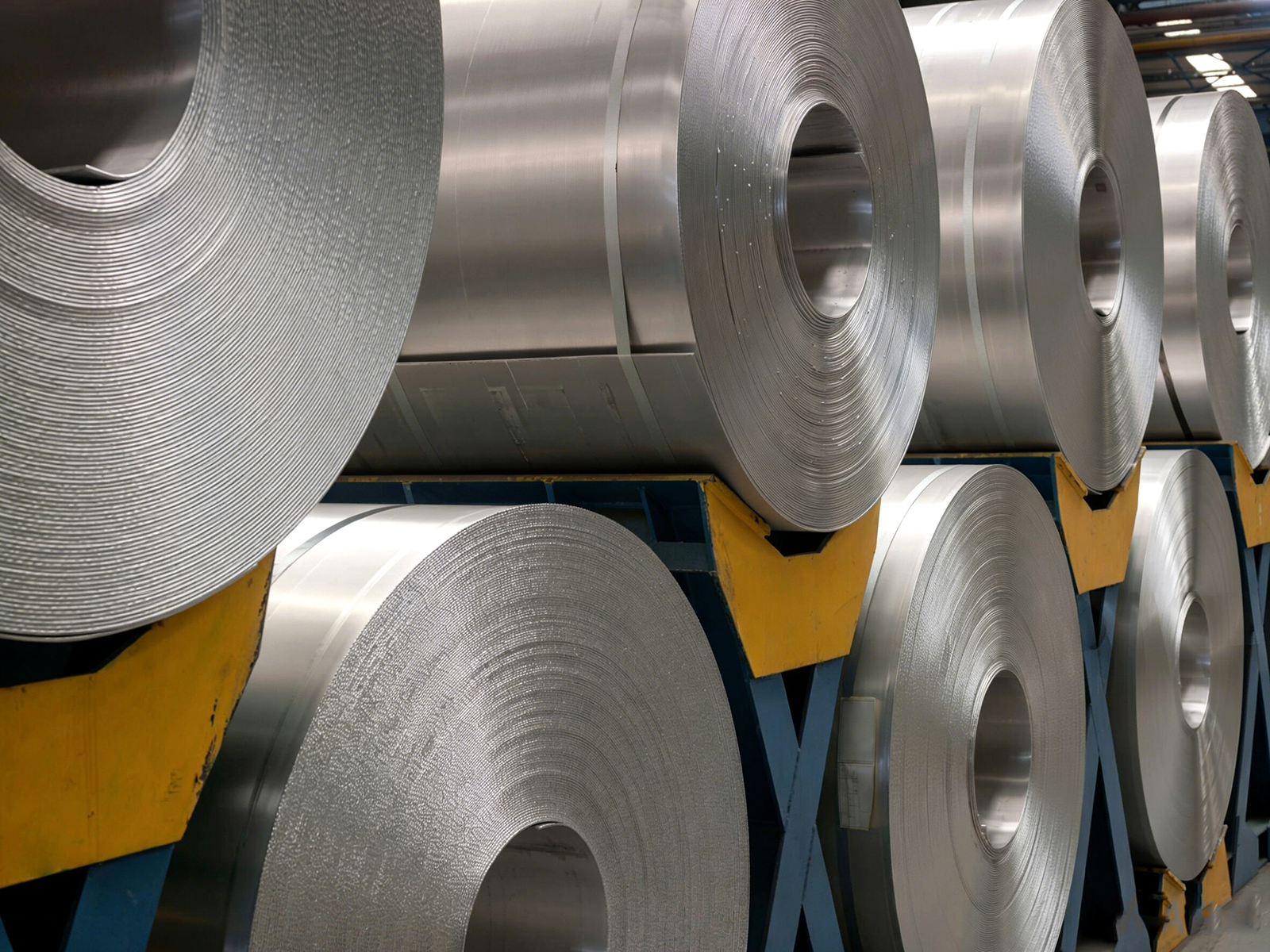
The reason why Ti-15V-3Al-3Cr-3Sn Titanium Foil has become the first choice for aerospace structural materials is mainly due to its unique near-beta alloy properties. This material has excellent cold forming capabilities in the annealed state and can complete complex bending and stamping processes. It can then obtain high strength properties comparable to Ti-15V-3Al-3Cr-3Sn titanium foil through aging treatment. Its density is only 60% of steel, but it can provide a load-bearing capacity close to that of high-strength steel. This high specific strength characteristic allows the aircraft to achieve significant weight reduction while maintaining structural strength (the density is only 60% of steel). More importantly, Ti-15V-3Al-3Cr-3Sn titanium foil can maintain stable mechanical properties in extreme temperature environments, and with excellent fatigue resistance and corrosion resistance, it perfectly meets the stringent requirements of the modern aerospace industry for lightweight and high-reliability structural materials.
1. Why Is Structural Advantages of Near-beta Titanium Alloys: Why Ti-15V-3Al-3Cr-3Sn Stands Out Important?
(1) What Should You Know About the Uniqueness of Alloy Structure?
Ti-15V-3Al-3Cr-3Sn belongs to a nearly β-type titanium alloy system, and its β-stabilizing element content has been carefully proportioned so that the material retains a large amount of metastable β phase at room temperature. This microstructural structure gives titanium foil excellent plastic deformation ability. Compared with α+β Ti-6Al-4V alloy, its cold working elongation can be increased by more than 40% (the typical elongation of Ti-6Al-4V is about 8-10%). Titanium Valley Company uses vacuum melting to prepare ingots, and then undergoes a multi-pass precision cold rolling process to control the structural uniformity to an industry-leading level.
(2) What Should You Know About Controllable Phase Change Strengthening Mechanism?
The biggest technological breakthrough of this material lies in its ability to control two-state properties. Annealed titanium foil has good plasticity and a tensile strength of about 800-900 MPa, making it suitable for complex forming such as deep drawing and drawing. After aging treatment at 480-550℃, the α phase precipitates from the β matrix to form a dispersion-strengthened structure, and the strength can jump to the 1100-1200 MPa level. This process flexibility allows engineers to shape the part first and then heat treat it to impart end-use strength.
(3) What Are the Differences in Performance Comparison with Ti-15V-3Al-3Cr-3Sn?
There are differences in the application positioning of the two nearly β-type titanium foils. The Fe element of Ti-15V-3Al-3Cr-3Sn reduces material costs, has a faster aging response, and is more suitable for mass production. Ti-15V-3Al-3Cr-3Sn (UNS R56400) has a wider processing window and better corrosion resistance, and performs better in harsh environments such as spacecraft shells. Titanium Valley’s 20-roll precision rolling mill can produce ultra-thin foils of these two specifications respectively, and the thickness can be controlled to 0.02-1.0mm.
2. Why Is Analysis of Key Application Scenarios in the Aerospace Field Important?
(1) What Should You Know About Aircraft Skin and Stiffeners?
The skin structures of large transport aircraft and fighter jets require materials that can both withstand aerodynamic loads and have the ability to form complex curved surfaces. Ti-15V-3Al-3Cr-3Sn titanium foil thickness of 0.3-0.8mm is particularly suitable for manufacturing integral skins. Since creep forming or superplastic forming needs to be performed at high temperatures, it can complement cold forming capabilities – near net forming of double curvature surfaces can be achieved through creep forming or superplastic forming processes. Compared with aluminum alloy skin, titanium foil maintains stable performance in the operating temperature range of -50℃ to 150℃, and its fatigue crack growth rate is 30% lower than that of aluminum alloy skin.
(2) What Should You Know About Engine Compartment Insulation Parts?
Aviation engine nacelles need to withstand high-temperature environments of 300-500℃. Traditional stainless steel materials have the disadvantages of high density and fast heat conduction. Using 0.1-0.5mm Ti-15V-3Al-3Cr-3Sn ultra-thin foil to make a multi-layer heat insulation barrier, its thermal conductivity is only 1/4 of stainless steel and its weight is reduced by more than 50%. Titanium Valley’s continuous annealing production line adopts 7-zone electric heating control with a temperature accuracy of ± 2℃. The annealing temperature is controlled at 750℃ to ensure the uniformity of the foil structure and avoid thermal deformation caused by local softening.
(3) What Should You Know About Landing Gear and Transmission Parts?
The landing gear support structure needs to withstand the impact load during takeoff and landing. The yield strength of Ti-15V-3Al-3Cr-3Sn after age strengthening exceeds 1000 MPa, and with an elongation of 15-20%, it can absorb impact energy without brittle fracture. Precision parts such as transmission gears and connecting clamps are stamped from 0.5-1.0mm titanium foil, and the dimensional accuracy can be controlled within ± 0.05mm. Titanium Valley’s high-precision leveling production line effectively eliminates residual stress and ensures the consistency of parts assembly.
Table 1: Application parameters of Ti-15V-3Al-3Cr-3Sn titanium foil in different aerospace components
Application parts | Typical thickness(mm) | Main performance requirements | Processing technology | Strength level (MPa) |
Fuselage skin | 0.4-0.8 | Formability + fatigue strength | Creep deformation + aging | 1100-1200 |
thermal barrier | 0.1-0.3 | Temperature resistance + low thermal conductivity | Multi-layer stacking | 800-900 |
Landing gear parts | 0.6-1.0 | High strength + toughness | Stamping + aging | 1150-1250 |
Transmission clamp | 0.5-0.8 | Dimensional accuracy + wear resistance | Precision blanking | 1000-1100 |
3. What Should You Know About Technological Breakthroughs and Quality Control in Processing and Manufacturing?
(1) What Should You Know About Rolling Technology for Ultra-thin Wide Foils?
The production of titanium foil with specifications of 0.02-1.0mm×15-680mm faces dual challenges of shape control and surface quality. The 750mm 20-roll precision rolling mill equipped in Titanium Valley adopts a hydraulic servo system, with a rolling force of 3500kN and a maximum rolling speed of 400m/min. By optimizing the diameter of the work roll and matching the stiffness of the roll system, the thickness tolerance is ± 0.005mm and the flatness of the plate is ≤ 3I units. The work hardening in the multi-pass cold rolling process is released through intermediate annealing, and the cumulative deformation can reach more than 90%.
(2) What Should You Know About Surface Cleanliness and Functionalization?
Aerospace parts are extremely sensitive to surface contaminants, grease residues can cause welding porosity, and fluctuations in the oxide layer can affect subsequent coating adhesion. Titanium Valley’s ultrasonic cleaning production line uses a multi-stage ultrasonic + pure water rinsing process. The surface dyne value after cleaning exceeds 40, and the maximum line speed is 30m/min, taking into account both efficiency and cleanliness. For applications that require bonding or coating, sandblasting or chemical etching production lines can perform surface micro-texturing, and the roughness Ra is controlled in the range of 0.2-0.8um.
(3) What Should You Know About Full-process Oxygen Pollution Control System?
The sensitivity of titanium alloys to oxygen requires strict oxygen control in the production environment. The entire process from hot rolling to annealing is protected by inert gas, the oxygen content of the annealing furnace is <20ppm, and the vacuum degree is ≤ 5×10⁻³Pa. The continuous annealing production line realizes non-stop operation and avoids uneven structure caused by frequent temperature rise and cooling. Finished product inspection uses oxygen and nitrogen analyzers and X-ray diffractometers to ensure that the oxygen content is ≤ 0.13% and the phase composition meets the requirements of AMS 4983/4984 standards.
Table 2: Key process parameters for titanium valley Ti-15V-3Al-3Cr-3Sn titanium foil production
Process link | Core equipment | Key parameters | quality control indicators |
Precision cold rolling | 20-high rolling mill | Rolling force 3500kN speed 400m/min | Thickness tolerance ± 0.005mm |
Ultrasonic cleaning | Continuous cleaning line | Line speed 30m/min Frequency 40kHz | Dyne value ≥ 40 |
continuous annealing | 7 zone electric heating furnace | Temperature 750℃ Accuracy ± 2℃ | Oxygen content ≤ 0.13% |
Precision slitting | High speed slitting machine | Width 15-680mm | Width tolerance ± 0.1mm |
4. Why Is Cost-Effectiveness and Sustainability Advantages Important?
(1) What Should You Know About Whole Life Cycle Cost Analysis?
Although the unit price of Ti-15V-3Al-3Cr-3Sn titanium foil is higher than that of aluminum alloy materials, it is obviously economical from the perspective of the whole life cycle. After a certain model of transport aircraft was switched to titanium foil skin, the structural weight was reduced by 12% and the fuel efficiency increased by 8%. During the 20-year operation period, the fuel cost can be saved by more than three times the material price difference. The corrosion resistance of titanium foil extends the maintenance cycle to 2-3 times that of aluminum alloy, and the indirect benefits brought by reducing downtime and maintenance time are even more considerable.
(2) What Should You Know About Material Utilization and Waste Recycling?
The material utilization rate of traditional cutting and processing of titanium alloy parts is only 40-60%, while the use of titanium foil stamping can increase the utilization rate to 75-85%. Titanium Valley’s precision slitting production line can customize the width according to customer needs, and the width tolerance is controlled at ± 0.1mm, minimizing the generation of leftover materials. The titanium scrap during the production process is remelted by vacuum consumable electrodes and returned to the smelting process to achieve 100% recycling, which is in line with the concept of green manufacturing.
(3) What Should You Know About Help Achieve Carbon Neutrality Goals?
The aviation industry is an important source of global carbon emissions, and lightweighting aircraft is a direct way to reduce energy consumption. For every 1 kilogram of structural material weight saved, approximately 0.9 tons of carbon emissions can be reduced over the entire life of a commercial aircraft. Ti-15V-3Al-3Cr-3Sn titanium foil has a density that is 40% lower than high-strength steel and nearly 50% lower than nickel-based high-temperature alloys under the premise of equivalent strength. With the advancement of carbon neutrality policies in Europe and the United States and the research and development of hydrogen-powered aviation engines, ultra-thin titanium foil has broad application prospects in low-temperature hydrogen fuel storage systems.
Table 3: Comprehensive comparison between Ti-15V-3Al-3Cr-3Sn titanium foil and traditional materials
Contrast Dimensions | Ti-15V-3Al-3Cr-3Sn | Ti-6Al-4V(Gr5) | Aluminum alloy 7075 | high strength steel |
Density(g/cm³) | 4.65 | 4.43 | 2.81 | 7.85 |
Specific strength (MPa·cm³/g) | 237 | 214 | 202 | 178 |
Cold formability | excellent | Poor | good | medium |
Intensity adjustability | Excellent | medium | limited | limited |
Corrosion resistance (10-year evaluation) | Class A | Class A | Class B | Class C |
Whole life cost index | 100 | 105 | 118 | 142 |
5. What Should You Know About Future Technology Trends and Market Prospects?
(1) What Should You Know About the Research and Development Direction of Ultra-large Size Foil Materials?
The next generation of wide-body passenger aircraft and heavy-duty transport aircraft have put forward higher requirements for skin size, and the stable production of wide-width titanium foils above 1000mm is the focus of technical research. Titanium Valley is upgrading its rolling equipment and plans to achieve batch supply capabilities for ultra-thin foils with a width of 1, 200mm and a thickness of 0.05mm. Wider materials can reduce splice welds, reduce the risk of stress concentration, and improve overall structural reliability.
(2) Why Is Application Expansion of Composite Material Interface Layer Important?
The connection between carbon fiber composite materials and metal structures has always been an engineering problem. Ti-15V-3Al-3Cr-3Sn ultra-thin foil as a transition layer can effectively alleviate the thermal expansion coefficient mismatch. After surface treatment, the bonding strength of the foil with a thickness of 0.05-0.15mm and the resin matrix reaches more than 25MPa. This metal-composite hybrid structure exhibits excellent impact resistance and damage tolerance properties in load-bearing parts such as wing boxes and fuselage frames.
(3) What Should You Know About Integration of Additive Manufacturing and Traditional Rolling?
Additive manufacturing technologies such as selective laser melting (SLM) can manufacture parts with complex shapes, but there are still deficiencies in surface roughness and tissue density. Using Ti-15V-3Al-3Cr-3Sn titanium foil as a raw material for additive manufacturing or compounding it with 3D printed parts, combining the excellent surface quality of rolled foil and the structural freedom of printed parts, is an important direction for future customized aerospace parts. Titanium Valley is cooperating with the Aeronautical Research Institute to carry out relevant application verification.
6. What Is the Conclusion?
Ti-15V-3Al-3Cr-3Sn titanium foil has become the core choice of aerospace structural materials due to its unique structure of nearly β-type alloy, excellent dual forming-strengthening performance and full life cycle cost advantage. Through precision rolling, clean treatment and a full-process quality control system, Titanium Valley Company has achieved stable mass production of 0.02-1.0mm ultra-thin wide foils, and its product performance has reached international standards such as AMS 4983. With the deepening of lightweight technology and the development of green aviation, the application fields of this type of high-performance titanium foil materials will continue to expand.
FAQ
Q1: How to choose between Ti-15V-3Al-3Cr-3Sn titanium foil and Ti-15V-3Al-3Cr-3Sn titanium foil in aviation applications?
Ti-15V-3Al-3Cr-3Snhas lower cost and fast response time, making it suitable for mass-produced fuselage structural parts; Ti-15V-3Al-3Cr-3Sn has better corrosion resistance and wider processing window, making it more suitable for extreme environments such as spacecraft shells. Both are near-β-type alloys and can be selected according to the temperature range, corrosive medium and output requirements of specific working conditions.
Q2: How to avoid cracking of ultra-thin titanium foil during the forming process?
The key is to select the annealed state for the cold forming operation. Ultra-thin foils of 0.02-0.5mm need to use hydroforming or rubber forming processes, and control the deformation speed at 5-15mm/s to avoid adiabatic temperature rise caused by excessive strain rates. Parts with complex shapes can be formed in multiple steps, with stress relief annealing in between, and unified aging strengthening after the forming is completed.
Q3: How to verify whether the titanium foil material meets aerospace standards?
It is necessary to detect chemical composition (spectral analysis), mechanical properties (tensile/hardness test), metallographic structure (microscopic observation of β grain size) and surface quality (ultrasonic flaw detection). Materials that meet the AMS 4983 standard should provide a Mill Test Certificate, including the melting batch number, mechanical property data and third-party testing report to ensure full traceability.
How Should Looking for Reliable Aerospace Grade Titanium Foil Supplier?
As a professional manufacturer, Baoji Titanium Valley Titanium Nickel Zirconium Material Processing Co., Ltd. is equipped with world-class precision rolling equipment and has an annual output of 3, 000 tons of ultra-thin foils, serving global aerospace, medical and high-end electronics customers. To obtain technical specifications and quotations for Ti-15V-3Al-3Cr-3Sn or Ti-15V-3Al-3Cr-3Sn titanium foil, please contact: sales@titaniumvalleys.com
References
- Liu Daxiang, Tang Ping. Application and development trends of titanium alloys in aeroengines [J]. Journal of Aeronautical Materials, 2020, 40(1): 1-15.
- Chen Guoliang, Zhang Guoqing, Wang Xin. Microstructure and properties of near-beta titanium alloy Ti-15V-3Al-3Cr-3Sn[J]. Rare Metal Materials and Engineering, 2018, 47(6): 1885-1890.
- Zhao Yongqing, Hong Quan, Wu Xiaodong. Research progress in forming technology of titanium alloy sheet for aviation [J]. Journal of Plastic Engineering, 2019, 26(3): 1-9.
- Gan Zhenwei, et al. Titanium and titanium alloy standard manual[M]. Beijing: China Standards Press, 2015.