
Why Is Nickel 201 Complete Guide to Nickel Foil Composition, Properties and Industrial Applications Important?
- Nickel 201 Nickel Foil
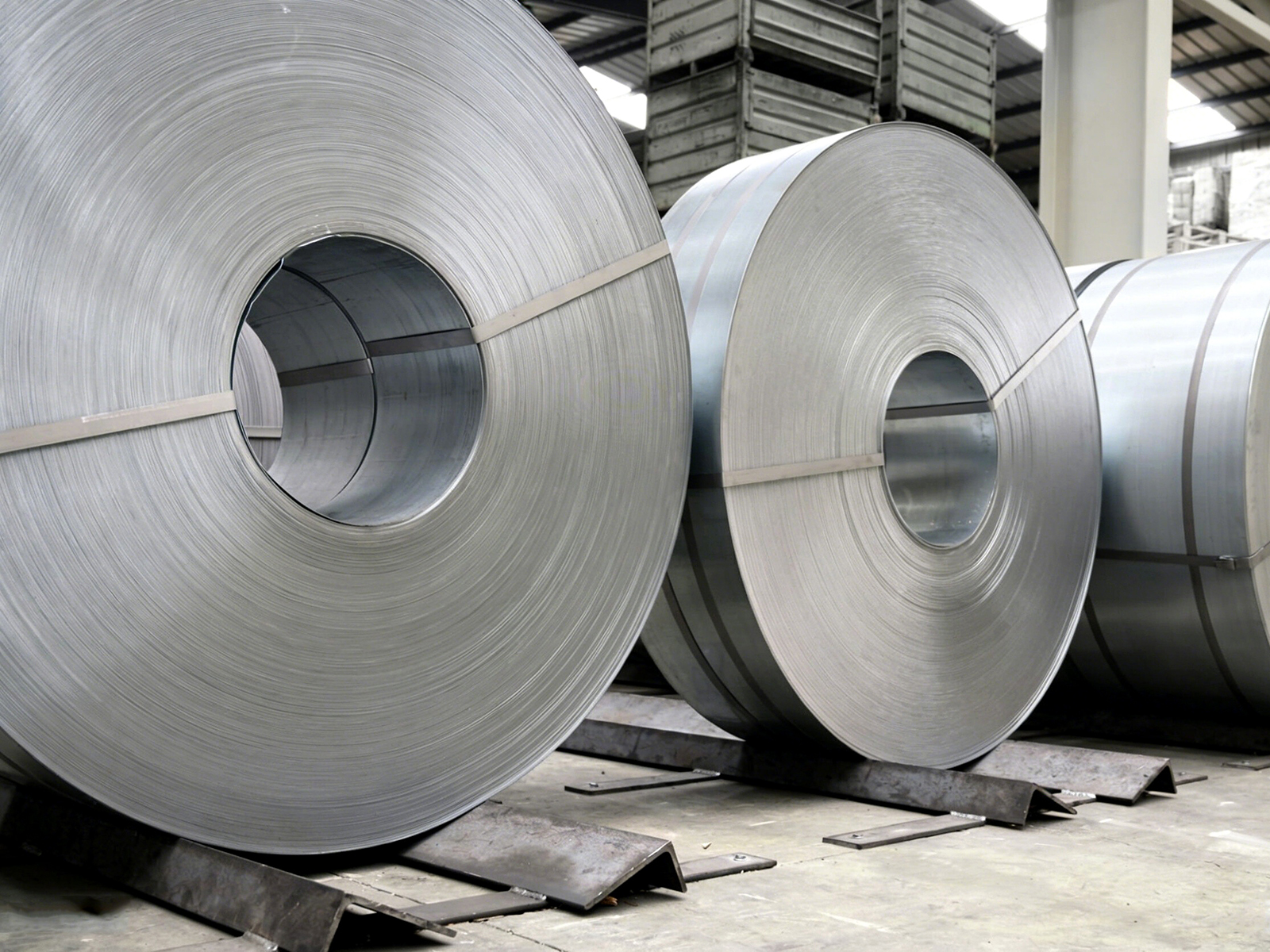
Nickel 201 nickel foil is a low-carbon, high-purity nickel material with a carbon content of ≤ 0.02% and a nickel content of ≥ 99.0%. It is specially designed for high-temperature stability applications. Compared with Nickel 200, its significantly lower carbon content effectively inhibits graphitization tendency and intergranular embrittlement in high temperature environments. This material maintains the excellent electrical conductivity and corrosion resistance of pure nickel and can operate stably for a long time in an environment of ≤ 600℃. Nickel 201 Foil is widely used in fields such as new energy battery tabs, chemical electrolysis electrodes, electromagnetic shielding and high-temperature conductive structural parts. Its thickness range is 0.03-0.8mm, its width can reach 350-670mm, its annealed tensile strength is 350-420 MPa, and its elongation is ≥ 25%. It complies with ASTM B162 and UNS N02201 standards.
1. What Should You Know About Nickel 201 Nickel Foil Material Composition and Standard Specifications?
(1) What Should You Know About Technical Significance of Chemical Composition Control?
The core competitiveness of Nickel 201 lies in strict chemical composition control. The nickel content is maintained at ≥ 99.0%, ensuring that the material has the intrinsic characteristics of pure nickel, including excellent electrical and thermal conductivity and broad-spectrum corrosion resistance. The carbon content is strictly limited below the critical threshold of ≤ 0.02%, which is approximately 86.7% lower than Nickel 200. The fundamental purpose of low-carbon design is to prevent the material from diffusing carbon atoms into the grain boundaries and precipitating the graphite phase in the temperature range of 315-760℃, which will lead to grain boundary weakening and brittle fracture. The contents of impurity elements such as iron, manganese, and silicon are controlled below 0.40%, 0.35%, and 0.35% respectively, and the sulfur content is limited to 0.01%. These control indicators jointly ensure the long-term stability of the material in high-temperature alkaline and oxidizing media.
(2) What Should You Know About International Standards and Quality Certification System?
The production and inspection of Nickel 201 nickel foil follows internationally accepted material standards. The American ASTM B162 standard specifies the technical requirements for nickel and nickel alloy plates, sheets and strips, covering chemical composition, mechanical properties and dimensional tolerances. The UNS N02201 Unified Numbering System provides unified material identification codes for global supply chains. High-end application fields have extremely high requirements for material cleanliness. The production process uses a vacuum melting process to eliminate gas inclusions, and multi-pass precision cold rolling and strict annealing processes ensure structural uniformity. The complete quality traceability system includes spectral analysis of raw materials, mechanical property testing of semi-finished products, dimensional inspection of finished products and surface quality assessment. Each batch of products is equipped with a material certificate and third-party inspection report.
(3) How Should Material Grade Positioning and Material Selection Logic?
Understanding the differences between Nickel 201 and related materials is critical to correct material selection. Nickel 200 has a carbon content of up to 0.15% and is suitable for application scenarios from room temperature to 315℃. It is commonly used in electronic connectors and normal temperature chemical equipment. By reducing the carbon content, Nickel 201 raises the safe operating temperature limit to 600℃, making it the preferred material for high-temperature electrolyzers, heat treatment fixtures and vacuum furnace components. Although titanium foil has excellent seawater corrosion resistance and high specific strength, its conductivity is only 3-4% of nickel materials, making it unsuitable for conductive structural parts. Material selection requires a comprehensive evaluation of operating temperature, medium corrosion, electrical conductivity requirements and mechanical load. Nickel 201 shows unique advantages in composite working conditions that require high temperature stability, electrical conductivity and alkali corrosion resistance at the same time.
element | Content range | Functional role |
Ni | ≥ 99.0% | Provides basic electrical conductivity and corrosion resistance |
C | ≤ 0.02% | Inhibit high temperature graphitization embrittlement |
Fe | ≤ 0.40% | Control the impact of impurities |
Mn | ≤ 0.35% | Optimize processing performance |
Si | ≤ 0.35% | Improve antioxidant properties |
S | ≤ 0.01% | Prevent thermal brittleness |
2. What Should You Know About Physical Properties and Mechanical Characteristics of Nickel 201 Nickel Foil?
(1) Why Is Application Value of Electrical and Thermal Conductivity Important?
Nickel 201 maintains the excellent electrical and thermal conductivity properties of pure nickel, which is its irreplaceable core advantage in the fields of electrochemistry and conductive structures. The electrical conductivity of the material is about 25% of pure copper. Although it is lower than copper-based materials, copper materials will quickly fail in highly corrosive media environments, while nickel foil can maintain stable electrical contact resistance for a long time. In the application of new energy lithium battery tabs, Nickel 201 foil not only serves as a current transmission channel, but also assumes a mechanical connection function. Its density of 8.9 g/cm³ makes the weight per unit area lower than that of stainless steel and copper-nickel alloys, helping to increase battery energy density. The thermal conductivity performance makes the material suitable for heating elements and temperature-sensitive electronic component packaging that require fast thermal response. The melting point of 1455℃ ensures the structural integrity of the material under extreme high temperature conditions.
(2) What Should You Know About State Dependence of Mechanical Properties?
The mechanical properties of Nickel 201 Foil vary significantly depending on the heat treatment state, which provides customization possibilities for different application scenarios. The annealed (M-state) material has been fully recrystallized, and the internal residual stress is released. The tensile strength is stable in the range of 350-420 MPa, the elongation is ≥ 25%, and it shows excellent plastic deformation ability. This state is suitable for applications that require deep drawing, complex bending or welding processing, such as battery soft connections and bellows compensators. The cold-worked (Y-state) material retains a certain work-hardening effect by controlling the amount of deformation. The tensile strength is increased to 500-600 MPa, and the elongation is reduced to ≥ 8%. It is suitable for elastic elements and structural supports that require high rigidity and dimensional stability.
(3) What Should You Know About High Temperature Performance and Service Stability?
The long-term stability of the material in the temperature range of ≤ 600℃ is the key technical indicator that distinguishes Nickel 201 from Nickel 200. Controlling the carbon content below 0.02% effectively avoids the segregation of carbon atoms at the grain boundaries and the precipitation of graphite phase. This metallurgical defect will cause a sharp decrease in the grain boundary bonding force and trigger brittle fracture along the grain. In a strong alkaline electrolyte environment, a dense nickel oxide passivation film will form on the surface of the material. This film has self-healing properties and can resist long-term erosion by strong corrosive media such as sodium hydroxide and potassium hydroxide. Continuous high-temperature exposure will cause the grains to grow slowly, but Nickel 201 stabilizes the grain size within an appropriate range through the trace addition of alloying elements and precise control of the annealing process, ensuring that the material maintains reliable mechanical integrity and electrochemical activity throughout the service cycle.
Performance indicators | Annealed state (M) | Cold attitude (Y) | Application scenarios |
tensile strength | 350-420 MPa | 500-600 MPa | Annealed state for forming processing |
Elongation | ≥ 25% | ≥ 8% | Cold work for structural support |
service temperature | ≤ 600℃ | ≤ 600℃ | High Temperature Chemical Engineering and Electrolysis |
surface hardness | lower | higher | Select status based on application |
3. What Should You Know About Nickel 201 Nickel Foil Production Process and Technological Breakthroughs?
(1) What Should You Know About Vacuum Smelting and Purified Metallurgy?
The preparation of high-purity raw materials is the source of the quality of Nickel 201 foil. The production process starts with the vacuum induction melting or electron beam melting process. In a high vacuum environment below 10^-3 Pa, gaseous impurities such as oxygen, nitrogen, and hydrogen are fully removed to avoid the formation of pores and inclusions. During the refining process, harmful elements such as sulfur and phosphorus are separated in gaseous or slag form by controlling the molten pool temperature and holding time. The ingot solidification adopts water-cooled copper mold directional solidification technology to obtain a fine and uniform cast structure. The subsequent homogenization heat treatment is held at 1000-1100℃ for several hours to eliminate component segregation and casting stress, creating good conditions for subsequent plastic processing.
(2) What Should You Know About Hot Rolling Blanking and 20-roll Precision Rolling?
Processing the as-cast ingot into 0.03-0.8mm ultra-thin foil requires a hot-rolling process. The ingot is first rolled in a hot rolling mill in multiple passes, and the heating temperature is controlled at 1050-1200℃ to obtain an intermediate billet with a thickness of about 5-10mm. This process can break the as-cast structure and improve the plasticity. After the hot-rolled billets are pickled to remove surface oxide scale, they enter the core equipment – the 750mm 20-roll Sendzimir precision rolling mill. This equipment uses small-diameter work rollers and a multi-layer support roller system to control the reduction in a single pass to the micron level, effectively suppressing plate wave and thickness fluctuations. During the multi-pass cold rolling process, the material undergoes significant work hardening, and an annealing process needs to be inserted in the intermediate stage to release internal stress and restore plasticity. The tension control system prevents the thin strip from wrinkling or breaking during the rolling process through precise matching of front and rear tension. The automatic thickness control system (AGC) monitors the outlet thickness signal in real time, dynamically adjusts the roller pressing position, and stabilizes the thickness tolerance within the range of ± 0.001mm (this accuracy is usually aimed at ultra-thin customized specifications, and industrial mass production standards are more relaxed), meeting the stringent requirements of precision electronics and micro-nano manufacturing.
(3) What Should You Know About Continuous Annealing and Tissue Homogenization?
The annealing process plays a decisive role in the final properties of Nickel 201 foil. The continuous roller hearth annealing furnace uses a hydrogen or argon protective atmosphere. The temperature of the heating section is accurately controlled at 700-900℃, and the temperature uniformity reaches ± 2℃. Within this temperature range, the deformed structure is completely recrystallized, forming equiaxed fine grains, and the material regains good plasticity and toughness. The cooling section adopts a segmented temperature control strategy to avoid thermal stress and tissue unevenness caused by excessive cooling. The surface of the annealed foil appears uniform silvery white or light gray, and the thickness of the oxide film is controlled at the nanometer level, which does not affect the subsequent welding and coating processes. Ultrasonic cleaning and alkaline solution treatment further remove surface oil stains and particulate pollutants, stabilizing the surface dyne value above 44 mN/m (tested at 23℃, 50%RH according to ASTM D2578 standard), ensuring that the material has good coating wettability and bonding strength.
(4) What Should You Know About High-precision Slitting and Surface Treatment?
The slitting and processing of ultra-thin wide-width foils faces technical difficulties in burr control and edge quality management. The disc shearing and slitting line uses carbide blades and pneumatic pressing devices. By optimizing the blade gap and cutting speed, the cutting edge burr height is controlled below 10 microns. Tension fluctuations during slitting will cause edge wrinkles, and the use of multi-zone independent tension control systems and edge trimming devices can effectively eliminate this defect. The sanding process uses a fine-grained abrasive belt to lightly grind the foil surface to achieve consistent surface roughness and matting effects, which is suitable for optical shielding and decorative applications that have special requirements for surface reflectivity. The automated inspection system integrates a laser thickness gauge, surface defect detection camera and edge quality scanning device to achieve 100% online quality monitoring and automatically reject unqualified products.
4. Why Is Application Practice of Nickel 201 Nickel Foil in Industrial Field Important?
(1) What Should You Know About Key Materials for New Energy Battery Systems?
In the manufacturing of lithium-ion and solid-state batteries, Nickel 201 foil plays a key role as tabs and sink fluids, connecting the cells to external circuits. Compared with copper foil and aluminum foil, nickel foil exhibits lower contact resistance growth rate and higher oxidation resistance stability under high-rate charge and discharge conditions. The tabs of the power battery pack are welded using ultrasonic or laser welding technology. The excellent welding performance of Nickel 201 ensures that there are no cracks and pore defects at the joints, and the welding strength can reach more than 85% of the strength of the base metal. In high-temperature cycle aging tests, the resistance drift rate of nickel-based tabs is significantly lower than that of nickel-plated copper-based materials, which helps improve the energy efficiency and cycle life of the battery pack. The modular connection structure of the energy storage system uses stamped Nickel 201 conductive sheets. Its elastic deformation characteristics compensate for dimensional changes caused by cell expansion and maintain stable electrical contact performance.
(2) Why Is Chemical Electrolysis and Electroplating Industry Applications Important?
The ion membrane electrolyzer in the chlor-alkali industry places stringent requirements on electrode materials: they must simultaneously withstand corrosion from high-temperature concentrated alkali solutions, chlorine oxidation erosion, and high current density impacts. As a conductive connector or cathode component, Nickel 201 foil can operate stably for thousands of hours in a 30% sodium hydroxide solution above 90℃ with a corrosion rate of less than 0.1 mm/year. Anode baskets and hangers in the electroplating industry use Nickel 201 woven mesh or punched plates. The uniform current distribution improves the consistency of coating thickness, and the anti-brittle properties of the material extend the service life of the equipment. The cathode of the electrolytic cell in the hydrometallurgical extraction process uses Nickel 201 foil as the carrier substrate for the precipitated metal. Its surface cleanliness and flatness directly affect the product purity and stripping efficiency.
(3) What Should You Know About Electronic Communications and Electromagnetic Compatibility Design?
Electromagnetic interference (EMI) shielding of high-frequency electronic equipment requires metal foils that are both conductive and machinable. Nickel 201 ultra-thin foil is processed into complex shielding covers and gaskets through die-cutting or chemical etching. The thickness can be customized with a thickness of 0.01-0.03mm (belonging to the ultra-thin customization range), which ensures shielding effectiveness while minimizing the internal space occupation of the device. The material’s weak magnetic properties make it suitable for precision measuring instruments and medical diagnostic equipment that are sensitive to magnetic fields. The conductive layer of the flexible printed circuit board (FPC) is made of ultra-thin Nickel 201 foil and polyimide substrate. The material’s bending fatigue resistance meets the dynamic stress requirements of wearable devices and folding screen mobile phones. The connector and contact spring utilize the elastic recovery properties of the cold-hardened foil to ensure a plug-and-unplug cycle life of more than 10, 000 times.
(4) What Should You Know About High Temperature Equipment and Vacuum System Components?
The heating element support frame and heat shielding structure of the vacuum furnace need to serve for a long time in a high vacuum environment below 600℃. The low vapor pressure and oxidation resistance of Nickel 201 foil meet the needs of this application. The material maintains dimensional stability under appropriate stress levels and does not cause structural failure due to creep deformation. The reaction chamber lining and gas distribution plate of semiconductor manufacturing equipment use Nickel 201 sheets that have been surface passivated. Its chemical inertness prevents metal ions from contaminating the surface of the silicon wafer. The high-temperature pipeline compensator of the petrochemical cracking furnace uses Nickel 201 bellows components to compensate for the displacement caused by thermal expansion and contraction while withstanding the effects of internal pressure and corrosive media. The filters and sealing gaskets of the aircraft engine fuel system take advantage of the material’s ability to withstand high-temperature hydrocarbon fuel erosion to ensure long-term reliable operation of the system.
Application areas | Typical parts | Performance requirements | Material selection basis |
New energy battery | polar ear, sink fluid | Conductivity + weldability | Low contact resistance and high cycle stability |
Chemical electrolysis | Conductive connectors, cathode components | Alkali corrosion resistance + high temperature stability | Resistant to graphitization and long life |
electronic communications | EMI shielding, connectors | Shielding efficiency + bending durability | Ultra-thin custom specifications and weak magnetism |
High temperature equipment | Heating bracket, bellows | Anti-oxidation + creep resistance | Long-term stability below 600℃ |
5. What Should You Know About Nickel 201 Nickel Foil Quality Control and Customized Service System?
(1) What Should You Know About Full-process Quality Management and Testing Capabilities?
Establishing a complete quality traceability system covering the entry of raw materials to the delivery of finished products is the basis for ensuring product stability. Raw material inspection uses a direct-reading spectrometer for rapid analysis of chemical composition, and an ICP mass spectrometer to verify trace element content to ensure that each batch of raw materials meets ASTM B162 standards. Key control points during the production process include thickness monitoring between rolling passes, annealing temperature curve recording and online inspection of surface quality. Finished product inspection items cover tensile testing, hardness testing, metallographic structure observation and surface roughness measurement, and the sampling rate reaches more than 10% of each batch. The material certificate from a third-party testing agency provides independent quality verification, including chemical composition analysis reports, mechanical property test data and intergranular corrosion test results, to meet the compliance review requirements of high-end customers.
(2) How Should Size Customization and Surface Condition Selection?
Standard specification Nickel 201 foil covers the range of thickness 0.03-0.8mm and width 350-670mm. It is supplied in roll form and the length can be customized according to customer needs. Ultra-thin customized specifications can achieve an ultimate thickness of 0.005-0.01mm, suitable for microelectronic packaging and MEMS device manufacturing. The width customization service supports slitting and slitting narrow strips below 20mm to meet the feeding needs of precision stamping and automated welding production lines. The surface state provides three options: bright surface, matte surface and clean surface. The bright surface obtains a mirror reflection effect through precision rollers, the matte surface is sanded to present a uniform matte texture, and the clean surface reaches electronic grade cleanliness after alkali cleaning and ultrasonic treatment. Customers can choose the appropriate surface treatment method based on subsequent processing technology and final product appearance requirements.
(3) What Should You Know About Mass Supply Capability and Technical Support?
It has an annual production capacity of 3, 000 tons (specific production capacity needs to be evaluated based on production line configuration) to ensure stable supply of large-scale industrial projects. The cycle from order confirmation to batch delivery is controlled within 4-6 weeks. The equipment utilization rate of the automated production line reaches 90%, and key processes can be operated continuously for 24 hours, significantly improving delivery efficiency. The inventory management system maintains safety stocks of commonly used specifications and supports quick response to small batches and emergency order processing. The technical service team provides material selection consultation, process parameter optimization and failure analysis support to assist customers in solving technical problems during the application process. For new product development projects, we provide sample production and performance verification services to accelerate customers’ product iteration cycles. The quality objection handling mechanism ensures that problems are responded to within 24 hours, and analysis reports and improvement measures are provided within 7 working days.
6. What Is the Conclusion?
Nickel 201 nickel foil has become an indispensable key material in the fields of new energy, chemical electrolysis, electronic communications and high-temperature equipment due to its low-carbon and high-purity composition design, excellent high-temperature stability and excellent comprehensive performance. Strict composition control inhibits the tendency of high-temperature graphitization, the precise rolling annealing process achieves stable mass production of ultra-thin and wide widths, and the perfect quality system ensures batch consistency and long-term reliability. With the continued development of clean energy technology and high-end manufacturing, the application fields of Nickel 201 foil will continue to expand, and its technical value and market demand will continue to grow.
FAQ
Q1: What is the main difference between Nickel 201 and Nickel 200?
The carbon content of Nickel 201 is ≤ 0.02%, which is significantly lower than Nickel 200’s ≤ 0.15%. This difference makes Nickel 201 more resistant to graphitization and intergranular corrosion in the range of 315-760℃, making it suitable for long-term high temperature conditions, while Nickel 200 is more suitable for application scenarios from room temperature to 315℃.
Q2: What is the thickness tolerance of Nickel 201 foil?
Using a 20-roll precision rolling mill and an automatic thickness control system, the thickness tolerance of Nickel 201 foil can be stably controlled within the range of ± 0.001mm (this accuracy is for ultra-thin customized specifications, and industrial mass production standards are more relaxed). This level of accuracy meets the strict requirements for dimensional consistency in fields such as precision electronics, micro-nano manufacturing and high-end batteries, ensuring the smooth progress of subsequent automated processing.
Q3: How to ensure the long-term stability of Nickel 201 foil in strong alkali environment?
The material is designed with low carbon components to avoid carbon precipitation at high temperatures, and the dense nickel oxide passivation film formed on the surface provides continuous protection. Vacuum smelting during the production process eliminates gas impurities, and strict annealing controls the grain size. In an environment of 30% sodium hydroxide and 90℃, the corrosion rate is less than 0.1 mm/year, which can meet the continuous operation requirements of electrolyzers and other equipment for thousands of hours.
What Should You Know About Call to Action?
Titanium Valley (Baoji Titanium Valley Titanium Nickel Zirconium Material Processing Co., Ltd.) is a professional Nickel 201 nickel foil manufacturer and supplier, with a world-class 20-roll finishing line and a complete quality inspection system. We provide standard specifications with thickness 0.03-0.8mm and width 350-670mm, and support ultra-thin customization and mass supply. For technical inquiries or to obtain a quote, please contact: sales@titaniumvalleys.com
References
- Li Jionghui, et al. “Handbook of Metal Materials”. Beijing: Machinery Industry Press, 2019.
- Davis, J.R. ASM Specialty Handbook: Nickel, Cobalt, and Their Alloys. ASM International, 2000.
- Chen Guoliang. “Progress in the application of nickel and nickel alloys in the chemical industry”. “Rare Metal Materials and Engineering”, 2022, 51(3): 879-886.
- ASTM B162-21: Standard Specification for Nickel Plate, Sheet, and Strip. ASTM International, 2021.