
Why Is UNS N02200 Nickel 200 Nickel Foil Performance Characteristics and Industrial Engineering Application Guide Important?
- UNS N02200 Nickel 200 Nickel Foil
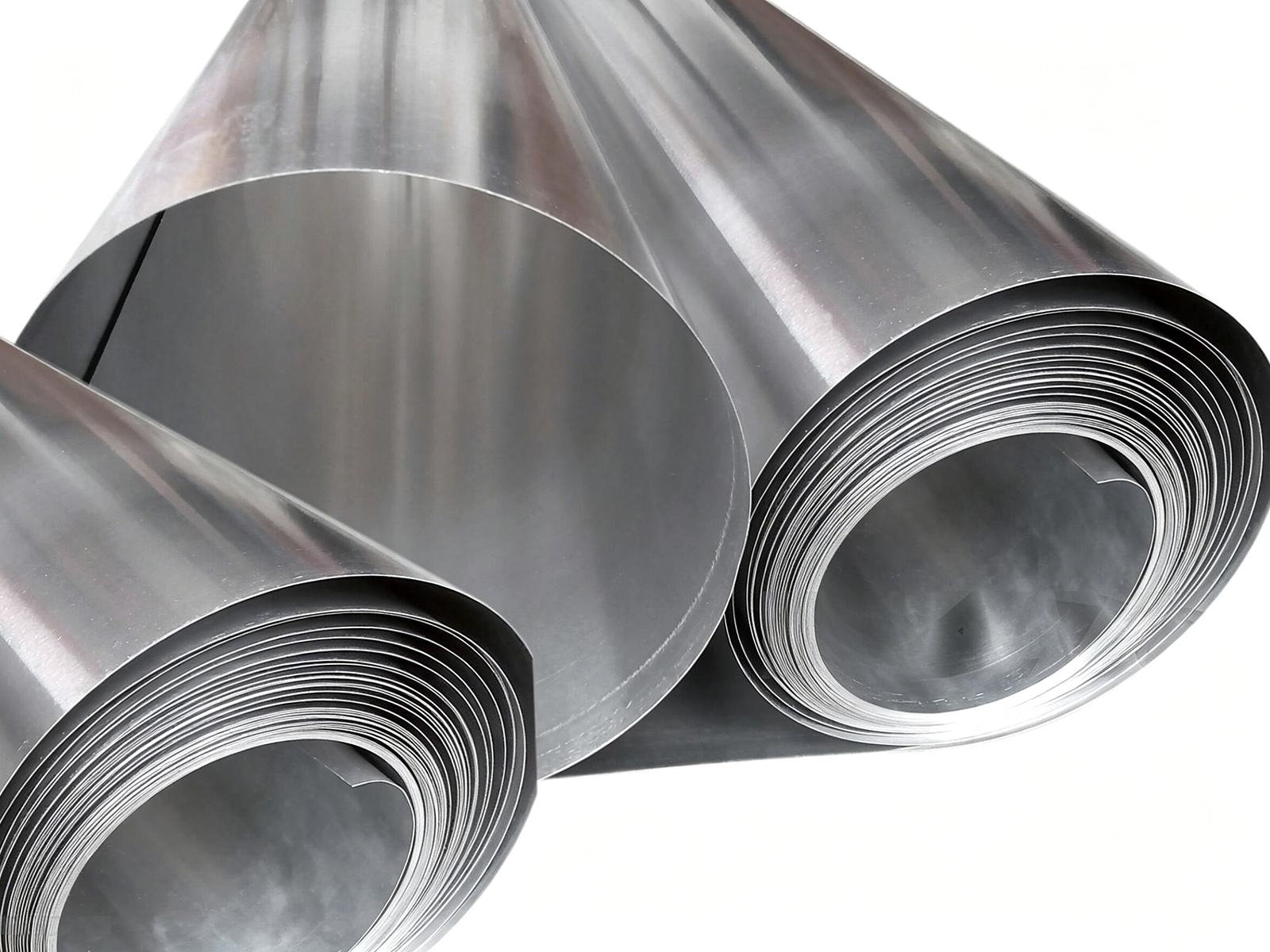
Nickel 200 nickel foil is a high-purity commercial pure nickel material (Ni≥ 99.6%), produced through a multi-pass precision cold rolling process. This material shows excellent performance in electrochemistry, new energy batteries, precision electronics and other fields. Compared with metal foils such as titanium foil, Nickel 200 Foil has significantly higher conductivity and chemical stability, and is particularly suitable for conductive applications in alkaline and weakly reducing environments. Its thickness range is 0.03-0.8mm, and its width can reach 350-670mm, which can meet the needs of large-scale industrial production. The tensile strength of the annealed material is 370-420 MPa, the elongation is ≥ 25%, and it has excellent formability and welding performance, providing reliable material guarantee for precision manufacturing.
1. Why Is Material Essence and Performance Advantages of UNS N02200 Nickel Foil Important?
(1) What Should You Know About Chemical Composition Characteristics of High-purity Commercial Pure Nickel?
UNS N02200 belongs to the commercial pure nickel series, with nickel content ≥ 99.6%, and impurity elements are strictly controlled: carbon ≤ 0.15%, iron ≤ 0.40%, manganese ≤ 0.35%, silicon ≤ 0.35%, sulfur ≤ 0.01%. This high-purity formula ensures that the material performs well in electrochemical environments, avoiding potential differences and accelerated corrosion caused by impurity elements. The pure nickel matrix gives the material excellent electron transport capabilities, making it ideal for electrodes and conductive connections.
(2) What Should You Know About Excellent Conductivity and Electrochemical Stability?
The electrical conductivity of Nickel 200 nickel foil far exceeds that of titanium alloy foil, reaching about 22% of that of copper. In applications requiring stable current transmission, this conductive property significantly reduces contact resistance and energy loss. The material exhibits excellent passivation behavior in alkaline solutions (such as NaOH), and a dense oxide layer is formed on the surface, effectively preventing further erosion by corrosive media. This characteristic makes it irreplaceable in the electrolysis industry and chemical processing fields.
(3) What Should You Know About Mechanical Performance Under Wide Temperature Range?
Nickel foil maintains good mechanical properties in the temperature range of -196℃ to 600℃. The elongation of the annealed material is ≥ 25%, and it can withstand complex stamping, bending and other forming processes. The tensile strength in the cold working state can be increased to 500-600 MPa, meeting the strength requirements of structural parts. The material density is 8.9 g/cm³, the melting point is 1455℃, and its high temperature stability is better than many commonly used metals, making it suitable for heating elements and vacuum equipment applications.
Table 1: Performance comparison between Nickel 200 Foil and other metal foil materials
Performance indicators | Nickel 200 Foil | Gr2 titanium foil | Gr5 titanium alloy foil |
Density(g/cm³) | 8.9 | 4.51 | 4.43 |
Conductivity | Excellent (approximately 22% IACS) | Poor (about 3% IACS) | Poor (about 1% IACS) |
Tensile strength (MPa) | 370-420 (annealed state) | 345-480 | 895-930 |
Alkali corrosion resistance | Excellent | good | good |
Main application directions | Conductivity/Electrode/Electrochemistry | Structure/corrosion resistance | High strength structure |
2. What Should You Know About Breakthrough in Precision Processing Technology of Nickel 200 Nickel Foil?
(1) What Should You Know About Overcoming Core Difficulties in Ultra-thin Wide-width Rolling?
The production of 0.03-0.30mm ultra-thin nickel foil faces multiple technical challenges: difficult plate shape control, serious work hardening, and difficult to control thickness fluctuations. Baoji Titanium Valley Titanium Nickel Zirconium Material Processing Co., Ltd. (Titanium Valley for short) uses a 20-roll precision rolling mill and uses a multi-pass small reduction rolling strategy to control the thickness tolerance within ± 0.001mm. The intermediate annealing process eliminates cold work hardening, restores the plasticity of the material, and ensures smooth subsequent rolling. This process combination enables stable mass production of ultra-thin nickel foil with a maximum width of 670mm.
(2) What Should You Know About Surface Cleanliness Control Technology System?
Electrochemical applications have extremely high requirements on material surface cleanliness, and contaminants such as oil and oxides will affect conductivity and welding quality. The production line is equipped with dual ultrasonic cleaning and alkaline solution cleaning systems to effectively remove rolling oil and surface impurities. The dyne value of the treated nickel foil surface is stable at 44, ensuring excellent wettability and formability. The continuous annealing furnace uses an argon protective atmosphere with a temperature control accuracy of ± 2℃ to avoid oxidation and coloration and ensure uniform surface color.
(3) What Should You Know About High-precision Slitting and Shape Control Capabilities?
Ultra-thin nickel foil slitting is prone to burrs and edge defects, which affects subsequent processing and use. The dedicated slitting line is equipped with a high-precision cutting tool system, combined with tension control technology, to achieve burr-free trimming. The flattening machine precisely straightens the strip to eliminate warpage and waves caused by internal stress, ensuring that the flatness of the plate meets the requirements of precision stamping and welding. The automation rate of the whole process reaches 90%, reducing human interference and ensuring batch consistency.
Table 2: Typical application scenarios of Nickel 200 Foil with different thickness specifications
Thickness range(mm) | Width range(mm) | Main application areas | Technical features |
0.05-0.15 | 350-670 | Battery tabs, precision electrodes | Ultra-thin, highly conductive, excellent formability |
0.10-0.30 | 350-670 | Electromagnetic shielding, conductive connectors | Balance of strength and flexibility |
0.30-0.50 | 350-670 | Electrolysis electrodes, heating elements | Strong carrying capacity and high temperature resistance |
0.50-0.80 | 350-670 | Chemical anti-corrosion components and structural parts | High strength, resistant to medium corrosion |
3. Why Is Key Applications in New Energy and Electrochemistry Important?
(1) How Should Lithium Battery Tab and Current Collector Material Selection?
New energy batteries have strict requirements for tab materials: high conductivity to reduce internal resistance, good weldability to ensure connection reliability, and resistance to electrolyte corrosion to extend life. Nickel 200 Foil fully meets these needs. Its pure nickel matrix ensures stable electron transmission and the surface cleanliness supports ultrasonic and laser welding processes. The thickness specification of 0.05-0.15mm not only ensures conductivity, but also effectively controls the weight of the battery and improves energy density.
(2) What Should You Know About Improved Durability of Electrodes for Electrolysis Industry?
Electrodes used in alkaline water electrolysis for hydrogen production, chlor-alkali industry and other fields have been immersed in highly corrosive electrolytes for a long time. Ordinary metal electrodes are prone to dissolution and passivation failure, while Nickel 200 Foil forms a stable protective layer in alkaline media such as NaOH and KOH, significantly extending the service life of the electrode. The material’s high conductivity reduces electrolyzer voltage and improves energy efficiency. The 0.30-0.50mm thickness specification takes into account both mechanical strength and electrochemical performance, making it the mainstream choice for electrolysis electrodes.
(3) What Should You Know About Conductive Channels in Fuel Cell Bipolar Plates?
Proton exchange membrane fuel cell (PEMFC) bipolar plates require high conductivity, corrosion resistance and good air tightness. The nickel foil is precision stamped to form a flow field structure, and the conductivity is further improved after surface metallization. Compared with graphite bipolar plates, metal bipolar plates have high mechanical strength and thin thickness, which helps to increase the power density of battery stacks. The passivation behavior of nickel materials under acidic conditions ensures long-term operational stability.
4. Why Is Precision Electronics and Electromagnetic Shielding Technology Applications Important?
(1) What Should You Know About Electromagnetic Compatibility Design of 5G Communication Equipment?
As the operating frequencies of 5G base stations, communication modules and other equipment increase, the problem of electromagnetic interference becomes more and more prominent. As an electromagnetic shielding material, Nickel 200 Foil utilizes its high conductivity to achieve broadband shielding effectiveness. The ultra-thin specifications of 0.05-0.10mm can fit complex curved surfaces and are fixed on the circuit board shielding cover through conductive adhesive or spot welding. The weak magnetic properties of the material avoid additional interference with radio frequency signals and ensure communication quality.
(2) What Should You Know About Contact Stability Guarantee of Precision Connectors?
High-end connectors require contacts with low contact resistance, high mating life and corrosion resistance. The nickel foil is stamped to form elastic pieces or contact pins, and the contact resistance can be as low as milliohms after the surface is gold-plated. The material’s elastic modulus and fatigue strength ensure stable contact pressure after tens of thousands of plugging and unplugging cycles. In high-reliability scenarios such as medical equipment and avionics, nickel-based connectors demonstrate excellent performance.
(3) What Should You Know About the Dual Functions of Heat Dissipation and Conduction of Microelectronic Packaging?
Advanced packaging technologies such as flip chip (Flip Chip) and wafer level packaging (WLP) require high thermal conductivity and conductive substrates. The thermal conductivity of nickel foil is about 90 W/(m·K), and when combined with the electroplated copper layer, it can build an efficient heat dissipation channel. At the same time, it can effectively conduct heat and reduce thermal stress, supporting high-density interconnection requirements. The 0.03-0.05mm ultra-thin specification adapts to the miniaturization packaging trend and supports high-density interconnection requirements.
Table 3: Nickel 200 Foil’s core values in different industrial fields
Application areas | Core pain points | The value Nickel 200 Foil brings |
New energy battery | High internal resistance and unreliable connection | Reduce internal resistance by more than 30% and improve cycle life |
Electrolysis industry | Electrodes corrode quickly and need to be replaced frequently | Extend service life 3-5 times and reduce maintenance costs |
electromagnetic shielding | Insufficient shielding effectiveness and heavy weight | Achieve shielding efficiency above 60dB and reduce weight by 40% |
Precision connection | High contact resistance and poor reliability | Contact resistance <5mΩ, plugging and unplugging life>100, 000 times |
Chemical anti-corrosion | Materials fail quickly and downtime losses are large. | Stable operation in alkaline environment, reducing unplanned downtime |
5. What Should You Know About Quality Assurance and Customization Capabilities of Industrial Production?
(1) What Should You Know About Full-process Automated Quality Monitoring System?
Titanium Valley has established a full-process quality control system covering the entry of raw materials into the delivery of finished products. The 750mm 20-high rolling mill is equipped with an online thickness gauge to monitor thickness deviations in real time and automatically adjust rolling parameters. X-ray fluorescence spectrometer (XRF) analyzes the chemical composition of each batch of materials to ensure compliance with ASTM B162 standards. Tensile testing, hardness testing, metallographic analysis and other mechanical property testing coverage is 100%, and each roll of product comes with a material certificate and testing report.
(2) What Should You Know About Stable Supply Capability with Annual Production Capacity of 3, 000 Tons?
The nickel foil production line built with an investment of US$36.2 million has an annual production capacity of 3, 000 tons, which can meet the needs of large-volume orders. Core equipment such as continuous annealing lines, vacuum furnaces, tempering machines, and slitting lines all adopt international advanced standards, and the overall equipment efficiency (OEE) remains above 85%. The standardized production process is combined with a flexible production scheduling system, and the delivery cycle is stable at 4-6 weeks, supporting customers’ JIT (just-in-time) purchasing model.
(3) What Should You Know About Diverse Surface Conditions and Size Customization Services?
In addition to the standard glossy surface, pickled surface, and matte surface, special surface treatments such as sandblasting, brushing, etc. are also available. In addition to the standard thickness range of 0.03-0.8mm, it can also be customized and extended to ultra-thin specifications of 0.005-0.01mm to meet high-end precision applications. The width can be precisely cut to any specification from 10 to 670mm according to customer requirements, and the length can be supplied in fixed length or rolled material. There are two supply states: annealed state (M) and cold work hardened state (Y) to match different processing technology requirements. One-stop customized service covers the entire process from raw material selection, surface treatment, size processing to packaging and transportation.
6. What Should You Know About Global Market Layout and Industry Development Trends?
(1) What Should You Know About Carbon Neutrality Drives Demand in European and American Markets?
Europe and North America are promoting carbon neutrality strategies, and new energy technologies such as green hydrogen preparation and fuel cell vehicles are developing rapidly. The demand for high-performance electrode materials in water electrolysis hydrogen production equipment has surged, and Nickel 200 Foil has become the first choice due to its resistance to alkali corrosion. Under the background of German Industry 4.0, the quality requirements of high-end manufacturing for precision nickel foil continue to increase, pushing material suppliers to transform towards customization and high added value.
(2) What Should You Know About Battery Industry Agglomeration Effect in Asia-Pacific Region?
Japan and South Korea remain leaders in the field of lithium battery technology and have extremely high requirements for the performance consistency and supply stability of tab materials. As an emerging manufacturing center, India’s electronic product assembly capacity is growing rapidly, driving the demand for electromagnetic shielding materials to rise. Vietnam undertakes the transfer of global electronics manufacturing, has strong demand for precision hardware processing, and has huge market potential for ultra-thin nickel foil. Localized service capabilities and rapid response mechanisms have become the key to competition.
(3) What Should You Know About High Reliability Requirements in the Aviation Medical Field?
Aerospace electronic systems work in extreme temperatures and vibration environments, and have strict requirements on material reliability. Nickel-based materials used in medical implants and diagnostic equipment must pass biocompatibility certification. These high-end application scenarios set extremely high standards for material purity, surface quality, and batch stability, driving production companies to continuously optimize processes and improve quality control levels. Complying with international certification requirements such as FDA and CE has become a necessary condition for entering the high-end market.
7. What Is the Conclusion?
Nickel 200 nickel foil plays an irreplaceable role in the fields of new energy, electrochemistry, precision electronics and other fields due to its high purity, excellent conductivity and alkali corrosion resistance. Advanced 20-roller finishing technology enables stable production of ultra-thin widths of 0.03-0.8mm, and full-process quality control ensures product consistency. Facing the global market, customized service capabilities and an annual production capacity of 3, 000 tons can provide customers with reliable material guarantees and help the sustainable innovation and development of high-end manufacturing.
FAQ
Q1: What are the advantages of Nickel 200 Foil compared with pure copper foil?
Nickel foil has far greater corrosion resistance than copper foil in alkaline environments and is suitable for electrolysis and chemical applications. Although the conductivity is slightly lower than copper (about 22% IACS vs 100% IACS), it has higher mechanical strength and better high-temperature stability, which makes it more advantageous in scenarios where both conductivity and durability are required.
Q2: What bending radius can 0.03mm ultra-thin nickel foil withstand?
The minimum bending radius of annealed 0.03mm nickel foil is about 3-5 times the material thickness, that is, 0.09-0.15mm. In actual applications, it is recommended to keep the bending radius above 0.3mm to avoid work hardening and potential cracking risks caused by excessive plastic deformation and ensure product reliability.
Q3: How to choose the nickel foil thickness specification suitable for battery tabs?
Cylindrical batteries usually use 0.10-0.15mm nickel foil to balance electrical conductivity and mechanical strength. Soft-pack batteries are available in 0.05-0.10mm ultra-thin specifications to reduce weight and increase energy density. The specific selection requires a comprehensive evaluation based on battery capacity, welding process and cost requirements. It is recommended to conduct technical docking with material suppliers.
8. What Should You Know About Find Reliable Nickel 200 Foil Manufacturer?
Baoji Titanium Nickel Zirconium Material Processing Co., Ltd. specializes in precision processing of high-purity nickel foil, with an annual production capacity of 3, 000 tons, a thickness tolerance of ± 0.001mm, and meets the ASTM B162 international standard. We provide customized nickel foil products and technical support to global new energy, electronics, and chemical companies. Contact us now for detailed technical specifications and quotations: sales@titaniumvalleys.com
References
- China Nickel Association. Compilation of Nickel and Nickel Alloy Standards[M]. Beijing: Metallurgical Industry Press, 2010.
- Li Zhihong, Zhang Haitao. Research on the corrosion behavior of pure nickel in alkaline electrolyte [J]. Corrosion Science and Protection Technology, 2015, 27(3): 265-270.
- Wang Jianjun, Chen Yonghua. Ultra-thin metal foil precision rolling technology [J]. Forging Technology, 2018, 43(5): 1-7.
- Liu Wei, Yang Xiaoping. Application of Nickel 200 nickel foil in lithium battery tabs [J]. Power Supply Technology, 2020, 44(2): 185-188.