
How Does Oxidation Affect the Performance of Gr1 Titanium Wire?
- Gr1 Titanium Wire
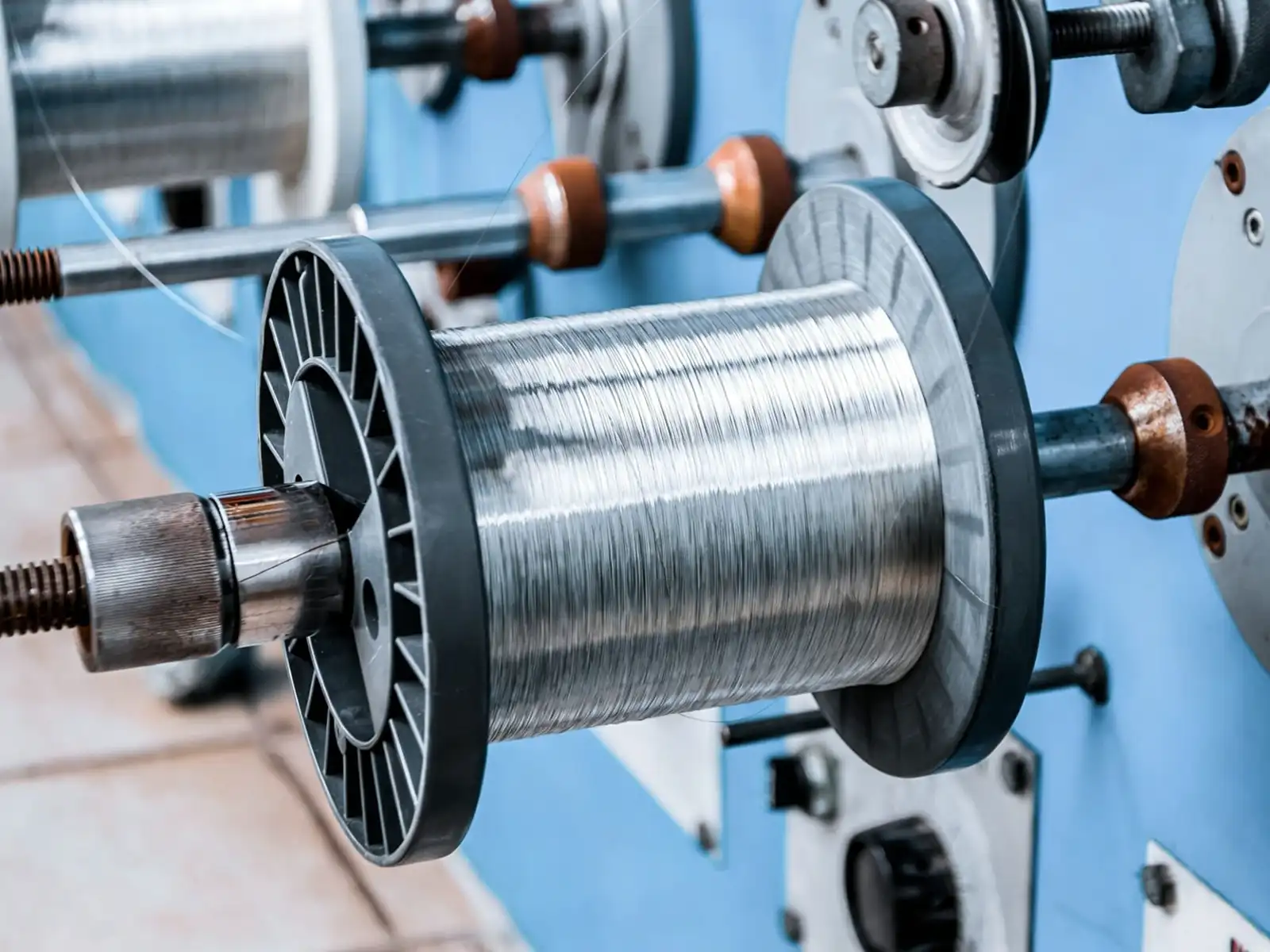
The impact of oxidation on the performance of Gr1 titanium wire is a multi-dimensional issue. Moderate oxygen content (≤0.18%) can significantly improve the strength and hardness of titanium wire, but excessive oxidation will cause the material to increase in brittleness, decrease in plasticity, and even cause surface cracking. In a high-temperature environment, a dense TiO2 protective film will form on the surface of the titanium wire. This oxide film is only a few nanometers thick but can effectively isolate further corrosion. However, when the oxide layer is damaged or in an environment containing chloride ions, localized oxidation can cause pitting corrosion, weakening the material’s long-term reliability. Understanding the oxidation mechanism is crucial to optimizing titanium wire applications in fields such as medical implants, marine engineering, and chemical anticorrosion.
1. What Should You Know About the Basic Mechanism of Action of Oxygen in Gr1 Titanium Wire?
(1) What Are the the Nature of Oxygen As a Gap-strengthening Element?
The oxygen atom has a small radius and can penetrate into the hexagonal lattice gap positions of titanium to form a gap-strengthened structure. This gap strengthening mechanism will distort the crystal lattice and hinder dislocation movement, thus improving the yield strength and tensile strength of the material. The oxygen content of Gr1 titanium wire is controlled below 0.18% in order to maintain good plasticity and welding performance while ensuring strength.
(2) What Are the Quantitative Relationship Between Oxygen Content and Mechanical Properties?
Research shows that for every 0.1% increase in oxygen content, the tensile strength of Gr1 titanium wire increases by approximately 70-100 MPa, but the elongation will decrease accordingly by 3-5%. This trade-off relationship requires precise control of oxygen content during production. Too low an oxygen content will result in insufficient material strength, while too high an oxygen content will sacrifice molding performance.
(3) What Should You Know About Precise Control of Oxygen Content in Vacuum Melting?
Vacuum melting technology can stabilize the oxygen content in the titanium liquid within the target range. By controlling the vacuum degree (usually <10⁻³Pa) and the melting temperature (1700-1750℃), gas impurities can be effectively removed. This process ensures the consistency of performance between batches of Gr1 titanium wire. The Ti purity is ≥99.5%, meeting the stringent requirements of high-end applications such as aviation medicine.
2. What Are the Formation and Protective Properties of Surface Oxide Film?
(1) What Should You Know About the Instantaneous Formation Characteristics of Natural Oxide Film?
The moment the titanium wire is exposed to the air (within about 0.01 seconds), a 2-5 nm thick amorphous TiO2 film will be formed on the surface. Even if this self-healing oxide film is scratched, it can be quickly regenerated in an oxygen-containing environment, which is the fundamental source of the corrosion resistance of titanium materials. The film layer is tightly combined with the substrate and is not easy to peel off.
(2) What Should You Know About the Influence of Temperature on the Structure of Oxide Film?
| temperature range | Oxide film type | Film thickness change | Protection performance |
| 20-300℃ | Amorphous TiO2 | 2-10 nm | Excellent |
| 300-600℃ | Anatase Phase TiO2 | 10-50 nm | good |
| 600-900℃ | Rutile phase TiO2 | 50-200 nm | medium |
| >900℃ | porous oxide layer | >200 nm | Poor |
As the temperature increases, the oxide film changes from amorphous to crystalline, increasing in thickness but decreasing in protection. This explains why the long-term use temperature of Gr1 titanium wire is limited to below 300℃.
(3) What Should You Know About Reshaping of Surface Oxide Film by Pickling and Polishing?
Pickling treatment (usually using HF-HNO3 mixed acid) can remove the rough oxide scale formed during processing, and then quickly form a uniform fresh oxide film in the air, with a surface roughness of up to Ra≤0.8um. Polishing further reduces the roughness to Ra≤0.4um. This smooth surface is particularly important in medical devices and can reduce bacterial adhesion.
3. What Are the Negative Effects of Excessive Oxidation on Titanium Wire Performance?
(1) What Should You Know About Microscopic Mechanism of Oxygen Embrittlement?
When the oxygen content exceeds 0.3%, excess oxygen atoms will segregate at the grain boundaries to form brittle Ti-O compound particles. These hard phases become sources of crack initiation, leading to a sharp decrease in material toughness. During the cold working process, high-oxygen titanium wire is prone to edge cracks and wire breakage, and the yield is significantly reduced.
(2) What Are the Loss of Dimensional Accuracy Caused by High Temperature Oxidation?
During the welding or heat treatment process, the surface of the titanium wire will quickly absorb oxygen to form a thick oxide layer. Not only does this change the actual diameter of the wire, it also creates residual stresses due to differences in thermal expansion coefficients as it cools. For ultra-fine titanium wires below φ0.5mm, this dimensional change may exceed the tolerance range (+/-0.02mm) and affect precision assembly.
(3) What Are the Risk of Localized Corrosion Caused by Uneven Oxidation?
| environmental media | Uniform oxide film | local oxidation defects | Corrosion rate comparison |
| neutral salt spray | <0.001 mm/year | 0.05-0.2 mm/year | 50-200 times |
| 3.5% NaCl solution | <0.0005 mm/year | 0.03-0.15mm/year | 60-300 times |
| dilute nitric acid | <0.002 mm/year | 0.08-0.3mm/year | 40-150 times |
Small defects in the oxide film will form an active anode area, which together with the surrounding passivation area forms a corrosion cell, leading to pitting and perforation. This is a major failure mode in marine engineering applications.
4. How Is Oxidation Control Strategies in Different Application Scenarios?
(1) What Should You Know About Special Requirements for Oxide Layers of Medical Implants?
Implant-grade titanium wire (complying with ISO 5832-2 standard) requires an oxygen content of ≤0.18% and a uniform surface oxide film thickness. An excessively thick oxide layer may release Ti⁴⁺ ions in the body fluid environment, triggering tissue reactions. Titanium Valley uses controlled atmosphere annealing technology to perform heat treatment under the protection of high-purity argon gas to ensure that the surface oxide film thickness is controlled at 5+/-2 nm while maintaining good biocompatibility.
(2) What Are the Oxidation Film Strengthening Treatment for Chemical Anti-corrosion Equipment?
For components such as titanium wire mesh and heat exchanger tube bundles that are exposed to strong acid and alkali environments, the surface TiO2 film can be thickened to 500-1000 nm through anodizing treatment. This artificial oxide film is denser and can resist the erosion of high-concentration sulfuric acid and hydrochloric acid. The corrosion rate of the treated titanium wire in 98% sulfuric acid is <0.01 mm/year, and the service life is extended by 3-5 times.
(3) What Should You Know About Low Oxidation Damage Process for Welding Materials?
Titanium wire easily absorbs oxygen during welding, resulting in embrittlement of the weld area. Using argon or helium for all-round protective welding (back inflation + towing hood protection), the increase in oxygen content in the heat-affected zone can be controlled within 0.05%. The Gr1 titanium wire produced by Titanium Valley as ERTi-2 welding wire adopts surface cleaning treatment and argon gas shielded welding to reduce oxidation in the heat affected zone, and the weld strength coefficient can reach more than 0.95.
5. What Should You Know About Precise Control of Oxygen Content in Titanium Wire Using Advanced Technology?
(1) What Should You Know About Oxide Layer Peeling Effect in Multi-pass Cold Drawing?
Each cold drawing will reduce the diameter of the titanium wire by 10-15%, and the surface oxide layer will be broken and peeled off due to plastic deformation. Through 8-12 passes of progressive drawing, combined with intermediate annealing and pickling, the surface can be continuously updated to obtain a low-oxygen clean surface. Titanium Valley’s φ0.1mm ultra-fine titanium wire has been processed in 16 passes, and the surface oxygen concentration gradient is <0.02%/mm, ensuring micro-molding performance.
(2) What Should You Know About Structural Homogenization Effect of Roller Die Drawing Technology?
| Processing method | Grain size | Oxygen distribution uniformity | Qu Qiangbi | surface quality |
| Traditional brushing | 15-30 um | Poor (CV=12%) | 0.78-0.82 | Ra 0.6-1.0 um |
| Roll die drawing | 8-15 um | Excellent (CV=5%) | 0.85-0.90 | Ra 0.3-0.5 um |
Roller die drawing refines the grains through multi-directional compressive stress, allowing oxygen elements to be evenly distributed on more grain boundaries to avoid local enrichment. The titanium wire produced by this process has a higher yield-to-strength ratio and a 20-30% improvement in fatigue resistance.
(3) What Should You Know About Oxygen Diffusion Regulation Mechanism of Vacuum Annealing?
After annealing at 10⁻⁴Pa vacuum and 650℃ for 2 hours, oxygen on the surface of the titanium wire will diffuse into the interior, forming a structure with a decreasing oxygen concentration gradient. The surface oxygen content drops below 0.10%, while the core maintains 0.15-0.18%, which not only ensures welding performance but also maintains overall strength. This gradient structure is particularly suitable for spring wires that require multiple bends.
6. What Is the Conclusion?
The effect of oxidation on the performance of Gr1 titanium wire presents double-edged sword characteristics: moderate oxygen content improves strength through interstitial strengthening, and the natural oxide film gives excellent corrosion resistance, but excessive oxidation can cause embrittlement and local corrosion. Precision manufacturing requires dynamic monitoring of oxygen content throughout the entire process of raw material smelting, hot processing, cold processing and surface treatment. Titanium Valley Company uses vacuum melting, multi-pass fine drawing, controlled atmosphere annealing and intelligent detection systems to control the oxygen content fluctuation of Gr1 titanium wire within +/-0.02%, and the surface oxide film thickness deviation is <1 nanometer, meeting the stringent standards of high-end fields such as aviation medical and marine engineering.
FAQ
Q1: Does the yellowing of the surface of Gr1 titanium wire during welding affect its performance?
The golden yellow to blue oxidation color in the weld area indicates a light degree of oxidation, which usually does not affect the mechanical properties. However, gray-white or powdery oxide indicates serious oxygen absorption and needs to be polished and re-welded. Argon back protection prevents discoloration.
Q2: How to detect the actual oxygen content in titanium wire?
Industrially, the inert gas melting-infrared absorption method (ASTM E1409) is used. The titanium sample is melted at high temperature in a graphite crucible, and the released CO₂ is quantitatively analyzed by an infrared detector with an accuracy of +/-0.005%. A single detection takes about 5 minutes.
Q3: What impact does the storage environment have on the oxidation of titanium wire?
The natural oxidation film is stable under normal temperature and dry environment, but high temperature and high humidity (>40℃, >80%RH) will accelerate surface oxidation. It is recommended to store in an environment with a temperature of 15-25℃ and a humidity of <60%. Use vacuum packaging to maintain the surface condition for a long time.
7. Looking for a Reliable Gr1 Titanium Wire Manufacturer?
Baoji Titanium Nickel and Zirconium Materials Processing Co., Ltd. has an Italian Danieli continuous rolling production line and a complete quality system. It has an annual output of 5, 000 tons of high-end titanium wire and can provide full specifications of φ0.06-10mm. Contact us for technical parameters and samples: sales@titaniumvalleys. com
For a broader view of available grades, supply forms, and related specifications, explore our Titanium Wire category.
For product-level details and supply options, you can also review our ASTM F67 Medical Gr1 Titanium Wire page.
References
- Zhao Yongqing, Ge Peng. “The role of oxygen and nitrogen elements in titanium alloys and their control technology”. Rare Metal Materials and Engineering, 2019, 48(3): 721-729.
- Zhang Xiaoming, Zhang Pingze. “Interstitial elements in titanium alloys and their effects on properties”. Materials Herald, 2018, 32(5): 789-794.
- Li Miaoquan, Wang Kru. “Study on the structural evolution and corrosion resistance of pure titanium oxide film”. Chinese Journal of Corrosion and Protection, 2021, 41(2): 156-164.
- Chen Jun, Zhao Yongqing. “Titanium Alloy Smelting and Ingot Preparation Technology”. Metallurgical Industry Press, 2015: 120-145.