
Why Is Gr1 Titanium Rod the Best Solution for Handling Strongly Reducing Acidic Media?
- Gr1 Titanium Rod
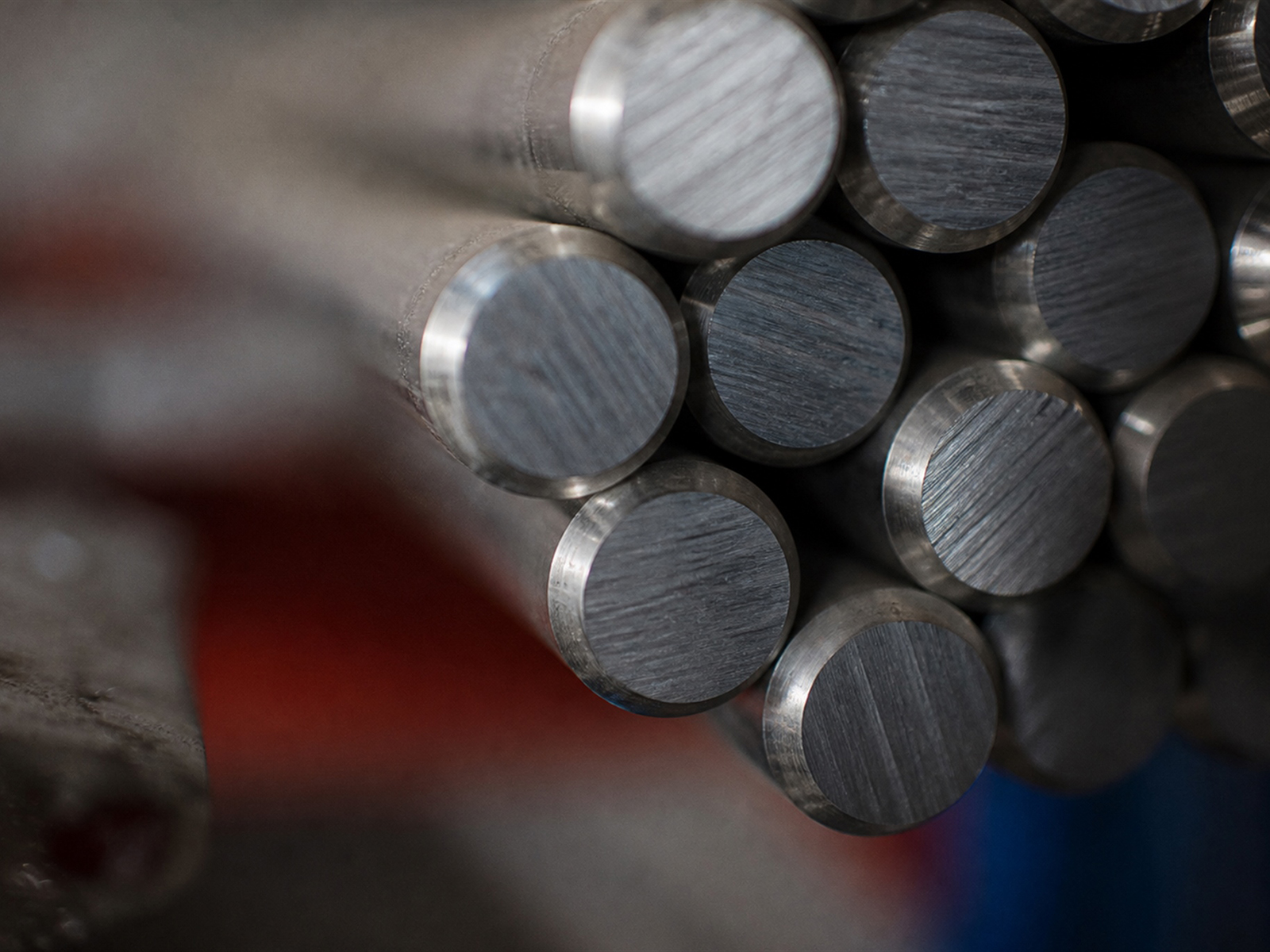
In the fields of chemical industry, pharmaceuticals and hydrometallurgy, the treatment of strongly reducing acidic media (such as hydrochloric acid, dilute sulfuric acid, dilute hydrofluoric acid solution) has always been a difficult problem in material selection. Traditional stainless steels suffer from severe pitting corrosion and stress corrosion cracking in these environments, while high-alloy materials are costly and difficult to process. Gr1 industrial pure titanium rods can maintain excellent chemical stability in reducing acid environments due to their ultra-high purity (titanium content ≥99.5%) and naturally formed dense oxide film. Its excellent plasticity (elongation ≥24%) makes cold bending, welding and deep processing of complex-shaped parts simple and efficient, while its low density of 4.51 g/cm³ greatly reduces the overall quality and transportation cost of the equipment. This combination of material properties makes Gr1 industrial pure titanium rods an ideal choice for handling strongly reducing acidic media, enabling long-term stable operation and significantly reducing life-cycle costs.
1. What Should You Know About Strong Reducing Acid Environment Poses Special Challenges to Materials?
(1) What Should You Know About Reducing Acid Corrosion Mechanism and Failure Modes of Common Metals?
Reducing acid media destroys the protective film on the metal surface through the direct erosion of hydrogen ions. The corrosion rate of ordinary carbon steel in hydrochloric acid can reach tens of millimeters per year, and a loose oxide layer will quickly form on the surface and continue to peel off. Although 304 stainless steel has certain corrosion resistance, under the synergistic action of chloride ions and hydrogen ions, the passivation film will be partially damaged, leading to the formation and expansion of pitting pits. This kind of corrosion not only shortens the life of the equipment, but also causes media contamination and safety hazards.
(2) What Should You Know About Double Test of High Purity and Low Temperature Environment?
Many chemical processes require the handling of reducing acid solutions at low temperatures. Ordinary metal materials will undergo a brittle transition at low temperatures, and their impact toughness will drop sharply, making them prone to brittle fracture when the temperature fluctuates. At the same time, strong reducing media require extremely high purity of materials, and trace amounts of impurities such as iron and nickel will catalyze side reactions and affect product quality. In the production of pharmaceutical and electronic grade chemicals, the dissolution of metal ions must be controlled at the ppb level, which places extremely high requirements on the chemical stability of the materials.
(3) What Are the the Contradiction Between Cost and Performance in Traditional Material Selection?
Faced with reducing acid corrosion, engineers usually face a dilemma: choosing ordinary stainless steel requires frequent replacement of parts, resulting in low production efficiency due to shutdown maintenance; choosing Hastelloy or tantalum materials requires huge initial investment, high processing difficulty, and long delivery cycle. This contradiction is particularly prominent in small and medium-sized devices, which can neither afford the cost of precious metal materials nor accept the losses caused by frequent maintenance. There is always an irreconcilable contradiction between resistance to reducing acid corrosion and economy of traditional materials.
2. What Are the Analysis of the Material Science Advantages of Gr1 Industrial Pure Titanium Rod?
(1) What Are the Formation Mechanism and Protective Properties of Self-passivating Oxide Film?
The moment the surface of Gr1 industrial pure titanium rod is exposed to air or aqueous solution, a dense oxide film of TiO2 with a thickness of about 2-7 nanometers will spontaneously form. This film has extremely high chemical stability and self-healing capabilities, and can be regenerated in a very short time even after mechanical damage. In a reducing acid environment, this oxide film can effectively block the penetration of hydrogen ions and chloride ions, controlling the corrosion rate to less than 0.01 mm per year. Compared with the chromium oxide film of stainless steel, the titanium oxide film is more stable in a low pH environment and will not breakdown due to local acidification.
(2) What Should You Know About Chemical Inertness Due to Ultra-high Purity?
The Gr1 level of industrial pure titanium has the highest purity, and the total content of impurity elements such as iron, oxygen, carbon, nitrogen, and hydrogen is less than 0.5%. This ultra-high purity results in almost no driving force for electrochemical corrosion inside the material, and no micro-battery effect is formed at grain boundaries and phase boundaries. In dilute hydrofluoric acid solution, dilute hydrochloric acid, dilute sulfuric acid and other media, Gr1 industrial pure titanium rods can maintain long-term chemical inertness and will not change the surface composition due to selective dissolution of elements like alloy materials. This stability is critical for fine chemical and pharmaceutical processes that require strict control of metal ion contamination.
(3) How Is Processing and Application Flexibility Due to Excellent Plasticity?
The elongation rate of Gr1 industrial pure titanium rod can reach 24%-30%, and it has the best plasticity among all industrial pure titanium. This excellent plasticity allows the material to undergo complex forming operations such as cold bending, cold drawing, and deep drawing without intermediate annealing. When manufacturing complex-shaped components such as stirring shafts, coils, flange connectors, etc., Gr1 industrial pure titanium rods can significantly reduce processing difficulty and scrap rate. Its good welding performance (the strength of the weld can reach more than 90% of the base metal) makes on-site installation and maintenance easy, without worrying about stress corrosion cracking at the weld.
3. What Are the Performance Comparison in Actual Working Conditions?
(1) What Should You Know About Long-term Corrosion Resistance Test in Hydrochloric Acid Medium?
In a hydrochloric acid solution with a concentration of 5%-20% and a temperature of 40-80℃, the annual corrosion rate of Gr1 industrial pure titanium rod is stable between 0.005-0.02 mm, which is much lower than the 0.5-5 mm of 316L stainless steel. The following table shows the performance comparison of different materials after being soaked in 10% hydrochloric acid solution (60℃) for 1000 hours:
| Material type | Corrosion rate (mm/year) | surface state | Mechanical property retention rate | relative cost |
| Q235 carbon steel | >50 | Severe ulcer, matrix destruction | <20% | 1.0 |
| 304 stainless steel | 15-25 | Extensive pitting, discoloration | 40-60% | 2.5 |
| 316L stainless steel | 3-8 | Localized pitting, slight discoloration | 65-75% | 4.0 |
| Gr1 industrial pure titanium rod | 0.008-0.015 | Bright as before, no traces of corrosion | >98% | 6-8 |
| Hastelloy C-276 | 0.005-0.01 | Surface intact | >95% | 15-20 |
From the perspective of full life cycle cost, although the initial investment of Gr1 industrial pure titanium rod is 1.5-2 times that of 316L, the service life can be extended by 5-10 times without frequent replacement, and the overall cost is more advantageous.
(2) What Should You Know About Adaptability to Dilute Sulfuric Acid and Mixed Acid Environments?
In hydrometallurgy and titanium dioxide production, it is often necessary to process complex media containing a mixture of sulfuric acid and hydrochloric acid. Gr1 industrial pure titanium rod performs well in 5%-15% dilute sulfuric acid, especially in mixed acid environments containing chloride ions, and its corrosion resistance far exceeds that of high-nickel alloys. Practical application cases show that the acidolysis reactor of a titanium dioxide plant uses a stirring shaft made of Gr1 industrial pure titanium rods and has been running continuously for more than 8 years in a sulfuric acid-hydrochloric acid mixed medium with a pH value of 1.5-2.5 and a temperature of 90-100℃. The surface has only slight discoloration and no obvious corrosion and thinning. In comparison, the original 316L stainless steel shaft needed to be replaced every 18 months on average.
(3) What Are the Special Advantages in the Treatment of Dilute Hydrofluoric Acid Solutions?
Hydrofluoric acid is a highly corrosive medium and can dissolve most metal oxides. In a dilute hydrofluoric acid solution with a concentration less than 5%, the oxide film on the surface of Gr1 industrial pure titanium rod will be converted into soluble fluorotitanate, but the corrosion rate can still be controlled at a level of 0.1-0.5 mm/year, which is much better than other metal materials. In the semiconductor cleaning and glass etching industries, immersion baskets and fixed fixtures made of Gr1 industrial pure titanium rods can work stably for a long time without causing metal pollution to the products. It should be noted that when the concentration of hydrofluoric acid exceeds 10% or the temperature is higher than 60℃, tantalum materials or special coatings should be used for protection.
4. How Is Key Points in Design and Selection in Engineering Applications?
(1) What Should You Know About Basis for Selection of Different Surface Conditions?
Choosing the right surface treatment for specific operating conditions can optimize performance and cost. The following table summarizes the applicable scenarios for various surface states:
| surface state | Surface roughness Ra | Dimensional accuracy | Applicable working conditions | Price coefficient |
| Black rod (hot rolled/forged) | 6.3-12.5 | +/-0.5-1.0mm | Large supports requiring subsequent machining | 1.0 |
| Polished rod (turning process) | 1.6-3.2 | +/-0.2-0.3mm | General corrosion-resistant parts, flange connections | 1.3-1.5 |
| Pickling rod (chemical descaling) | 0.8-1.6 | +/-0.3-0.5mm | Welding parts require clean surfaces | 1.4-1.6 |
| Polishing rod (cold drawing/precision polishing) | ≤0.4 | +/-0.05-0.1mm | Precision shafts, high cleanliness requirements | 1.8-2.2 |
For pharmaceutical equipment and electronic grade chemical containers, polishing rods are recommended for optimal surface cleanliness and dimensional consistency. For general chemical equipment, you can choose pickling rods or polished rods to control costs while meeting performance requirements.
(2) What Should You Know About Reasonable Planning of Diameter and Length?
The conventional inventory diameter range of Gr1 industrial pure titanium rods is φ8-φ200mm, of which φ10-φ50mm is the mainstream specification in the market, with short delivery cycle. For long rods such as mixing shafts and transmission shafts, it is recommended to use the size of φ20-φ80mm, which not only ensures strength but also facilitates machining. Small diameter precision parts (φ4-φ12mm) are suitable for cold drawn polishing rods, which can be directly used to manufacture pins, connecting rods and electrode rods. Large diameter forged rods (φ100-φ300mm) are mainly used for customized needs, such as support shafts and flange blanks for large reactors, but attention must be paid to the uniformity of the internal structure of the forged material.
(3) What Should You Know About Optimization of Welding and Connection Methods?
Gr1 industrial pure titanium rods should be welded by argon arc welding (TIG) or electron beam welding, and the purity of the protective gas must be above 99.99% to avoid joint embrittlement caused by the absorption of oxygen and nitrogen at high temperatures. The tensile strength of the welding area usually reaches 240-280 MPa, which meets the requirements of most medium and low voltage equipment. For occasions where welding is inconvenient, threaded connections or flange connections can be used, but attention should be paid to the risk of galvanic corrosion when dissimilar metals come into contact. It is recommended to install a titanium alloy transition flange or use an insulating gasket to isolate the titanium-steel connection. Over-tightening of mechanical connections should be avoided to prevent micro-cracks on the titanium surface.
5. What Should You Know About Full Life Cycle Cost and Maintenance Strategy?
(1) What Should You Know About Quantitative Analysis of Initial Investment and Long-term Returns?
Taking the pickling tank mixing system of a medium-sized chemical plant as an example, compare the 10-year total ownership cost of Gr1 industrial pure titanium rods and 316L stainless steel:
| cost item | 316L stainless steel | Gr1 industrial pure titanium rod | Comparison instructions |
| Material and processing fees (first time) | $2, 800 | $4, 500 | The initial investment in titanium is 60% higher |
| Expected service life | 1.5-2 years | More than 10 years | The life of titanium materials is extended by 5-7 times |
| Number of replacements (10 years) | 5-6 times | 0 times | No mid-term replacement required |
| Cumulative material cost | $14, 000-$16, 800 | $4, 500 | The total cost of titanium materials is reduced by 73% |
| Maintenance downtime losses | $8, 000-$10, 000 | $500 | Significant reduction in downtime |
| Total cost over 10 years | $22, 000-$26, 800 | $5, 000 | Save more than 80% |
This cost advantage is even more obvious in continuous production processes, because the yield loss and quality risk caused by unplanned downtime often far exceeds the value of the material itself.
(2) What Should You Know About Preventive Maintenance and Inspection Cycles?
The maintenance strategy of Gr1 industrial pure titanium rod equipment can be changed from “regular replacement” to “condition monitoring”. Annual visual inspections and surface roughness measurements are recommended, focusing on weld areas and high stress areas. Eddy current testing or ultrasonic thickness measurement technology can be used to non-destructively assess the remaining thickness of the material. When corrosion thinning exceeds 10% of the original thickness, a replacement plan should be arranged. Compared with stainless steel equipment, the inspection frequency of titanium equipment can be reduced by more than 50%, significantly reducing maintenance labor costs and the risk of production interruption.
(3) What Are the Secondary Use and Environmental Protection Value?
Gr1 industrial pure titanium rods have extremely high recycling value. Waste titanium materials can be 100% recycled and reused. The market recycling price is usually 50%-70% of new materials. This recyclability not only reduces the disposal costs of end-of-life equipment, but also conforms to the development trend of circular economy and carbon neutrality. In contrast, severely corroded stainless steel can only be treated as low-value scrap steel, with a recycling value of less than 20% of the original price. In the context of increasingly stringent environmental regulations, the selection of long-life, recyclable titanium materials is in line with the company’s sustainable development strategy.
6. What Is the Conclusion?
Gr1 industrial pure titanium rods rely on the unique protection mechanism of the self-passivation oxide film, the chemical inertness brought by ultra-high purity, and excellent plasticity and welding properties, showing unparalleled advantages in handling strongly reducing acidic media. Its excellent corrosion resistance and stability in harsh environments such as hydrochloric acid, dilute sulfuric acid, and mixed acids extend the life of the equipment by 5-10 times and reduce the life cycle cost by more than 70%. For chemical, pharmaceutical and hydrometallurgical companies pursuing long-term stable operation and low maintenance costs, Gr1 industrial pure titanium rods are the best choice for dealing with reducing acidic media.
FAQ
Q1: Can Gr1 industrial pure titanium rod be used in concentrated sulfuric acid (>70%) environment?
Generally not recommended. Concentrated sulfuric acid is a strong oxidizing acid and will destroy the passivation film on the titanium surface at higher temperatures, causing rapid corrosion. Gr1 industrial pure titanium rod is suitable for dilute sulfuric acid with a concentration lower than 50%. When the concentration exceeds 60% or the temperature is higher than 100℃, corrosion may occur under specific conditions. Tantalum materials, zirconium materials or glass-lined equipment should be preferred, and detailed evaluation must be conducted based on actual working conditions.
Q2: Compared with Gr2 industrial pure titanium rod, what are the advantages of Gr1?
Gr1 industrial pure titanium rod has higher purity (oxygen content ≤0.18% vs Gr2 ≤0.25%), better plasticity and welding performance, and is suitable for occasions requiring complex molding and high cleanliness. Gr2 has slightly higher strength but slightly worse plasticity. The corrosion resistance of the two is similar. It should be selected according to the strength and processing requirements of specific working conditions.
Q3: The initial investment of titanium rod equipment is high. How to convince the decision-makers to purchase it?
It should be analyzed from the perspective of full life cycle costs: Calculate the cumulative material costs, replacement labor costs, downtime losses and environmental disposal costs within 10 years. Actual cases show that the titanium material solution can save 70%-80% of the total cost. At the same time, it emphasizes the hidden value of product quality improvement, safety risk reduction and environmental compliance brought by titanium materials. These factors are particularly important in the fine chemical and pharmaceutical industries.
7. What Should You Know About About Titanium Valley?
As a leading company in the field of high-end rare metal precision processing in China, Titanium Valley (Baoji Titanium Valley Titanium Nickel Zirconium Material Processing Co., Ltd.) specializes in the production of various specifications of Gr1 industrial pure titanium rods, titanium foil, titanium wire and other precision materials. Our Italian Danieli rolling production line has an annual production capacity of more than 20, 000 tons. The products comply with ASTM B348 standards and can provide complete material reports. Whether you need standard stock parts or customized processing services, we can provide quick response and professional technical support. Feel free to contact our engineering team: sales@titaniumvalleys. com
For a broader view of available grades, supply forms, and related specifications, explore our Titanium Rod category.
For product-level details and supply options, you can also review our ASTM F67 Gr1 Titanium Rod page.
References
- Wang Yongxin, Li Zhiqiang. Research on the corrosion behavior of industrial pure titanium in reducing acid medium [J]. Corrosion Science and Protection Technology, 2021, 33(4): 381-387.
- Zhang Jianjun, Zhao Yongqing. Application and material selection of titanium and titanium alloys in chemical equipment [J]. Chemical Equipment and Pipelines, 2020, 57(2): 1-8.
- Yang Xiaodong, Liu Zhenyu. Corrosion resistance and engineering application of industrial pure titanium in hydrochloric acid medium [J]. Progress in Titanium Industry, 2019, 36(5): 25-30.
- Chen Guoliang, Li Dejun. Passivation film characteristics and corrosion control of titanium in reducing acid environment [J]. Materials Protection, 2022, 55(3): 12-18.
- Liu Jing, Wang Jianjun. Application of full life cycle cost in titanium chemical equipment selection [J]. Chemical Industry Management, 2021, 44(10): 56-60.