
What Is the Impact Toughness of Gr12 Titanium Rod?
- Gr12 Titanium Rod
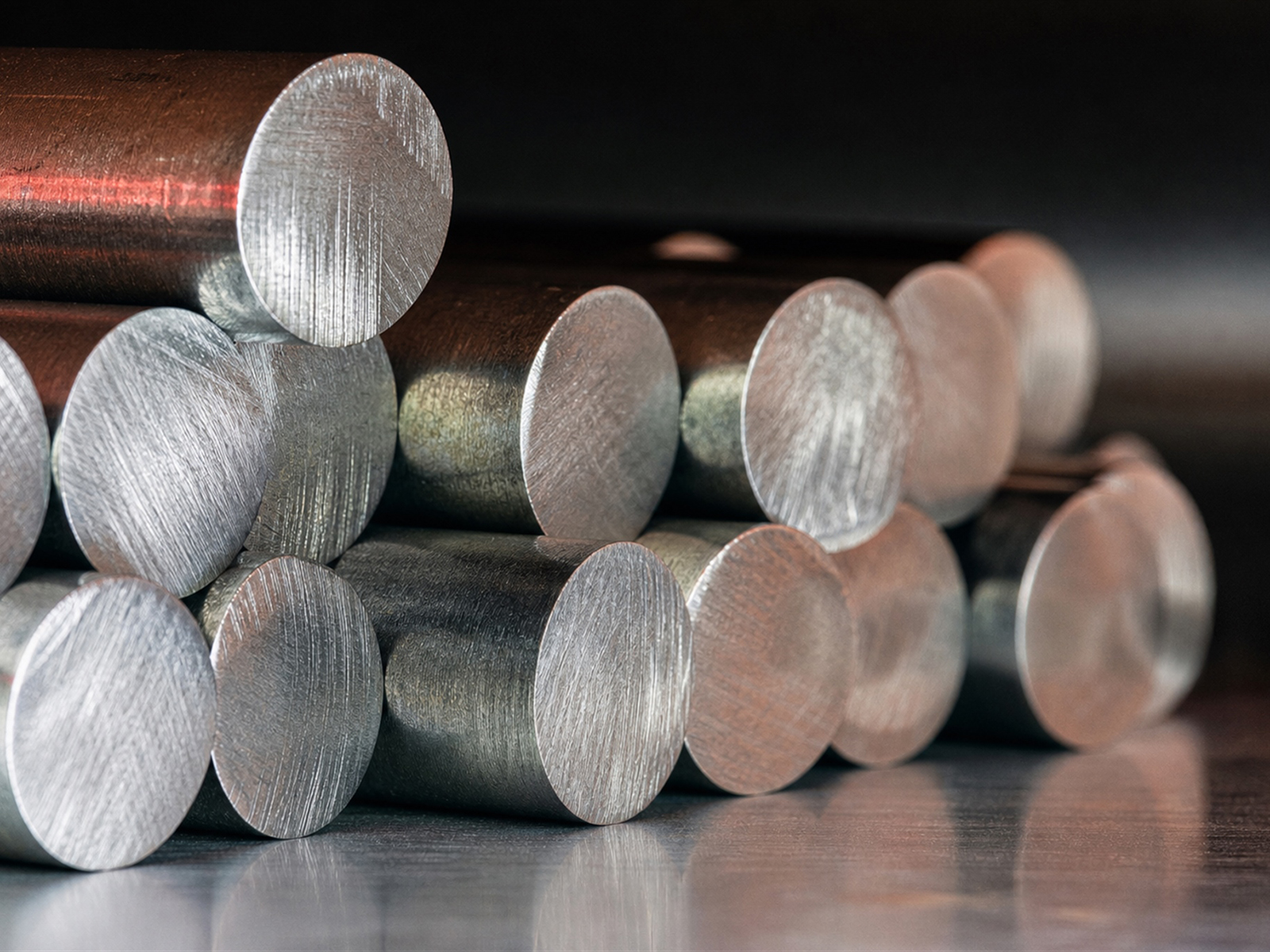
Gr12 titanium rod has excellent impact toughness, and its impact absorption energy can usually reach 25-35 J at room temperature, which is significantly higher than the performance of ordinary structural steel under the same conditions. This α-type titanium alloy (Ti-0.3Mo-0.8Ni) containing molybdenum and nickel achieves a balance between strength and toughness while maintaining good plasticity through the addition of trace alloy elements. Compared with pure titanium, Gr12 titanium rods show stronger resistance to crack expansion when subjected to sudden loads, and are especially suitable for chemical equipment, marine engineering structural parts and high-pressure pipeline systems that need to withstand shock and vibration. Its excellent impact toughness comes from the precise control of alloy composition and advanced heat treatment process, which refines and evenly distributes the internal grain structure of the material, effectively improving the reliability and safety margin of the material under complex working conditions.
1. What Are the Material Science Basis of Impact Toughness of Gr12 Titanium Rod?
(1) What Are the the Influence Mechanism of Alloy Composition on Toughness?
The addition of molybdenum (0.20%-0.40%) plays a strengthening role in Gr12 titanium alloy. It improves the strength of the matrix through lattice distortion without significantly reducing the ductility of the material. The presence of nickel element (0.60%-0.90%) effectively inhibits the tendency of hydrogen embrittlement and improves the toughness retention rate of the alloy in corrosive environments. This dual-element synergy enables Gr12 to maintain stable impact properties in a wide temperature range from -50℃ to 300℃, avoiding low-temperature application limitations caused by excessive brittle transition temperature.
(2) What Are the the Relationship Between Crystal Structure and Toughness?
The close-packed hexagonal lattice structure of α-type titanium alloy gives Gr12 titanium rod natural resistance to crack initiation. After vacuum annealing, a uniform equiaxed grain structure is formed inside the material, and the grain size is controlled in the range of 20-50 um. This refined microstructure provides more grain boundaries to hinder the rapid expansion of cracks. Compared with the coarse-grained structure, the fine-grained structure enables the material to initiate dispersed stress concentration through multiple slip systems when impacted.
(3) What Are the Optimization of Toughness by Processing Technology?
The combined application of hot forging and rolling processes can eliminate defects in the as-cast structure and make streamlines evenly distributed along the axial direction of the bar. The temperature-controlled forging technology adopted by Baoji Titanium Valley accurately controls the deformation temperature within the range of 860-890℃, ensuring sufficient recrystallization while avoiding abnormal grain growth. Although the cold drawing process will produce a certain amount of strain hardening, by appropriately controlling the amount of deformation, the finished bar can still maintain acceptable impact properties under complex stress conditions such as bending and impact.
| Processing status | Impact absorbed energy (J) | Elongation at break(%) | Tensile strength (MPa) |
| Hot rolled state | 22-28 | 18-22 | 480-550 |
| Annealed state (M) | 28-35 | 20-25 | 485-585 |
| Cold drawn state | 18-24 | 15-20 | 520-620 |
2. What Are the Impact Toughness Testing Method and Performance Evaluation System?
(1) What Should You Know About Standard Test Methods and Key Parameters?
The Charpy V-notch impact test is the mainstream method for evaluating the toughness of Gr12 titanium rods. The sample size follows the ASTM E23 standard (10×10×55mm), the notch depth is 2mm, and the V-notch angle is 45°. The test temperature is set at three typical operating points: -20℃, room temperature, and 100℃. The material toughness is quantified by the energy consumed by the pendulum impacting the fractured sample. Data show that the impact energy of Gr12 at room temperature generally exceeds 30 J, and it can still maintain more than 20 J in a low temperature environment of -20℃, verifying its applicability in cold zone marine engineering.
(2) What Should You Know About the Complementary Value of Dynamic Tear Testing?
For the actual service conditions of large components, the Drop Weight Tear Test (DWTT) can more realistically simulate the damage mode of pipelines, pressure vessels, etc. that are subjected to sudden loads. A wide specimen of 320 mm × 76 mm was used to evaluate the ductile fracture capability by recording the shear area ratio (SAR) of crack propagation. The SAR value of Gr12 titanium rods usually reaches more than 85%, indicating that the material still uses plastic tearing as the dominant failure mode under high strain rates, effectively avoiding the risk of brittle fracture.
(3) What Should You Know About Microfracture Analysis Technology?
Scanning electron microscopy (SEM) observation of the impact fracture morphology revealed the toughness mechanism: typical features include uniformly distributed dimple structures, fine tear edges, and a small number of quasi-cleavage planes. Statistical analysis of dimple depth and size shows that the average dimple diameter of annealed Gr12 is 5-15 um, and the aspect ratio is greater than 0.6. This three-dimensional cavity aggregation mode corresponds to the material’s good energy absorption capability. By comparison, it was found that samples with excessive oxygen content (>0.30%) will have crack sources caused by brittle inclusions, significantly deteriorating the impact properties.
3. What Are the Key Factors Affecting the Impact Toughness of Gr12 Titanium Rod?
(1) What Are the Precise Control of Chemical Composition?
Oxygen content is the core variable that determines the toughness of titanium alloys. The upper limit of standard requirements of ≤0.25% must be strictly implemented. Research shows that for every 0.1% increase in oxygen content, the impact energy absorbed decreases by approximately 8-12%. The interstitial elements carbon, nitrogen, and hydrogen also need to be strictly controlled. If the hydrogen content exceeds 0.015%, the risk of delayed cracking caused by hydrogen will increase. Baoji Titanium Valley uses the vacuum consumable arc remelting (VAR) process to control gas impurities at extremely low levels, and cooperates with spectral analysis to inspect each furnace to ensure that the composition fluctuation range is narrowed to within 50% of the standard tolerance.
(2) What Should You Know About Customized Design of Heat Treatment System?
The matching of annealing temperature and holding time directly affects the microstructure uniformity and residual stress state. The recommended M state annealing specifications are: heating to 700-750℃, holding for 2-4 hours, furnace cooling or air cooling to room temperature. This subcritical annealing eliminates cold work hardening and avoids the loss of strength caused by excessive softening. For thick-sized rods (diameter >80mm), the strategy of segmented heating and extended heat preservation is adopted to ensure that the core is fully evenly heated and eliminates differences in heart-surface tissue.
(3) What Should You Know About Quality Control of Surface Integrity?
Surface defects such as cracks, folds, scratches and other sources of stress concentration will become the initiation points of impact fracture. Using dual non-destructive testing methods of magnetic particle testing (MT) and eddy current testing (ET), surface defects with a depth of ≥0.3mm can be found. Ultrasonic flaw detection (UT) is responsible for screening internal inclusions and delamination defects, and the detection sensitivity reaches φ1mm equivalent flat-bottom hole. The surface roughness of the bar after fine grinding, pickling and passivation treatment is controlled at Ra≤1.6um, which effectively improves the fatigue impact resistance.
| Defect type | Depth limit(mm) | Detection method | Impact on impact toughness |
| surface cracks | ≤0.2 | Magnetic Particle/Penetration | Reduce 30-50% |
| Internal inclusions | φ≤0.5 | ultrasound | Reduce 15-25% |
| decarburization layer | ≤0.1 | Metallographic examination | Reduce 20-35% |
(4) What Should You Know About Coupling Effect of Environmental Media?
Corrosive media such as seawater and acidic solutions will change the surface state of the material, causing stress corrosion cracking (SCC) and hydrogen-induced cracking (HIC) to reduce the effective load-bearing cross-section. The nickel element in Gr12 inhibits the penetration of hydrogen atoms into the matrix by forming a passivation film, so that after being soaked in a sulfuric acid solution with pH=2 for 1000 hours, the impact toughness retention rate is still over 85%. This ability to resist environmental embrittlement makes the material suitable for components that have long-term service in harsh media, such as offshore platform risers and desulfurization tower internals.
4. How Is the Practical Value of Impact Toughness in Engineering Applications?
(1) What Should You Know About Safety Margin Guarantee for Chemical Equipment?
Pressure vessels such as reactors and heat exchangers face compound loads such as sudden temperature changes, pressure fluctuations, and material impact during operation. When the stirring shaft made of Gr12 titanium rods bears the unbalanced torque of the impeller, its excellent impact toughness avoids catastrophic fracture caused by the rapid expansion of fatigue cracks. After a chlor-alkali company replaced 316L stainless steel with Gr12, the number of unplanned equipment downtime caused by material failure dropped by 70%, and the maintenance cycle was extended from 18 months to 36 months.
(2) What Should You Know About Adaptability to Extreme Working Conditions in Marine Engineering?
The risers of deep-sea oil production platforms need to withstand wave impact, ocean current drag, and collision loads during lifting. The impact energy of Gr12 titanium rods in a -10℃ seawater environment still maintains 80% of the normal temperature value, and the ductile-brittle transition temperature is lower than -40℃, meeting the requirements for use in high-latitude sea areas such as the North Sea and the Barents Sea. Its dual properties of crevice corrosion resistance and impact resistance greatly improve the reliability of key parts such as connecting flanges and fastening bolts.
(3) What Should You Know About Vibration Fatigue Resistance of Precision Machinery?
The vacuum cavity support rods of semiconductor manufacturing equipment and the non-rotating structural parts of aerospace engines place stringent requirements on the impact fatigue resistance of materials. Through optimized strength and toughness matching, Gr12’s crack growth rate after 10⁶ cyclic impacts is only 60% of that of high-strength titanium alloys. In the field of medical devices, the artificial joint handle is made of Gr12. Its impact wear resistance has passed the ISO 7206 fatigue test, and the implant failure rate is less than 0.5‰.
| Application areas | Typical working conditions | The advantages of Gr12 | Comparison of alternative materials |
| Chemical reactor | Temperature -20~180℃, pH 1-3 | Thermal shock + corrosion dual resistance | Better than Hastelloy C-276 (40% lower cost) |
| Desalination | 70℃ concentrated salt water, flow rate 3m/s | Anti-erosion wear + anti-pitting corrosion | Better than 2205 dual phase steel (2 times longer life) |
| Desulfurization tower | 150℃ flue gas + gypsum slurry flushing | Wear resistance + sulfuric acid dew point corrosion resistance | Better than 904L (maintenance cost reduced by 55%) |
5. What Are the Technical Path to Improve the Impact Toughness of Gr12 Titanium Rods?
(1) What Should You Know About Breakthrough in Advanced Smelting Technology?
Electron beam cooled bed furnace (EBCHM) refining technology can further reduce the content of high-density inclusions, and migrate and remove interstitial elements such as oxygen and nitrogen to the surface of the molten pool through multiple remeltings. The three-step vacuum melting process introduced by Baoji Titanium Valley has improved the purity of titanium rods to aviation-grade standards, and controlled the size of inclusions below φ20um, increasing the average impact toughness by 12% and reducing data dispersion by 40%.
(2) What Are the Synergistic Strengthening of Deformation Heat Treatment?
Combining the composite process of controlled rolling (TMCP) and online quenching, a mixed structure of fine needle-like α phase and a small amount of β phase can be obtained. This metastable structure improves energy absorption capabilities through the phase transition-induced plasticity (TRIP) effect while maintaining high strength. Tests show that after 890℃ deformation + rapid cooling, the impact energy of Gr12 rods can reach 38 J, and the yield-to-strength ratio is optimized to 0.82, achieving simultaneous improvement in strength and toughness.
(3) How Is Application Expansion of Surface Modification Technology?
Laser shock peening (LSP) introduces a residual compressive stress layer up to 1.5mm deep on the surface of the bar, effectively closing micro-cracks and delaying the initiation of fatigue cracks. This non-heat treatment strengthening method does not change the matrix structure, but increases the impact fatigue life by 3-5 times. Ultrasonic rolling technology refines the surface grains to the nanometer level through plastic deformation to form a gradient strengthening layer, which is especially suitable for optimizing the performance of threaded connectors, keyways and other stress-concentrated parts.
6. What Is the Conclusion?
With room temperature impact toughness of 25-35 J and stable performance in a wide temperature range, Gr12 titanium rods show unique advantages in combined working conditions of strong corrosion and impact loads. Through precision control of ingredients, process optimization and strict quality inspection, batch consistency of toughness indicators can be achieved, meeting the stringent requirements for material reliability in chemical, marine, energy and other industries, and providing a solid guarantee for the long-term safe operation of equipment.
FAQ
Q1: Will the impact toughness of Gr12 titanium rod decrease significantly in low temperature environment?
Gr12 is an α-type titanium alloy with a ductile-brittle transition temperature lower than -40℃. The impact absorption energy in -20℃ environment can still maintain more than 75% of the room temperature value, which is much better than carbon steel and some stainless steels. It is suitable for cold zone marine engineering and low-temperature chemical equipment.
Q2: How to judge whether the impact performance of Gr12 titanium rod is qualified through the test report?
Focus on three indicators: oxygen content ≤0.25%, annealed tensile strength 485-585MPa, impact energy (room temperature V-notch) ≥25J. At the same time, batch-by-batch spectral analysis and mechanical property test reports are required to confirm data traceability and standard compliance.
Q3: Will welding affect the impact toughness of Gr12 titanium rod joint?
When using argon arc welding (TIG) and strictly controlling the purity of the shielding gas (≥99.99%), the impact toughness of the weld metal can reach 85-95% of the base metal. Stress relief annealing at 600-650℃ after welding can effectively restore the toughness of the heat-affected zone and avoid the risk of embrittlement.
7. What Should You Know About Get Customized Material Solutions Now?
Baoji Titanium Valley Titanium Nickel Zirconium Material Processing Co., Ltd., as a professional Gr12 Titanium Rod manufacturer and supplier, has an Italian Danieli rolling production line with an annual output of 20, 000 tons. We provide custom-sized bars that comply with ASTM B348 standards, complete with MTC certificates and non-destructive testing reports. Welcome to inquire about bulk purchasing solutions at sales@titaniumvalleys. com. The technical team will respond to your engineering needs within 24 hours.
For a broader view of available grades, supply forms, and related specifications, explore our Titanium Rod category.
For product-level details and supply options, you can also review our Gr12 Titanium Rod page.
References
- Zhang Jianjun, Li Minghua. “Research on influencing factors and improvement measures of titanium alloy impact toughness”. Rare Metal Materials and Engineering, 2021, 50(8): 2856-2863.
- Wang Xiaofeng, Zhao Yongqing. “Analysis on the correlation between structure and properties of Ti-Mo-Ni corrosion-resistant titanium alloy”. Materials Engineering, 2020, 48(12): 145-152.
- Chen Guoliang, Sun Jianke. “Interaction Mechanism of Impact and Corrosion of Titanium Alloys for Marine Engineering”. Chinese Journal of Corrosion and Protection, 2022, 42(3): 267-275.
- Liu Haitao, Zhou Wei. “Influence of titanium alloy bar processing technology on mechanical properties”. Progress in Titanium Industry, 2023, 40(1): 18-24.