
How Does the Strength of Gr12 Titanium Wire Compare to Other Grades?
- GR12 Titanium Wire
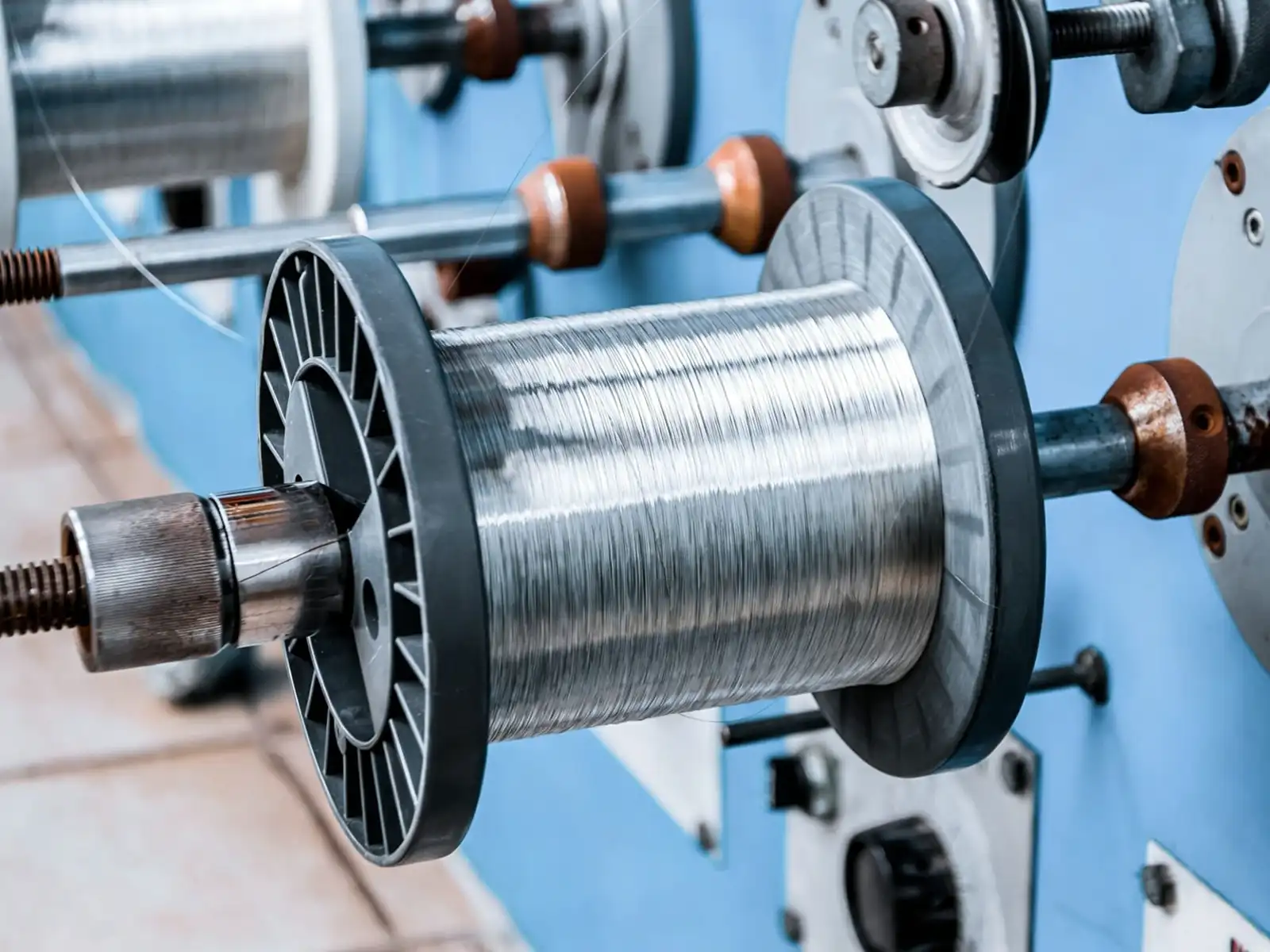
The tensile strength of Gr12 titanium wire (Ti-0.3Mo-0.8Ni) typically falls within the range of 480–620 MPa, placing it in the medium-to-high strength category. Compared with commercially pure titanium grades such as TA1 and TA2 (300–480 MPa), Gr12 represents approximately a 30–40 percent increase in strength, although it remains below that of high-strength titanium alloys such as Gr5 (900–950 MPa). Gr12 titanium wire is widely used in springs, wire meshes, fasteners, and similar applications owing to its excellent strength-to-toughness balance, superior corrosion resistance, and good cold formability. This article provides an in-depth analysis of the strength characteristics of Gr12 titanium wire from the perspectives of mechanical properties, microstructure, and influencing factors.
I. Core Characteristics of Gr12 Titanium Wire Strength Performance
1. Tensile Strength and Yield Strength in Practice
In the annealed condition (M state), Gr12 titanium wire exhibits a tensile strength range of 480–620 MPa, a yield strength of 345–380 MPa (typical annealed values), and an elongation of 18–25 percent. These figures demonstrate that the material possesses both load-bearing capacity and adequate plastic reserve. Compared with commercially pure titanium (Gr1/Gr2), Gr12 achieves approximately 25–35 percent higher tensile strength, with an even more pronounced improvement in yield strength—reaching 1.5 to 1.8 times that of pure titanium.
2. Correspondence Between Hardness and Strength
The hardness of Gr12 titanium wire in the annealed condition typically ranges from HV 280–350, increasing to HV 400–500 after cold working. The Brinell hardness (HB) is approximately 270–320. A strong linear correlation exists between hardness and tensile strength, enabling rapid assessment of the material’s strength condition through hardness testing.
3. Engineering Significance of Fatigue Strength
The fatigue limit of Gr12 titanium wire is approximately 40–45 percent of its tensile strength (roughly 200–280 MPa), an index particularly critical for spring applications subject to cyclic loading. Compared with Gr1 titanium wire, which has a fatigue limit of approximately 120–150 MPa, Gr12 demonstrates significantly improved fatigue performance, giving it a distinct advantage in high-cycle fatigue scenarios.
II. Key Factors Influencing the Strength of Gr12 Titanium Wire
4. Strengthening Mechanisms of Alloying Elements
The molybdenum (0.25–0.40 percent) and nickel (0.60–1.00 percent) added to Gr12 titanium wire serve as the primary strengthening elements. Molybdenum, as a beta-stabilizing element, enhances strength through solid-solution strengthening and the promotion of fine beta-phase precipitation. Nickel further reinforces the matrix by forming fine NiTi intermetallic compounds. The synergistic effect of these two elements enables Gr12 to achieve higher strength while maintaining good ductility.
5. Influence of Processing Techniques
The reduction ratio during cold drawing is the critical parameter determining the final strength of Gr12 titanium wire. As the number of cold-drawing passes increases, the degree of work hardening rises, and tensile strength correspondingly increases. A typical relationship is observed: for every 10 percent increase in cold-drawing reduction, tensile strength increases by approximately 50–80 MPa. However, excessive cold working reduces elongation, necessitating an optimal balance between strength and plasticity.
6. Regulatory Role of Heat Treatment
Annealing temperature and holding time are essential means of controlling the mechanical properties of Gr12 titanium wire. Low-temperature annealing (400–500 °C) is primarily used to relieve working stresses while retaining a high degree of cold-work hardening strength. Medium-temperature annealing (550–650 °C) yields moderate strength with good plasticity. High-temperature annealing (700–800 °C) fully softens the material, achieving the lowest strength and highest elongation.
Strength Comparison: Gr12 Versus Other Titanium Wire Grades
Compared with Gr1/Gr2 commercially pure titanium wire: Gr12 exhibits approximately 30–40 percent higher tensile strength, albeit with slightly lower elongation (Gr1 elongation ≥27 percent, Gr12 at 18–25 percent). Gr12 is more suitable for spring and elastic component applications requiring elevated strength levels.
Compared with Gr5 titanium alloy wire: Gr5 (Ti-6Al-4V) achieves a tensile strength of 900–950 MPa, far exceeding that of Gr12. However, Gr5 exhibits poorer ductility (elongation of approximately 10–15 percent) and inferior corrosion resistance compared to Gr12. Gr5 is suited for aerospace and other extreme high-strength applications, whereas Gr12 offers superior cost-effectiveness for general industrial uses.
Compared with Gr7 (Ti-5Pd): Gr7 possesses strength comparable to Gr12 (tensile strength 500–650 MPa), but Gr7 incorporates the precious metal palladium, resulting in a significantly higher cost. The primary advantage of Gr7 lies in corrosion resistance against reducing acids, rather than superior strength.
Table 1. Strength Comparison of Representative Titanium Wire Grades
| Grade | Tensile Strength (MPa) | Yield Strength (MPa) | Elongation (%) | Typical Applications |
| Gr1 | 240–345 | 170–250 | ≥24 | Condensers, electroplating racks |
| Gr2 | 340–450 | 275–345 | ≥20 | Chemical equipment, marine components |
| Gr12 | 480–620 | 345–380 | 18–25 | Springs, wire mesh, fasteners |
| Gr5 | 895–950 | 830–860 | 10–15 | Aerospace, high-strength components |
| Gr7 | 500–650 | 400–450 | 15–20 | Corrosion-resistant springs, chemical filtration |
Table 2. Effect of Cold Drawing Reduction on Mechanical Properties
| Cold Drawing Reduction | Tensile Strength (MPa) | Elongation (%) |
| Annealed (0%) | 480–520 | 22–25 |
| 10% | 530–580 | 18–22 |
| 20% | 580–620 | 15–18 |
| 30% | 620–680 | 10–15 |
Table 3. Effect of Annealing Temperature on Mechanical Properties
| Annealing Temperature | Tensile Strength (MPa) | Elongation (%) |
| 400–500°C (Stress Relief) | 580–650 | 15–20 |
| 550–650°C (Moderate) | 500–580 | 18–25 |
| 700–800°C (Full Softening) | 450–500 | 25–30 |
Strength Performance in Typical Applications
Spring Applications
Helical springs manufactured from Gr12 titanium wire demonstrate stable and reliable restoring force when compressed to 80 percent of their working height. Compared with commercially pure titanium springs, Gr12 springs exhibit approximately 35 percent higher stiffness and significantly enhanced load-bearing capacity.
Wire Mesh Filtration
Filtration screens woven from Gr12 titanium wire resist deformation and fracture under high differential pressure conditions. Its elevated yield strength ensures that the wire mesh maintains geometric stability even after repeated vibration cleaning cycles.
7. Conclusion
With a tensile strength of 480–620 MPa and a favorable plastic reserve, Gr12 titanium wire achieves an excellent balance between strength and formability among titanium wire materials. Compared with commercially pure titanium wire, it provides higher load-bearing capacity; compared with high-strength titanium alloy wire, it retains superior cold-working performance and cost advantages. For industrial applications such as springs, wire mesh, and fasteners, Gr12 titanium wire ranks among the most cost-effective options available.
FAQ
Q1: What post-processing operations can be performed on Gr12 titanium wire?
Gr12 titanium wire possesses excellent cold formability and can undergo bending, coiling, stamping, and similar operations. In the annealed condition, the bending radius of Gr12 can reach 1 to 2 times the wire diameter without cracking.
Q2: Does the strength of Gr12 titanium wire degrade over time?
Under normal operating conditions, Gr12 titanium wire does not experience significant strength degradation. However, prolonged exposure to elevated temperatures (above 300 °C) or corrosive environments may lead to age hardening or stress corrosion, resulting in property changes.
Q3: How can the strength of Gr12 titanium wire be verified to meet specifications?
Tensile strength and yield strength can be determined through standard tensile testing (ASTM E8). Alternatively, a portable Leeb hardness tester may be used for rapid screening, as an empirical correlation exists between hardness values and tensile strength.
Finding a Reliable Gr12 Titanium Wire Supplier
Baoji Titanium Valley Titanium Nickel Zirconium Material Processing Co., Ltd. is a professional manufacturer of high-end rare metal processed products. Equipped with a Danieli rolling production line from Italy, the company produces over 3,000 metric tons of titanium wire annually and provides full-size customization along with EN 10204 3.1 certification services. Contact us now for technical support and quotation: sales@titaniumvalleys.com
For a broader view of available grades, supply forms, and related specifications, explore our Titanium Wire category.
For product-level details and supply options, you can also review our Gr12 Titanium Alloy Wire page.
References
- [1] GB/T 3623.1-2017, Titanium and Titanium Alloy Wire Rods – Part 1: Dimensions, Out-of-Tolerance Allowances, and Surface Quality [S]. Beijing: Standards Press of China, 2017.
- [2] Chen Zhiqiang. “Strength Design and Application of Titanium Alloy Wire Rods.” Rare Metal Materials and Engineering, vol. 49, no. 8, 2020, pp. 2780–2788.
- [3] ASM International. Titanium Alloy Wires: Properties and Applications [M]. Materials Park: ASM International, 2018.