
How Is Core Advantages of Gr5 Titanium Foil in Advanced Industrial Applications?
- Gr5 Titanium Foil
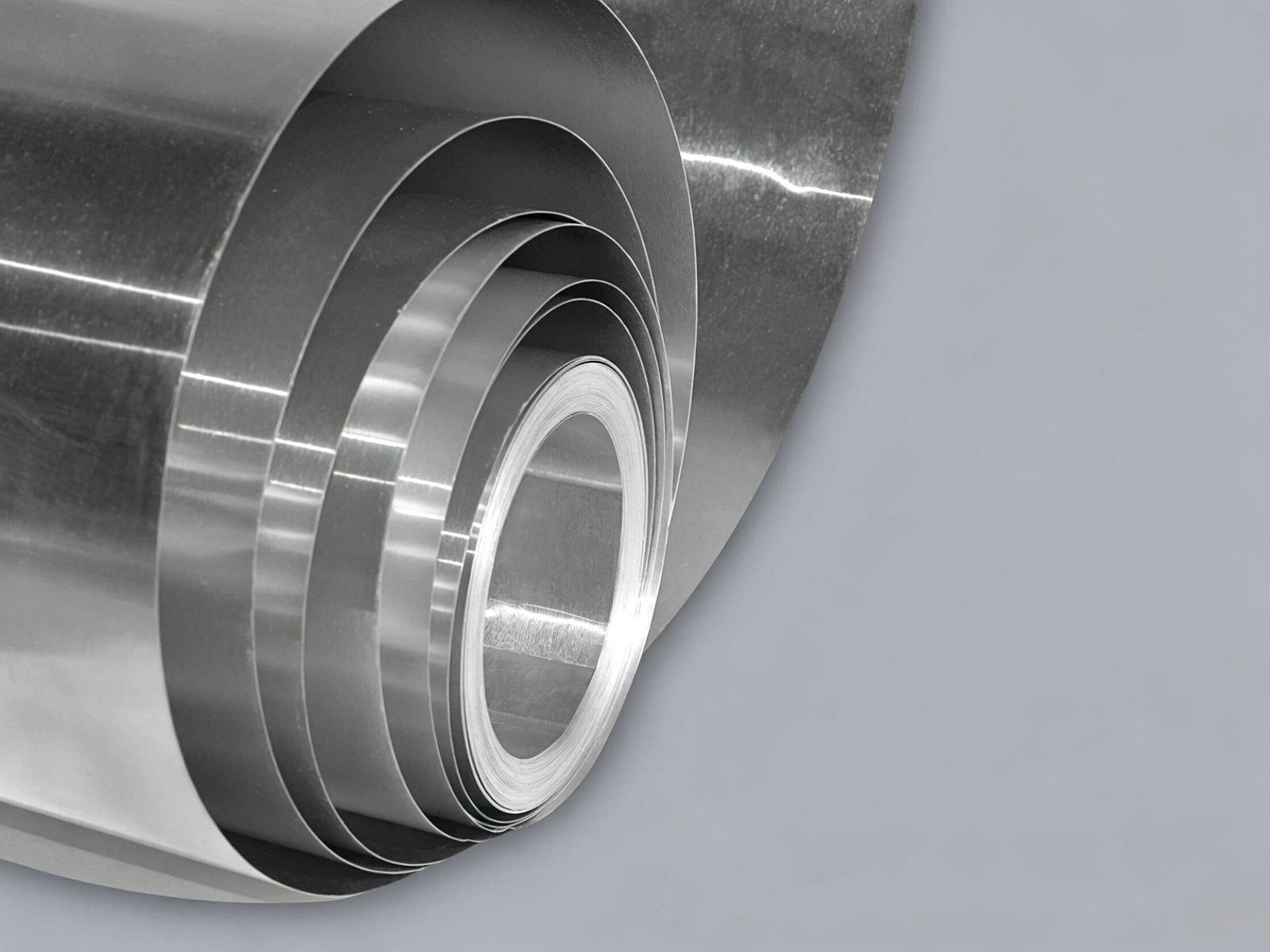
Gr5 titanium foil (Ti-6Al-4V), with its unique α+β dual-phase alloy structure, shows significant advantages in strength, heat resistance and lightweight. The tensile strength is ≥895 MPa, the yield strength is ≥828 MPa, and the density is only 4.43 g/cm³, which is about 60% of steel. It can serve stably for a long time in a 300℃ environment. This material breaks through the limitations of pure titanium’s insufficient strength while retaining excellent corrosion resistance and non-magnetic characteristics. It has become an indispensable key material in the fields of aerospace, new energy, precision electronics and high-end equipment manufacturing. Its ultra-thin specifications of 0.03-0.8mm and width capacity of 350-670mm meet the stringent demands of modern industry for high-performance and high-precision materials.
1. What Are the Material Properties and Technological Breakthroughs of Gr5 Titanium Foil?
(1) What Are the Alloy Composition and Microstructural Advantages?
Ti-6Al-4V alloy forms a stable α+β dual-phase structure by precisely controlling the aluminum (5.5-6.75%) and vanadium (3.5-4.5%) content. The aluminum element strengthens the α phase and improves the antioxidant capacity, and the vanadium element stabilizes the β phase to enhance toughness and thermal stability. This dual-phase structure enables the material to maintain high strength while having good processing adaptability, avoiding the defects of single-phase alloys that are brittle or have insufficient plasticity. The vacuum or inert gas annealing process further ensures uniform distribution of phase structures, eliminates internal stress, and maintains a high degree of consistency in mechanical properties between batches.
(2) What Should You Know About Overcoming Technological Difficulties in Ultra-thin and Wide-width Manufacturing?
Gr5 alloy with high strength and low plasticity is prone to edge cracks, strip breakage and out-of-control plate shape problems during ultra-thin rolling. Using a 20-roll precision rolling mill combined with multi-pass cold rolling technology, stable processing in the thickness range of 0.03-0.8mm is achieved through precise tension control and rolling parameter optimization. The high-precision thickness control system controls the tolerance within +/-0.005mm, reaching the industry’s advanced level. Products with a width of up to 670mm effectively solve common defects such as wavy shape and warping of wide and thin strips through precise flattening and tension matching.
(3) What Should You Know About Surface Quality and Cleanliness Management System?
The combined application of ultrasonic cleaning system and continuous vacuum annealing furnace can completely remove the remaining oil stain and oxide layer during the rolling process. The whole process cleanliness control suppresses oxygen pollution, and the oxygen content is strictly controlled at ≤0.20% (in line with ASTM B265 standards) to avoid material embrittlement. Various surface states such as pickling, bright and matte can be customized on demand to meet the special requirements for surface roughness and reflective properties in different application scenarios. This high-standard surface treatment capability makes Gr5 titanium foil uniquely competitive in fields such as precision electronic packaging and optical devices.
2. How Is Comparison of Key Performance Indicators and Application Advantages?
(1) What Are the Mechanical Properties and Lightweight Design Value?
| Performance indicators | Gr5 titanium foil | Pure titanium Gr2 | high strength steel |
| Tensile strength (MPa) | ≥895 | ~345 | ~800 |
| Density (g/cm³) | 4.43 | 4.51 | 7.85 |
| Specific strength (strength/density) | 202 | 77 | 102 |
The specific strength of Gr5 titanium foil is 2.6 times that of pure titanium and 2 times that of high-strength steel. Every 1 kilogram weight reduction in aviation structural parts can save thousands of dollars in fuel costs. It has excellent fatigue resistance and can maintain stable mechanical response under cyclic loads. It is suitable for key load-bearing parts such as aircraft skins and engine heat shields. The combination of low density and high strength allows structural designers to significantly reduce overall mass without sacrificing safety.
(2) What Should You Know About Corrosion Resistance and High Temperature Stability Comparison?
In marine engineering and chemical equipment, Gr5 titanium foil has excellent resistance to chloride ions, acid and alkali solutions and seawater, and its corrosion resistance is better than most high-strength alloy steels. The long-term service temperature can reach 300℃, and the short-term service temperature can reach 400℃, which is better than the conventional use temperature of pure titanium. This high-temperature stability comes from the dense oxide film formed by aluminum and the thermal stabilization effect of vanadium on the β phase, which enables the material to maintain structural stability and mechanical properties in high-temperature environments and avoid performance degradation caused by creep and phase change.
(3) What Are the Non-magnetic and Electromagnetic Compatibility Properties?
The resistivity is 165-175 μΩ·cm, which is completely non-magnetic and will not interfere with the magnetic field environment of precision instruments and electronic equipment. In electromagnetic shielding applications, Gr5 titanium foil as thin as 0.03mm can form an effective Faraday cage structure, blocking electromagnetic interference while maintaining a lightweight design. This feature is particularly critical in avionics bays, medical imaging equipment and semiconductor manufacturing clean rooms, avoiding the weight burden and corrosion risk of traditional copper or aluminum shielding materials.
3. How Is Match Core Application Scenarios with Technical Requirements?
(1) How Is Key Component Applications in the Aerospace Field?
| Application parts | Specification requirements | Performance advantages |
| honeycomb structure core material | 0.05-0.1mm thick | High specific strength, fatigue resistance |
| engine insulation foil | 0.03-0.08mm thick | High temperature resistance, antioxidant |
| Fuselage skin connector | 0.3-0.5mm thick | High strength, light weight, easy to weld |
The aerospace honeycomb sandwich structure is made of ultra-thin Gr5 titanium foil, which can provide excellent pressure and impact resistance while maintaining extremely light weight. Engine hot-end components require materials to maintain structural integrity at high temperatures, and the thermal stability and creep resistance of Gr5 titanium foil perfectly meet this need. The connection parts of the fuselage bear complex stresses, and the high strength and welding adaptability of the materials ensure long-term reliable operation of the structure.
(2) How Is Innovative Applications in New Energy and Electronics Industries?
In the battery pack thermal management system, 0.1-0.3mm thick Gr5 titanium foil is used as a structural support. With its high strength and corrosion resistance, it can avoid corrosion failure caused by electrolyte leakage. Electromagnetic shielding foil utilizes its non-magnetic and high-strength properties to achieve lightweight shielding in 5G base stations and high-frequency communication equipment. The positive and negative tab connectors of lithium batteries are made of Gr5 titanium foil, which improves conductivity reliability, reduces contact resistance, and extends battery cycle life.
(3) What Should You Know About Corrosion-resistant Structures in Chemical and Marine Engineering?
Electrolytic cell electrode substrates and corrosive media pipeline linings are typical applications of Gr5 titanium foil. Its strong corrosion resistance to chlor-alkali, sulfuric acid and seawater greatly extends the equipment maintenance cycle and reduces downtime costs. The load-bearing structural parts of offshore platforms require materials with both high strength and seawater corrosion resistance. Gr5 titanium foil can still maintain stable performance in salt spray environments and avoid the risk of stress corrosion cracking. The deep-sea detector shell is made of wide-width titanium foil to reduce the number of welds and improve overall sealing and safety redundancy.
4. What Should You Know About Production Technology and Quality Assurance System?
(1) What Should You Know About Full-process Precision Manufacturing Capabilities?
From hot rolling of titanium ingots to multi-pass cold rolling, each process is equipped with an automated monitoring system. The roll system design of the 20-high precision rolling mill optimizes the reduction distribution and reduces edge cracks and thickness fluctuations. The continuous vacuum annealing furnace ensures a balanced α+β phase ratio and eliminates residual stress through precise temperature curve control. The post-annealing rolling and tension smoothing processes further improve the plate shape and mechanical properties, stabilizing the tensile strength of the final product in the range of 930-1100 MPa.
(2) What Should You Know About Breakthroughs in Slitting and Surface Treatment Technology?
| process | Technical features | quality effect |
| Precision slitting | High-precision tool + tension control | Burr<0.02mm |
| Surface polishing | Automated belt grinding | Ra≤0.4um |
| Ultrasonic cleaning | Multi-frequency ultrasound + pure water rinsing | Oil residue <5mg/m² |
During the slitting process of ultra-thin wide-width materials, tool wear and uneven tension can easily lead to edge burrs and dimensional deviations. Using carbide cutting tools and a real-time tension feedback system, the cutting accuracy is improved to +/-0.05mm. Surface grinding uses progressively finer abrasive belts to ensure that the surface roughness and smoothness meet precision machining requirements. Ultrasonic cleaning removes trace contaminants and provides a clean substrate for subsequent welding and coating processes.
(3) What Should You Know About Quality Testing and Standards Compliance?
The products fully comply with international aviation standards such as ASTM B265 and AMS 4911. Chemical composition analysis, mechanical performance testing and metallographic structure inspection reports are provided for each batch. Third-party testing agency certification ensures data traceability. Non-destructive testing technology (ultrasonic, eddy current) screens for internal defects and eliminates micro-cracks and inclusions. The stable production capacity of 3, 000 tons per year and strict quality management system ensure the consistency and timely delivery of large-volume orders.
5. What Should You Know About Market Demand and Technology Development Trends?
(1) What Should You Know About Material Upgrading Needs of Global High-end Manufacturing Industries?
The demand for high-performance biocompatible materials in the U. S. aerospace medical field is growing, and the proportion of Gr5 titanium foil used in implants and surgical instruments continues to increase. Germany’s high-end manufacturing industry pursues extreme lightweight and energy efficiency optimization, and promotes the use of titanium alloys in automobiles and mechanical equipment to replace traditional steel. The Japanese precision electronics industry has strict requirements on the dimensional accuracy and surface quality of ultra-thin shielding materials, and wide-width Gr5 titanium foil meets the packaging needs of large-size devices. South Korea’s battery industry is expanding rapidly, and the demand for titanium foil for thermal management and safety protection of power batteries has surged.
(2) What Should You Know About Industrial Upgrade Opportunities in Emerging Markets?
In the process of upgrading India’s manufacturing industry, the localization rate of aerospace and defense equipment has increased, and local titanium material processing capabilities urgently need to be enhanced. Vietnam’s electronics manufacturing industry has undertaken global industrial transfers, and its reliance on imported high-end shielding and heat dissipation materials has gradually shifted to local procurement. Carbon neutrality policies in Europe and North America drive the development of hydrogen energy and energy storage technology, and the demand for corrosion-resistant and high-strength titanium foils in electrolyzers, fuel cells and hydrogen storage tanks has increased exponentially.
(3) What Should You Know About Technological Innovation Direction and Competition Barriers?
Future technological development will focus on stable rolling of thinner specifications (0.01-0.02mm), wider width (>800mm) plate shape control and functional surface treatment (such as nano-coating, laser texturing). The combination of additive manufacturing and traditional rolling processes is expected to achieve the integrated forming of complex-shaped titanium foils. The intelligent production line optimizes process parameters through real-time data analysis and machine learning, further improving product consistency and production efficiency. Companies that master the core technology of ultra-thin and wide-width titanium foil manufacturing will occupy a dominant position in the global high-end materials market.
6. What Is the Conclusion?
Gr5 titanium foil has become an irreplaceable key material in advanced industry due to its excellent strength, lightweight properties and multi-scenario adaptability. From aerospace to new energy, from precision electronics to marine engineering, its technical advantages and application value continue to be highlighted. With the upgrading of global manufacturing and the development of emerging technologies, the market demand for high-performance titanium alloy foils will maintain strong growth. Companies that master core manufacturing technologies and quality assurance systems will gain long-term competitive advantages in this field.
7. What Should You Know About FAQ?
Q1: What is the difference in strength between Gr5 titanium foil and pure titanium foil?
The tensile strength of Gr5 titanium foil is ≥895 MPa, which is 2.6 times that of pure titanium Gr2 (~345 MPa). At the same time, the density only increases by 2%, achieving the optimal balance of strength and weight, and is especially suitable for aviation and high-load structural applications.
Q2: Can ultra-thin Gr5 titanium foil (0.03mm) meet complex forming requirements?
Although the plasticity of Gr5 alloy is lower than that of pure titanium, medium-complexity forming can be achieved through precise annealing control and mold optimization. For extreme deformation such as deep drawing, it is recommended to choose a thickness of 0.1mm or more or a segmented forming process.
Q3: How to ensure size consistency for large batch orders?
Adopting high-precision online thickness measurement system and closed-loop feedback control, the thickness tolerance is +/-0.005mm. Material reports and mechanical property test data are provided for each batch, and third-party testing ensures compliance with ASTM B265 and AMS 4911 standards.
8. What Should You Know About About Titanium Valley?
As a professional Gr5 titanium foil manufacturer and supplier, Baoji Titanium Nickel Zirconium Material Processing Co., Ltd. relies on the world’s advanced production equipment and technology system to provide global customers with high-precision titanium alloy foils in the specifications of 0.03-0.8mm×350-670mm. The annual production capacity is 3, 000 tons, supporting OEM customization and large-volume stable supply. For more product information or technical support, please contact: sales@titaniumvalleys. com.
For a broader view of available grades, supply forms, and related specifications, explore our Titanium Foil category.
For product-level details and supply options, you can also review our ASTM F136 Gr5 Eli (Gr23) Titanium Foil page.
References
- Zhou Lian, Zhao Yongqing, Wang Xiangdong. Titanium alloy materials and their processing technology[M]. Beijing: Metallurgical Industry Press, 2008.
- Chen Jun, Zhao Yongqing, Chang Hui. Research progress in preparation technology of titanium alloy foils for aviation [J]. Rare Metal Materials and Engineering, 2019, 48(6): 2053-2060.
- Li Shiwei, Liu Wei, Zhang Wei. Research on rolling process and microstructure properties of Ti-6Al-4V alloy ultra-thin strip [J]. Progress in Titanium Industry, 2020, 37(5): 12-17.
- Guo Hongzhen, Yao Zekun. Titanium alloy precision rolling technology[M]. Beijing: National Defense Industry Press, 2015.