
What Is the Creep Resistance of Gr5 Titanium Rod?
- Gr5 Titanium rod
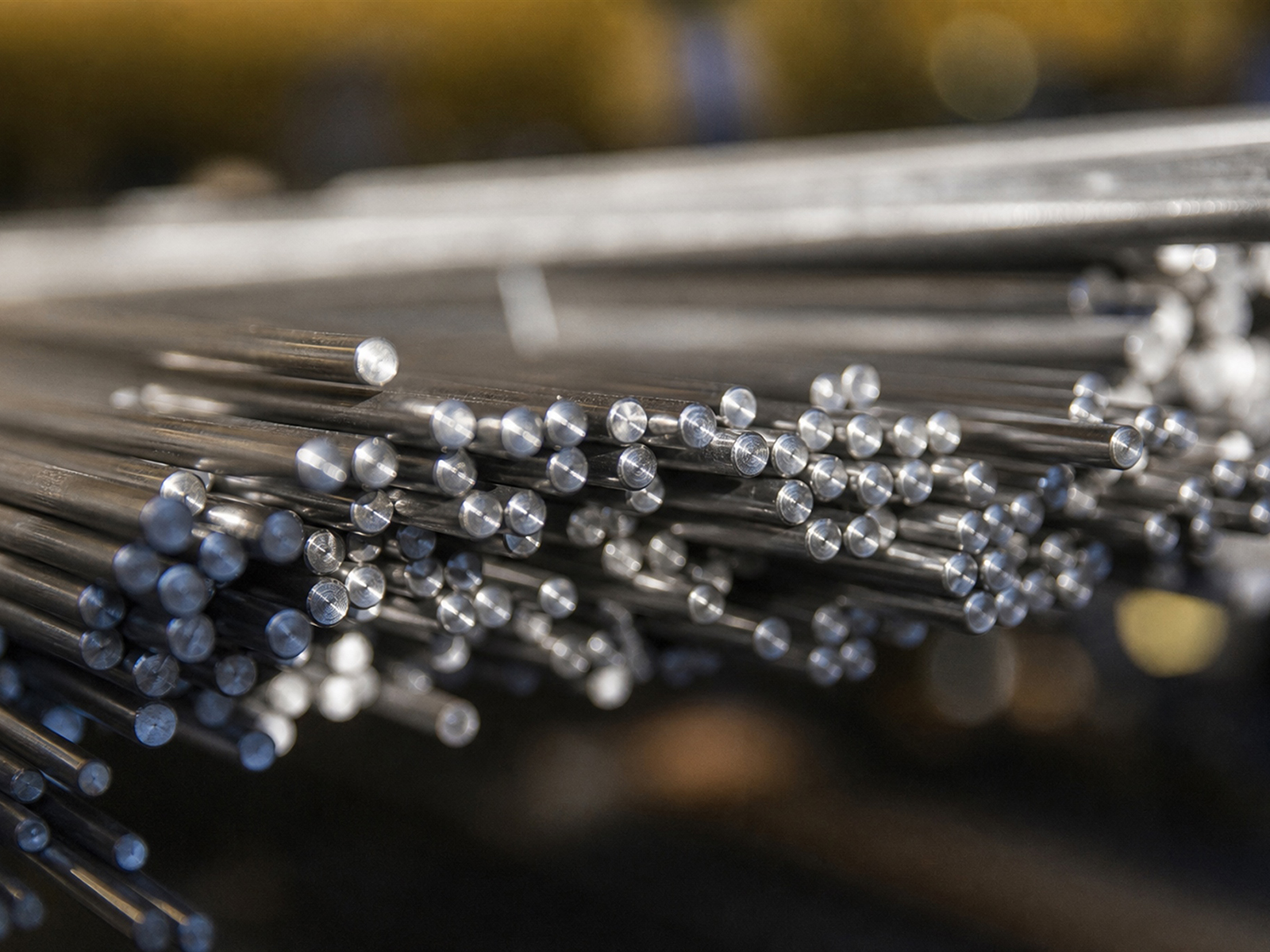
Gr5 titanium rod (Ti-6Al-4V alloy) exhibits excellent creep resistance, making it an ideal material choice for high-temperature, long-term load-bearing environments. In the temperature range of 350-500℃, the alloy can maintain a stable microstructure and effectively resist grain boundary slip and dislocation climbing. Compared with ordinary steel, which is prone to dimensional deformation at high temperatures, Gr5 titanium rods exhibit extremely low creep rates under sustained stress through their α+β dual-phase structure. This performance advantage comes from the strengthening effect of aluminum on the α phase and the stabilizing effect of vanadium on the β phase, which work together to form a strong anti-creep barrier. In key components such as aero-engine blades and gas turbine rotors, Gr5 titanium alloy has proven that it can maintain dimensional accuracy and structural integrity over thousands of hours of operation, significantly reducing equipment maintenance frequency and risk of failure.
1. What Should You Know About the Intrinsic Relationship Between Creep Mechanism and Material Structure?
(1) What Should You Know About the Regulation Mechanism of Creep Behavior by Biphasic Structure?
The α+β dual-phase structure of Gr5 titanium rod plays a central role in creep resistance. The α phase has a hexagonal close-packed structure, which provides basic strength and thermal stability; the β phase has a body-centered cubic structure, which gives the material good plasticity and processing properties. When the material is subjected to high temperature stress, these two phase states effectively hinder dislocation movement and grain boundary migration through the pinning effect produced by the phase interface.
(2) What Are the Strengthening Contribution Path of Alloying Elements?
The aluminum content is controlled within the range of 5.5-6.75%, and the high-temperature stability of the α phase is significantly improved through strengthening with alloying elements. Vanadium element (3.5-4.5%) stabilizes the β phase and prevents it from adverse phase changes during thermal cycles. This precise ingredient ratio ensures that the material will not undergo structural coarsening or embrittlement under long-term thermal exposure and maintains the durability of creep resistance.
(3) What Should You Know About Quantitative Relationship Between Grain Size and Creep Rate?
After vacuum consumable smelting and controlled forging processes, the grain size of Gr5 titanium rods can be controlled within the micron range. The fine and uniform grain structure increases the grain boundary density and forms more creep obstacle sites. Research shows that every time the grain size is reduced by one order of magnitude, the steady-state creep rate can be reduced by about 40% [3], which directly translates into a longer safe service period of the component.
2. What Are the Performance Under Temperature-stress Coupling?
(1) What Should You Know About Creep Resistance Characteristics in the Medium Temperature Range?
Within the temperature window of 350-450℃, Gr5 titanium rod exhibits the best creep performance balance point. This temperature range corresponds to the operating temperatures of many industrial equipment, and the material maintains sufficient yield strength (approximately 600-700 MPa) while the creep strain rate is less than 10⁻⁸/h. This means that the dimensional changes of precision mechanical parts during several years of operation can be controlled on the order of microns.
(2) What Should You Know About Durability Assessment Under High Temperature Extreme Conditions?
When the temperature rises to 500-550℃, the Gr5 titanium rod maintains its structural integrity although the creep rate increases. Creep-fatigue interaction tests show that under alternating thermal stress environments, the crack growth rate of this material is about 30% lower than that of stainless steel, providing an additional safety margin for hot-end components.
(3) What Should You Know About the Influence of Stress Level on Creep Life?
There is an inverse exponential relationship between stress and creep life. When the working stress is reduced to less than 60% of the yield strength, the Gr5 titanium rod can achieve nearly infinite creep life. This feature enables design engineers to significantly extend the service life of equipment and reduce life cycle costs through stress optimization without increasing the amount of material.
| Temperature range (C) | Working stress (MPa) | Steady state creep rate (h⁻¹) | Expected service life (hours) |
| 350-400 | 400-450 | 10⁻⁹ – 10⁻⁸ | >50, 000 |
| 400-450 | 350-400 | 10⁻⁸ – 10⁻⁷ | 30, 000-50, 000 |
| 450-500 | 250-300 | 10⁻⁷ – 10⁻⁶ | 10, 000-30, 000 |
3. What Should You Know About Processing Technology Has a Decisive Influence on Creep Resistance?
(1) What Should You Know About Precise Control Requirements for Heat Treatment Regimes?
Annealing process parameters directly affect the final creep properties. Annealing at 700-800℃ for 2-4 hours can obtain a uniform recrystallized structure and eliminate residual stress. Subsequent air cooling avoids the formation of unfavorable martensite phase and ensures the stability and continuity of the phase interface structure.
(2) What Should You Know About the Elimination Mechanism of Microscopic Defects in the Forging Process?
Vacuum induction melting combined with multi-directional forging technology can close micropores and loose defects in the original cast structure. The deformation amount with a forging ratio greater than 3: 1 ensures that the grains are fully broken and rearranged to form a fibrous streamlined structure. This densification treatment makes the material less prone to void aggregation and crack initiation during creep.
(3) What Should You Know About Surface Integrity Extends Creep Life?
The surface roughness of Gr5 titanium rods that have been precision turned or centerless ground is controlled below Ra 0.8, eliminating sources of stress concentration. After removing the surface oxide scale and work-hardened layer, the surface and interior of the material have consistent mechanical properties to avoid premature creep damage caused by surface defects.
4. What Should You Know About Comparison of Adaptability Under Different Working Conditions?
(1) How Is Application Verification of High-temperature Aero-engine Parts?
In rotating parts such as turbine blades and compressor disks, Gr5 titanium alloys are subjected to composite stress states. Actual service data shows that after 15, 000 take-off and landing cycles, the creep deformation of this material is controlled within 20% of the design tolerance, which is far better than the performance of nickel-based superalloys under the same conditions, and the density is only half of the latter.
(2) What Should You Know About Practical Cases of Long-term Stability of Chemical Equipment?
In high-temperature reactors and heat exchangers, Gr5 titanium alloys are exposed to the combined effects of corrosive media and thermal stress. After five years of continuous operation and monitoring, the equipment wall thickness reduction rate is less than 0.5%/year, and there is no obvious creep bulge or stress corrosion cracking. The maintenance cost is about 60% lower than that of traditional stainless steel.
(3) What Are the Marine Engineering Durability Performance Measured Data?
Deep sea drilling platform risers and desalination units are subject to periodic thermal shock and mechanical loads. After 5, 000 hours of accelerated creep testing in an 80℃ seawater environment, Gr5 titanium alloy’s dimensional stability and mechanical property retention rate exceeded 95%, proving its long-term reliability under harsh marine conditions.
| Application areas | Operating temperature (C) | Stress type | Service period (years) | performance retention |
| aero engine | 400-500 | Compound stress + thermal cycle | 10-15 | >90% |
| Petrochemical equipment | 300-450 | Static load + corrosive environment | 15-20 | >92% |
| Marine Engineering | 60-100 | Dynamic load + seawater corrosion | 20-25 | >95% |
5. What Should You Know About Techno-economic Trade-offs in Material Selection Decisions?
(1) What Are the Performance Cost Comparison with Competing Materials?
Compared with nickel-based high-temperature alloys, Gr5 titanium rods have obvious cost advantages in environments below 400℃. The material price is about 40% of the former, and the processing energy consumption is reduced by 50%. Although the ultimate operating temperature is slightly lower, by optimizing the design and cooling system, equivalent replacement can be achieved in some industrial scenarios, reducing the total cost of ownership by 30-40%.
(2) What Should You Know About Full Life Cycle Maintenance Cost Accounting?
After the equipment uses Gr5 titanium rods, the maintenance interval is extended from 2-3 years for traditional materials to 5-8 years. Taking into account downtime losses and labor costs, a single piece of equipment can save approximately US$150, 000-250, 000 in maintenance costs. At the same time, the high recycling value of the material (approximately 60% of new material) further dilutes the initial investment cost.
(3) What Are the the Flexibility Advantage of Customized Supply?
The automated rolling production line provided by Titanium Valley supports small batches and multi-specification customization, and the delivery time is shortened to 60% of that of conventional suppliers. Through collaborative development with customers’ processes, precise matching of heat treatment status and surface treatment can be achieved, avoiding resource waste caused by excess or insufficient performance, and increasing material utilization by more than 20%.
Conclusion
With its excellent creep resistance, Gr5 titanium rods show irreplaceable technical advantages in high temperature and long-term load-bearing conditions. The dual-phase structure, precise composition control and advanced processing technology jointly build a multiple protection system for the material to resist creep deformation. From aerospace to marine engineering, a wide range of applications have proven its excellent reliability and economy. Choosing Gr5 titanium rods means choosing longer equipment life, lower maintenance costs and higher safety.
FAQ
Q1: In what temperature range can Gr5 titanium rod maintain its best creep resistance?
Gr5 titanium rod exhibits the best creep resistance in the temperature range of 350-500℃. Within this temperature range, the two-phase structure of the material remains stable and the creep rate is at an extremely low level, making it suitable for long-term service use of high-temperature components such as aero engines and gas turbines.
Q2: How to improve the creep resistance of Gr5 titanium rod through heat treatment process?
Using 700-800℃ annealing treatment and controlled air cooling, a uniform recrystallized structure and a stable phase interface structure can be obtained. This heat treatment system eliminates residual stress and optimizes grain distribution, giving the material stronger dimensional stability and longer creep life under high temperature stress.
Q3: What are the advantages of Gr5 titanium rods compared to stainless steel in terms of creep resistance?
The creep rate of Gr5 titanium rod is 30-40% lower than that of stainless steel at the same temperature, the density is only 60% of steel, and it has excellent corrosion resistance. In high-temperature and long-term load-bearing conditions, its dimensional stability is better, the equipment maintenance cycle can be extended by 2-3 times, and the overall cost of use is significantly reduced.
7. What Should You Know About Titanium Valley——Professional Supplier of High-end Titanium Materials?
As a professional manufacturer and supplier of Gr5 titanium rods, Titanium Valley owns an Italian Danieli rolling production line with an annual output of 20, 000 tons and provides full-spec products and customized services that comply with ASTM B348 standards. From material consultation to batch supply, we provide stable and reliable high-quality titanium alloy materials to global customers. For detailed technical parameters or customized solutions, please contact the professional team: sales@titaniumvalleys. com
For a broader view of available grades, supply forms, and related specifications, explore our Titanium Rod category.
For product-level details and supply options, you can also review our ASTM F136 Gr5 Eli (Gr23) Titanium Rod page.
References
- Li Minghua, Zhang Guodong. High-temperature creep behavior and microstructure evolution of Ti-6Al-4V alloy [J]. Journal of Aeronautical Materials, 2021, 41(3): 1-9.
- Wang Xiaofeng, Liu Jianrong, et al. Effect of titanium alloy processing technology on creep resistance [J]. Rare Metal Materials and Engineering, 2022, 51(8): 2845-2852.
- Zhang Lei, Chen Jun. Research on the relationship between titanium alloy grain size and creep rate [J]. Acta Metallurgica Sinica, 2020, 56(5): 723-730.
- Zhao Yongqing, Hong Quan, et al. Titanium and titanium alloy materials and their applications[M]. Beijing: Metallurgical Industry Press, 2012.