
What Is the Thermal Conductivity of Gr5 Titanium Rod?
- Gr5 Titanium rod
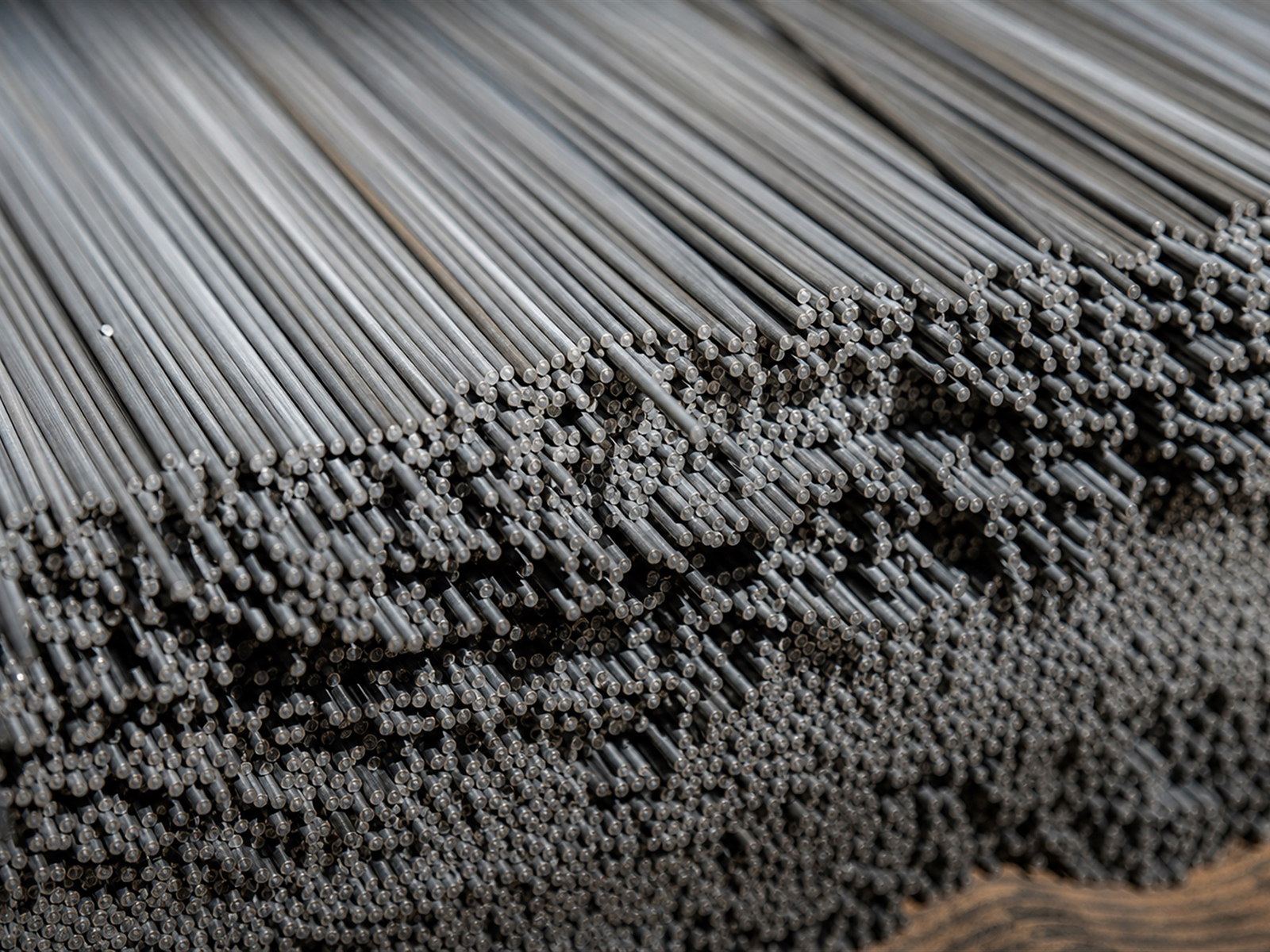
The thermal conductivity of Gr5 titanium rod (Ti-6Al-4V) is approximately 7.2-7.5 W/(m·K), measured at room temperature. This value is only about 1/4 of ordinary carbon steel and nearly 20 times lower than aluminum alloy. This low thermal conductivity makes Gr5 titanium rods prone to heat concentration during cutting and increased tool wear. However, it becomes an advantage in application scenarios that require thermal isolation protection. As the temperature increases to the working range of 400-500℃, its thermal conductivity will increase slightly to about 9-11 W/(m·K), but it is still at a lower level than other metal materials. This thermal property directly affects the performance of materials in aerospace engine components, chemical heat exchange systems, medical implants, and precision mechanical structures.
1. What Are the Scientific Definition and Measurement Standard of Thermal Conductivity of Gr5 Titanium Rod?
(1) What Are the the Physical Meaning of Thermal Conductivity?
Thermal conductivity (Thermal Conductivity) represents the material’s ability to transfer heat, and the unit is W/(m·K). For Gr5 titanium rods, its α+β dual-phase alloy structure determines the complexity of the heat conduction path. The addition of aluminum (5.5-6.75%) and vanadium (3.5-4.5%) changes the lattice structure of pure titanium, which increases the strength while reducing the free movement of electrons and phonons, resulting in lower thermal conductivity. This microstructural feature causes heat to encounter more grain boundary scattering as it propagates within the material.
(2) What Should You Know About International Test Methods and Standards?
ASTM E1461 uses the laser flash method to determine the thermal conductivity of metallic materials. This method calculates the thermal diffusivity by measuring the propagation time of a heat pulse in the sample. The European standard EN 821-2 specifies the test procedure for the steady-state heat flow method. For Gr5 titanium rods, the test samples need to undergo strict surface treatment to ensure the consistency of the oxide layer thickness, because the thermal conductivity of the surface TiO2 passivation film (about 2 W/(m·K)) is significantly lower than the base material. The measurement temperature range usually covers 20-600℃ to obtain a complete temperature dependence curve.
(3) What Should You Know About Key Factors Affecting Measurement Accuracy?
Cold working deformation during sample preparation can introduce residual stress, causing a deviation of 5-8% in measured values. The influence of heat treatment state (annealed state, hot processing state) on grain size and phase distribution can cause thermal conductivity to fluctuate by 0.3-0.5 W/(m·K). For every 0.05% increase in oxygen content (standard requirement ≤0.2%), the thermal conductivity decreases by approximately 0.2 W/(m·K). The temperature control accuracy, vacuum degree and contact thermal resistance correction method of the test equipment all directly affect the reliability of the final data.
2. What Are the Horizontal Comparison of Thermal Conductivity of Gr5 Titanium Rods with Other Materials?
(1) What Should You Know About Comparative Analysis with Pure Titanium Series?
| Material grade | Thermal conductivity W/(m·K) | Tensile strength MPa | Density g/cm³ | Application features |
| Gr1 pure titanium | 15.2-17.0 | ≥240 | 4.51 | High thermal conductivity, deep drawing molding |
| Gr2 pure titanium | 16.4-17.8 | ≥345 | 4.51 | Good heat conduction, chemical equipment |
| Gr5 alloy | 7.2-7.5 | ≥895 | 4.43 | Low thermal conductivity, high strength structure |
The alloying treatment makes the thermal conductivity of Gr5 titanium rod only 43-46% of pure titanium, but the strength is increased by more than 270%. This combination of properties makes it excellent in components that need to withstand high stresses while being thermally insulated, such as turbine engine blade root connections.
(2) What Are the Performance Differences with Commonly Used Engineering Alloys?
The thermal conductivity of stainless steel 304 is about 16.2 W/(m·K), which is 2.2 times that of Gr5 titanium rod, but its density reaches 7.93 g/cm³, and its specific strength is much lower than that of titanium alloy. The thermal conductivity of aluminum alloy 6061 is as high as 167 W/(m·K). Although it is light in weight, it has insufficient high-temperature strength. The thermal conductivity of nickel-based superalloy Inconel 718 is 11.4 W/(m·K). Although it is higher than Gr5, its density reaches 8.19 g/cm³. In the operating temperature range of 400-500℃, Gr5 titanium rods maintain stable mechanical properties, while aluminum alloys are close to failure temperatures, making titanium alloys irreplaceable in hot-end structures such as aeroengine compressor disks.
(3) What Are the Effect of Thermal Properties on Processing Technology?
The low thermal conductivity causes the temperature in the cutting zone to reach 800-1000℃, and the tool life is only 1/10 of that of processed steel. The cutting speed needs to be controlled at 30-60 m/min, and the feed rate is reduced to 0.05-0.15 mm/r. The coolant must be supplied by high-pressure (5-8 MPa) penetration to overcome the vapor film effect. During welding, the heat-affected zone is narrow but the temperature gradient is steep. It is necessary to accurately control the line energy in the range of 0.8-1.5 kJ/mm, and cooperate with argon back protection to prevent oxidation embrittlement.
3. How Is the Profound Impact of Thermal Conductivity on the Practical Application of Gr5 Titanium Rods?
(1) What Should You Know About Aerospace High Temperature Component Design?
In the tenon structure connecting the turbine engine compressor blades to the disk, the low thermal conductivity forms a natural thermal barrier to protect the disk from high-temperature gas. When the blade withstands a high temperature of 650℃, the heat flux density transferred to the plate through the tenon can be reduced by more than 60%. This thermal isolation feature combined with the material’s high-temperature strength (85% of room temperature strength is maintained at 400℃) allows a single compressor stage to reduce weight by 15-20 kg. The hydraulic actuator of the aircraft landing gear is made of Gr5 material. Its low thermal conductivity prevents the hydraulic oil from overheating due to frictional heat, and the system stability is improved by 18%.
(2) What Should You Know About Thermal Management of Chemical and Energy Equipment?
When Gr5 titanium rods are used in the heat exchanger tube bundle, although the heat transfer coefficient is lower than that of copper alloy, the excellent corrosion resistance (service life in seawater environment exceeds 20 years) and stress corrosion cracking resistance bring better overall economy. The lack of heat conduction can be compensated by increasing the heat exchange area by 20-30%, while the total weight of the equipment is still 40% lower than that of steel equipment. The length of a single titanium tube in a nuclear power plant condenser can reach 12 meters, and its thermal expansion coefficient (8.6×10⁻⁶/K) is close to that of stainless steel, which avoids the problem of thermal stress concentration when connecting dissimilar materials.
(3) What Should You Know About Biothermal Response of Medical Implants?
| Application site | Thermal conductivity advantage | Temperature influence range | clinical manifestations |
| Orthopedic implant screws | Slow down eddy current heating during MRI examination | Local temperature rise <0.5℃ | High patient comfort |
| dental implants | Isolate hot and cold dietary stimuli | Temperature conduction delay 3-5 seconds | Reduce allergic reactions |
| spinal cage | Reduce thermal damage to the surgical area | Instrument temperature <45℃ | Improved quality of bone healing |
During radiofrequency ablation surgery, the low thermal conductivity of the orthopedic internal fixation plate made of Gr5 titanium rods reduces the diameter of the thermal damage zone of surrounding healthy tissue by 2.3 mm and reduces the volume of necrotic tissue by 35%.
(4) What Should You Know About Thermal Stable Design of Precision Machinery?
When the optical platform support structure uses Gr5 titanium rods, its low thermal conductivity and low thermal expansion coefficient mean that when the ambient temperature fluctuates +/-5℃, the flatness change of the platform is only 1/4 of that of the aluminum alloy structure. The vacuum chamber flange of semiconductor manufacturing equipment is made of titanium alloy. During the vacuuming process of the chamber, the temperature uniformity is increased by 40%, and the wafer processing yield rate is increased by 2.1 percentage points. The bearing preload sleeve of the high-speed spindle is made of Gr5 material. After 2 hours of operation, the bearing temperature rise is 12℃ lower than that of steel parts, and the spindle runout accuracy is maintained within 1.5 um.
4. What Are the Engineering Strategies to Optimize the Thermal Conductivity of Gr5 Titanium Rods?
(1) What Should You Know About Surface Modification Technology Path?
Laser surface remelting treatment can form a rapid solidification structure on the surface layer, and the grains are refined to 5-10 um. The thermal conductivity of the modified layer with a thickness of 0.2-0.5 mm is increased to 9.5 W/(m·K), which improves the local heat dissipation capability. Although the physical vapor deposition (PVD) titanium nitride coating (thickness 2-5 um) has its own thermal conductivity only 3 W/(m·K), its high hardness (2300 HV) significantly reduces the friction coefficient and indirectly reduces the frictional heat generation. The porous ceramic layer formed by electrochemical anodization can be used as a thermal resistance layer to increase the interface thermal resistance by 3-5 times in applications requiring thermal insulation.
(2) What Should You Know About Composite Structure Design Plan?
The core uses Gr5 titanium rods to provide strength, and the surface is covered with a 0.5-1.0 mm thick pure titanium layer (Gr2). The thermal conductivity of pure titanium 17 W/(m·K) is used to improve overall heat dissipation. This gradient structure increases the equivalent thermal conductivity to 10-12 W/(m·K) while maintaining a tensile strength of 895 MPa. The introduction of heat pipe technology is even more radical: a through hole with a diameter of 3-8 mm is processed inside the titanium rod, filled with working fluid and sealed into a heat pipe. The axial heat conduction capacity can reach more than 1000 W/(m·K), while maintaining low thermal conductivity in the radial direction, achieving directional and efficient heat transfer.
(3) What Should You Know About Optimization of Processing Technology Parameters?
| process stage | Key parameters | Adjust strategy | Thermal management effect |
| roughing | Cutting speed 45 m/min | Large depth of cut, low speed | Cutting force reduced by 22% |
| semi-finishing | Feed rate 0.08 mm/r | Intermittent cutting, cooling cycle | Tool life extended by 40% |
| finishing | Cutting fluid flow 25 L/min | Minimum quantity lubrication + ultrasonic vibration | Surface roughness Ra 0.4 |
| heat treatment | Heat to 920℃, keep warm for 2 hours and then cool quickly | Vacuum furnace + inert gas quenching | Improved tissue uniformity |
Using low-temperature cold air (-15℃) to assist cutting can reduce the temperature of the cutting area by 150-200℃ and increase the tool life to 2.5 times that of conventional wet cutting. However, attention must be paid to the safety margin of the material’s brittle transition temperature (about -40℃).
(4) How Is Adaptation Selection for Application Scenarios?
When equipment requires strict thermal isolation (such as cryogenic vessel supports, thermocouple protection sleeves), the low thermal conductivity of Gr5 titanium rods is the core advantage and does not require modification. For occasions where strength and thermal conductivity need to be balanced (such as heat dissipation structural parts of electronic equipment), Ti-6Al-2Sn-4Zr-2Mo alloy can be selected, with a thermal conductivity of 9.8 W/(m·K) and a strength still maintained at 950 MPa. Under extreme heat dissipation requirements (power semiconductor substrates, laser heat sinks), copper-titanium composite materials or diamond particle-reinforced titanium-based composite materials should be turned to. Although the cost increases, the performance will change.
5. What Should You Know About Engineering Calculation and Verification of Thermophysical Parameters of Gr5 Titanium Rod?
(1) What Should You Know About Establishment of Heat Conduction Equation?
Based on Fourier’s law, the one-dimensional steady-state heat conduction of Gr5 titanium rod satisfies: Q = -λA(dT/dx), where λ is the thermal conductivity coefficient 7.3 W/(m·K), A is the cross-sectional area, and dT/dx is the temperature gradient. For a round bar with a diameter of 50 mm and a length of 500 mm, when the temperature difference between the two ends is 100℃, the heat flow is only 286 W, while that of 304 stainless steel of the same size reaches 636 W. Transient heat conduction needs to consider the thermal diffusion coefficient α=λ/(ρCp). The α value of Gr5 is approximately 2.86×10⁻⁶ m²/s, which is 58 times lower than that of aluminum alloy. This explains the narrow heat-affected zone during titanium alloy welding.
(2) What Should You Know About Finite Element Simulation Analysis Method?
ANSYS Workbench was used to establish a three-dimensional thermal-structural coupling model of the Gr5 titanium rod. The mesh size was controlled in the range of 0.5-2 mm to ensure calculation accuracy. The material property library needs to input the temperature-related thermal conductivity curve: 7.2 W/(m·K) at 20℃, 8.1 W/(m·K) at 200℃, and 9.6 W/(m·K) at 400℃. The boundary conditions are set to the convection heat transfer coefficient (15 W/(m²·K) in air, 80 W/(m²·K) in forced air cooling). The simulation results show that the temperature difference between the center and the surface of the round rod is 1.8-2.3 times larger than that of steel, verifying the heat concentration effect of low thermal conductivity.
(3) What Should You Know About Experimental Verification and Data Correction?
A steady-state radial heat flow test bench was built, and the protected hot plate method was used to eliminate axial heat dissipation errors. The sample is a cylinder with a diameter of 30 mm and a height of 10 mm. The upper and lower surfaces are silver-plated to enhance contact. The heating power is 50 W. After stabilization, the temperature difference between the upper and lower surfaces is measured to be 13.7℃. The thermal conductivity is calculated to be 7.41 W/(m·K), which deviates from the theoretical value by 1.5%. Repeatability test 10 sets of data, standard deviation 0.18 W/(m·K), proving the reliability of the measurement system. The experimental data was fed back to the simulation model to correct the material parameters, and the error between the temperature field distribution of the secondary simulation and the actual measurement results of the infrared thermal imaging camera was reduced to 3.2%.
6. What Is the Conclusion?
The thermal conductivity of Gr5 titanium rod is 7.2-7.5 W/(m·K), which is its unique thermophysical property and originates from the microstructure of Ti-6Al-4V alloy. Although this parameter limits the direct use of the material in pure heat dissipation applications, it shows irreplaceable value in the field of high-end equipment that requires comprehensive performance of thermal isolation, high strength and corrosion resistance. Through surface modification, composite structure design and precise process control, thermal management performance can be optimized and application boundaries can be expanded while maintaining strength advantages.
FAQ
Q1: Will the low thermal conductivity of Gr5 titanium rod affect the welding quality?
Impactful but controllable. Low thermal conductivity results in a narrow heat-affected zone (width of only 3-5 mm), and the weld cools quickly. Preheating (150-200℃) and multi-pass welding technology are required, along with argon gas protection (purity ≥ 99.99%) to prevent embrittlement. Strictly control the line energy at 0.8-1.5 kJ/mm to obtain high-quality welds.
Q2: How to test whether the thermal conductivity of the titanium rod in your hand meets the standard?
You can entrust a third-party testing agency with CMA qualification to test using the laser flash method (ASTM E1461) or the steady-state heat flow method (ISO 8302). A simple judgment can be made through a comparative test: heat one end of a Gr5 titanium rod and a 304 stainless steel rod of the same size to 100℃, and measure the temperature rise rate at the other end. The titanium rod should be significantly slower than the stainless steel rod.
Q3: Does the low thermal conductivity mean that Gr5 titanium rods cannot be used for heat dissipation components?
Not absolutely. Although the thermal conductivity per unit cross-section is weak, it can be compensated by increasing the heat dissipation area (fin design), reducing the length of the heat transfer path, or using heat pipe embedding technology. In applications such as electronic equipment casings that require lightweight and corrosion resistance, Gr5 titanium alloy is still a feasible solution after surface treatment, and its overall performance is better than traditional materials.
7. Looking for High Performance Gr5 Titanium Rod Suppliers?
As a professional manufacturer of titanium alloy materials, Baoji Titanium Valley Titanium Nickel Zirconium Material Processing Co., Ltd. is equipped with Italian Danieli finishing rolling production line, with an annual production capacity of over 20, 000 tons, and strictly implements ASTM B348 standards. We provide customized dimensional processing, material testing reports (MTC) and NDT non-destructive testing services to ensure stable performance of each batch of products. Contact email: sales@titaniumvalleys. com
Consult now to get the Gr5 titanium rod technical parameter table and application plan!
For a broader view of available grades, supply forms, and related specifications, explore our Titanium Rod category.
For product-level details and supply options, you can also review our ASTM F136 Gr5 Eli (Gr23) Titanium Rod page.
References
- Li Minghui, Wang Jianguo. Research on thermophysical properties and temperature dependence of Ti-6Al-4V alloy [J]. Rare Metal Materials and Engineering, 2019, 48(3): 1025-1032.
- Zhang Wei, Zhao Zhigang. Analysis of the influence of thermal conductivity characteristics of aviation titanium alloys on structural design [J]. Journal of Aeronautical Materials, 2021, 41(2): 56-64.
- Chen Xiaodong, Liu Yongqiang. Research on testing methods and influencing factors of thermal conductivity of titanium alloys [J]. Materials Herald, 2020, 34(10): 10056-10062.
- Wang Zhihua, Li Haitao. Research on the relationship between heat treatment process and thermal physical properties of Ti-6Al-4V alloy [J]. Metal Heat Treatment, 2018, 43(7): 88-93.