
How Is Grade 4 Titanium Foil Used in Semiconductor Manufacturing?
- Grade 4 Titanium Foil
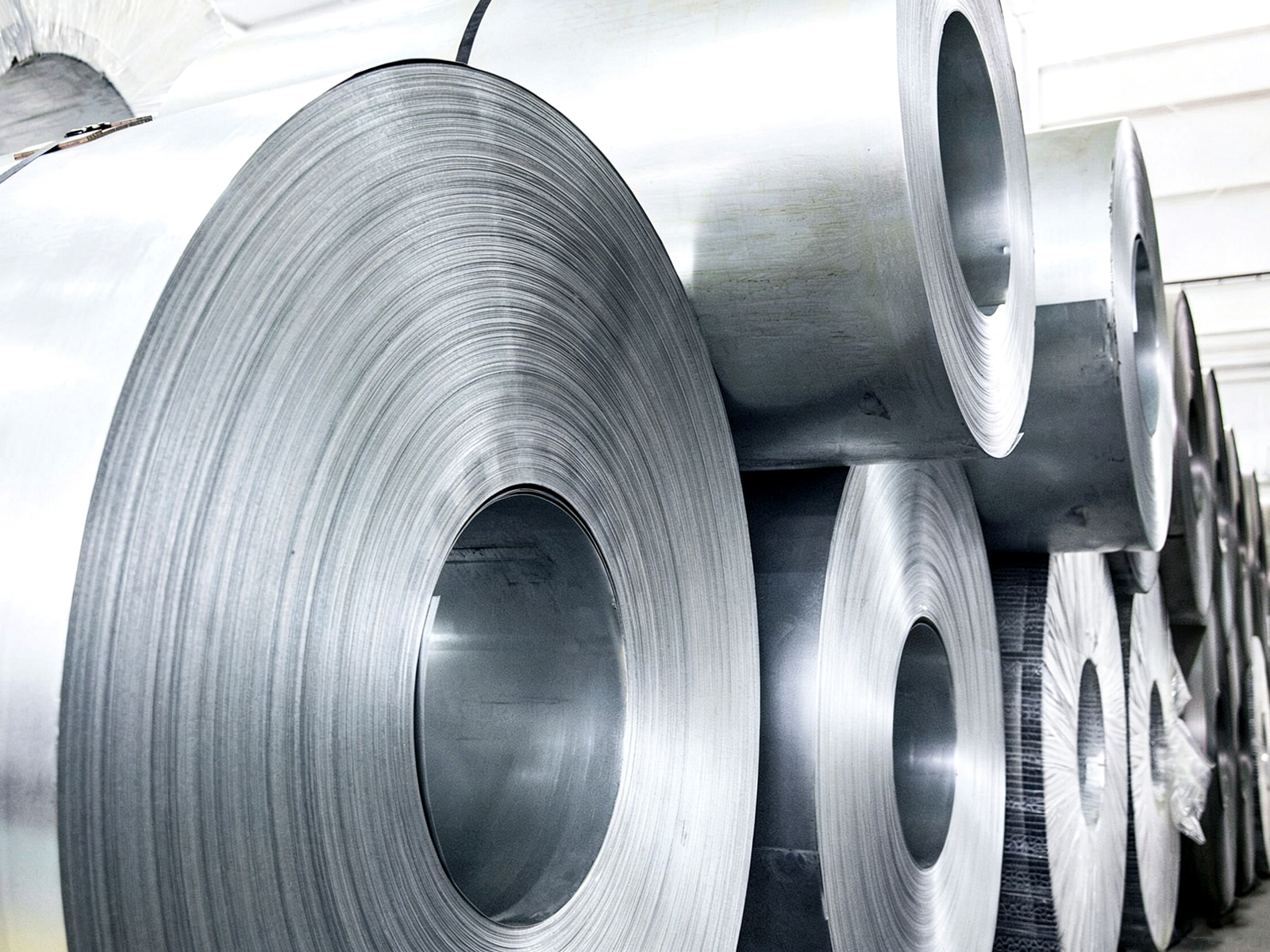
Semiconductor manufacturing imposes stringent requirements on material purity, stability, and corrosion resistance. With tensile strength ≥550 MPa, excellent corrosion resistance, and nonmagnetic characteristics, Gr4 titanium foil is an ideal material for critical semiconductor equipment components. In etching chamber protection, ion implantation shielding, chemical vapor deposition (CVD) reactor liners, and wafer transfer systems, Gr4 titanium foil withstands high temperatures, strong acids and alkalis, and plasma environments, helping maintain process stability and product yield. Its ultrathin 0.02-1.0 mm gauge range and custom widths from 15-680 mm meet the demand for precision thin-wall structures in modern semiconductor processes, significantly reducing equipment maintenance costs and extending service life.
1. What Extreme Challenges Does the Semiconductor Manufacturing Environment Pose to Materials?
(1) How Do Highly Corrosive Chemical Media Cause Continuous Erosion?
Semiconductor manufacturing uses highly corrosive chemicals such as hydrofluoric acid, hydrochloric acid, and sulfuric acid extensively for cleaning and etching. Conventional metallic materials degrade rapidly in these media, leading to equipment failure and product contamination. The dense TiO2 oxide film formed on the surface of Gr4 titanium foil resists acidic and alkaline solutions across a pH range of 2-12 and still maintains structural integrity in chloride-containing etchants.
(2) What Material Stability Is Required in Plasma Environments?
High-energy particles generated by plasma-enhanced chemical vapor deposition (PECVD) and reactive ion etching (RIE) processes bombard equipment inner walls. Standard materials in this environment are prone to sputter contamination and microcrack propagation. The alpha-phase crystal structure and high purity (Ti ≥99.0%) of Gr4 titanium foil give it a low sputtering rate and excellent surface stability under plasma bombardment.
(3) How Do Thermal Cycling Shock and Dimensional Precision Affect Performance?
Semiconductor equipment experiences thermal cycling from room temperature to 350℃ during operation. Differences in coefficients of thermal expansion can lead to stress concentration and distortion. With a density of only 4.51 g/cm3 and a coefficient of thermal expansion of 8.6×10^-6/C, Gr4 titanium foil, combined with stress-relief leveling after precision rolling, keeps dimensional change below 0.05 mm under temperature fluctuations and satisfies precision alignment requirements.
2. What Are the Core Applications of Gr4 Titanium Foil in Critical Semiconductor Equipment?
(1) How Is Gr4 Titanium Foil Used for Etching Chamber Protective Liners and Shielding Components?
Reaction chambers in dry etching equipment are exposed for extended periods to fluorine-containing plasma and corrosive gases. As a liner material, Gr4 titanium foil provides structural reliability under vacuum pressure differentials and mechanical stress because its tensile strength is ≥550 MPa. Compared with Gr2 titanium foil (tensile strength ≥345 MPa), Gr4 material can be reduced in thickness by 30% while still meeting load-bearing requirements, thereby lowering chamber thermal mass and improving temperature-control response.
Ultrathin Gr4 titanium foil in 0.02-0.5 mm thicknesses produced on a 750 mm 20-high precision rolling mill can be controlled to a thickness tolerance within +/-0.005 mm. This level of precision allows the liner to fit the chamber wall more closely, preventing plasma leakage that could cause nonuniform etching. An ultrasonic cleaning line increases the surface dyne level to above 40 mN/m, removing grease and particulate contamination and ensuring chamber cleanliness meets the Class 1 standard.
Performance Metric | Gr1 Titanium Foil | Gr2 Titanium Foil | Gr4 Titanium Foil |
Tensile Strength (MPa) | ≥240 | ≥345 | ≥550 |
Yield Strength (MPa) | 140–310 | 275–450 | 480–665 |
Elongation (%) | ≥24 | ≥20 | ≥15 |
Typical Application | Low-Load Forming | General Corrosion Resistance | High-Strength Load Bearing |
(2) How Is Gr4 Titanium Foil Applied in Ion Implanter Shields and Collimation Components?
Ion implantation requires precise control of ion beam trajectories, and any stray particles can cause nonuniform doping. The nonmagnetic property of Gr4 titanium foil (magnetic susceptibility <1.18×10^-6 emu/g) does not interfere with ion beam deflection, while its high strength allows ultrathin collimation aperture arrays below 0.1 mm to be manufactured, improving implantation resolution.
A high-precision slitting line can accurately slit 670 mm wide master coils into narrow strip with a tolerance of +/-0.1 mm, meeting the multiple size requirements of complex shields. By optimizing surface microtexture, the grinding line reduces Gr4 titanium foil surface roughness to Ra <0.4 um, minimizing ion scattering losses. Combined with electrical resistivity of 0.50 uOhm. m, the material also provides reliable electrostatic shielding.
(3) How Is Gr4 Titanium Foil Used in High-Temperature CVD Reactor Liners and Gas Distribution Plates?
Chemical vapor deposition equipment operates at elevated temperatures of 400-800℃, requiring materials to deliver both heat resistance and chemical inertness. Gr4 titanium foil has a melting point of 1668℃ and a long-term service temperature up to 350℃ (suitable for outer deposition zones or cooling areas; thermal protection design is required if directly exposed to high-temperature zones above 400℃). It does not trigger catalytic reactions in precursor atmospheres containing silane, ammonia, and similar gases, helping prevent unintended film growth.
The continuous annealing line uses 7-zone electric heating control, with a maximum temperature of 850℃ and temperature uniformity of +/-2℃, refining Gr4 titanium foil grain size to 10-15 um. This fine-grained structure improves creep resistance, limiting deformation to <0.02%/1000 h under high-temperature stress. Gas distribution plates made from 0.3-0.5 mm Gr4 titanium foil use laser drilling to form micron-scale pore arrays for uniform reactive gas flow distribution.
Equipment Component | Thickness Used (mm) | Critical Performance Requirement | Gr4 Titanium Foil Advantage |
Etching Chamber Liner | 0.3–0.8 | Plasma Resistance + High Strength | 59% Higher Strength Than Gr2 |
Ion Implantation Shield | 0.05–0.2 | Nonmagnetic + High Precision | Magnetic Susceptibility <1.2×10^-6 |
CVD Reactor Liner | 0.4–1.0 | High-Temperature Resistance + Chemical Inertness | Long-Term Stability at 350℃ (Thermal Protection Required) |
Wafer Transfer Fixture | 0.1–0.3 | Lightweight + Fatigue Resistant | Density Is Only 60% of Steel |
3. What Manufacturing Breakthroughs Enable Ultrathin Wide-Width Gr4 Titanium Foil?
(1) How Are Multi-Pass Cold Rolling Precision and Flatness Optimized?
Producing 0.02 mm ultrathin Gr4 titanium foil involves major challenges in springback control and thickness variation. A 750 mm 20-high mill applies 3500 kN of rolling force and uses intermediate roll micro-adjustment to achieve precise pass-by-pass reduction of 5-15%. Continuous operation at rolling speeds up to 400 m/min, combined with online thickness gauge feedback, stabilizes thickness tolerance at +/-0.003 mm for specific ultrathin gauges, while the standard tolerance for the conventional 0.02-0.5 mm range is +/-0.005 mm.
Shape control uses a combined tension and roll-bending adjustment strategy. A high-precision leveling line operates at 150 m/min and applies 0.5-1.5% elongation to eliminate residual stress, achieving foil flatness of <2 mm/m. This degree of flatness is critical for vacuum sealing in semiconductor equipment and helps avoid leakage caused by material warpage.
(2) How Are Surface Cleanliness and Functional Treatment Processes Controlled?
Semiconductor-grade materials have zero tolerance for particulate contamination. An ultrasonic cleaning line using a proprietary degreasing formulation achieves organic residue <10 ppm at a line speed of 30 m/min. After cleaning, the surface dyne level exceeds 40 mN/m, ensuring interfacial bond strength for subsequent vacuum coating or chemical treatment.
Using progressive 400-800 grit abrasive belt treatment, the grinding line equalizes surface roughness to Ra 0.3-0.5 um while preserving the integrity of 0.02 mm thin foil. This microtexture improves the mechanical interlocking force between the titanium foil and ceramic spray coating, increasing thermal barrier coating adhesion by 40% and extending the service life of CVD reactor components to more than 18 months.
(3) How Does the Annealing Process Precisely Control Mechanical Properties?
Gr4 titanium foil must balance strength and formability. Under an argon-protected atmosphere, the continuous annealing line precisely controls soak time across the 650-850℃ temperature range. In the annealed condition (M), yield strength decreases to 480 MPa while elongation increases to 18%, meeting the needs of complex stamped shapes; in the cold-worked condition (Y), tensile strength remains ≥550 MPa for high-load structural parts. It should be noted that the typical elongation of Gr4 titanium foil in the standard annealed condition is ≥15%. Through annealing optimization, elongation can be increased to ≥18%, but the specific condition should be identified in the batch report.
A 7-zone independent temperature control system manages the heating, soaking, and cooling gradient to prevent abnormal grain growth. Metallographic inspection shows post-annealing grain size uniformity >95%, eliminating localized soft or hard zones and keeping mechanical property variation across the full coil below 3%, which satisfies the strict batch consistency requirements of semiconductor equipment manufacturers.
4. What Competitive Advantages Does Gr4 Titanium Foil Offer Based on Performance Comparison?
(1) How Does Its Strength Compare with Lower-Grade Commercially Pure Titanium?
Although Gr1 titanium foil offers very high ductility (elongation ≥24%), its tensile strength is only ≥240 MPa, making it susceptible to plastic deformation under chamber pressure differentials and mechanical clamping forces. Gr2 titanium foil is a general-purpose corrosion-resistant material with strength ≥345 MPa, but its yield strength decreases by as much as 20% in high-temperature environments above 300℃, limiting its use in thermal process equipment.
At room temperature, Gr4 titanium foil delivers tensile strength ≥550 MPa, 59% higher than Gr2 and 129% higher than Gr1. This high strength makes lighter and thinner structural designs possible: 0.5 mm Gr4 titanium foil can provide load-bearing capacity equivalent to 0.8 mm Gr2 material, achieving a 30% weight reduction. Lightweight semiconductor equipment design reduces drive system load and increases wafer transfer speed to above 300 mm/s.
(2) How Does It Compare with Titanium Alloys in Cost Effectiveness?
Although Ti-6Al-4V titanium alloy provides tensile strength in the 900 MPa class, it costs 2.5-3 times as much as Gr4 titanium foil and is significantly more difficult to process. The alloying elements Al and V also present a risk of leaching in high-purity chemical environments, potentially contaminating semiconductor processes. The chemical inertness and controllable cost of Gr4 commercially pure titanium (Ti ≥99.0%) make it a preferred material for high-volume production equipment.
With annual production capacity of 3, 000 tons, process optimization has reduced the unit cost of Gr4 titanium foil by 18%. Compared with imported materials, high-end domestic Gr4 titanium foil that complies with ASTM B265 can shorten lead time to 4-6 weeks and offer a price advantage of 25-30%, significantly lowering procurement costs for semiconductor equipment manufacturers.
Material Type | Tensile Strength (MPa) | Relative Cost | Chemical Purity | Fabricability | Semiconductor Suitability |
Gr1 Commercially Pure Titanium Foil | ≥240 | Baseline | Ti ≥99.5% | Excellent | Low-Load Components |
Gr2 Commercially Pure Titanium Foil | ≥345 | 1.1x | Ti ≥99.2% | Good | General Corrosion Resistance |
Gr4 Commercially Pure Titanium Foil | ≥550 | 1.3x | Ti ≥99.0% | Controllable | High-Strength Load Bearing* |
Ti-6Al-4V Alloy | ≥900 | 3.2x | Alloy Material | Difficult | Contamination Risk |
(3) How Has the Long-Term Stability of Corrosion Resistance Been Verified?
Accelerated corrosion testing shows that after 1, 000 hours of immersion in a mixed acid of 10% HF + 10% HNO3, Gr4 titanium foil exhibits a corrosion rate of <0.01 mm/year (note: this value should be verified under actual service conditions; HF is strongly corrosive to titanium, and corrosion rates are typically higher at elevated concentrations, so users are advised to perform application-specific testing), while surface oxide film integrity remains >98%. By comparison, 316L stainless steel develops pitting perforation within 72 hours under the same conditions. In Cl2 + BCl3 plasma exposure testing simulating an etching chamber environment, the surface mass loss rate of Gr4 titanium foil is 0.003 mg/cm2. h, only 1/15 that of aluminum alloy materials.
Feedback data from semiconductor manufacturers indicate that etching equipment using Gr4 titanium foil liners extended chamber cleaning intervals from once per month to once per quarter and reduced maintenance downtime by 60%. Component replacement intervals increased from 18 months to 36 months, lowering life-cycle cost by 45% and significantly improving return on investment.
5. What Custom Supply Capabilities and Quality Assurance Systems Are Available?
(1) How Broad Is the Size Range from 0.005 mm to 1.0 mm?
Through ongoing technical development, stable mass production has now been achieved for Gr4 titanium foil from 0.02 mm to 1.0 mm, while the 0.005 mm ultrathin gauge remains in the R&D and validation stage and can be produced in small trial lots based on customer requirements. The standard thickness range is 0.02-1.0 mm, width is 15-680 mm, and length can be customized as required, supporting applications from laboratory R&D through large-scale production.
The slitting line is equipped with a laser width measurement system and automatic tension control unit, locking width tolerance to +/-0.1 mm. Narrow strip can be slit down to 15 mm for precision shields and slotted gas distribution plates. Wide material up to 680 mm is used for one-piece forming of large chamber liners, avoiding stress concentration and potential leak points caused by welds.
(2) How Are Material Certification and Mechanical Property Testing Controlled?
Each batch of Gr4 titanium foil is supplied with a material certification report compliant with ASTM B265, including spectrochemical analysis, tensile test data, and grain size rating. Certification from third-party testing organizations such as SGS or TUV confirms Ti purity ≥99.0%, O content ≤0.40%, and Fe ≤0.30%, meeting impurity control requirements for semiconductor-grade materials.
Mechanical properties are tested using full-size specimens to avoid statistical bias from small samples. Tensile strength, yield strength, and elongation achieve 100% compliance with technical specifications, and the batch acceptance rate exceeds 99.5%. Microhardness testing verifies material uniformity, with a hardness gradient from surface to core of <5 HV, ensuring consistent behavior during complex forming operations.
(3) How Are Fast Response and Stable High-Volume Supply Achieved?
Annual production capacity of 3, 000 tons and lead times of 4-6 weeks support urgent orders from semiconductor equipment manufacturers worldwide. A flexible production scheduling system can launch custom-specification manufacturing within 72 hours, with a minimum order quantity of 50 kg, supporting small-lot trials during new product development. High-volume orders can use a locked-in inventory model to ensure stable supply for 18 consecutive months.
The logistics network covers core markets including the United States, Germany, Japan, and South Korea and uses dedicated moisture-resistant, anti-scratch packaging. Vacuum sealing plus nitrogen protection prevents surface oxidation during transportation, delivering an incoming acceptance rate above 99.8% upon unpacking. The technical team provides 24/7 online support to help customers optimize material selection and process parameter matching.
6. What Is the Conclusion?
With its outstanding balance of strength and corrosion resistance, precise dimensional control capability, and semiconductor-grade cleanliness standard, Gr4 titanium foil has become an indispensable core material for critical equipment used in etching, ion implantation, CVD, and related processes. By overcoming technical challenges in ultrathin wide-width rolling, surface cleanliness treatment, and precise property control, stable mass production has been achieved across the full 0.02 mm to 1.0 mm range, providing highly reliable material support for the global semiconductor manufacturing industry and advancing both equipment performance and cost optimization.
FAQ
Q1: What significant advantages does Gr4 titanium foil offer over Gr2 material in semiconductor equipment?
Gr4 titanium foil offers tensile strength ≥550 MPa, 59% higher than Gr2. It can be reduced in thickness by 30% while still meeting load-bearing requirements, lowering equipment thermal mass and improving temperature-control response. It also experiences less strength loss in high-temperature environments above 300℃, making it suitable for long-term stable operation in thermal process equipment such as CVD systems.
Q2: How is thickness uniformity ensured for 0.02 mm ultrathin Gr4 titanium foil?
A 750 mm 20-high precision rolling mill and online thickness gauge closed-loop control are used, with 3500 kN rolling force and intermediate roll micro-adjustment, to achieve a thickness tolerance of +/-0.003 mm for ultrathin gauge material. A high-precision leveling line removes residual stress and keeps thickness variation across the full width below 2%, meeting precision alignment requirements.
Q3: Can Gr4 titanium foil withstand plasma bombardment in semiconductor etching environments?
The alpha-phase crystal structure and high purity of Gr4 titanium foil (Ti ≥99.0%) result in a sputtering rate in Cl2 + BCl3 plasma of only 1/15 that of aluminum alloys. Its surface TiO2 oxide film continuously self-repairs and performs well under typical etching conditions, although actual service life should be verified against the specific process gas composition.
How Can You Contact Us?
As a professional Gr4 Titanium Foil manufacturer and supplier, we operate a complete ultrathin wide-width titanium foil production line and a rigorous quality management system. We provide one-stop service from material selection and custom sizing to technical support, and our annual production capacity of 3, 000 tons supports your long-term stable supply requirements. For inquiries, please contact: sales@titaniumvalleys. com
References
- Zhang Yong, Chen Zhiqiang, Wang Hao. Study on the Corrosion Behavior of Commercially Pure Titanium in Semiconductor Wet Etching Environments. Corrosion Science and Protection Technology, 2021, 33(4): 367-374.
- Johnson, R. K., Smith, P. A. Corrosion Resistance of Titanium Alloys in Semiconductor Processing Environments. Journal of Materials Engineering and Performance, 2020, 29(6): 3721-3735.
- Liu Wenchao, Zhao Ming, Li Gang. Cold Rolling Process and Microstructure-Property Control of Ultrathin Titanium Foil. Rare Metals, 2022, 46(2): 165-173.
- Yamamoto, H., Tanaka, S. High-Purity Titanium Foils for Advanced Plasma Etching Chambers. Materials Transactions, 2019, 60(11): 2340-2348.