
How to Customize High-precision Gr1 Titanium Rods According to Your Engineering Blueprint?
- Gr1 Titanium Rod
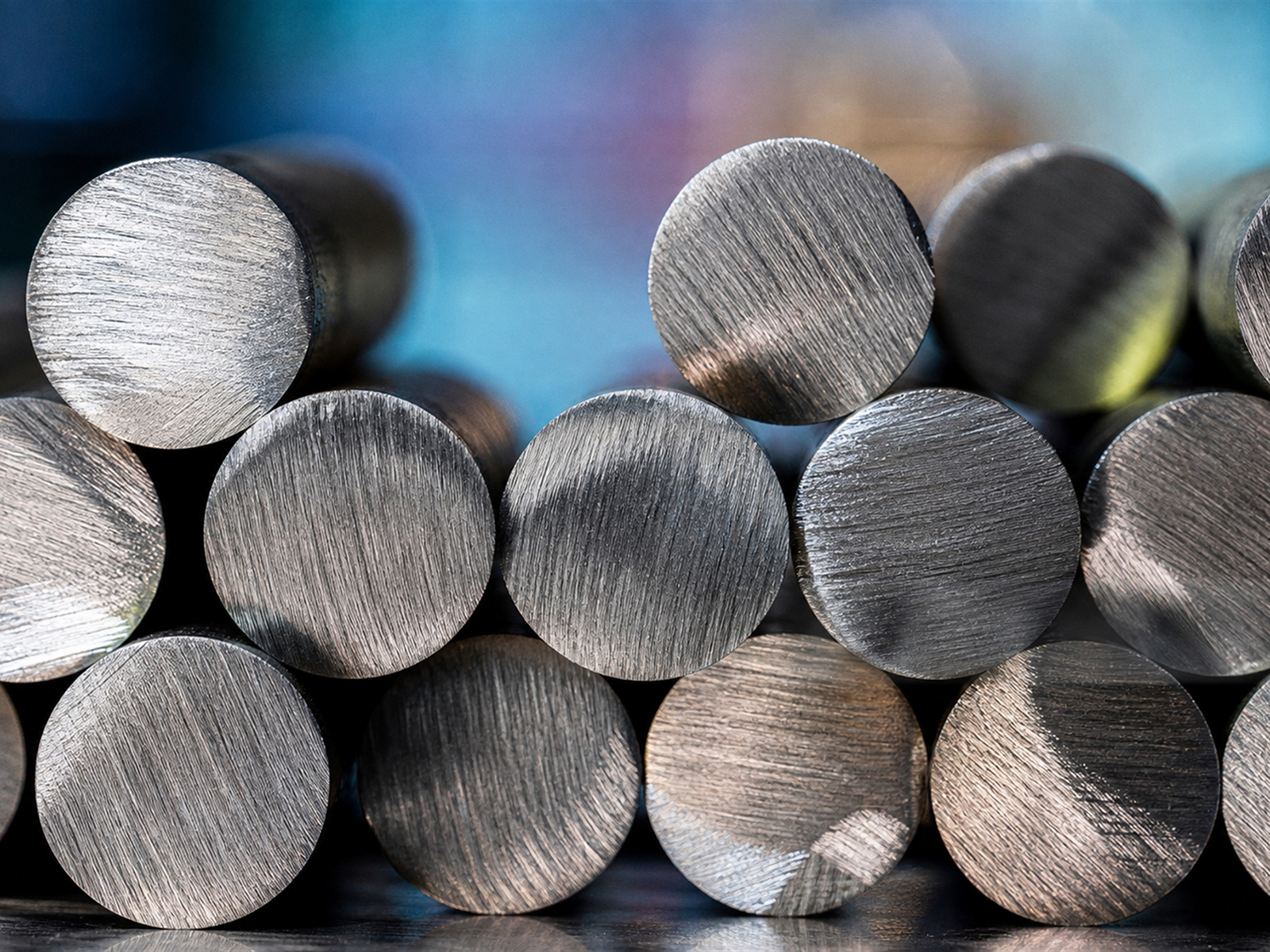
When your engineering project requires high-precision Gr1 titanium rods, the key is to translate technical drawings into physical products that fit the actual application. The customization process involves five core links: drawing interpretation, material selection, process matching, precision control and quality verification. As a high-purity commercial pure titanium material, Gr1 titanium rod has stable chemical composition (titanium content ≥ 99.5%), excellent ductility (elongation ≥ 24%), and outstanding corrosion resistance. It is especially suitable for customized processing in the fields of medical implants, aerospace precision parts, chemical equipment, and electronic instruments. Through precise dimensional control, surface treatment and performance testing, we can ensure that the final product fully matches your engineering blueprint requirements, achieving seamless connection from design to delivery.
1. What Should You Know About Interpretation of Engineering Blueprints: Accurately Understand Your Technical Needs?
(1) What Are the Dimensional Parameter Extraction and Tolerance Analysis?
The dimensions in the engineering blueprint directly determine the processing path of the titanium rod. For Gr1 titanium rods with a diameter of φ4-φ300mm, three types of tolerance requirements need to be focused on: rough-machined black rods (+/-1.0mm) are suitable for subsequent machining scenarios, turned rods (+/-0.3-0.5mm) can be directly used for assembly welding, and cold-drawn polished rods (+/-0.05-0.2mm) reach the H7/H8 precision level to meet the needs of precision shafts and mold manufacturing. In terms of length, the annealed product is 300-3000mm, and the hot-processed or cold-processed product can be extended to 6000mm. Fixed-length processing allows a +20mm tolerance, and a 5mm margin is added for each cutting.
(2) What Should You Know About Surface Condition Requirements Identification?
The surface roughness annotation in the blueprint determines the machining process selection. The surface of the black rod retains oxide scale and forging traces, which is suitable for scenes with a diameter ≥ φ20mm and requires secondary machining; the surface of the turned rod has no oxide layer, with an Ra value of 3.2-6.3 um, and can be directly welded and assembled; the surface of the polished rod is precision ground to Ra ≤ 1.6 um, and the dimensional accuracy meets the high cleanliness requirements of precision bearing seats, sensor housings, etc.; the pickling rod removes the oxide layer to reveal the true color of metal, and is specially used in chemical anti-corrosion and metal pollution-free scenarios.
(3) What Are the Mechanical Performance and Environmental Suitability Assessment?
Evaluate the suitability of Gr1 titanium rods based on the working load and environmental conditions marked on the blueprint. The material has a typical tensile strength of 240-310MPa and a typical yield strength of 170-240MPa. It is a low-strength and high-plasticity type and is suitable for light-load cycle conditions but not suitable for high-speed and heavy-load impact scenarios (such as engine load-bearing structures). Its density is 4.51g/cm³, which is about 40% lighter than ordinary steel. Its melting point is 1660℃ and its thermal expansion coefficient is low. It forms a stable oxide film in acid, alkali, salt spray and seawater environments, and has excellent corrosion resistance.
2. What Are the Material Customization Solutions: From Composition Control to Morphology Matching?
(1) What Are the Precise Chemical Composition Ratio?
The customization of Gr1 titanium rods starts from high-purity titanium sponge, and the ingot is prepared by vacuum consumable arc remelting more than twice to ensure that impurity elements are strictly controlled: iron ≤ 0.20%, oxygen ≤ 0.18%, nitrogen ≤ 0.03%, carbon ≤ 0.08%, hydrogen ≤ 0.015%. This ultra-low impurity content gives the material excellent biocompatibility and chemical stability. It complies with ASTM B348 standards and UNS R50250 grade requirements. Material certificates and spectral analysis reports can be provided.
(2) What Are the Customized Cross-section Shape and Specifications?
| product type | Specification range | Typical applications |
| round rod | φ8-φ200mm (regular stock) | Chemical tube sheets, medical device handles |
| Small diameter precision rod | φ4-φ30mm (cold drawn polishing) | Electroplating rack, semiconductor cavity connecting rod |
| Large diameter forged rod | φ100-φ300mm (customized) | Seawater desalination equipment shaft, reactor stirring shaft |
| Special shaped bars | Square rod 6×6-80×80mm, hexagonal rod | Fastener blanks, precision fixtures |
| Imperial size | 1/4″(6.35mm), 1″(25.4mm), 3″(76.2mm) | International standard equipment |
(3) What Should You Know About Heat Treatment Status Selection?
The annealed state (M) titanium rod has a uniform structure, the best plasticity, and an elongation of ≥24%, which is suitable for subsequent bending, drawing, and deep processing; the hot-processed state (R) retains the forged fiber structure and has slightly higher strength; the cold-processed state (Y) has improved surface hardness and higher dimensional accuracy. According to the mechanical performance requirements marked on the blueprint, different annealing temperatures (650-800℃) and holding times can be customized to achieve precise control of grain size and mechanical properties.
3. What Should You Know About Precision Machining Technology: Turning Blueprints Into Physical Objects?
(1) What Should You Know About Forging and Rolling Technology Path?
Large-diameter Gr1 titanium rods are open die forged or free forged. Defects in the as-cast structure are eliminated through multi-fire deformation and cross forging. The forging ratio is ≥3 to ensure continuous flow lines. The Danieli rolling production line in Italy achieves an annual output of 20, 000 tons of titanium rods and wire rods. The continuous rolling process is used to hot-roll the forged billets through multiple passes, and the final rolling temperature is controlled at 850-950℃ to ensure uniform refinement of the α phase structure. The cold drawing process improves the diameter accuracy to +/-0.05mm through multiple drawings and intermediate annealing, and the surface residual stress is completely released through vacuum annealing.
(2) What Should You Know About Precision Turning and Grinding?
Turning rod processing requires adjusting process parameters according to the “sticking” characteristics of titanium alloy: use carbide or ceramic tools, control the cutting speed at 60-120m/min, feed rate 0.1-0.3mm/r, and use sufficient coolant to prevent heat accumulation. For the polishing rod required by H7/H8 tolerance, it needs to go through three processes of rough grinding, fine grinding and super fine grinding. The linear speed of the grinding wheel is 25-35m/s. The final roundness is ≤0.01mm and the surface roughness Ra≤1.6um. Centerless grinding technology can control diameter tolerance and straightness at the same time, shortening the single-piece processing cycle by 40%.
(3) What Should You Know About Surface Treatment and Protection Technology?
| Processing method | Process parameters | Performance improvements |
| pickling | HF: HNO3=1: 3-5, soak at room temperature for 10-30min | Remove the oxide layer to reveal metallic luster and maintain corrosion resistance |
| mechanical polishing | Abrasive belt 180#→320#→600# progressive grinding | Surface Ra is reduced to 0.8-1.6um, and the smoothness is improved |
| Ultrasonic cleaning | Frequency 40kHz, time 15-30min | Removes oil stains and particles, with cleanliness reaching Class 100 |
| anodizing | Voltage 20-100V, forming color oxide film | Improve hardness and decoration, film thickness 5-25um |
4. What Should You Know About Quality Control System: Ensure Products Meet Blueprint Standards?
(1) What Should You Know About Full Process Dimensional Inspection?
A three-dimensional coordinate measuring machine (CMM) is used to conduct 100% inspection of key dimensions with an accuracy of 0.001mm. The diameter is measured using an outer diameter micrometer or laser caliper, and no less than 3 sections are measured per meter; the length is measured using a digital caliper or laser distance, and the fixed length tolerance is strictly controlled within +20mm; the straightness is tested by the platform rolling method or the wire drawing method, and the curvature per meter is ≤1mm. For mass-customized products, SPC statistical process control charts are established to monitor size fluctuation trends in real time.
(2) What Are the Material Performance Verification Testing?
The chemical composition is analyzed by direct reading spectrometer or ICP mass spectrometry to ensure that the content of each element meets the ASTM B348 standard; the tensile test prepares the sample according to the standard to measure the tensile strength, yield strength and elongation, and the data dispersion coefficient is <5%; the metallographic inspection evaluates the grain size (level 6-8) and the uniformity of the structure; the hardness test uses a Brinell or Vickers hardness tester, HB ≤ 140. For medical grade products, add biocompatibility testing and endotoxin testing.
(3) What Should You Know About Non-destructive Testing and Surface Quality Inspection?
Ultrasonic flaw detection detects internal defects with a sensitivity equivalent to a φ1mm flat-bottomed hole; eddy current flaw detection detects surface cracks with a depth resolution of 0.1mm; penetrant flaw detection verifies surface opening defects with a sensitivity of ≤10 um. The surface quality is inspected according to the defect grading standards for scratches, pitting, inclusions and other defects. Key parts are inspected one by one using a high-power magnifying glass or video microscope to ensure that the delivered products are zero-defect.
5. What Should You Know About Customized Service Process: Full Control From Consultation to Delivery?
(1) What Should You Know About Technology Docking and Feasibility Review?
After the customer provides CAD drawings or PDF blueprints, the technical team completes the feasibility review within 48 hours: analyzing whether the dimensional tolerance matches the existing equipment capabilities, whether the surface treatment requirements can be achieved through the existing process, and the balance between delivery cycle and production capacity load. For special needs, the process test process is started, the processing parameters are verified through small batch trial production, and the samples are sent to the customer for confirmation before mass production. Provide DFM (Design for Manufacturability) recommendations to optimize design details in the blueprint that may cause processing difficulties or cost increases.
(2) What Should You Know About Production Scheduling and Progress Tracking?
| stage | cycle | Key points of control |
| Raw material procurement | 7-10 days | Choose a certified titanium sponge supplier and request a warranty |
| Smelting and forging | 15-20 days | Control the number of remelting times and forging temperature, first piece inspection |
| heat treatment rolling | 10-15 days | Monitor annealing temperature and cooling rate, and conduct random inspections of mechanical properties |
| Precision machining | 5-10 days | Tool wear monitoring, full dimensional inspection, surface quality inspection |
| Test packaging | 3-5 days | Physical and chemical performance re-inspection, non-destructive testing, protective packaging |
Establish an ERP system to synchronize production progress in real time, and customers can check the order status through a dedicated account. After the key nodes are completed, an email notification will be sent, accompanied by detection data and physical photos.
(3) How Is After-sales Technical Support and Application Guidance?
The delivered products come with complete technical documents: material certificate (MTC), dimensional inspection report, mechanical property data, and non-destructive testing records. Provide welding process guidance for Gr1 titanium rods (TIG welding current 80-150A, argon protection), machining parameter recommendations (cutting fluid ratio, tool angle), and maintenance recommendations in corrosive environments. If quality problems occur during the warranty period, we will respond within 72 hours and provide replacements. The technical team can be on site to assist in solving application problems. For long-term cooperative customers, a material archive is established, and subsequent repurchases can directly call historical parameters for rapid delivery.
6. What Is the Conclusion?
The core of customizing high-precision Gr1 titanium rods based on engineering blueprints lies in accurately converting drawing information into collaborative matching of material specifications, processing techniques and quality standards. Through systematic dimensional interpretation, chemical composition control, precision processing and full-process testing, we can ensure that products fully meet technical requirements. Choosing suppliers with advanced equipment and perfect quality systems can shorten the delivery cycle, reduce the risk of rework, and ultimately achieve efficient docking from design to application.
FAQ
Q1: What is the minimum order quantity for small batch customization of Gr1 titanium rods?
A1: We support a minimum order of 10kg, which is suitable for R&D samples and small batch production needs. We provide rapid prototyping services and deliver samples and complete test reports within 15-20 days. After passing the verification, you can seamlessly transfer to mass production to avoid the risk of supply chain interruption.
Q2: How to ensure that the dimensional accuracy of customized titanium rods meets H7 tolerance requirements?
A2: Using a combination of centerless grinding and precision turning technology, combined with a three-coordinate measuring machine for full inspection. SPC statistical control is implemented during the production process to monitor dimensional fluctuations in real time. A root-by-root dimensional inspection report is provided before delivery. The diameter tolerance can be stably controlled within +/-0.05mm, and the roundness is ≤0.01mm.
Q3: Can Gr1 titanium rod withstand the mixed environment of high temperature steam and strong acid?
A3: The melting point of Gr1 titanium rod is 1660℃, and its performance is stable in steam environment below 300℃. It has excellent corrosion resistance to strong acids such as sulfuric acid (concentration <70%), hydrochloric acid (concentration <10%), nitric acid and other strong acids, and the natural oxide film on the surface can repair itself. However, hydrofluoric acid and high-concentration hot concentrated sulfuric acid need to be avoided, and it is recommended to provide specific working conditions parameters for corrosion resistance evaluation.
7. What Should You Know About Get Customized Services Now?
As a professional Gr1 titanium rod manufacturer and supplier, Baoji Titanium Valley owns Italian Danieli rolling production lines and fully automatic precision processing equipment, with an annual production capacity of over 20, 000 tons. We provide customization of titanium rods in full specifications from φ4mm to φ300mm, and support pickling, polishing, special tolerances and rapid prototyping services. Welcome to send your project blueprint to sales@titaniumvalleys. com to obtain a 48-hour technical review report and accurate quotation.
For a broader view of available grades, supply forms, and related specifications, explore our Titanium Rod category.
For product-level details and supply options, you can also review our ASTM F67 Gr1 Titanium Rod page.
References
- Zhao Yongqing, Ge Peng. Microstructure, properties and applications of industrial pure titanium[M]. Beijing: Metallurgical Industry Press, 2019.
- Wang Jinyou, Yu Zhentao, Zhou Lian. Titanium and titanium alloy materials[M]. Beijing: Chemical Industry Press, 2015.
- Li Miaoquan, Wang Kru. Titanium alloy plastic processing technology and equipment[M]. Xi’an: Northwestern Polytechnical University Press, 2018.
- Chen Wei, Zhao Shan. Titanium alloy heat treatment process and microstructure property control[M]. Beijing: National Defense Industry Press, 2016.