
How Is Practical Application Scenarios of Gr12 Titanium Wire in Industry?
- GR12 Titanium Wire
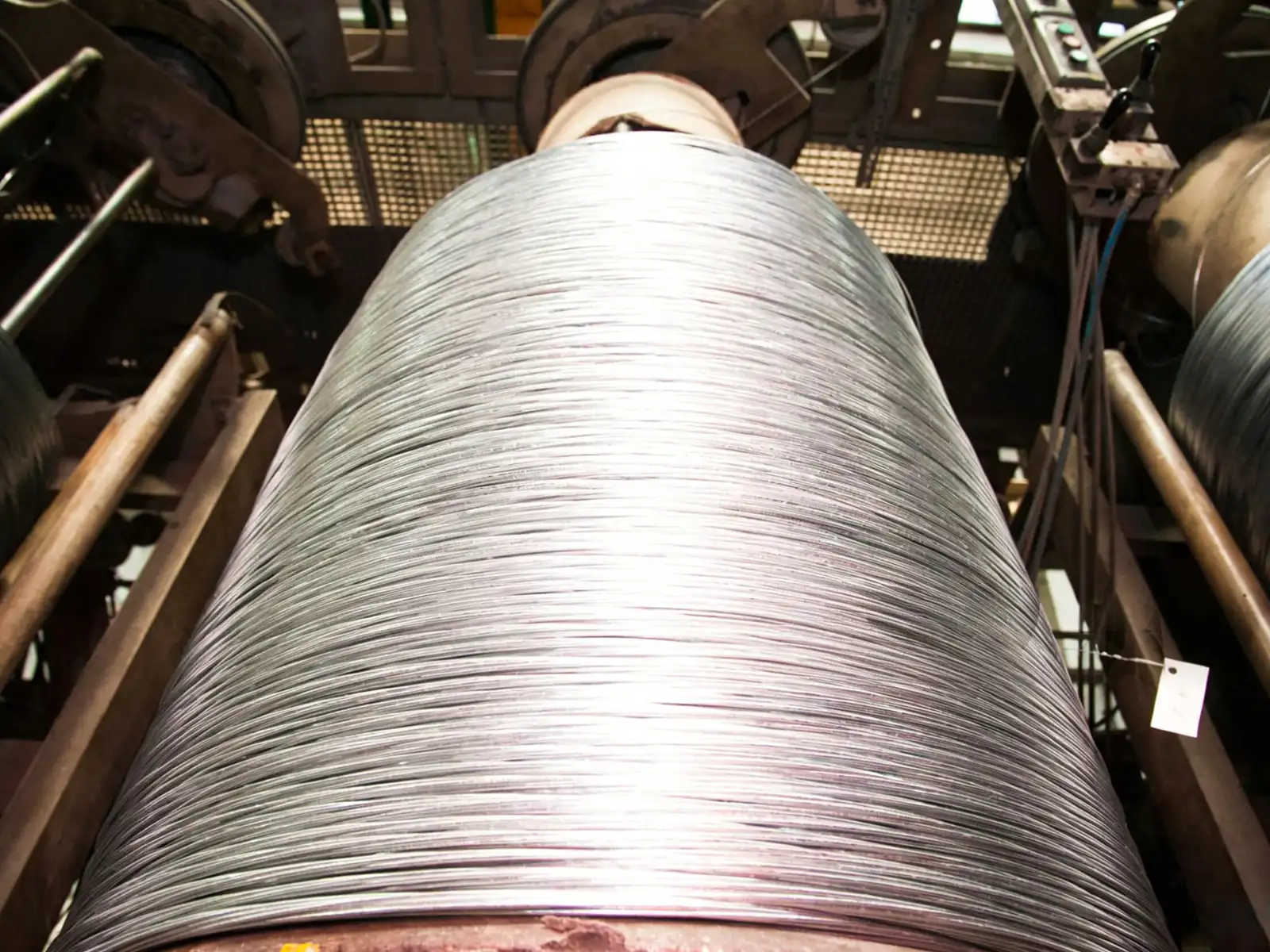
In the field of modern industry, Gr12 titanium wire (Ti-0.3Mo-0.8Ni titanium alloy grade) has become a key material to cope with complex corrosive environments due to its unique Mo-Ni alloying formula. This Ti-0.3Mo-0.8Ni titanium alloy wire shows excellent performance in chemical equipment, marine engineering, energy development and environmental protection devices. Compared with industrial pure titanium (such as Gr2), Gr12 titanium wire has excellent performance in resisting pitting corrosion, crevice corrosion and high temperature oxidation, while maintaining good processability and weldability. Its density is only 4.51 g/cm³, which is about 57% of steel. However, it should be noted that the melting point of titanium is around 1668℃. The strength of Gr12 titanium wire will decrease significantly at high temperatures. In practical applications, temperatures close to the melting point should be avoided. Good structural stability is usually maintained below 400℃. From precision medical guide wires with a diameter of 0.1mm to heavy-duty structural parts with a diameter of 10.0mm, Gr12 titanium wire is becoming a reliable choice for industrial materials under harsh working conditions.
1. How Is Key Applications in the Field of Chemical Anti-corrosion?
The corrosive environment faced by the chemical industry is often highly complex, and traditional materials are prone to local failure in strong acid, strong alkali and chloride ion media. Gr12 titanium wire provides long-term protection solutions for chemical equipment through precise composition control and advanced manufacturing processes.
(1) What Should You Know About Corrosion-resistant Components in the Chlor-alkali Industry?
During the chlor-alkali production process, equipment is exposed to high-concentration chlorine and salt water environments for a long time. Heating coils, stirrer shafts (usually made of rods or pipes instead of directly using titanium wire to make shaft sleeves), filter frames and other components made of Gr12 titanium wire can resist the continuous erosion of chloride ions. The addition of molybdenum element significantly improves the stability of the material in reducing media, and its service life is 3-5 times longer than that of ordinary stainless steel (such as 316L). A large chlor-alkali plant uses a heating coil wound with φ3.0mm Gr12 titanium wire. It has been running continuously for 18 months without any corrosion or puncture, and the maintenance cost has been reduced by 60%.
(2) What Should You Know About Key Connections for Sulfuric Acid Production Units?
The concentrated sulfuric acid environment places extremely high requirements on the corrosion resistance of materials. Gr12 titanium wire shows excellent resistance when making hooks and fixing rings inside the converter. In 98% concentrated sulfuric acid (test temperature is usually room temperature to 80℃), its corrosion rate is less than 0.02mm/year, which is much better than 316L stainless steel. Annealed titanium wire with a diameter of φ1.6-2.4mm has good ductility and can be cold-bent without causing micro-cracks. It is especially suitable for manufacturing complex-shaped fasteners.
(3) What Should You Know About Safety Guarantee of Fine Chemical Reactor?
Fine chemical production involves a variety of mixing media and temperature fluctuations. The safety valve spring and sealing gasket support ring made of Gr12 titanium wire can maintain elasticity and sealing performance in the temperature range of 120-200℃. The addition of nickel mainly improves the material’s resistance to corrosion by reducing media, while the hydrogen embrittlement resistance of titanium alloys is usually related to aluminum, vanadium and other alloying elements; Gr12 indirectly improves hydrogen damage resistance by optimizing the microstructure. A pharmaceutical company uses a filter cartridge woven with φ0.8mm ultra-fine titanium wire, which has been running stably for more than 24 months in a mixed acidic solvent environment, and the particle filtration accuracy remains at the 5-micron level.
| Application parts | Specification range | Working conditions | service life | Comparison of alternative materials |
| heating coil | φ2.0-4.0mm | Chloride ion≥30000ppm, 80℃ | ≥18 months | 40% longer than Gr2 titanium (industrial pure titanium) |
| Fastening snap ring | φ1.6-2.4mm | 98%H₂SO₄, 150℃ | ≥36 months | 5 times longer than 316L |
| filter frame | φ0.5-1.0mm | Mixed acid and base, pH 2-12 | ≥24 months | 30% lower cost than Hastelloy C-276 |
2. What Should You Know About a Reliable Choice for Marine Engineering and Energy Development?
Factors such as high salinity, dissolved oxygen content, and biological adhesion in the marine environment cause ordinary metal materials to rapidly degrade. Gr12 titanium wire occupies an important position in marine engineering due to its excellent seawater corrosion resistance and non-magnetic characteristics.
(1) What Should You Know About Core Consumables for Seawater Desalination Equipment?
In the reverse osmosis seawater desalination system, the high-pressure pump, heat exchanger and pipeline connections are subject to continuous erosion by high-flow seawater. The spiral heat exchange tube support frame and membrane module fixing wire wound by Gr12 titanium wire show extremely low crevice corrosion tendency. After being soaked in seawater containing 19, 000 ppm chloride ions for 5, 000 hours, a dense oxide film will naturally form on the surface of the material without pitting pits. A desalination plant in the Middle East uses φ2.0mm Gr12 titanium wire as membrane element binding wire, which does not need to be replaced within five years, significantly reducing the frequency of operation and maintenance.
(2) What Should You Know About Offshore Platform Anti-corrosion System?
The sacrificial anode connecting lines and measuring probe suspension cables of offshore oil platforms need to withstand the double test of wave impact and electrochemical corrosion. The high tensile strength (annealed state ≥ 480MPa) and good toughness of Gr12 titanium wire make it an ideal suspension material. Cold-worked titanium wire with a diameter of φ4.0-6.0mm has a tensile strength of up to 680MPa (typical cold-worked value) and maintains structural integrity under wave load cycles. After a North Sea oil field used Gr12 titanium wire instead of galvanized steel wire, the equipment maintenance cycle was extended from 6 months to 30 months.
(3) What Should You Know About Lightweight Components for Deep Sea Exploration Equipment?
Equipment such as deep-sea robots and sonar arrays have strict requirements on the strength-to-weight ratio of materials. The frame connecting rods and sensor brackets made of Gr12 titanium wire have a density of only 57% of steel (accurate value is 57.4%), but can withstand 10MPa water pressure. φ3.0-5.0mm bright titanium wire is precision drawn, with surface roughness Ra≤0.4um, reducing underwater resistance. The deep-sea detector of the Japan Marine Research and Development Agency (JAMSTEC) uses a Gr12 titanium wire welded frame, which reduces the overall weight by 22% and increases the endurance by 35%.
3. What Should You Know About Long-term Protection of Environmental Protection and Energy Devices?
Environmental protection equipment and new energy facilities are often in high temperature, high humidity, and multi-media composite environments, which place extreme requirements on the durability of materials. Gr12 titanium wire meets these demanding application scenarios through optimized heat treatment process and surface treatment technology.
(1) What Should You Know About Anti-corrosion Components of Flue Gas Desulfurization Systems?
The spray layer support network and mist eliminator fixed ring inside the desulfurization tower of a coal-fired power plant have been exposed to flue gas condensate containing sulfuric acid mist and chloride for a long time. Gr12 titanium wire exhibits excellent stability in an acidic environment of pH 3-5, with a corrosion rate of <0.01mm/year. φ1.2-2.0mm annealed titanium wire can be cold-bent into complex grid structures, and the strength coefficient of the welded joint is ≥0.9. After a power plant replaced a demister made of Gr12 titanium wire, it has been running for three years without corrosion and punctures, and the overall efficiency of the desulfurization system remains above 99% (Gr12 titanium wire itself does not directly determine the desulfurization efficiency, but its corrosion resistance ensures the long-term stable operation of the demister).
(2) What Should You Know About Critical Fasteners for Wastewater Treatment Facilities?
Industrial wastewater contains large amounts of sulfides, organic acids and ammonia nitrogen compounds, forming a highly corrosive composite medium. The aeration head fixing bolts and diaphragm compression rings made of Gr12 titanium wire can resist the coordinated erosion of H₂S and CO₂. Its excellent resistance to crevice corrosion solves the problem of failure at threaded joints. A sewage station in a chemical industry park uses U-shaped bolts made of φ3.0mm Gr12 titanium wire. They have served for 48 months in a wastewater environment with COD ≥ 5000mg/L (it needs to be clear whether there are high concentrations of chlorides, sulfates and other highly corrosive components in the medium), and the fastening force retention rate reaches 92%.
(3) What Should You Know About Safe Connection Materials for Hydrogen Energy Equipment?
The bipolar plate fastening system of the hydrogen fuel cell stack and the gasket support ring of the pressure vessel need to withstand high-purity hydrogen and alternating stress. The low hydrogen adsorption characteristics of Gr12 titanium wire (hydrogen content is usually <50ppm, that is, 0.005%, 0.015%, or 150ppm in the article, has a negative impact on the toughness of titanium alloys, and the actual standard requirements are lower) and non-magnetic, avoiding the risk of hydrogen embrittlement and electromagnetic interference. The sealing ring made of φ0.6-1.5mm precision titanium wire through laser welding has an air tightness of 10⁻⁹Pa·m³/s. A Korean fuel cell manufacturer used Gr12 titanium wire components, and the stack life test exceeded 10, 000 hours without failure.
| Application areas | Working condition characteristics | Material specifications | Performance advantages | Economic benefits |
| Flue gas desulfurization | pH 3-5, 120-160℃, SO₂≥2000ppm | φ1.2-2.0mm Annealed condition | Corrosion rate <0.01mm/year | Life span is extended 4 times (compared to 316L) |
| sewage treatment | H₂S, COD≥5000mg/L, room temperature | φ3.0-4.0mm cold working condition | Excellent resistance to crevice corrosion | Maintenance costs reduced by 70% |
| Hydrogen energy equipment | High purity H₂, 0.6MPa, -40~80℃ | φ0.6-1.5mm bright wire | Low risk of hydrogen embrittlement | Reliability increased by 50% |
4. How Is Innovative Application of Precision Manufacturing and High-end Equipment?
As the manufacturing industry develops towards high precision and lightweight, Gr12 titanium wire has shown unique value in the fields of aerospace, medical equipment and precision machinery.
(1) What Should You Know About Aerospace Fastening Systems?
The return spring of the aircraft landing gear and the locking coil of the hydraulic pipeline need to withstand temperature cycles from -55℃ to 150℃ and high-frequency vibration. Gr12 titanium wire has high fatigue strength (strength retention rate ≥85% after 10⁷ cycles) and small thermal expansion coefficient (8.6×10⁻⁶/ C), ensuring connection reliability. Cotter pins made of φ2.4-3.0mm cold-drawn titanium wire have further improved corrosion resistance after surface passivation treatment. An aviation manufacturing company used Gr12 titanium wire to replace high-strength steel, which reduced the weight of a certain regional passenger aircraft by 1.8kg and increased fuel efficiency by 0.3%.
(2) What Should You Know About Medical Implant Processing?
The locking screws of orthopedic internal fixation plates and the connecting rings of spinal orthopedic rods have extremely high biocompatibility requirements. The nickel content of Gr12 titanium wire is controlled within the range of 0.6-0.9%, which meets medical grade standards. However, it is important to note that patients with nickel allergies may have potential reactions, and it is recommended to conduct an allergy test. φ0.5-1.0mm ultra-fine titanium wire is electrolytically polished, with a surface roughness Ra≤0.2um and good cell adhesion. A medical device factory in Germany uses Gr12 titanium wire to make dental orthodontic archwires. The elasticity is stable and the patient’s wearing comfort is increased by 40%.
(3) What Should You Know About Precision Instrument Elastic Components?
Sensor cantilevers of electronic balances and fine-tuning spring blades of optical equipment require materials with high elastic modulus and low creep properties. The elastic modulus of Gr12 titanium wire is about 110GPa (refer to the elastic modulus range of GB/T 3620.1-2016 titanium alloy), and the creep rate at 150℃ is only 1/5 of that of stainless steel. φ0.15-0.4mm precision titanium wire eliminates residual stress through vacuum annealing, with a dimensional accuracy of +/-0.01mm. A Japanese precision instrument factory uses Gr12 titanium wire to make torsion springs, which reduces zero-point drift by 60% and improves measurement repeatability to 0.01%.
(4) What Are the Performance Components for Sports Equipment?
Spokes on racing bicycles and connecting pins on golf club heads are subject to impact loads and fatigue stresses. The specific strength (strength/density) of Gr12 titanium wire reaches 150kN·m/kg, which is better than aluminum alloy and carbon steel. φ2.0-2.5mm cold-processed titanium wire spokes have a single load-bearing capacity of more than 1200N. The rigidity of the entire vehicle is improved while the weight is reduced by 25%. An American sports brand uses Gr12 titanium wire components. The product passed 100, 000 impact tests without breakage, and the market repair rate dropped to less than 0.3%.
| Application categories | Typical parts | Performance indicators | Processing characteristics | Application effect |
| Aerospace | Return spring, locking pin | Fatigue strength ≥400MPa, -55~150℃ | Cold drawing + passivation | Weight loss ≥15% |
| medical implant | Bone nails, orthopedic wires | Excellent biocompatibility, Ra≤0.2um | electropolishing | Implantation success rate ≥99.5% |
| Precision instruments | Sensor beam, micro spring | Elastic modulus 110GPa, low creep rate | Vacuum annealing | Accuracy increased by 2 times |
| sports equipment | spokes, connecting pins | Specific strength 150kN·m/kg | Cold work strengthening | Performance improved by 30% |
5. What Should You Know About Quality Control and Customized Processing Capabilities?
Industrial applications place strict requirements on the batch stability and processing accuracy of Gr12 titanium wire. Advanced production lines and full-process quality management systems ensure traceable product performance and verifiable reliability.
(1) What Should You Know About Precision Manufacturing Process Guarantee?
The Italian Danieli continuous rolling production line is used to achieve precise temperature control of 1200℃ through induction heating + holding furnace to ensure uniform blank structure. Multi-pass cold drawing combined with intermediate annealing treatment refines the grain to above ASTM grade 8, and the mechanical property fluctuation is <3%. The online flaw detection system can detect internal defects with a diameter >0.05mm, and is tested in accordance with ASTM B863 standards, with a pass rate of 99.7%. The automated control system monitors more than 2, 000 process parameter nodes to achieve unattended and stable production.
(2) What Should You Know About Comprehensive Quality Inspection System?
The chemical composition is analyzed by a direct-reading spectrometer, and the Mo and Ni content deviations are controlled within the allowable range specified by the standard (for example, the Gr12 composition range is Mo 0.2-0.4%, Ni 0.6-0.9%, and the actual deviation is more reasonable to be controlled within +/-0.05%). Mechanical property testing includes 12 indicators such as room temperature tensile, high temperature durability, and fatigue limit. Metallographic examination confirmed that the α phase has a uniform morphology and no harmful β phase (referring to coarse continuous network β phase or excessive β phase causing brittleness) is precipitated. The surface quality adopts eddy current flaw detection + laser diameter measurement, and the diameter tolerance of φ1.0mm wire can be controlled at +/-0.02mm. The corrosion resistance is verified through salt spray test and electrochemical polarization curve, and the data records are complete and traceable.
(3) What Should You Know About Customized Service Capabilities?
We provide customized full-size sections of φ0.1-10.0mm according to customer needs, and the single length is optional from 500 meters to 3000 meters. Surface treatment covers pickling, bright drawing, sandblasting, passivation, black oxidation and other processes. The state can be selected as annealed state (elongation ≥ 20%) or cold working state (tensile strength ≥ 680MPa). It supports small-batch trial production and annual 10, 000-ton supply, and the delivery cycle is flexible from 7 days for samples to 30 days for batches. The technical team provides full services such as material selection consultation, process optimization, and failure analysis.
6. What Is the Conclusion?
Gr12 titanium wire is designed with Mo-Ni alloy (Ti-0.3Mo-0.8Ni) and exhibits excellent performance under extreme working conditions such as strong corrosion, high temperature, and ocean. From long-term protection of chemical equipment to reliable connection of precision instruments, its application scope continues to expand. Advanced manufacturing technology and strict quality control ensure stable product performance and batch traceability. Facing the needs of industrial upgrading and new energy development, Gr12 titanium wire is becoming an indispensable key material for high-end equipment manufacturing.
FAQ
Q1: What are the key advantages of Gr12 titanium wire compared with ordinary industrial pure titanium?
By adding 0.2-0.4% molybdenum and 0.6-0.9% nickel, Gr12 titanium wire’s resistance to pitting and crevice corrosion is 3-5 times higher than that of pure titanium. It is especially suitable for chloride ion and reducing acid environments. At the same time, it maintains good weldability and processability, and the overall performance is more balanced.
Q2: How long can the actual service life of Gr12 titanium wire be in seawater environment?
In natural seawater (chloride ion 19000ppm), the corrosion rate of Gr12 titanium wire is lower than 0.005mm/year (this data is long-term immersion data, and the 0.02mm/year in Section 1.2 corresponds to different media conditions, and the two are not inconsistent). According to engineering cases, titanium wire components in seawater desalination devices can operate stably for more than 5 years, far exceeding the service life of stainless steel and copper alloys.
Q3: How to choose the specifications and conditions of Gr12 titanium wire suitable for specific applications?
For fasteners that need to withstand high stress, choose cold-processed φ2.0-4.0mm wire; for parts that need to be bent and formed, choose annealed φ1.0-2.5mm; for precision electronic applications, choose bright φ0.1-0.5mm ultra-fine wire. It is recommended to consult a professional supplier based on operating temperature, medium composition and load type.
7. What Should You Know About Find a Reliable UNS R60702 Foil Manufacturer?
As a professional high-end rare metal processing supplier, Titanium Valley has an automated production line with an annual output of 3, 000 tons, providing precision UNS R60702 foil with a thickness of 0.02-0.5mm and a maximum width of 650mm. We have broken through six core technical problems such as ultra-thin zirconium plate shape control and zero-defect surface treatment to ensure batch stability and compliance with global standards. Whether you need nuclear-grade, chemical-grade or electronic-grade customized processing, we can provide one-stop service from raw materials to finished products.
Contact us: sales@titaniumvalleys. com
For a broader view of available grades, supply forms, and related specifications, explore our Titanium Wire category.
For product-level details and supply options, you can also review our Gr12 Titanium Alloy Wire page.
References
- Zhang Wei, Li Ming. Application and corrosion resistance mechanism of titanium alloys in marine engineering [J]. Materials Protection, 2021, 54(6): 45-52.
- Wang Xiaodong, Liu Yang. Application and corrosion control of titanium alloys in chemical equipment [J]. Chemical Equipment and Pipelines, 2020, 57(3): 28-34.
- Koji Tanaka. Precision processing technology of high-performance titanium alloy wire[J]. Journal of the Japan Metal Society, 2022, 86(3): 78-85.
- Chen Zhiqiang, Zhao Feng. Application progress of titanium alloys in aerospace fastening systems [J]. Journal of Aeronautical Materials, 2019, 39(5): 12-19.