
What Are the Common Diameter Specifications of Gr1 Titanium Rods?
- Gr1 Titanium Rod
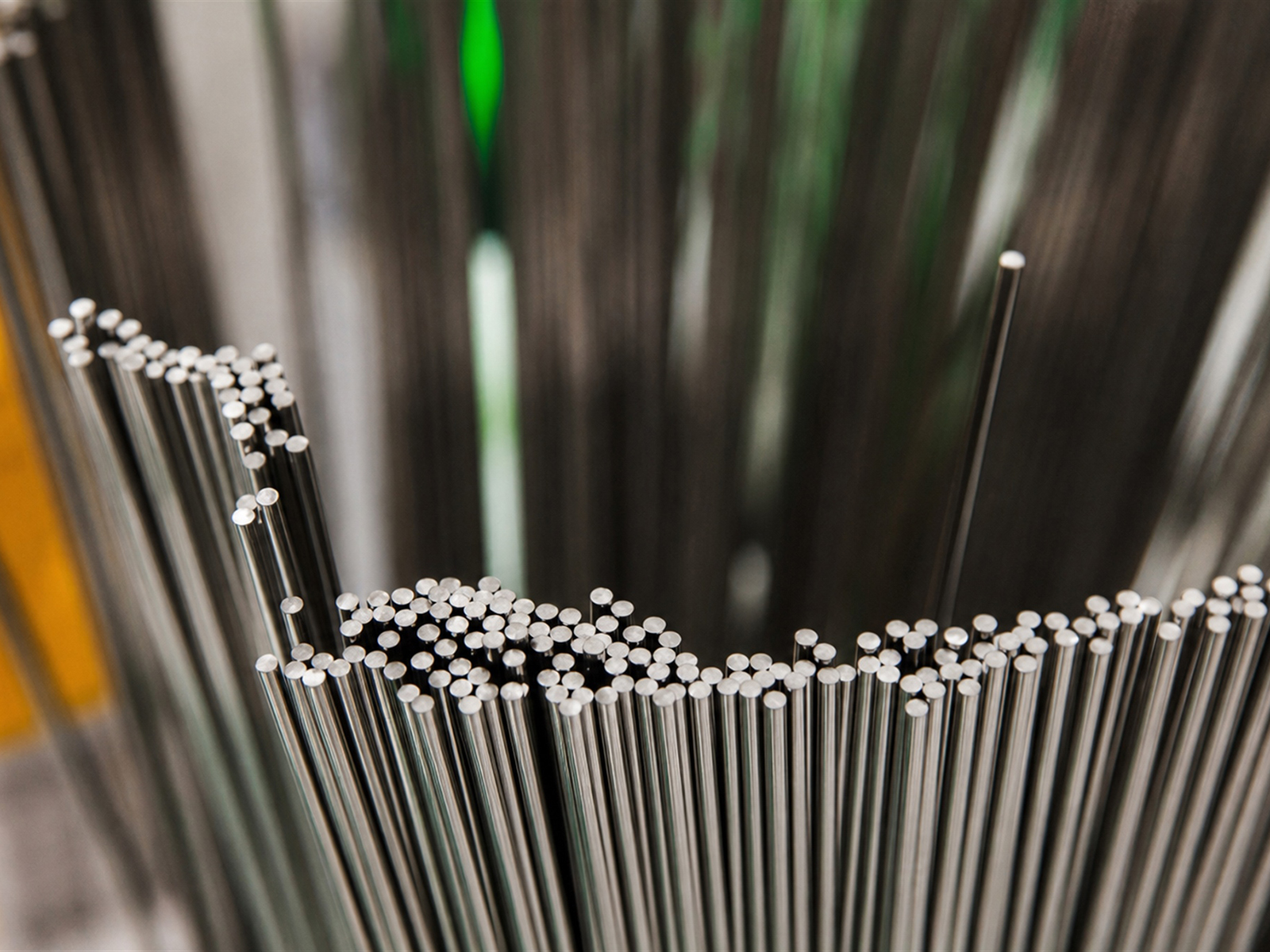
Gr1 titanium rod, as the purest material among industrial pure titanium, provides a variety of diameter options on the market to meet different application needs. Common diameter specifications are mainly divided into three categories: small-diameter cold-drawn/polished bars (φ4-φ30mm) are suitable for precision machining fields, medium-diameter conventional stock bars (φ30-φ200mm) cover most industrial applications, and large-diameter forged bars (φ100-φ300mm) are mainly used for customized projects. American sizes such as 1/4″ (6.35mm), 1/2″ (12.7mm), 1″ (25.4mm), 2″ (50.8mm), 3″ (76.2mm) are widely used in the North American market. Depending on the surface treatment, black leather rods, Lathe rods, polishing rods, and pickling rods each have their own characteristics, with tolerances ranging from +/-0.05mm to +/-1.0mm. The length can be customized from 300 to 6000mm, which can accurately match the strict requirements of high-end manufacturing fields such as aviation medical, precision electronics, and chemical anti-corrosion.
1. What Are the Gr1 Titanium Rod Diameter Specification Classification System?
(1) What Are the Precision Grade Small Diameter Specifications (φ4-φ30mm)?
Gr1 titanium rods in this range are mainly produced through cold drawing or cold rolling processes. The surface is precision polished and the roughness can reach Ra≤1.6 microns. Dimensional accuracy is strictly controlled at H7/H8 tolerance level (for example, φ30mm H7 tolerance is +0.021/-0, which is a one-way positive deviation). Medical device manufacturers particularly favor φ6-φ12mm specifications for orthopedic screw blanks, while φ8-φ16mm are often used for abutment processing of dental implants. In the field of precision instruments, ultra-fine rods of φ4-φ8mm are used in sensor axes and connecting rods of vacuum equipment, taking advantage of the non-magnetic properties of Gr1 titanium. The production of such specifications requires a high-clean environment, and ultrasonic cleaning is used to remove surface particle contamination to ensure that impurities are not introduced into semiconductor coating equipment and electronic components.
(2) What Are the Industrial Grade Medium Diameter Specifications (φ30-φ100mm)?
The medium diameter range covers 80% of industrial application scenarios, and φ50-φ80mm is the most commonly used specification in chemical equipment. The titanium tie rods of heat exchangers usually use φ40-φ60mm polished rods. The surface roughness is controlled at Ra 3.2-6.3 and can be directly assembled and welded. The stirring shaft of the reactor mostly adopts φ50-φ80mm specifications. This size can not only ensure sufficient structural strength, but also maintain the excellent processability of Gr1 titanium. Pump shafts and valve rods in the field of offshore engineering prefer φ60-φ100mm diameter, and the tolerance requirements are relatively loose (+/-0.3-+/-0.5mm), but there are special requirements for straightness and roundness. Black-skinned rods produced by hot rolling or forging processes dominate this range and are suitable for subsequent mechanical processing to remove scale.
(3) What Are the Heavy-duty Large Diameter Specifications (φ100-φ300mm)?
Large-diameter Gr1 titanium rods are customized products and are mainly formed through multi-fire forging. φ150-φ200mm specifications are often used for large-scale tube sheet processing in seawater desalination equipment, and the weight of a single tube can reach hundreds of kilograms. Large storage tank supports and flange blanks in the chemical industry usually require forged bars of φ200-φ300mm. Such products have extremely high requirements for the uniformity of the internal structure and need to undergo strict ultrasonic flaw detection. Although the strength of Gr1 titanium is not as high as alloy titanium, large-diameter pure titanium rods are still the most economical choice in low-stress, strong-corrosion environments. The production cycle is long, usually 6-8 weeks from raw materials to finished products, including multiple forging, annealing, finishing and other steps. The tolerance of this specification is generally around +/-1.0mm, and more emphasis is placed on material purity and corrosion resistance rather than dimensional accuracy.
2. What Should You Know About Diameter Applicable Ranges Corresponding to Different Surface Treatments?
(1) What Should You Know About Precision Size Domain of Polishing Rods?
The economic diameter range of polished Gr1 titanium rods is limited to φ4-φ50mm. Beyond this range, the polishing cost will increase significantly. φ6-φ20mm is the golden size segment of polishing rods. The surface mirror degree can reach 8K level. It is suitable for occasions with strict requirements on appearance and cleanliness. Vacuum cavity components in the semiconductor industry mostly use φ10-φ16mm polishing rods, and the residual carbon content on the surface must be less than 10ppm. Medical implant blanks have high requirements for surface integrity. After electrochemical polishing of φ8-φ12mm polishing rods, there are no traces of mechanical processing on the surface, and the biocompatibility reaches the best state. The polishing process will remove 0.1-0.3mm of material on the surface, so a processing allowance must be reserved when selecting raw materials.
(2) What Should You Know About General Size Segment of Car Light Rods?
Lathe processing is suitable for all diameters above φ10mm, but the most cost-effective range is φ20-φ150mm. This process uses a CNC lathe to remove black skin and surface defects, retaining the natural color of the metal. φ30-φ60mm polished rods are most used in the processing of chemical pipeline connectors, and the surface roughness Ra 3.2 can meet most sealing requirements. Corrosion-resistant fasteners for marine engineering are often made of φ16-φ40mm polished rods. The surface has no oxide scale to avoid the risk of hydrogen embrittlement during the pickling process. The tolerance control capability of the finishing process is strong. The φ50mm specification can stably maintain a deviation of +/-0.2mm (in line with the common tolerances of finishing rods), which is far better than the +/-1.0mm of black leather rods. Polished rods with large diameters such as φ100-φ150mm are mostly used for valve body processing, and the tool life will be longer during subsequent milling.
(3) What Should You Know About Dimensional Characteristics of Black Leather Rods and Pickled Rods?
Black leather rods are usually economical only if their diameter is ≥φ20mm, because thermal processing of small diameters is prone to excessive oxidation. φ50-φ200mm is the mainstream specification of black leather rods. The surface retains forging traces and oxide scale, and is suitable for large-margin cutting. The pickling rod covers the range of φ10-φ100mm, and the oxide layer is removed by mixing acid to reveal the true color of the metal. Titanium hangers in the electroplating industry mostly use φ12-φ25mm pickling rods. There should be no iron contamination on the surface, otherwise it will affect the quality of the electroplating layer. The spray pipe of the environmentally friendly desulfurization equipment is made of φ30-φ50mm pickling rods, and the surface does not need to be treated after direct welding. The pickling depth is about 0.05-0.15mm, and the surface quality requirements for raw materials are higher than those of black leather rods, but lower than those of polished rods.
3. What Are the Gr1 Titanium Rod Specification System Under International Standards?
(1) What Are the ASTM B348 Standard Specification Essentials?
The American Society for Testing and Materials standard ASTM B348 clearly defines the size range and performance requirements of Gr1 titanium rods. The standard covers round rods with diameters from φ6.35mm (1/4 inch) to φ228.6mm (9 inches), as well as square rods, hexagonal rods and other special shapes. The annealed product code is “M”, the tensile strength is 240-345 MPa, and the elongation is ≥24%. This is the core indicator that distinguishes Gr1 from Gr2 and Gr3. The standard stipulates that for rods with a diameter ≤φ19mm, the ovality shall not exceed 50% of the diameter tolerance; when greater than φ19mm, the ovality limit is relaxed to 75% of the tolerance. The allowable deviation in length is +20mm/-0mm. When cutting multiple lengths, the total length should take into account the notch allowance, which depends on the saw blade thickness and process (for example, the common saw blade thickness is 3-6mm). At the same time, it needs to be stated whether the end face processing allowance is included. Baoji Titanium Valley’s production line strictly implements this standard, and each batch of products comes with a material certificate (MTC), marking the chemical composition, mechanical properties and dimensional testing data.
(2) What Are the Differences in Specifications Between European and Japanese Standards?
The European standard EN 2002-1 uses the “3.7025” material number for Gr1 titanium rods, and the dimensions are marked in the metric system. Common specifications increase from φ5mm in 1mm increments to φ100mm, and then in 10mm increments to φ200mm. The equivalent grade in the Japanese JIS H4650 standard is “TP270”, which specifically stipulates surface cleanliness requirements for food equipment. The residual organic matter on the surface of the polishing rod must be less than 10 μg/cm². German high-end manufacturing industry prefers DIN 17850 standard tolerance level, h9 level is shaft tolerance (for example, φ30mm h9 tolerance is -0.052/-0, one-way negative deviation), which is suitable for φ10-φ60mm precision shaft parts. The Gr1 titanium rods used in the Korean battery industry mostly follow the KS D3770 standard, which requires rods with a diameter of φ8-φ25mm to have a magnetic permeability of <1.01 to prevent eddy current heating in a strong magnetic field environment. Although these standard systems are different, the core chemical composition requirements are basically the same. Titanium content ≥99.30% and oxygen content ≤0.18% are the common bottom line.
(3) What Are the Technical Feasibility of Customized Specifications?
Special diameters beyond conventional standards can be achieved through customization, subject to technical and economic evaluation. It is extremely difficult to produce ultra-thin rods below φ3mm, and they are easy to break during the cold drawing process. Multi-pass small compression ratio processes are usually used, and the cost is 3-5 times that of conventional sizes. Ultra-large diameter rods of φ300-φ500mm require electroslag remelting technology to ensure internal quality. The minimum order quantity for a single piece is high, and the delivery cycle may be extended to more than 3 months. Non-standard diameters such as φ35mm, φ75mm, etc. can be realized by turning standard specifications, but the material utilization rate is reduced by 15-25%. In terms of length, bars exceeding 6 meters are difficult to transport and must be supplied in sections or welded on site. Special shapes such as elliptical rods (long axis φ50mm × short axis φ40mm) and trapezoidal rods can be extruded through special dies and are suitable for lightweight design of aerospace structural parts.
4. How Is Specification Selection Strategy Determined by Application Scenarios?
(1) What Are the Specification Preferences in the Medical Device Field?
The manufacturing of orthopedic implants requires extremely precise specifications for Gr1 titanium rods. Polished rods of φ8-φ14mm are commonly used for intramedullary nail blanks (actual diameter range of intramedullary nails), and φ3.5-φ6.5mm (standard diameter of bone screws) are commonly used for bone screw blanks. The tolerance is +/-0.05mm, and the surface roughness Ra≤0.8. Dental implant abutments mostly use φ6-φ10mm specifications, and the single length is 300-500mm, which is convenient for automated turning processing. The handles of surgical instruments use φ12-φ20mm polishing rods, which not only ensures the grip but also facilitates high-temperature and high-pressure sterilization. Medical device stents and catheter connectors prefer φ4-φ8mm small diameter polished rods, which are lightweight and have excellent bioinertness. The U. S. FDA has strict requirements for implant-grade titanium materials, and suppliers must provide batch traceability documents. Titanium Valley’s medical-grade Gr1 rods have passed ISO 13485 certification. Each product is laser-marked with a batch number, which can be traced back to the raw material smelting furnace number.
(2) What Are the Specifications and Configuration of Chemical Anti-corrosion Equipment?
The electrolytic cell anodes in the chlor-alkali industry use φ20-φ40mm pickled Gr1 titanium rods with a length of 2-4 meters, which are assembled into an electrode array through threaded connections. The heat exchanger tube plate uses φ50-φ80mm polished rods to process the hole diameter. A single tube plate may require dozens of rods with the same specifications. The reaction kettle stirring bearing is subject to low-speed torque. φ60-φ100mm forged black leather rods are an economical choice. They are subsequently turned into shape and partially quenched and tempered. Chemical pipeline flanges mostly use φ80-φ150mm specifications. Gr1 titanium has excellent weldability. The girth weld can be achieved by TIG welding, and no heat treatment is required after welding. The evaporator of the seawater desalination device uses φ30-φ50mm titanium rods to make distributors. It can withstand chloride ion concentration up to 20, 000 ppm and has a service life of more than 15 years. The support beams of the spray layer of the desulfurization tower use φ40-φ60mm pickling rods, and there is no iron pollution on the surface to prevent catalyst poisoning.
(3) What Should You Know About the Needs of the Aerospace and Electronics Industries?
Aviation fastener blanks strictly use φ6-φ20mm cold-drawn polished Gr1 titanium rods, with dimensional consistency requirements of +/-0.02mm, and batch supply must meet Statistical Process Control (SPC) standards. The corrosion-resistant pipe joints of the aircraft air conditioning system use φ12-φ25mm polished rods, which are 40% lighter than stainless steel and reduce the fuel consumption of the entire aircraft. Vacuum coating machine chamber fixtures in the field of precision electronics use φ8-φ16mm non-magnetic polishing rods with magnetic permeability <1.005 to prevent interference with the uniformity of film deposition. The plasma reaction chamber of semiconductor etching equipment uses φ20-φ40mm high-cleanliness rods, and the amount of metal ions precipitated on the surface is <0.1ppb to avoid wafer contamination. The buckle springs of 3℃ electronic products are stamped with φ3-φ5mm ultra-fine polished rods. The high elongation rate (≥24%) of Gr1 titanium ensures no cracking during the stamping process. India’s electronics manufacturing industry is growing rapidly, and the demand for precision titanium rods with specifications of φ10-φ20mm has an annual growth rate of 18%.
5. What Are the Key Considerations When Purchasing Gr1 Titanium Rod Specifications?
(1) What Are the Balance Between Tolerance Level and Cost?
Choosing the appropriate tolerance level directly affects procurement costs and subsequent processing efficiency. The unit price of polishing rods with H7 level tolerance (such as φ20h7 corresponding to +0/-0.021mm) is 30-50% higher than ordinary polishing rods, but it can save the rough machining process and is suitable for batch manufacturing of precision parts. If the rods used in chemical equipment are not mating surfaces, just choose an ordinary tolerance of +/-0.5mm. Excessive pursuit of precision will cause waste. The larger the diameter, the wider the tolerance zone. The h9 tolerance of φ100mm is -0.087/-0, while that of φ10mm is only -0.036/-0. The processing difficulty and cost of large-diameter precision bars increase exponentially. Non-roundness and straightness also need to be paid attention to. Precision shafts require straightness ≤0.5mm/m, and ordinary structural parts can be relaxed to 2mm/m.
(2) What Are the Economic Analysis of Length Specifications?
The standard length range is 300-6000mm, and 3000mm is the most economical stocking length. The transportation and storage costs of extra-long bars increase significantly. Cutting to length is 5-10% more expensive than cutting to length, but it can reduce on-site cutting losses and labor costs. Medical device processing often orders short materials of 500-1000mm, which facilitates automatic loading and has high material utilization. Large parts of chemical equipment require 3-6 meters long rods, and the welded joints will become weak links, making the entire piece more reliable to process. When cutting multiple rods to length, the total length should take into account the notch allowance. If you need 10 500mm bars, you should order 5000+ notch allowance (the notch allowance depends on the thickness of the saw blade, commonly 3-6mm/blade, and it needs to be clear whether the end face processing allowance is included). Annealed Gr1 titanium rods can be cold-bent on site. Purchasing long materials and then bending them is more economical than ordering bent pipes directly.
(3) How Is Application Matching of Surface States?
Polishing rods are suitable for situations where there is no subsequent machining or only minor trimming is required. The surface integrity is good but the unit price is the highest. Polished rods are the most cost-effective choice, and the surface quality meets most machining and welding needs. Black leather rods are suitable for large margin cutting, such as turning from φ80mm to φ70mm. Purchasing φ85mm black leather rods is 20% cheaper than φ80mm polished turning rods and has sufficient machining allowance. The special value of pickling rods is that there is no metal contamination on the surface, and they are irreplaceable in applications such as electroplating, anodizing, and food contact. Some precision parts adopt the “rough material finishing” strategy. After purchasing a turning rod and grinding it to size, the surface quality is better than using a polishing rod directly. Knowing the thickness of the removed layer for each surface state allows for accurate calculation of raw material procurement diameter to avoid excessive waste or insufficient margin.
6. What Is the Conclusion?
The diameter specification system of Gr1 titanium rods covers the entire range of φ4-φ300mm, from ultra-fine polished rods for precision medical equipment to large-diameter forged rods for heavy chemical equipment. Each specification segment has its specific process characteristics and application fields. Understanding the applicable scope of different surface treatment states, mastering the tolerance requirements of international standards, and selecting economical and reasonable specifications based on actual working conditions are the keys to achieving cost optimization and performance assurance. As the global high-end manufacturing industry continues to grow in demand for corrosion-resistant, lightweight, and biocompatible materials, the diversified specifications and quality stability of Gr1 titanium rods will become the core competitiveness of suppliers.
FAQ
Q1: What is the price difference between the polished and polished Gr1 titanium rods with φ50mm?
The surface roughness of the polished state is Ra 3.2-6.3, and the unit price is about 70-75% of that of the polished state. Polished Ra≤1.6 requires additional precision machining steps, but if the final part does not require further processing, the total cost may be lower. Rods used for chemical equipment must be in a polished state, while medical device blanks must be in a polished state to ensure surface integrity.
Q2: Why are medical grade Gr1 titanium rods mostly concentrated in φ6-φ16mm specifications?
This size segment covers most orthopedic and dental implant applications. The diameter of intramedullary nails is usually φ8-φ14mm, the diameter of bone screws is usually φ3.5-φ6.5mm, and φ6-φ10mm is suitable for dental implant abutments. Larger than φ16mm exceeds the requirements of human anatomy, and the implantation trauma of large-diameter implants is greater. The diameter ranges of different application scenarios need to be accurately distinguished to avoid confusion.
Q3: Why are large-diameter Gr1 titanium rods (φ200mm and above) mostly customized instead of in stock?
Large-diameter bars require multiple forgings, and a single piece weighs hundreds of kilograms. Capital occupation and inventory costs are extremely high, and downstream demand is scattered and specifications vary greatly. For example, the seawater desalination tube sheet uses φ220mm, and the chemical flange uses φ250mm. Customization on demand can accurately match customer length and surface requirements to avoid secondary processing losses. The delivery cycle of 6-8 weeks is the norm in the industry.
7. What Should You Know About Contact Titanium Valley for Professional Gr1 Titanium Rod Supply Services?
As a leading manufacturer and supplier of Gr1 Titanium Rod, Baoji Titanium Valley is equipped with Italian Danieli rolling production line with an annual production capacity of over 20, 000 tons. It can provide φ4-φ300mm full specification rods and customized processing services. We strictly implement ASTM B348 standards, and each batch of products is equipped with a complete MTC certificate and ultrasonic flaw detection report. Purchasers in the fields of aerospace, medical equipment, and chemical anti-corrosion are welcome to contact us: sales@titaniumvalleys. com
For a broader view of available grades, supply forms, and related specifications, explore our Titanium Rod category.
For product-level details and supply options, you can also review our ASTM F67 Gr1 Titanium Rod page.
References
- American Society for Testing and Materials, “ASTM B348-2021 Standard Specification for Titanium and Titanium Alloy Bars”, 2021 Edition
- Chen Hu, Wang Lei, “Processing Technology and Performance Control of Industrial Pure Titanium”, Metallurgical Industry Press, 2019
- Li Ning, Zhang Peng, “Application status and prospects of titanium and titanium alloys in medical devices”, “Chinese Journal of Nonferrous Metals”, Volume 30, Issue 3, 2020, Pages 589-598
- Zhao Jianhua, Liu Wei, “Titanium Alloy Bar Precision Processing Technology”, Machinery Industry Press, 2018
- Wang Xiufang, “Selection and Corrosion Control of Titanium Materials for Chemical Equipment”, Chemical Industry Press, 2021