
What Is the Formability of Gr1 Titanium Wire?
- Gr1 Titanium Wire
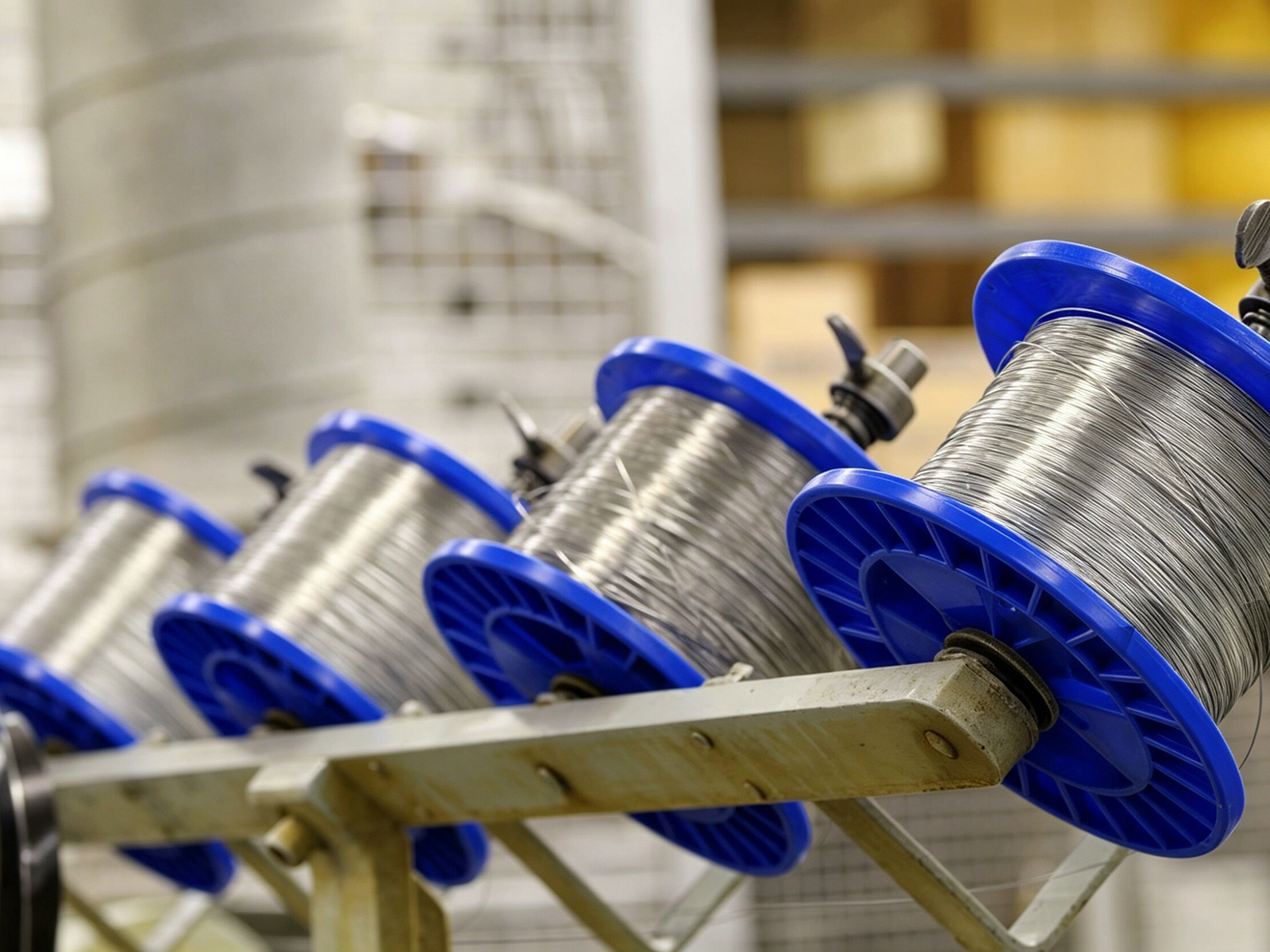
Gr1 titanium wire has excellent formability properties, mainly due to its ultra-high purity (≥99.5%) and extremely low impurity content. As the grade with the best plasticity among industrial pure titanium, Gr1 titanium wire has an elongation rate of more than 20% at room temperature and an annealed hardness of only 140-180HV, allowing it to easily complete complex forming operations such as bending, winding, stretching, and weaving. Compared with other titanium alloys, Gr1 titanium wire is not prone to cracking or stress concentration during cold working, and is particularly suitable for manufacturing precision springs, medical device components, electronic shielding nets and chemical anti-corrosion structural parts. Its hexagonal close-packed (HCP) crystal structure gives the material an excellent slip system and maintains good processing stability even in ultra-fine specifications of 0.06mm. For application scenarios that require complex three-dimensional forming or multi-pass drawing, Gr1 titanium wire can significantly reduce processing losses and improve yield, making it an ideal choice in the field of precision manufacturing.
1. What Should You Know About Materials Foundation and Formability Mechanism of Gr1 Titanium Wire?
(1) What Should You Know About Crystal Structure and Plastic Deformation Characteristics of Pure Titanium?
Gr1 titanium wire adopts α-phase pure titanium structure and has a hexagonal close-packed (HCP) crystal structure. This structure exhibits a sufficient slip system in the range from room temperature to 300℃, including three main deformation mechanisms: basal slip, cylindrical slip, and conical slip. When a material is subjected to external forces, lattice dislocations can move in specific directions and achieve plastic deformation without fracture. Compared with the body-centered cubic structure of beta titanium alloy, the critical shear stress of pure titanium is lower and slippage is more likely to occur. This is the microscopic reason why Gr1 titanium wire has excellent ductility.
(2) What Are the the Critical Impact of Impurity Control on Forming Performance?
Table 1: Gr1 titanium wire chemical composition control standards
| element | Maximum content(%) | Effect on formability |
| Oxygen(O) | ≤0.18 | For every 0.1% increase in content, the strength increases by about 70MPa, but the elongation decreases by 3-5%. |
| Iron(Fe) | ≤0.20 | Formation of hard phase, reducing material uniformity and increasing risk of fracture |
| Carbon(C) | ≤0.08 | Carbide precipitation will cause local embrittlement and affect the bending radius. |
| Nitrogen(N) | ≤0.03 | Nitrogen atom interstitial strengthening, too high will lead to increased cold work hardening |
Oxygen content is the most critical factor affecting the plasticity of pure titanium. The Gr1 grade controls oxygen below 0.18%, ensuring that the material maintains a balanced state of typical yield strength ≥275MPa and high elongation (≥20%). The use of vacuum smelting process can effectively remove gas impurities, refine the grains evenly, and create an ideal structural foundation for subsequent forming processing.
(3) What Should You Know About Heat Treatment Status and Tissue Control?
Gr1 titanium wire provides three states according to different application requirements: annealed state (M), semi-hard state (Y2) and hard state (Y). The annealing treatment is maintained at 650-750℃ for 2-4 hours and then slowly cooled, which can completely eliminate the cold working stress and make the grains appear in an equiaxed state. At this time, the material’s plasticity reaches its peak. The semi-hard state is obtained by controlling the amount of cold working deformation, which maintains a certain strength while still having good bending properties. Although the strength of hard titanium wire is increased to 480-650MPa, the elongation drops to more than 8%. It is mainly used in scenarios that require high elastic recovery force. Users can choose the appropriate supply status according to the complexity of the forming process.
2. What Are the Actual Performance in Different Forming Processes?
(1) What Should You Know About Cold Bending and Winding Processing Capabilities?
Gr1 titanium wire can achieve small radius bending at room temperature without cracking. For the φ1.0mm specification, the minimum bending radius can reach 1.5-2 times the wire diameter, which is far better than the 3-4 times the wire diameter requirement of stainless steel wire. This makes the material particularly suitable for manufacturing products that require complex bending, such as medical guidewires, eyeglass frames, and electronic connectors. In the continuous winding test, the annealed Gr1 titanium wire can withstand more than 100 repeated bends without breaking, showing excellent fatigue performance.
Table 2: Comparison of bending properties between Gr1 titanium wire and common materials
| Material type | Minimum bending radius (D=wire diameter) | Repeated bending times | rebound angle |
| Gr1 titanium wire (annealed) | 1.5-2D | >100 times | 5-8° |
| 304 stainless steel wire | 3-4D | 40-60 times | 10-15° |
| pure copper wire | 1-1.5D | >150 times | 3-5° |
| Nickel wire | 2.5-3D | 60-80 times | 8-12° |
It should be noted that surface scratches should be avoided during the bending process, because small defects can become stress concentration points. Using titanium wire with a bright polished surface (Ra≤0.4um) can significantly reduce this risk, while using rounded corner molds can further improve the forming quality.
(2) What Are the Stretch and Draw Forming Properties?
Gr1 titanium wire exhibits good work hardening controllability during multi-pass drawing. Through the roller die cold drawing process, the φ6.5mm blank can be gradually drawn to φ0.06mm ultra-fine specifications, with a cumulative area reduction rate of more than 99%. The deformation amount of each pass is controlled within the range of 15-25%, and appropriate annealing treatment is performed in the middle to continuously maintain the plastic reserve of the material. This progressive diameter reduction method avoids wire breakage problems caused by excessive work hardening.
Tensile test data shows that the uniform elongation of the annealed Gr1 titanium wire accounts for more than 70% of the total elongation, indicating that the material has excellent necking resistance. This characteristic allows it to achieve greater deformation in processes such as deep drawing and stretch forming, reduce the number of forming passes, and improve production efficiency. The titanium wire produced by Danieli continuous rolling line in Italy has a microstructure uniformity that reaches the top level in the industry, and the tensile strength fluctuation between batches is less than 5%.
(3) What Should You Know About Braiding, Welding and Composite Forming?
In braiding applications, Gr1 titanium wire can withstand complex staggered bending and friction. When manufacturing filters, shields or reinforced frames, the materials will not cause fatigue cracks due to repeated bending. Its non-magnetic nature also ensures that no electromagnetic interference is introduced in precision electronic equipment. In terms of welding performance, Gr1 titanium wire, as the ERTi-2 standard welding material, can achieve perfect fusion with the same material. The tensile strength of the weld can reach more than 90% of the base material without reducing the corrosion resistance.
3. What Should You Know About Process Parameters and Environmental Factors Affecting Formability?
(1) What Should You Know About Control of Processing Temperature and Strain Rate?
Although Gr1 titanium wire already has good plasticity at room temperature, the formability can be further improved by appropriately increasing the processing temperature. When warm forming is performed in the range of 150-300℃, the flow stress of the material is significantly reduced, allowing a smaller bending radius or a larger draw ratio to be achieved. Strain rate is also a key parameter-slow deformation rates (<10⁻³/s) allow sufficient time for dislocations to rearrange and avoid the formation of adiabatic shear bands. Rapid stamping or high-speed drawing may cause local temperature rise and uneven structure.
(2) What Should You Know About Surface Quality and Lubrication Conditions?
Surface defects are the main factor limiting the forming limit. Through the bright roller die drawing process, a mirror-level surface with Ra≤0.4um can be obtained, eliminating micro-cracks and inclusions. Proper selection of lubricants is crucial during cold working – phosphate saponified liquids are suitable for drawing processes, while polymer coatings are better suited for bending and weaving operations. Poor lubrication can lead to surface scratches and mold adhesion, causing premature material failure.
(3) What Should You Know About Effect of Dimensional Accuracy on Forming Stability?
Table 3: Forming consistency performance of titanium wires with different precision levels
| Diameter tolerance class | Diameter fluctuation range | Forming defect rate | Applicable scenarios |
| +/-0.02mm | φ1.00+/-0.02mm | <0.5% | Precision medical equipment, aerospace |
| +/-0.05mm | φ1.00+/-0.05mm | 1-2% | Electronic components, chemical equipment |
| +/-0.10mm | φ1.00+/-0.10mm | 3-5% | General industrial applications |
High-precision titanium wire exhibits better stability in automated forming equipment. The Danieli production line can control the ovality of φ6.5mm titanium wire to 0.15-0.2mm (the common market level is 0.3mm). This ultra-high roundness ensures uniform stress distribution during subsequent processing and avoids the occurrence of local weak points.
4. How Is Application-specific Formability Optimization Strategies?
(1) What Should You Know About Microforming Technology in the Field of Medical Devices?
Medical implants and surgical instruments place extreme demands on the formability of titanium wires. Ultra-fine titanium wire with a diameter of 0.2-0.5mm requires complex three-dimensional weaving or winding operations under a microscope. The low yield strength (275MPa) of annealed Gr1 titanium wire enables precise positioning in micro-clamps, while good biocompatibility ensures that the material properties are not affected after forming. For components requiring laser welding, strict control of the oxygen content below 0.15% can avoid weld embrittlement.
(2) What Should You Know About Flexforming in the Electronics and Communications Industry?
When manufacturing mobile phone antennas, sensor shrapnel or connectors, Gr1 titanium wire needs to take into account both formability and springback control. Semi-rigid materials (tensile strength 380-480MPa) provide an ideal balance point – they can complete complex bending and have sufficient elastic recovery force. Through the roller mold strengthening process, the yield-to-strength ratio can be increased to 0.75-0.85, thereby enhancing the fatigue resistance of the parts. Surface coating with a nanoceramic layer can also improve wear resistance and conductive stability.
(3) What Should You Know About Corrosion-resistant Formed Parts for Marine and Chemical Environments?
In seawater desalination devices, chlor-alkali electrolyzers or ocean platforms, Gr1 titanium wire is often woven into filters or made into fasteners. Such applications require the material to maintain an intact passivation film after forming. Pickling surface treatment can remove oxide scale and residual stress generated during processing, forming a uniform TiO2 protective layer on the surface. For structural parts that need to be welded, the use of argon gas protection and low heat input processes can prevent grain coarsening in the weld area and maintain overall corrosion resistance and plasticity.
5. What Are the Quality Control and Forming Performance Verification System?
(1) What Should You Know About Raw Material Screening and Batch Consistency Management?
Baoji Titanium Valley uses a vacuum smelting process to produce titanium ingots, and each batch of raw materials is fully tested through spectral analysis and oxygen, nitrogen and hydrogen analyzers. Only titanium ingots whose chemical composition deviation is less than 50% of the standard limit are used for high-end titanium wire production. The online detection system during the continuous rolling process monitors diameter, ovality and surface quality in real time, automatically rejects unqualified products, and ensures that titanium wire weighing more than 100kg in a single roll has no intermediate welding points and has uniform performance.
(2) What Are the Mechanical Property Testing and Forming Limit Evaluation?
Each batch of titanium wire must undergo tensile tests, repeated bending tests and cupping tests before leaving the factory. The tensile test evaluates basic mechanical properties, the number of repeated bendings verifies fatigue resistance, and the cupping test (Erichsen value) is used to evaluate the deep drawing performance of the plate. For wire materials, repeated bending tests are usually used to verify formability. For medical-grade titanium wire, biocompatibility testing (ISO 10993 series standards) and surface cleanliness testing (Kodak gray point level ≤ 3) are also required. Complete material documentation includes an EN 10204-3.1 certificate, traceable to the specific furnace number.
(3) How Is Client Application Verification and Process Feedback?
For specific forming processes, Titanium Valley provides sample trial production services. By simulating the customer’s actual production conditions (mold design, processing parameters, environmental temperature and humidity, etc.), the suitability of the titanium wire is evaluated and optimization suggestions are made. Feedback from some customers shows that after using high-precision titanium wire, the scrap rate of their automated production lines dropped from 8% to less than 2%, and the production capacity of a single shift increased by 30%. This closed-loop feedback mechanism helps continuously improve product performance to meet escalating manufacturing needs.
6. What Is the Conclusion?
Gr1 titanium wire exhibits the best formability among industrial pure titanium thanks to its ultra-high purity, fine structure control and advanced surface treatment technology. From micron-scale medical devices to large-scale chemical equipment, this material can adapt to a variety of forming processes such as cold bending, stretching, weaving, and welding, while maintaining excellent corrosion resistance and biocompatibility. By rationally selecting the material state, optimizing processing parameters and implementing strict quality control, the forming potential of Gr1 titanium wire can be fully utilized to provide reliable material guarantee for high-end manufacturing.
7. What Should You Know About Get Professional Technical Support Now?
Baoji Titanium Valley Titanium-Nickel-Zirconium Materials Processing Co., Ltd., as the world’s leading titanium wire manufacturer and supplier, is equipped with Italian Danieli production lines and complete quality systems, with an annual production capacity of 5, 000 tons. We provide full specifications of Gr1 titanium wire from φ0.06mm to φ10mm, supporting customized surface treatment and dimensional tolerances. Welcome to contact our technical team for detailed selection guidance: sales@titaniumvalleys. com
FAQ
Q1: Does Gr1 titanium wire need intermediate annealing during cold working?
For complex forming where the total area reduction rate exceeds 60%, it is recommended to perform an intermediate annealing (700℃ for 2 hours) when the cumulative deformation reaches 40-50%. This restores the plasticity of the material and prevents cracking caused by work hardening. Simple bending or single pass drawing usually does not require annealing.
Q2: How to judge whether the forming performance of titanium wire meets specific application requirements?
Check the elongation data in the material certificate (annealed state should be ≥ 20%), and ask the supplier to provide repeated bending test reports. For critical applications, specimens can be requested for simulated forming testing to evaluate fracture risk and dimensional stability under actual working conditions.
Q3: How much influence does surface condition have on formability?
Surface roughness and defects directly affect the forming limit. The bright surface (Ra≤0.4um) can reduce the minimum bending radius by 20-30% and significantly reduce the risk of fatigue crack initiation. For chemical anti-corrosion applications, it is recommended to choose pickled surfaces, while for medical devices, polishing or electrolytic polishing is preferred.
For a broader view of available grades, supply forms, and related specifications, explore our Titanium Wire category.
For product-level details and supply options, you can also review our ASTM F67 Medical Gr1 Titanium Wire page.
References
- Wang Kai, Li Minghua. “Cold working microstructure evolution and performance control of pure titanium and titanium alloy wires”. Rare Metal Materials and Engineering, 2021, 50(8): 2841-2849.
- Zhao Yongqing, Hong Quan, Ge Peng. “Titanium and titanium alloy wire processing technology”. Nonferrous Metal Science and Engineering, 2018, 9(4): 1-7.
- Zhang Yonggang, Chen Yuyong, Zhu Zhishou. “Titanium Alloy Plastic Processing Theory and Process Technology”. National Defense Industry Press, 2019: 112-167.
- Wang Guisheng, et al. “Titanium Alloy Handbook”. Machinery Industry Press, 2012: 89-124.