
Nickel 201 Foil Vs. Stainless Steel, Which Material Performs Better?
- Nickel 201 Foil
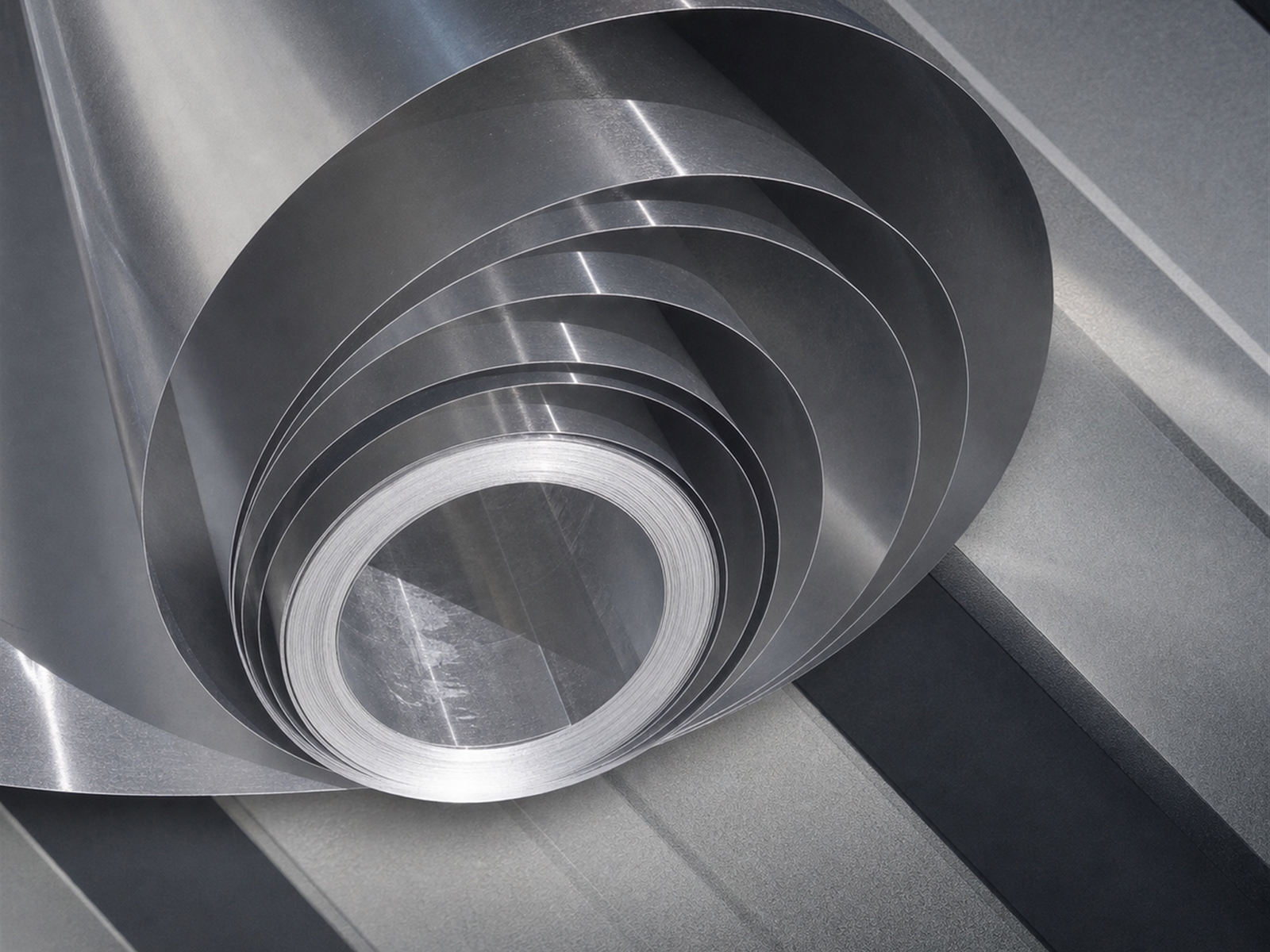
Choosing the right metal materials in high-end industrial applications often determines the service life and production efficiency of the equipment. Nickel 201 foil and stainless steel are two mainstream materials, each with unique advantages. With its ultra-low carbon content (C ≤ 0.02%) and high purity of more than 99.6%, Nickel 201 foil has outstanding performance in high-temperature stability, graphitization resistance and strong alkali corrosion environments, and is suitable for long-term service scenarios below 600℃. In contrast, stainless steel, although lower cost and mechanically stronger, has significant limitations in extreme chemical environments and high-temperature conductive applications. For fields such as new energy batteries, electrochemical equipment, and precision electronic manufacturing, material selection needs to comprehensively consider multi-dimensional indicators such as conductivity, corrosion resistance, high temperature stability, and processing performance.
1. What Are the Differences in Essential Differences in Material Composition and Microstructure?
(1) What Should You Know About Nickel 201’s Low-carbon and High-purity Design Concept?
Nickel 201 foil is produced using a vacuum smelting process, with a nickel content of ≥ 99.0% and a carbon content strictly controlled below 0.02%. This low-carbon design effectively inhibits carbon precipitation and graphitization in high-temperature environments, allowing the material to maintain a stable microstructure in the temperature range of 350-600℃. The multi-pass cold rolling process combined with precise annealing treatment (temperature tolerance ± 2℃) ensures uniform grain refinement and the post-fracture elongation can reach more than 25% in the annealed state. The material’s weak magnetic properties and density of 8.9 g/cm³ give it unique advantages in electromagnetic shielding and precision electronic applications.
(2) What Should You Know About Alloying Strengthening Mechanism of Stainless Steel?
Stainless steel achieves corrosion protection by adding chromium (usually ≥ 10.5%) to form a dense oxide film. The common 304 type also contains 8-10% nickel. Although this alloying design improves normal temperature corrosion resistance and mechanical strength (tensile strength can reach 520-750 MPa), the multi-element composite structure results in the electrical conductivity being only about 1/10 of pure nickel. In high temperature environments, the sensitivity of stainless steel to intergranular corrosion increases, especially in media containing chloride ions or strongly alkaline media, where the passivation film is easily destroyed. The body-centered cubic (BCC) structure of some stainless steels (such as martensitic stainless steels) makes their magnetic characteristics obvious, limiting their application in high-frequency electronic equipment.
(3) What Should You Know About Crystal Structure Decisive Influence on Properties?
The face-centered cubic (FCC) crystal structure of Nickel 201 gives it excellent plastic deformation ability and can be processed into ultra-thin specifications of 0.005-0.8mm, with a width of up to 670mm without obvious cracks. This structure remains tough at low temperatures and does not undergo brittle transition. The microstructure of stainless steel (FCC for austenite, BCC for martensite, and BCC for ferrite) determines its performance differences: although its strength is higher, its plasticity and stamping formability are relatively poor. During the manufacturing process of ultra-thin foils, stainless steel is prone to edge cracking and surface quality problems, which is Nickel 201’s core competency in the field of precision manufacturing.
2. What Are the Differences in Comparison of Corrosion Resistance in Extreme Environments?
(1) What Are the Differences in Differences in Behavior in Strongly Alkaline Media?
Nickel 201 foil shows good corrosion resistance in strong alkaline solutions such as sodium hydroxide and potassium hydroxide, and the corrosion rate is less than 0.05mm/year. The nickel oxide protective layer formed on the surface of the material is stable and dense, and can serve for a long time even in boiling caustic alkali solutions. Stainless steel faces the risk of stress corrosion cracking (SCC) in strong alkali environments. Especially when the temperature exceeds 60℃, intergranular corrosion can cause sudden equipment failure. Chemical equipment such as electrolytic cells and alkali cleaning equipment usually require materials to withstand NaOH solutions with a concentration of 10-30%, and Nickel 201 has become the first choice.
(2) What Should You Know About High Temperature Oxidation and Graphitization Risk Assessment?
When the service temperature reaches 500-600℃, Nickel 201 foil avoids material embrittlement caused by carbon precipitation due to its low carbon properties. In contrast, ordinary nickel-based materials (such as Nickel 200, with a carbon content of about 0.15%) will form graphite due to the reaction between carbon and nickel in this temperature range, resulting in weakening of grain boundaries and a sharp decline in mechanical properties. Although stainless steel has good oxidation resistance, in vacuum or reducing atmosphere, the volatilization of chromium will cause the protective film to fail. In applications such as heat exchangers, vacuum furnace components and high-temperature electrodes, Nickel 201 has obvious advantages in long-term stability and can reduce the frequency of equipment maintenance by 30-50%.
(3) What Should You Know About Electrochemical Corrosion and Passivation Properties?
In the electrolysis industry, anode materials need to withstand strong oxidation and high current density environments. The electrochemical stability of Nickel 201 foil makes it widely used in applications such as chlor-alkali electrolysis and water electrolysis for hydrogen production. The current efficiency can reach more than 95%. The material will not selectively dissolve under the action of an electric field and maintains dimensional stability. When stainless steel is used as an anode, the preferential dissolution of chromium will lead to changes in surface composition and affect electrolysis efficiency. Precision electrochemical processes such as electroplating and electrophoretic coating require high material purity, which is the core application scenario of Nickel 201.
Corrosive environment type | Nickel 201 Foil Performance | stainless steel performance | Recommended apps |
10-30% NaOH solution (boiling) | Corrosion rate <0.05mm/year | There is a risk of SCC and the temperature needs to be controlled | Alkaline cleaning equipment, evaporator |
500-600℃ high temperature environment | Stable structure, no graphitization | Requires anti-oxidation coating protection | Vacuum furnace, heat treatment equipment |
Chlor-alkali electrolysis (anode) | High current efficiency, dimensional stability | The passivation film is easily damaged | Electrolyzer, electroplating equipment |
sea water environment | Specific corrosion rates need to be assessed | Excellent corrosion resistance (304/316L) | Selected after comprehensive cost assessment |
3. Why Is Electrical and Thermal Conductivity and Energy Application Potential Important?
(1) What Should You Know About Resistivity and Current Carrying Capacity Analysis?
The resistivity of Nickel 201 foil is approximately 6.84 μΩ·cm (20℃) [1], which is much lower than the 72 μΩ·cm of stainless steel (Type 304). In new energy battery tab and connector applications, low-resistance materials can significantly reduce internal resistance and heat loss. Nickel 201 foil with a thickness of 0.03mm and a width of 500mm can carry a continuous current density of 150 A/cm². Under these conditions, stainless steel will cause the temperature rise to exceed the safety threshold due to Joule heating. Power battery packs usually contain hundreds of cells connected in parallel, and the resistance difference of the tab materials will be multiplied, directly affecting the energy efficiency and cycle life of the battery pack.
(2) What Should You Know About the Effect of Thermal Conductivity on Cooling Systems?
The thermal conductivity of nickel is approximately 90.7 W/(m·K) [2], which is 5.5 times that of stainless steel (16.3 W/(m·K)). In applications such as electronic equipment heat sinks and heat exchanger core components, high thermal conductivity materials can quickly conduct heat and reduce the risk of local overheating. Thermal management systems of charging pile high-power modules, 5G base station power amplifiers and other equipment can reduce thermal resistance by more than 40% using Nickel 201 foil. The thermal expansion coefficient of the material (13.3×10⁻⁶/K) is close to that of ceramic substrates, making it suitable for dissimilar material welding and high-reliability packaging.
(3) What Should You Know About Frequency Response Characteristics of Electromagnetic Shielding Effectiveness?
In the 1-10 GHz frequency band, Nickel 201 foil with a thickness of 0.05mm can provide 60-80 dB shielding effectiveness, meeting the electromagnetic compatibility (EMC) requirements of precision instruments and communication equipment. The weak magnetic properties of the material avoid eddy current losses and hysteresis effects in strong magnetic field environments, which is an advantage that ferromagnetic stainless steel cannot match. Scenes that are sensitive to magnetic materials, such as medical MRI equipment shielded rooms and avionics cabins, must use non-magnetic or weakly magnetic materials. The thickness tolerance of ± 0.001mm achieved by 20-roller precision rolling technology ensures the uniformity of the shielding layer and eliminates weak points of electromagnetic leakage.
Performance indicators | Nickel 201 Foil | 304 stainless steel | performance ratio |
Resistivity (μΩ·cm @20℃) | 6.84 | 72.0 | 1: 10.5 |
Thermal conductivity (W/(m·K)) | 90.7 | 16.3 | 5.5: 1 |
Magnetic permeability (relative) | 1.002 (magnetic weak) | 1.2-1.5 (magnetic) | Low magnetic advantage |
Electromagnetic shielding effectiveness (dB @0.05mm) | 60-80 | 40-55 | High frequency advantage |
4. What Should You Know About Processing Performance and Precision Manufacturing Compatibility?
(1) What Should You Know About Ultra-thin Rolling and Flatness Control?
The production of Nickel 201 foil uses a 750mm 20-roll precision rolling mill. Through multi-pass cold rolling and precise tension control, the thickness specification of 0.03-0.8mm can be stably achieved, and the ultimate thickness can be customized up to 0.005mm. Low-carbon materials are prone to abnormal grain growth during high-temperature annealing, which needs to be controlled through a continuous argon protection annealing system (temperature tolerance ± 2℃) and cooling rate optimization to ensure uniformity of grain size. Ultra-thin stainless steel rolling faces problems such as large springback and poor surface quality. It usually requires multiple intermediate anneals, and the production efficiency is only 60% of that of pure nickel materials. For ultra-thin foils with specifications of 0.005-0.01mm, stainless steel is difficult to stably mass produce, but Nickel 201 has achieved mass supply.
(2) What Should You Know About Stamping Formability and Springback Control?
The post-break elongation of annealed Nickel 201 foil is ≥ 25%, and the cupping value can reach 8-10mm. It is suitable for complex forming processes such as deep drawing and precision stamping. The work hardening index n value of the material is about 0.35. The plasticity can be restored through stress relief annealing after cold working deformation, supporting multi-process continuous processing. Although stainless steel has high strength, its springback rate is relatively large (usually 2-3 times that of pure nickel), and a large amount of compensation needs to be reserved for mold design, making it difficult to guarantee processing accuracy. The micron-level positioning holes of the battery tabs and the complex bending structure of the electronic shielding cover require materials with both high plasticity and low rebound properties. Nickel 201 is suitable for automated production lines.
(3) What Should You Know About Welding Performance and Joint Reliability Evaluation?
Nickel 201 foil can use resistance welding, laser welding, ultrasonic welding and other processes, and the weld strength reaches 85-95% of the base metal. The low-carbon characteristics avoid carbide precipitation and intergranular corrosion tendency in the welding heat-affected zone. The joint fails simultaneously with the base metal in a corrosive environment without local weak points. Stainless steel welding requires strict control of heat input to prevent sensitization and embrittlement. Solution treatment is usually required after welding to restore performance. The tab welding of the battery module requires a single point to withstand a tensile force of ≥ 50N and a resistance of <0.5mΩ. Nickel 201 has obvious advantages in welding consistency and conductive continuity, and the scrap rate can be reduced to less than 0.3%.
5. What Should You Know About Whole Life Cycle Costs and Sustainability Considerations?
(1) Why Is Initial Purchase Cost Versus Performance Value Ratio Important?
The unit price of Nickel 201 foil is about 5-8 times that of stainless steel, but in applications with high temperature, strong corrosion and high conductivity requirements, the added value brought by the material performance far exceeds the cost difference. Chemical electrolyzers use Nickel 201 anodes, and the equipment life can be extended to 15-20 years. Stainless steel anodes usually need to be replaced every 3-5 years, and long-term use costs are reduced by 40% based on comprehensive calculations. Although the battery tab material is used in a small amount (about 0.5-1.2kg for a bicycle), it has a greater impact on internal resistance and safety. The use of high-performance materials can increase the energy density of the battery pack by 3-5%, with significant economic benefits.
(2) What Should You Know About Maintenance Cycle and Downtime Loss Analysis?
In industrial equipment, the cost of unplanned downtime often far exceeds the cost of the material itself. Corrosion-sensitive parts made of Nickel 201 foil can operate continuously for more than 5, 000 hours in an alkali circulation system without significant thinning, while stainless steel parts need to be inspected and replaced every 1, 500 hours. If the shielding materials in the electronics manufacturing industry are corroded and perforated, the entire batch of products will be scrapped, and the loss can reach millions of yuan. For application fields with high reliability requirements (such as aerospace, medical equipment, nuclear industry), the indirect cost of material failure is significantly magnified, and the stability of Nickel 201 becomes an important consideration for risk control.
(3) What Should You Know About Recyclability and Environmental Footprint?
As a strategic metal, the global recycling rate of nickel has reached 68%, which is higher than the comprehensive recycling rate of stainless steel. The high purity characteristics of Nickel 201 foil make the recycling and purification process less energy-intensive, and the performance loss of recycled materials is less than 5%. The recycling of pole tabs after new energy batteries are decommissioned can be directly returned to the nickel industry chain, forming a closed-loop economy. Although stainless steel can also be recycled, its multi-component alloy composition results in higher separation costs, and recycled materials are mostly used in low-end applications. Driven by carbon neutrality and circular economy policies, the full life cycle environmental advantages of high-value recyclable materials are becoming increasingly apparent. Nickel 201 is in line with the trend of green manufacturing.
Assessment Dimensions | Nickel 201 Foil | Stainless steel | Key differences |
Unit price ratio (relative value) | 5-8 times | 1x | Higher initial cost |
Service life (corrosive environment) | 15-20 years | 3-5 years | long term cost advantage |
recycling rate | 68% (high purity and easy to recycle) | 50-60% (complex alloy) | Sustainability advantages |
Downtime maintenance costs | Low (high reliability) | medium | indirect cost savings |
6. What Is the Conclusion?
Nickel 201 foil and stainless steel have their own positioning in material properties, and the choice needs to be based on specific application scenarios. In high-temperature and highly corrosive environments, precision conductive structures and electrochemical equipment, Nickel 201 shows obvious advantages due to its low-carbon and high-purity design, excellent conductivity and resistance to graphitization. Stainless steel is suitable for normal temperature structural parts and cost-sensitive applications. As the new energy, electronic manufacturing and chemical industries upgrade, the requirements for material performance continue to increase, and the market demand for Nickel 201 foil will maintain a growth trend.
FAQ
Q1: Can Nickel 201 foil replace stainless steel in food processing equipment?
Can. The high purity and alkali resistance of Nickel 201 make it compliant with food-grade hygiene standards. Its performance is better than that of 304 stainless steel in high-temperature cooking and alkali washing environments. It is suitable for key components of dairy, beer and other production lines without the risk of metal ion migration contamination.
Q2: How does ultra-thin Nickel 201 foil improve performance in battery applications?
The tab material with a thickness of 0.03-0.05mm can reduce the internal resistance by 15-20%, reduce the heat accumulation during charging and discharging, and improve the rate performance and cycle life. The low magnetic characteristics of the material can also reduce eddy current losses under high-frequency current, which is important for fast charging technology.
Q3: What are the special requirements for storage and processing of Nickel 201 foil?
Materials should be stored in a dry environment (relative humidity <60%) and avoid contact with acids. Clean tools and molds must be used during processing to prevent surface scratches. For ultra-thin specifications, it is recommended to use vacuum adsorption or electrostatic adsorption devices to avoid creases caused by manual handling. The surface dyne value is 44 to ensure good subsequent coating adhesion.
How Should Looking for High Quality Nickel 201 Foil Suppliers?
Baoji Titanium Valley Titanium Nickel Zirconium Material Processing Co., Ltd. has a 750mm 20-roll precision rolling mill and an annual production capacity of 3, 000 tons, and is engaged in stable mass production of ultra-thin wide foils. We provide customized processing with thickness 0.005-0.8mm and width 350-670mm, complying with ASTM B162 standards. For technical consultation or sample testing, please contact: sales@titaniumvalleys.com.
References
- Li Minghua, Wang Jianguo. Research on the corrosion behavior of industrial pure nickel materials in strong alkali environment [J]. Corrosion Science and Protection Technology, 2021, 33(4): 456-463.
- Zhang Wei, Liu Yang. Precision rolling technology and microstructure property control of ultra-thin nickel foil [J]. Rare Metal Materials and Engineering, 2022, 51(8): 2915-2923.
- Zhao Zhiqiang, Chen Min. Research on the application of high-purity nickel alloys in electrochemical devices [J]. Materials Herald, 2020, 34(10): 10086-10092.
- Liu Jianguo, Sun Xiaodong. Performance degradation mechanism of metal materials in high-temperature service environment [J]. Mechanical Engineering Materials, 2019, 43(6): 45-51.
- Wang Zhiming, Li Fang. New energy battery tab material selection and performance evaluation [J]. Power Supply Technology, 2021, 45(12): 1589-1595.