
What Are the Advantages of Using Gr1 Titanium Wire in Industrial Applications?
- Gr1 Titanium Wire
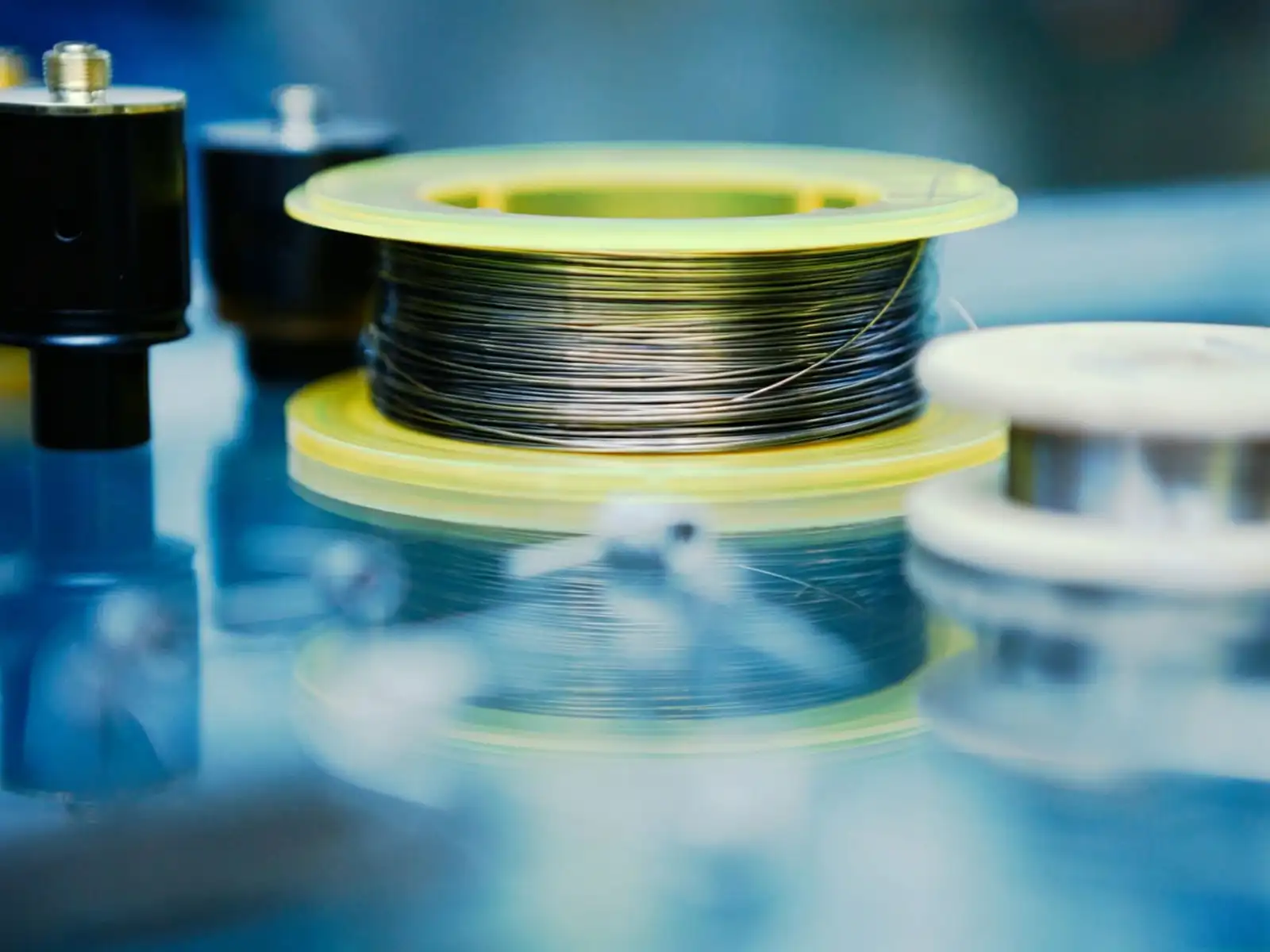
In the modern industrial environment, material selection directly affects product performance and production efficiency. Gr1 titanium wire, as the highest purity industrial pure titanium wire, has become the material of choice in many precision manufacturing fields. This material contains no less than 99.5% titanium and has excellent plastic processing capabilities, strong environmental resistance and excellent biocompatibility. From marine engineering to medical implants, from chemical equipment to electronic components, Gr1 titanium wire helps manufacturers break through the limitations of traditional materials with its unique physical and chemical properties. Compared with ordinary stainless steel or nickel alloy wire, Gr1 titanium wire has a service life of more than ten times in extremely corrosive environments. At the same time, its lightweight properties can reduce the structural weight by 30%. This combination of properties is redefining the design standards of industrial precision components.
1. What Should You Know About Corrosion Resistance of Gr1 Titanium Wire Under Extreme Working Conditions?
(1) What Should You Know About Long-lasting Protection Mechanisms in the Marine Environment?
In the seawater immersion experiment, the thickness of the oxide film formed on the surface of the Gr1 titanium wire was only 2-5 nanometers, but this dense passivation layer can continuously resist chloride ion erosion. Compared with 316L stainless steel, which will show pitting corrosion after six months of use under the same conditions, the corrosion resistance of Gr1 titanium wire is 15-20 times that of stainless steel. The deep-sea exploration equipment uses a sensor housing made of Gr1 titanium wire, which has been working continuously for three years in a high-pressure saltwater environment at a water depth of 6, 000 meters without any signs of corrosion.
Material type | Seawater immersion corrosion rate (mm/year) | Status after 500 hours of salt spray test | Service life comparison |
Gr1 titanium wire | <0.001 | No visible rust | benchmark |
316L stainless steel wire | 0.015-0.025 | Surface pitting | 1/15 |
Nickel copper alloy wire | 0.008-0.012 | slight discoloration | 1/8 |
(2) What Should You Know About Broad Spectrum Tolerance in Chemical Media?
Gr1 titanium wire can resist corrosion from strong oxidizing acids such as 98% sulfuric acid, 30% hydrochloric acid, and nitric acid. In the application of chlor-alkali industrial electrolyzers, the anode mesh made of titanium wire still maintains its original dimensional accuracy after five years of use, while traditional nickel-based materials need to be replaced after eighteen months. It also performs well in alkaline environments. Continuous contact with 10% sodium hydroxide solution at 80℃ has a corrosion rate of less than 0.005 mm/year.
(3) What Should You Know About Stable Performance Under Extreme Conditions of High and Low Temperatures?
From liquid hydrogen temperature -253℃ to 450℃ (short-term use, it needs to be protected by an inert atmosphere), Gr1 titanium wire maintains stable mechanical properties and corrosion resistance. Cold brittle transition does not occur in low temperature environments, which is the key reason why titanium is selected for aerospace cryogenic fuel systems. The thermal expansion coefficient is only 8.4×10⁻⁶/ C, which is much lower than the 17×10⁻⁶/ C of stainless steel, ensuring that the precision assembly structure maintains dimensional stability during temperature fluctuations.
2. Why Is Critical Applications in the Medical and Electronics Industries Important?
(1) What Should You Know About Safety Compliance in the Biomedical Field?
The biocompatibility of Gr1 titanium wire complies with ISO 5832-2 medical device standards and will not cause immune rejection or allergic symptoms after implantation in the human body. The 0.8-2.0mm diameter titanium wire used in orthopedic implant screws has a surface oxide layer that forms a stable biochemical bond with human tissue. In the field of orthodontics, dental arch wires made of 0.3-0.6mm ultra-fine titanium wire not only provide long-lasting correction power but also avoid gingival inflammation caused by metal ion precipitation.
(2) Why Is Application of Non-magnetic Properties in Microelectronic Packaging Important?
Gr1 titanium wire is a non-magnetic material (weakly paramagnetic) with a magnetic susceptibility of only +1.8×10⁻⁶. This characteristic is crucial in magnetically sensitive electronic devices. Titanium wire connectors used in magnetic resonance imaging (MRI) equipment do not produce image artifacts. When winding precision inductance components, the titanium wire does not interfere with the magnetic field distribution, allowing the inductance value deviation to be controlled within ± 0.5%, while the deviation of the iron-nickel alloy wire reaches ± 3%.
(3) What Should You Know About Dimensional Stability Guarantee for Precision Sensors?
The temperature sensor probe uses Gr1 titanium wire with a diameter of 0.1mm as the supporting frame. Its low thermal conductivity (15.2 W/(m·K)) reduces heat conduction errors. The characteristic of resistivity of 0.55uOhm.m makes titanium wire suitable for making high-precision strain gauges, with a measurement accuracy of up to 0.01%. In semiconductor manufacturing equipment, titanium wire brackets do not release metal ions in a clean room environment to avoid yield decline caused by wafer surface contamination.
Application areas | Typical wire diameter specifications | key performance requirements | Performance indicators |
orthopedic implants | 0.8-2.5mm | Biocompatibility/strength | Tensile strength ≥ 340MPa (annealed state), no cytotoxicity |
MRI equipment parts | 1.0-3.0mm | Non-magnetic/corrosion resistant | Magnetic susceptibility<2×10⁻⁶ |
Semiconductor holder | 0.1-0.5mm | High purity/low outgassing | Ti≥ 99.5%, vacuum outgassing<10⁻⁹Pa |
Precision sensor | 0.06-0.3mm | Dimensional accuracy/stability | Tolerance ± 0.01mm, creep <0.02% (normal temperature, 1000 hours) |
3. How Advanced Manufacturing Technology Improves the Quality of Gr1 Titanium Wire?
(1) What Should You Know About Continuous Rolling Technology Breaks Through Traditional Bottlenecks?
The Danieli continuous rolling production line in Italy adopts a 5543+4334 rolling mill configuration with alternating horizontal and vertical arrangements to achieve uniform deformation of titanium billets. The induction heating system improves the temperature control accuracy to ± 5℃, avoiding the uneven texture caused by the ± 20℃ fluctuation of traditional resistance furnaces. The reversible movable billet rolling mill completes the stable blanking of large titanium ingots, and the subsequent continuous rolling unit reduces the ovality from 0.3mm common in the industry to 0.15mm through the short stress line design.
(2) What Should You Know About Precision Control of Multi-pass Cold Drawing Process?
Roller die cold drawing is used to replace the traditional wire drawing die, which reduces the risk of surface scratches by reducing friction. The drawing rate of each pass is controlled in the range of 12-18%, and the intermediate annealing treatment is used to ensure that the material structure is refined to a grain size of 8 or above. The bright drawing process enables the surface to reach Ra 0.4um without pickling, and the Kodak gray spot level does not exceed level 3. The fully automatic tension control system monitors the changes in the pulling force in real time, and the fluctuation range is controlled within ± 2%.
(3) What Should You Know About Construction of Whole-process Quality Traceability System?
Starting from the input of raw materials for vacuum smelting, each batch of titanium ingots is assigned a unique number, and the content of 28 elements is detected by spectral analysis. During the rolling process, the online diameter gauge collects 200 data points per meter and automatically eliminates out-of-tolerance products. Finished product inspection includes 12 indicators such as tensile test, metallographic structure observation, ultrasonic flaw detection, etc., and the pass rate remains above 99.2%. Customers can trace the specific production date and process parameters through the batch number on the material certificate.
process stage | key equipment | control parameters | Quality improvement effect |
Raw material smelting | Vacuum induction furnace | Vacuum degree<5×10⁻³Pa | Gas impurity content reduced by 80% |
continuous rolling | Danieli mill | Rolling temperature 950± 5℃ | Ovality reduced by 50% |
Precision drawing | Roller die drawing machine | Diameter reduction rate per pass 15% | Surface quality improved by 3 levels |
Online detection | Laser caliper | Sampling density 200 points/meter | Dimensional consistency improved by 40% |
4. Why Is Performance Verification Data of Application Scenarios in Different Industries Important?
(1) What Should You Know About Empirical Cases in the Field of Marine Engineering?
An anti-corrosion mesh made of Gr1 titanium wire was used on an offshore oil platform. After operating in the high-salt and high-humidity environment of the South China Sea for eight years, the mesh diameter loss was less than 0.05mm. The cable sheath of the deep-sea scientific research submersible uses a braided titanium wire reinforcement layer. It has no deformation or breakage under the pressure of a water depth of 6, 500 meters. After 300 cycles of use, the tensile strength remains above 95% of the initial value. The titanium wire filter of the seawater desalination device has a service life five times longer than that of the nickel-chromium alloy mesh, and the maintenance cost is reduced by 60%.
(2) What Should You Know About Long-term Operation Records of Chemical Equipment?
The anode mesh of the chlor-alkali industrial electrolyzer is woven with Gr1 titanium wire with a diameter of 2.0mm. After continuous electrolysis for five years in a 90℃, 30% sodium chloride solution environment, the mesh corrosion depth is less than 0.02mm. The internal support parts of petrochemical hydrogenation reactors use titanium wire bundle structures to withstand high temperatures of 350℃ and 20MPa pressure. No cracks or oxide layer peeling were found during the ten-year maintenance cycle. The pharmaceutical company’s fermentation tank agitator shaft seal uses titanium wire braided packing, which can withstand alternating acid and alkali in the pH range of 2-12, and the sealing performance has not declined after three years of use.
(3) What Should You Know About Clinical Tracking Results of Medical Devices?
The titanium wire fixation system used in spinal fusion surgery was followed up on 1, 200 patients for five years. The success rate of bone fusion reached 97.3%, and there was no case of metal allergy or rejection. The titanium wire transmission mechanism of minimally invasive surgical instruments has undergone 5, 000 bending fatigue tests and has a fracture rate of less than 0.1%, which is much better than the 1.2% fracture rate of stainless steel wires. The dental implant connection screws are processed with 0.8mm titanium wire. They have been used in the oral environment for more than ten years and still maintain their original torque strength. There is no inflammatory cell infiltration in the osseointegration interface.
5. What Is the Conclusion?
Gr1 titanium wire has become a core material in high-end fields such as marine engineering, chemical anti-corrosion, and medical devices due to its high purity, excellent corrosion resistance, lightweight properties, and biocompatibility. Advanced continuous rolling and precision drawing processes ensure stable product quality, and the full-process traceability system ensures the reliability of each batch of materials. As the requirements for material performance in industrial applications continue to increase, Gr1 titanium wire is helping manufacturers achieve the multiple goals of lightweighting equipment, extending service life, and reducing maintenance costs.
FAQ
Q1: What is the difference between Gr1 titanium wire and Gr2 titanium wire in industrial applications?
Gr1 titanium wire has lower oxygen content (≤ 0.18% compared to Gr2 ≤ 0.25%), has better plasticity and cold working properties, and is suitable for precision parts that require complex molding. Gr2 has slightly higher strength but slightly lower plasticity. The two are basically equivalent in corrosion resistance. The choice depends on the specific processing technology requirements.
Q2: How to verify the authenticity of Gr1 titanium wire?
Material certificates provided by regular suppliers should include spectral analysis data, mechanical property test results and traceable batch numbers. A third-party testing agency can be requested to conduct ICP spectrum analysis to verify the titanium content, tensile testing to confirm the mechanical properties, and metallographic testing to confirm the uniformity of the structure. Products that meet ASTM B863 standards have complete warranty documents.
Q3: What should we pay attention to when using Gr1 titanium wire in welding applications?
Titanium welding must be carried out in an argon gas protected environment to prevent high temperature oxidation. The diameter of the welding wire is usually 0.8-3.0mm, and the welding current should be 20-30% lower than that of stainless steel. Welds and heat-affected zones need to be protected by filling the back with argon, and avoid contact with water or grease during the cooling process. The strength of titanium wire welds under correct technology can reach more than 90% of the base metal.
6. What Should You Know About Looking for Reliable Gr1 Titanium Wire Manufacturer?
Baoji Titanium Valley Titanium Nickel Zirconium Material Processing Co., Ltd. (Titanium Valley) has a world-class Danieli continuous rolling production line with an annual production capacity of 5, 000 tons, and provides customized services for titanium wire in full specifications of 0.06-10mm. Our products comply with ASTM B863 and EN 10204-3.1 standards and serve customers in the aerospace, medical and electronics industries. Welcome to contact us to obtain technical parameters and quotations: sales@titaniumvalleys.com
References
- Zhang Weiguo, Li Minghua. Research on corrosion behavior and protection mechanism of industrial pure titanium materials [J]. Chinese Journal of Nonferrous Metals, 2021, 31(2): 345-356.
- Wang Haoran, Liu Jianjun. Biocompatibility evaluation and clinical application of medical titanium alloys [J]. Journal of Biomedical Engineering, 2020, 37(4): 612-620.
- Chen Jianguo, Zhao Weifeng. Titanium and titanium alloy processing technology and quality control[M]. Beijing: Metallurgical Industry Press, 2016.
- Liu Ruixiang, Gao Jianping. Research progress on the application of titanium wire in the field of chemical anti-corrosion [J]. Corrosion Science and Protection Technology, 2019, 31(5): 487-494.