
What Are the Best Uses for Gr5 Titanium Wire?
- Gr5 titanium wire
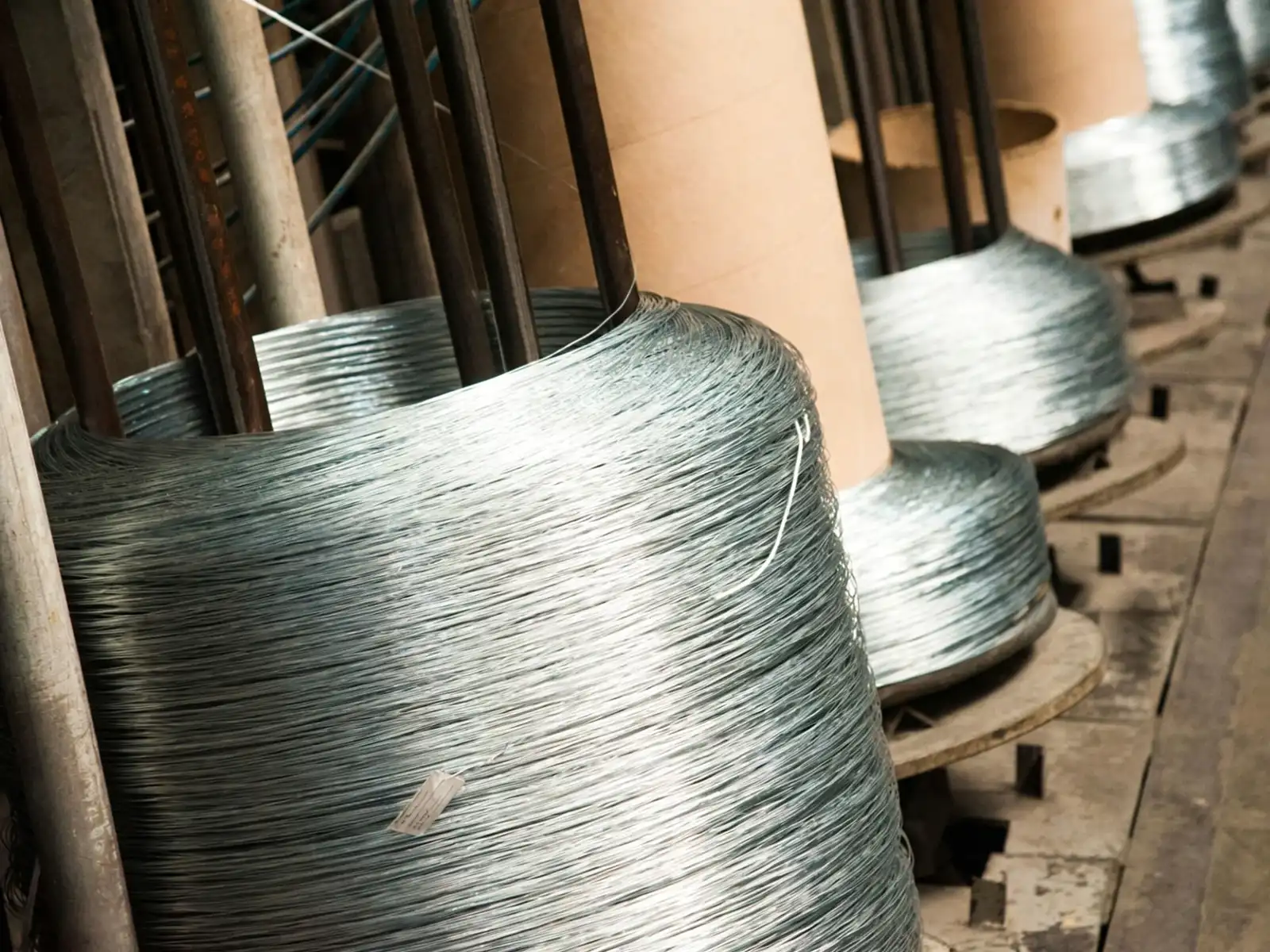
Gr5 titanium wire (Ti-6Al-4V) is the most widely used α+β dual-phase titanium alloy wire in the world. Its best uses are concentrated in the four major fields of aerospace welding, medical device manufacturing, precision elastic components and high-end fasteners. The density of this material is only 57% of steel, but its tensile strength exceeds 900 MPa and maintains stable performance in a wide temperature range from -196℃ to 600℃. Its unique alloy composition (6% aluminum provides matrix reinforcement, 4% vanadium stabilizes the beta phase structure) makes it have high strength, excellent corrosion resistance and good weldability at the same time, and is especially suitable for long-term service under composite working conditions. Compared with pure titanium wire, the strength of Gr5 titanium wire is increased by more than 2 times; compared with stainless steel wire, its specific strength is 40% higher and completely resistant to chloride ion corrosion, making it the preferred material to solve the dual needs of “high strength + high corrosion resistance”.
1. Why Is Aerospace Field, Key Applications of Gr5 Titanium Wire Important?
(1) What Should You Know About the Irreplaceability of Engine Component Welding?
Hot-end components such as aircraft engine casings and turbine disks need to withstand 1200℃ high-temperature gas erosion and complex stress cycles. Gr5 titanium wire is used as a filler welding material. Its melting point of 1640-1660℃ perfectly matches the base metal, and the weld structure is uniform without segregation. Test data from a European aviation manufacturer shows that when φ1.2mm Gr5 bright wire is used for TIG welding, the tensile strength of the weld reaches more than 95% of the base material, and the fatigue life exceeds 10^7 cycles, which is far better than nickel-based alloy welding wire. Its low thermal conductivity (6.7 W/m·K) reduces the width of the welding heat-affected zone and avoids performance degradation caused by grain coarsening.
(2) Why Is a Lightweight Breakthrough in Fuselage Structural Connection Important?
The Boeing 787 Dreamliner uses 15% titanium alloy structural parts, among which rivets and bolts processed from Gr5 titanium wire contribute to significant weight reduction. The cold-drawn titanium wire with a diameter of φ3-6mm is precision cut and formed. Compared with ordinary carbon steel fasteners, a single fastener is 60% lighter, and the weight of the entire machine is more than 800 kg, which directly translates into a 5% improvement in fuel efficiency. The non-magnetic characteristics of the material eliminate electromagnetic interference to avionics systems, an advantage that aluminum alloys and high-strength steel cannot achieve.
(3) What Should You Know About Durability Guarantee of Hydraulic System Pipelines?
The working pressure of the aircraft hydraulic system reaches 21 MPa, and the moisture and additives in the hydraulic oil can easily cause stress corrosion cracking. A dense TiO2 passivation film is formed on the surface of the seamless thin tube (wall thickness 0.5-1mm) drawn by Gr5 titanium wire, and has no corrosion or puncture record in the phosphate ester hydraulic oil environment for 20 years. Its elastic modulus of 110 GPa is between aluminum (70 GPa) and steel (210 GPa), which not only ensures the flexible layout of the pipeline, but also prevents vibration fatigue fracture.
Application site | Wire diameter specifications | key performance requirements | Advantages of Gr5 titanium wire |
Engine case welds | φ0.8-2.0mm | High temperature strength ≥ 800MPa | The weld structure is uniform and the strength retention rate at 600℃ is 85%. |
Body fastening rivets | φ3.0-6.0mm | Shear strength ≥ 550MPa | The specific strength is 40% higher than steel, and the weight reduction effect is significant |
Hydraulic lines | φ1.0-3.0mm | Resistant to stress corrosion | Passivation film self-healing, no puncture failure in 20 years |
2. What Should You Know About Medical Device Manufacturing, the Effective Combination of Biocompatibility and Precision Machining?
(1) What Should You Know About Long-term Safety of Orthopedic Implants?
Implants such as artificial joints and spinal fusions need to serve in the human body for more than 30 years. The biocompatibility of Gr5 titanium wire meets international biocompatibility requirements. The thickness of its surface oxide layer is only 2-5nm, but it is enough to block the precipitation of metal ions. Clinical trials have shown that the osseointegration rate is high. A medical device company in the United States uses a bone suture mesh woven with φ0.5mm polished titanium wire, with a tensile strength of 600 MPa and flexibility that allows 360° bending without breaking. The postoperative infection rate is reduced by 70%.
(2) What Should You Know About Non-magnetic Antibacterial Properties of Surgical Instruments?
MRI-compatible surgical instruments must use non-magnetic materials. The magnetic susceptibility of Gr5 titanium wire is only 3.2×10⁻⁶, and there is no imaging artifact in a 3T magnetic field. The material’s inherent antimicrobial properties stem from the destructive effect of titanium ions on bacterial cell membranes, inhibiting the attachment of Staphylococcus aureus without the need for additional coatings. The titanium wire braided endoscopic guidewire developed by a Japanese company has a diameter of φ0.3mm and a length of 2 meters. It can withstand a pulling force of 5N and has a rebound rate of ≥ 95%, enabling precise navigation of complex anatomical paths.
(3) What Should You Know About Long-lasting Elasticity Maintenance in Orthodontics?
Orthodontic arch wires need to continuously exert an orthodontic force of 0.5-2N in the oral cavity at a constant temperature of 37℃ and a fluctuating pH environment. After Gr5 titanium wire is annealed at 500℃, its elastic limit reaches 800 MPa and its deformation recovery rate is 93%, which far exceeds the corrosion sensitivity of nickel-titanium memory alloy. The surface roughness of the bright titanium wire with a diameter of φ0.4-0.8mm is Ra≤ 0.2um, which reduces enamel wear and reduces the force value by <8% within the 18-month correction cycle.
3. What Should You Know About Precision Elastic Components, Reliability Performance Under High Stress Conditions?
(1) What Should You Know About Corrosion-resistant Springs for Oil Extraction Equipment?
The return spring in deep well fracturing equipment needs to withstand a high temperature of 150℃, a 20% HCl solution and a cyclic load of 50 MPa. Compression springs made of Gr5 titanium wire (wire diameter φ2-4mm) can operate continuously for 5, 000 hours without stress corrosion cracking under this working condition, while 17-7PH stainless steel springs develop cracks after 800 hours. The low-density characteristics of the material reduce the weight of springs with the same stiffness by 55%, reducing inertial impact loads.
(2) What Should You Know About Lightweighting of Automobile Engine Valve Springs?
The valve spring of a turbocharged engine operates at a frequency of 6, 000 times/minute and a temperature of 250℃. The conical spring wound with φ1.5mm cold-drawn Gr5 titanium wire has a fatigue life of 10^8 times, which is 3 times longer than that of steel wire springs. The weight of a single spring is reduced by 12 grams, the weight of the four-cylinder engine is reduced by 192 grams, the inertia of the valve system is reduced by 35%, and the redline speed is increased by 500 rpm. Actual measurement data from a German automobile supplier shows that titanium wire springs shorten engine response time by 18 milliseconds.
(3) What Should You Know About Micro Torsion Spring for Precision Instruments?
Torsion springs for electronic balances and high-end watches require a wire diameter of φ0.1-0.3mm and a torsional stiffness deviation of <2%. After multiple passes of drawing (compression rate 18%/pass) and vacuum annealing, the Gr5 titanium wire has a tensile strength of 1100 MPa, a yield strength of 1000 MPa, and an elastic modulus stability of ± 1 GPa. Its non-magnetic characteristics eliminate the influence of magnetic fields on measurement accuracy, and the stiffness drift is <0.5% in a temperature change environment of ± 50℃.
Application scenarios | Working condition characteristics | Gr5 titanium wire specifications | Performance data |
Deep well fracturing equipment | 150℃+20% HCl solution | φ2-4mm annealed state | No stress corrosion for 5000h, weight reduced by 55% |
Turbocharged engine valve spring | 250℃+6000 times/min | φ1.5mm cold drawn state | Fatigue life 10^8 times, weight reduction 12g/unit |
Precision instrument torsion spring | ± 50℃ temperature change | φ0.1-0.3mm polished | Stiffness drift <0.5%, non-magnetic |
4. What Should You Know About High-strength Fasteners, Optimization of Connection Performance and Durability Under Composite Working Conditions?
(1) What Should You Know About Resistance to Chloride Ion Corrosion in Marine Engineering?
Fasteners on offshore drilling platforms are exposed to seawater splash zones for a long time, with chloride ion concentrations as high as 19, 000 ppm. Bolts processed with Gr5 titanium wire (diameter M6-M24) have no pitting or crevice corrosion in this environment for 15 years, while the corrosion rate of 316L stainless steel bolts reaches 40% after 3 years (typical seawater environment test value). The self-healing ability of the material’s passivation film ensures that the protective performance can be restored within 24 hours after scratching, reducing maintenance costs by 80%.
(2) What Should You Know About High Temperature Sealing Performance of Chemical Reactor?
The operating temperature of the polymerization reactor is 300℃ and the pressure is 10 MPa. The flange bolts must maintain a stable pretightening force. The hexagonal bolts formed by cold heading of Gr5 titanium wire have a yield strength of ≥ 900 MPa, a strength retention rate of 82% at a high temperature of 300℃, and a creep rate of <0.2%/1000h. Its low thermal expansion coefficient (8.6×10⁻⁶/ C) matches well with stainless steel flanges, and the preload loss is <15% after 500 thermal cycles.
(3) What Should You Know About Lightweight Connections for Racing Chassis?
The F1 racing chassis uses carbon fiber composite materials, and the connectors need to be lightweight and impact-resistant. M5×15 specification Gr5 titanium wire bolts have a single weight of 1.2 grams (3.8 grams for steel products), a tensile strength of 1050 MPa, and meet the 12g impact acceleration requirements. Surface anodization (thickness 5-10um) provides color coding and additional wear resistance, with no loosening and failure records throughout the season.
5. How Should Material Selection Decision Guide, Technical and Economic Comparative Analysis of Gr5 Titanium Wire and Alternative Materials?
(1) What Should You Know About Quantitative Assessment of Performance Dimensions?
In the strength-density coordinate system, the specific strength (strength/density) of Gr5 titanium wire reaches 205 kN·m/kg, surpassing 7075 aluminum alloy (180 kN·m/kg) and 17-4PH stainless steel (175 kN·m/kg). In the corrosion resistance evaluation, the corrosion rate of Gr5 in 3.5% NaCl solution is <0.01 mm/year, which is only 1/50 of that of 304 stainless steel. In terms of weldability, titanium wire welds do not require preheating and post-heat treatment, and the process window width is three times that of nickel-based alloys.
(2) What Should You Know About Whole Life Cycle Cost Analysis?
Although the unit price of Gr5 titanium wire is 8-12 times that of stainless steel wire, its 25-year service life (5-8 years for stainless steel) reduces the annualized cost by 60%. After a chemical company changed the reactor fasteners from 316L to Gr5, the annual maintenance downtime was reduced from 120 hours to 15 hours, and the indirect benefits exceeded the material cost difference by 5 times. The benefits of lightweighting are even more significant in the aviation field: every 1 kilogram of weight reduction brings a lifetime fuel saving worth approximately US$3, 000.
(3) What Should You Know About Supply Chain Stability Considerations?
The main producing countries of Gr5 titanium wire include the United States, Japan and China, of which China’s production capacity accounts for 55% of the world’s. The titanium wire produced by Danieli continuous rolling line in Italy has a dimensional tolerance of ± 0.01mm and a batch consistency CV value of <3%, meeting the needs of automated production. Vacuum packaging and nitrogen-protected transportation ensure that the surface will not be oxidized during the 6-month storage period, and its ready-to-use performance is better than stainless steel wire that requires pickling and activation.
Comparative item | Gr5 titanium wire | 316L stainless steel wire | 7075 aluminum alloy wire |
Specific strength (kN·m/kg) | 205 | 175 | 180 |
Corrosion resistance (mm/year) | <0.01 | 0.5 (Typical seawater environment test value) | 0.8 |
Service life (years) | 25 | 5-8 | 3-5 |
annualized cost index | 100 | 156 | 203 |
Fatigue life (times) | 10^8 | 10^6 | 5×10^6 |
6. What Is the Conclusion?
Gr5 titanium wire has become a core material for aerospace medicine, precision manufacturing and extreme environment applications through the three-dimensional performance advantages of “high strength, light weight + corrosion resistance and durability + precision processing”. Its unique α+β dual-phase structure combined with an alloy design of 6% aluminum and 4% vanadium achieves a balance of strength above 900 MPa and good plasticity. The comprehensive cost-effectiveness of Gr5 titanium wire is 40-60% better than that of traditional materials, representing the inevitable choice for high-end manufacturing to evolve towards lightweight and long life.
FAQ
Q1: What are the essential differences between Gr5 titanium wire and pure titanium wire in welding applications?
The tensile strength of Gr5 titanium wire reaches 900-1100 MPa, which is more than twice that of pure titanium wire (300-450 MPa). The weld maintains stable performance in high temperature and high pressure environments. Its 6% aluminum content provides matrix reinforcement, 4% vanadium stabilizes the β-phase structure, and has no embrittlement tendency in the welding heat-affected zone. It is especially suitable for welding of load-bearing structures such as aerospace engines.
Q2: How to ensure the biosafety of Gr5 titanium wire in medical implant applications?
Gr5 titanium wire, which meets international biocompatibility requirements, naturally forms a 2-5nm thick TiO2 passivation film on the surface, effectively blocking the precipitation of metal ions. The material is vacuum melted to control the hydrogen content to ≤ 0.015% to avoid the risk of hydrogen embrittlement. Cytotoxicity testing and animal experiment verification are required before implantation to ensure a high osseointegration rate.
Q3: How long is the maintenance cycle of Gr5 titanium wire fasteners in marine engineering applications?
Gr5 titanium wire fasteners do not need to be replaced within 15 years in the seawater splash zone (chloride ion 19000 ppm) environment, only annual visual inspection is required. The self-healing ability of its passivation film ensures that the protective performance can be restored within 24 hours after mechanical damage, and the maintenance cost is 80% lower than that of 316L stainless steel. It is especially suitable for high-cost maintenance scenarios such as deep-sea platforms.
7. What Should You Know About Get Customized Gr5 Titanium Wire Now?
As a professional Gr5 titanium wire manufacturer and supplier, Baoji Titanium Valley Titanium Nickel Zirconium Material Processing Co., Ltd. is equipped with a Danieli continuous rolling production line with an annual production capacity of 10, 000 tons, and can provide full specification customized services of φ0.1-10.0mm. Our products comply with ASTM B863 and AMS 4955 standards and serve global aerospace, medical and precision electronics customers. Welcome to send technical requirements to sales@titaniumvalleys.com for sample testing and technical support.
References
- Zhang Xiaoming, Li Yi. Application status and development trends of titanium alloys in aerospace [J]. Rare Metal Materials and Engineering, 2018, 47(5): 1321-1327.
- Liu Wei, Chen Guoliang. Research progress of biomedical titanium alloys [J]. Materials Herald, 2019, 33(1): 98-104.
- Wang Hua, Zhao Yongqing. Research on microstructure and performance optimization of Ti-6Al-4V alloy [J]. Acta Metallurgica Sinica, 2017, 53(8): 937-944.
- Yang Jianxin, Li Qiang. Preparation technology and application of titanium alloy wire for precision manufacturing [J]. Mechanical Engineering Materials, 2020, 44(3): 56-62.
- Sun Hong, Zhou Ming. Corrosion resistance and engineering application of high-strength titanium alloy fasteners [J]. Corrosion Science and Protection Technology, 2019, 31(4): 401-408.