
Precautions for Transporting Gr1 Titanium Rods, How to Ensure the Safety and Quality of Titanium Materials During Transportation?
- Gr1 Titanium Rods
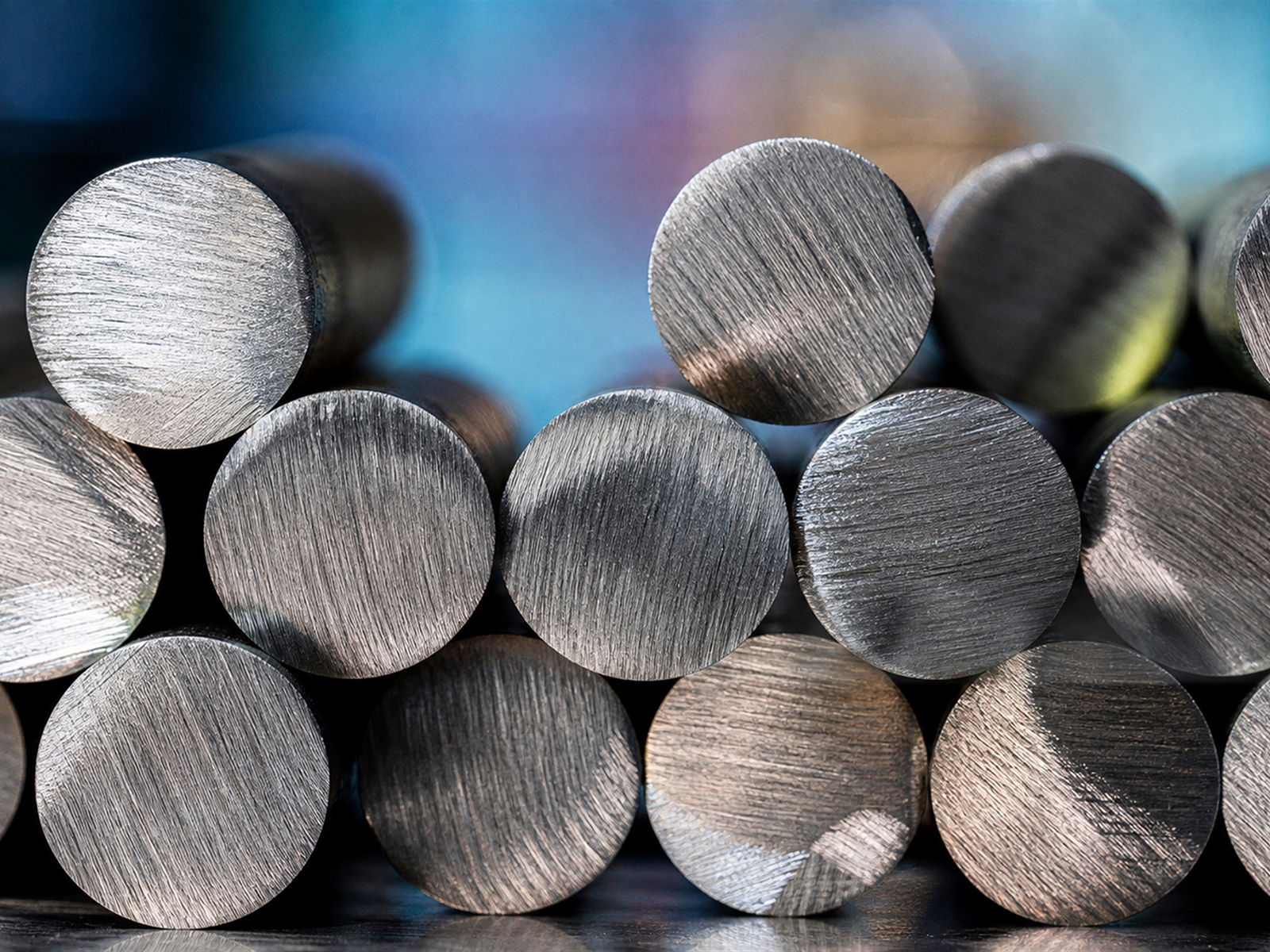
As a high-purity commercial pure titanium material, Gr1 titanium rods require special attention to protective measures during transportation. Since its surface is susceptible to contamination and mechanical damage will affect subsequent processing performance, reasonable packaging, loading and storage are crucial. Using means such as moisture-proofing, isolation, and bundling, coupled with appropriate transportation vehicle selection and environmental control, quality problems such as surface contamination or abnormal thickening of the oxide film, scratches, and deformation can be effectively avoided. Establishing a complete transportation management system, including label traceability, inspection records and emergency plans, can ensure that Gr1 titanium rods maintain their original excellent performance from the factory to customers and meet the strict requirements of high-end application fields such as aerospace, medical equipment, and chemical anti-corrosion.
1. What Should You Know About Material Properties and Transportation Risk Identification of Gr1 Titanium Rods?
(1) What Should You Know About Physical and Chemical Characteristics of Pure Titanium Materials?
Gr1 titanium rod contains ≥ 99.5% titanium, which is the highest purity grade among α-type commercial pure titanium. Its density is only 4.51 g/cm³, which is about 40% lighter than ordinary steel. This means that the transportation load is lighter under the same volume, but it also requires that the packaging must be strong enough to prevent shifting. The material has a melting point as high as 1660℃, has a natural oxide film protective layer, and is relatively stable at room temperature. It should be noted that although titanium has excellent corrosion resistance, if it comes into direct contact with iron tools and steel containers during transportation, metal ion transfer contamination may occur, affecting subsequent applications in medical, food and other fields.
(2) What Should You Know About Main Quality Threats in Transportation?
Surface scratches and bumps are the most common forms of damage. Although the Gr1 titanium rod has good plasticity with an elongation of ≥ 24%, its surface hardness is relatively low (HV about 120-150), and it is easy to produce scratches and indentations during the loading, unloading, and stacking processes. These mechanical damages not only affect the appearance, but may also become stress concentration points and reduce fatigue strength. A humid environment will accelerate the thickening of the surface oxide film, especially if the pickling rod absorbs moisture, watermarks or discoloration may occur. Vibrations and bumps during long-distance transportation may also cause the slender bars to bend and deform, exceeding the straightness tolerance required by the customer.
(3) What Are the Differences in Transport Differences for Different Surface States?
Black leather rods (hot-rolled/forged) have oxide scale on the surface and have strong scratch resistance. However, it is necessary to prevent the oxide scale from falling off and causing surface scratches or foreign matter residues. The surface of the polished rod is turned and has a roughness Ra≈3.2-6.3. It requires high packaging materials and requires the use of a soft isolation layer. The polishing rod Ra≤ 1.6, the surface accuracy reaches H7/H8 level, any minor scratches will affect the use, and must be packaged independently and fixed on a special bracket. The pickled rods show the natural color of metal with no traces of processing, but are easily contaminated with iron ions or oil. The packaging materials are required to be free of metal particles and the storage environment is clean and dry.
2. What Should You Know About Design and Implementation of Packaging Protection System?
(1) What Should You Know About Multi-level Packaging Structure Design?
The inner protection uses PE plastic film or neutral wrapping paper to wrap each titanium rod to isolate moisture in the air. For polished and pickled rods, it is recommended to use ordinary moisture-proof film or neutral wrapping paper to form a protective layer on the surface through physical isolation. The middle layer is isolated by EPE pearl cotton, foam plastic or corrugated cardboard to prevent direct contact and collision between titanium rods. The outer packaging can be wooden boxes, iron frame wooden boxes or steel strapping. Choose the appropriate size according to the diameter and length of the rod. Large-diameter forged rods (φ100-φ300mm) require custom-made wooden frames to fix each rod with notches; small-diameter cold-drawn rods (φ4-φ30mm) can be bundled into bundles and packed into cartons.
(2) What Should You Know About Identification and Traceability Management?
Each packaging unit must be clearly labeled, including material grade (Gr1/UNS R50250), specification (diameter × length), surface condition (M/R/Y), batch number, quantity and weight. Barcodes or QR codes are used to achieve information management. Scan the codes to query furnace batch numbers, test reports and customer order information. The label material should be waterproof and oil-proof, and the pasting position should be away from the titanium rod body to prevent contamination from residual glue. International transportation needs to add English labels and customs codes, and mark “FRAGILE” (fragile), “KEEP DRY” (keep dry), “NO IRON CONTACT” (avoid iron contact) and other warnings.
(3) What Should You Know About Moisture Proofing and Sealing?
Although titanium materials will not rust, packaging materials (wooden boxes, cardboard) may become moldy or produce odor after absorbing moisture, contaminating the surface of Gr1 titanium rods. Place enough desiccant (silica gel or calcium chloride) in the packaging box. The amount is calculated based on 1kg of desiccant to protect 1 cubic meter of space. When shipping or storing across seasons, add a moisture-proof bag on the outer layer and heat seal the opening to form a sealed space. If the desiccant is found to be discolored (silica gel changes from blue to pink, calcium chloride dissolves), it should be replaced in time and resealed. During rainy season, additional waterproof tarpaulin must be covered during transportation to prevent rainwater from penetrating.
3. What Should You Know About Operational Specifications for Loading and Transportation Processes?
(1) What Should You Know About Safety Regulations for Loading and Unloading Operations?
It is forbidden to use iron hooks or steel wire ropes to directly contact the titanium rods. Rubber pads or nylon slings must be placed on the contact surfaces during lifting. When being transported by a forklift, the forks should be wrapped in a soft sheath and inserted into the bottom of the wooden box to lift smoothly to avoid sudden acceleration or sudden braking that may cause the goods to shake. When manually handling small-sized titanium rods, wear powder-free gloves (to avoid leaving fingerprints or grease contaminating the surface). Two people should use simultaneous force when lifting to prevent bending in the middle. Handle with care when unloading, and do not throw or roll from high places. The stacking height should not exceed 1.5 meters and should be adjusted according to the diameter of the rod. The stacking height of slender rods (such as φ4mm) should be appropriately reduced to prevent bending and deformation. Wooden pallets are laid on the bottom floor to isolate the ground moisture.
(2) How Should Vehicle Selection and Space Layout?
For short-distance land transportation, vans or container trucks are preferred. The interior of the carriage is clean and free of iron filings and oil stains, and the floor is paved with anti-slip mats. When long materials (length >3 meters) are transported on flatbed trucks, they must be fixed with multiple support points to prevent the suspended parts from stress due to bumps. Shipping containers must be dry containers to avoid condensation due to temperature differences in refrigerated containers. When transported by air, special air boxes are used, filled with cushioning materials, and comply with aviation dangerous goods packaging standards (although titanium rods are not dangerous goods, precision materials are treated as special goods). The vehicle loading rate is controlled at about 80%, and buffer space is reserved to prevent the cargo from being squeezed and deformed when fully loaded.
Table 1: Applicable scenarios and precautions for different transportation methods
Transportation method | Applicable distance | Main advantages | key risk points | Protection points |
Land transportation (truck) | <1000km | Flexible, door-to-door service | Bumpy road, multiple loading and unloading | Strengthen bundling and fixation and choose a stable route |
rail transport | 1000-5000km | Low cost, suitable for large quantities | Scattered trains may face dispatch waiting (large-volume special trains do not have this problem) | Container sealed, rainproof and anti-theft |
Shipping | transoceanic international | Large shipping volume, economical and affordable | Marine salt spray, long-term humidity | Moisture-proof bag + desiccant, choose Clipper |
air transport | Urgent order | Fast speed, reducing risks in transit | High cost, load limit | Reinforced flight case, covered by insurance |
(3) What Should You Know About Key Points of Fixed Bundling Techniques?
Use nylon strapping or polyester fiber rope to bundle with moderate tension (to avoid leaving traces). The spacing is determined according to the length of the rod: at least 2 if it is less than 3 meters, and at least 3 if it is 3-6 meters. The bundling position should be at the reinforcing ribs of the packaging box, not the titanium rod body. Use wooden wedges or foam blocks to fill the gaps in the box to prevent the goods from sliding during transportation. The goods in the container need to be supported by air bags or wooden squares, and the walls of the box should be used to provide lateral support. When checking the fixing effect, push the packaging box by hand. The shaking amplitude should not exceed 2cm, and no internal collision sound can be heard.
4. What Should You Know About Environmental Control and Quality Monitoring?
(1) What Should You Know About Temperature and Humidity Management Standards?
The storage and transportation environment temperature of Gr1 titanium rods should be controlled at 5-35℃ to avoid extreme high temperatures causing aging of packaging materials or low temperatures causing film brittleness. It is advisable to keep the relative humidity at 40%-60%. If it exceeds 70%, the packaging box will easily become damp. Use temperature and humidity recorders to monitor the goods, automatically record data every 4 hours, and generate traceable environmental curves. Take timely measures if abnormalities are found: turn on dehumidification equipment or replace desiccant when the humidity is too high; adjust vehicle driving time to avoid the high temperature period at noon when the temperature is too high. Shipping containers can be equipped with container drying rods, with a moisture absorption capacity of 1-2kg and a validity period of 60-90 days.
(2) What Should You Know About Mid-course Inspection and Recording?
During long-distance transportation, stop and inspect every 300-500 kilometers or every 24 hours to check whether the packaging is intact, whether the strapping is loose, and whether there are any signs of water seepage. Open part of the outer packaging and randomly check the status of the titanium rods. If there are no water marks or new scratches on the surface, they are qualified. Use a handheld roughness meter to randomly test the polished rod surface, and the Ra value should not exceed ± 0.2 from the original test report. Take photos to record the inspection situation, fill out the “Quality Inspection Form During Transportation”, and have the driver and escort sign for confirmation. If a problem is discovered, contact the customer and quality department immediately to determine whether repackaging or replacement of transportation tools is required.
Table 2: List of quality inspection items for Gr1 titanium rod transportation
Check category | Check items | Check method | Qualification standards | Disposal of unqualified |
Packaging integrity | The outer packaging is damaged and the logo falls off | Visual inspection | No damage, clear markings | Repackaging/Subsidy Labeling |
protective measures | Internal gasket displacement, desiccant failure | Open random inspection | Firmly fixed and effective desiccant | Adjust pad/replace desiccant |
surface state | Scratches, water stains, contaminants | Visual + touch | Surface clean and free of damage | Wipe lightly/isolate if severe |
Dimensional accuracy | curvature, straightness | Ruler or laser distance measurement | Meets order tolerances | Record reports and negotiate |
Environmental parameters | Temperature and humidity exceeding standard | Read the recorder | 5-35℃, 40-60%RH | Activate emergency measures |
(3) What Should You Know About Arrival Acceptance Process?
After receiving the goods, the customer should unpack and accept the goods within 24 hours, and check whether the quantity, specifications and packing list are consistent. Check the outer packaging for obvious damage and take photos for retention. Count the number of titanium rods one by one, and use calipers to randomly check the diameter tolerance. The pass rate should reach 100%. The surface quality inspection coverage shall be no less than 10%, focusing on both ends and the middle part. The surface of the polishing rod needs to be wiped with a white silk cloth, and there should be no black metal particles left. If quality problems are found, take pictures immediately and notify the supplier in writing, and negotiate a solution within 48 hours. It shall not be put into use without inspection and acceptance to avoid mixing in substandard products and affecting production.
5. What Should You Know About Transportation Strategies in Special Scenarios?
(1) What Should You Know About Cross-border International Transportation Management?
During export customs declaration, the material certificate (Mill Test Certificate), certificate of origin and commercial invoice must be provided, indicating that the titanium rod complies with ASTM B348 or corresponding international standards. Understand the special requirements of the customs of the destination country for metal materials. For example, the EU REACH regulations require a material composition statement, and the United States may require FDA registration (medical grade titanium). Choose a reputable international freight forwarder and sign a transportation contract that includes cargo damage liability clauses. Purchase sufficient cargo transportation insurance, the insurance amount should cover 110% of the value of the goods. Customs clearance documents are fully prepared to avoid extra storage fees and humidity risks caused by cargo being stranded in the port due to data problems.
(2) What Should You Know About Coping with Extreme Climate Conditions?
When transporting in high-temperature areas (summer in the Middle East and Southeast Asia), apply reflective and heat-insulating coating on the outer layer of the packaging box, or cover it with aluminum foil reflective film to reduce the temperature inside the box. Avoid long-term exposure of goods in the open air, and choose a cool and ventilated place for temporary storage. In cold areas (Northern Europe and Russia in winter), packaging materials need to be prevented from freezing and cracking, and the seams of wooden boxes should be sealed with tape to prevent cold wind from penetrating. When transporting in high-altitude areas, pay attention to changes in air pressure. The sealed package may bulge due to the pressure difference between inside and outside. Appropriate ventilation holes should be provided (but a dust filter must be installed). Salt spray in coastal areas is highly corrosive. The titanium rod itself is not affected but the packaging materials need to be treated with salt spray.
(3) What Should You Know About Quick Response to Urgent Orders?
Air express is suitable for small batch, high-value orders, such as polishing rods for medical implants φ10×500mm, quantity <50kg. Each piece is individually packaged in a custom foam box, reinforced with an outer carton, and labeled with “THIS SIDE UP” (this side up). Contact an air freight forwarder to reserve space and choose direct routes to reduce the number of transfers. After picking up the goods at the airport, a special car will be arranged to deliver them directly to the customer’s factory, with GPS positioning and monitoring throughout the process. For urgent land transportation, the relay transportation mode can be adopted. Two drivers take turns driving to ensure that the vehicle does not stop running, and a satellite phone is equipped to maintain smooth communication. Establish a quick response mechanism with customers, prepare inventory of commonly used specifications in advance, and shorten the stocking cycle.
6. What Should You Know About Supply Chain Collaboration and Continuous Improvement?
How Should Supplier-Customer Communication Mechanism?
During the order confirmation stage, the packaging requirements for Gr1 titanium rods are communicated in detail. If the customer has special requirements (such as fumigation and anti-static packaging of export wooden boxes), they must be explained in advance. Provide packaging plan drawings and photos for customers to confirm to avoid misunderstandings. The customer is notified of the expected arrival time 48 hours before shipment, and the customer arranges personnel and venues to prepare for receiving the goods. Send daily location updates during transportation and communicate immediately if delays or emergencies occur. Establish a customer transportation feedback form to collect evaluations on Gr1 titanium rod packaging quality, transportation timeliness, and service attitude, and continuously improve weak links.
(2) What Should You Know About Transportation Data Analysis and Optimization?
Based on statistics of the transportation loss rate (the proportion of losses caused by breakage, scratches, and contamination in the total volume) in the past 12 months, the industry’s excellence level should be controlled below 0.2%. Analyze the root causes of frequent problems: the high damage rate of titanium rods of a certain specification may be due to the mismatch in packaging size, and frequent delays on a certain route may require a change of carrier. Through data mining, the optimal packaging combination is found. For example, the φ20×3000mm polishing rod adopts a bundle of 6 + EPE cotton + wooden box solution, and the loss rate is reduced from 0.5% to 0.1%. Optimize transportation routes, compare the timeliness, cost and risk of different options, and choose the most cost-effective method.
Table 3: Comparison of transportation costs and risks of Gr1 titanium rods
Plan type | Packaging cost (yuan/ton) | Transportation cost (yuan/ton·thousand kilometers) | Timeliness (days/thousand kilometers) | Loss rate | Comprehensive evaluation |
Standard wooden box + land transportation | 300-500 | 180-250 | 2-3 | 0.3% | Regular choice, well balanced |
Moisture-proof packaging + sea transportation | 600-900 | 60-100 | 10-15 | 0.2% | Optimal for long distance and large batches |
Air box + air transport | 1500-2000 | 1500-2500 | 0.5-1 | 0.1% | Urgent high value orders |
Simple packaging + railway | 150-300 | 120-180 | 4-6 | 0.8% | Low cost but higher risk |
(3) What Should You Know About Emergency Plan and Risk Management?
Formulate a “Transportation Emergency Emergency Plan” to cover traffic accidents, natural disasters, cargo loss and other scenarios. Clarify the response process at all levels: report the problem to the quality department and customers within 30 minutes after discovering it, activate the emergency team within 2 hours, and propose a solution within 24 hours. Establish a fast claim settlement channel with the insurance company and prepare a complete claim template (accident report, photos of cargo damage, proof of value). Train transportation personnel to master basic emergency skills, such as salvaging and fixing goods after they fall into the water, and transferring titanium materials in fires (titanium is not flammable but packaging is flammable). Regularly drill emergency plans to test response speed and response effects, and organize desktop drills at least once a year.
7. What Should You Know About Conclusion?
The safe transportation of Gr1 titanium rods is a systematic project, involving multiple dimensions such as understanding of material properties, packaging design, operating specifications, environmental control and supply chain collaboration. Through scientific protective measures, strict process management and continuous optimization and improvement, transportation risks can be minimized, ensuring that high-purity commercial pure titanium materials are delivered to global customers in perfect condition, meeting the stringent standards of high-end applications such as aerospace, medical equipment, and chemical anti-corrosion, and creating maximum value for customers.
FAQ
Q1: Can Gr1 titanium rods be mixed with other metal materials during transportation?
Mixing is not recommended. The surface of titanium materials is easily contaminated by metal ions such as iron and copper, causing pollution. Especially medical-grade and food-grade applications require extremely high purity. If mixed installation is necessary, plastic film must be used to completely isolate the titanium rods from any contact with other metals, and loading and unloading tools must also be used separately.
Q2: The surface of the titanium rod received is slightly discolored. Is this a quality problem?
Slight discoloration is usually an optical phenomenon caused by differences in oxide film thickness and does not affect performance. It can be wiped with acetone or alcohol. If the color returns, there will be no problem. However, if there are obvious rust spots, black particles attached or corrosion pits, the supplier should be contacted immediately for inspection and analysis. It may be caused by contamination during transportation.
Q3: How long does it take to transport Gr1 titanium rods across countries, and how to ensure that production is not delayed?
Sea shipment usually takes 20-45 days (depends on route), air shipment 2-7 days. It is recommended to make a purchasing plan in advance and reserve at least 15 days of safety stock. Choose an experienced freight forwarder, sign on-time delivery terms, and purchase delay insurance. In emergencies, you can apply for expedited air transportation. Although the cost is higher, it can ensure the continuity of production.
How Should Looking for a Reliable Titanium Wire Supplier?
Titanium Valley (Baoji Titanium Valley Titanium Nickel Zirconium Material Processing Co., Ltd.) is your professional manufacturer, equipped with the Italian Danieli production line, with an annual output of 5, 000 tons of high-precision titanium wire. It provides full-specification customization services of φ0.06-10mm, covering everything from aviation-grade welding wire to medical-grade ultra-fine wire, and provides one-stop technical support from surface treatment to functional coating. Contact us now to obtain product specifications and request free sample testing: sales@titaniumvalleys.com
References
- Wang Guisheng. Titanium Handbook[M]. Beijing: Chemical Industry Press, 2005.
- Zhao Yongqing, Hong Quan, Ge Peng. Titanium alloy and its processing technology[M]. Beijing: Metallurgical Industry Press, 2010.
- American Society for Testing and Materials (ASTM). “Standard Specification for Titanium and Titanium Alloy Bars and Billets (ASTM B348-13)”. West Conshohocken: ASTM International, 2019 revised edition.
- International Titanium Association. Best Practice Guidelines for International Trade and Logistics of Titanium Materials. Broomfield: International Titanium Association Publishing, 2022.