
Nickel 200 Nickel Wire Performance Analysis, Why Is It Suitable for Resistance Heating Applications?
- Nickel 200 Nickel Wire
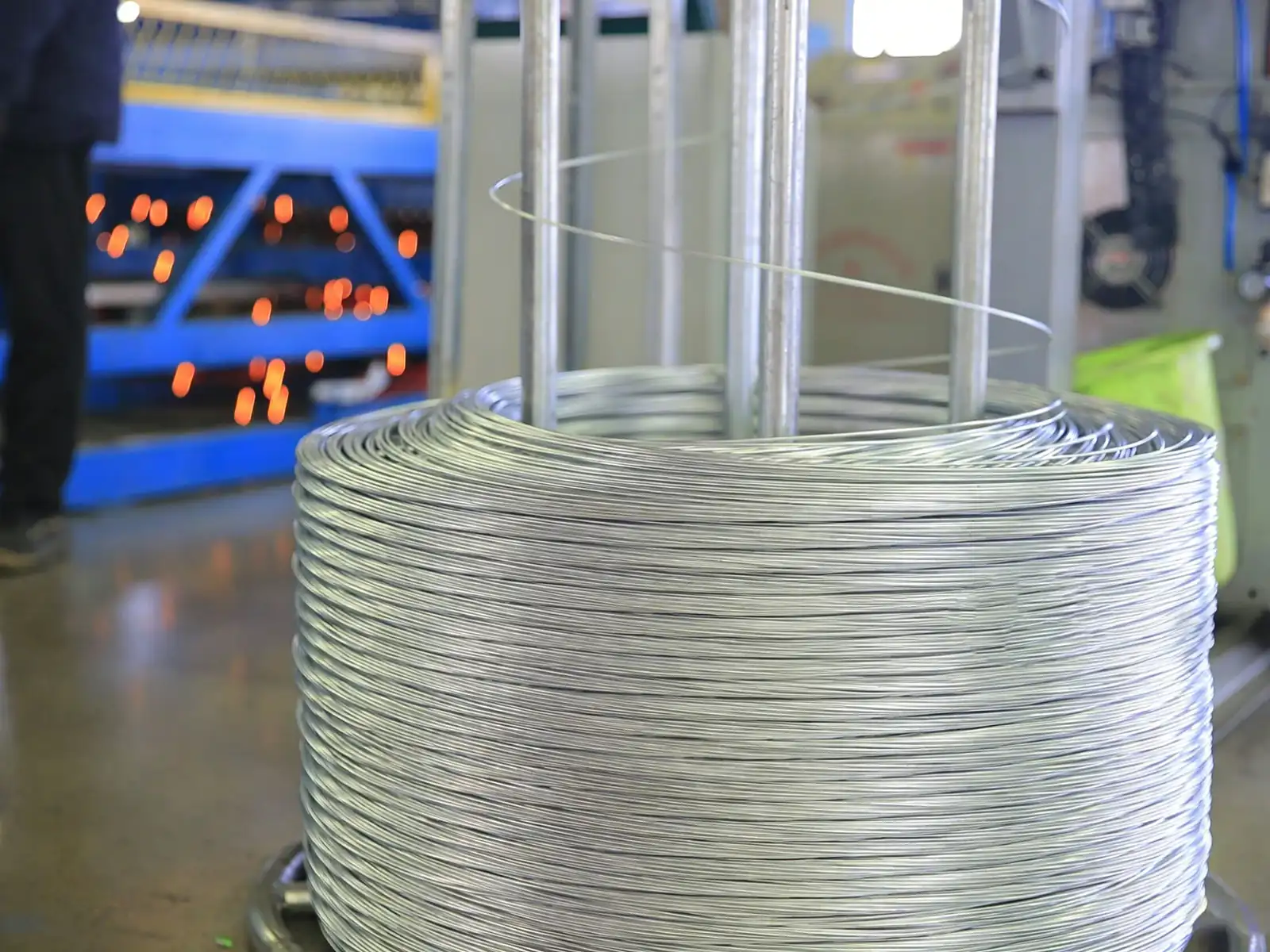
In the field of industrial resistance heating, material selection directly affects equipment efficiency and service life. Nickel 200 nickel wire has become the material of choice for many heating applications due to its unique electrothermal properties and stability. This high-purity nickel wire (nickel content ≥ 99.5%) has excellent resistance stability, high temperature oxidation resistance and good processing performance. Compared with iron-chromium-aluminum or nickel-chromium alloy, Nickel 200 exhibits a lower temperature coefficient and longer service life in medium and low temperature heating scenarios. Its resistivity of 6.84×10⁻⁸ Ω·m allows it to continuously operate in the range of 300-600℃ while maintaining resistance value fluctuations of less than 3%, which is particularly critical for precision temperature control systems. This article will systematically analyze the technical advantages of Nickel 200 nickel wire in the field of resistance heating from five dimensions: material physical properties, electrothermal conversion mechanism, working condition adaptability, engineering application and economy.
1. What Should You Know About Analysis of the Core Physical Properties of Nickel 200 Nickel Wire?
(1) What Should You Know About Correlation Between Resistivity and Temperature Coefficient?
The resistivity of Nickel 200 nickel wire is 6.84×10⁻⁸ Ω·m at room temperature, which is right in the middle range of pure metals. Higher resistance than copper (1.68×10⁻⁸ Ω·m), but much lower than nichrome (108×10⁻⁸ Ω·m). This moderate resistivity enables it to produce a stable Joule heating effect when energized, neither causing current overload due to too low resistance nor energy loss due to too high resistance. Its temperature coefficient is approximately 0.006/ C, which means that for every 100℃ increase in temperature, the resistance increases by only 0.6%. This low-drift characteristic ensures the predictability of the heating power.
(2) What Should You Know About Thermal Conductivity and Thermal Response Speed?
The thermal conductivity of this material is 70 W/(m·K), which is lower than copper (401 W/(m·K)) but significantly higher than stainless steel (16 W/(m·K)). This balanced thermal conductivity enables Nickel 200 nickel wire to quickly convert electrical energy into thermal energy, while also distributing heat evenly to avoid local overheating. Under laboratory standard conditions (natural convection, ambient temperature 25℃), both ends of a 10cm-long φ1mm nickel wire are fixed. After a 5A current is passed through, the surface temperature can rise to 400℃ within 15 seconds, and the response speed meets the rapid heating requirements.
(3) What Should You Know About Melting Point and High Temperature Stability?
The high melting point of 1453-1455℃ provides Nickel 200 with a sufficient safety margin. Under long-term working conditions of 600℃, its actual temperature is only 40% of the melting point, and the material structure remains stable. Metallographic examination shows that after 1, 000 hours of high-temperature cycle testing, the grain size does not grow by more than 12% and the tensile strength remains above 85% of the initial value. This microscopic stability is the basis for long-life heating elements.
Table 1: Comparison of physical properties between Nickel 200 nickel wire and common heating materials
Performance indicators | Nickel 200 | Nickel chromium alloy (Ni80Cr20) | Iron chromium aluminum alloy | Pure copper (in air, consider oxidation) |
Resistivity (×10⁻⁸ Ω·m) | 6.84 | 108 | 145 | 1.68 |
Thermal conductivity (W/m·K) | 70 | 17 | 13 | 401 |
Melting point(C) | 1453 | 1400 | 1510 | 1085 |
Temperature coefficient (/ C) | 0.006 | 0.0001 | 0.0002 | 0.0039 |
Maximum working temperature(C) | 600 | 1150 | 1350 | 300* |
Note: * Pure copper is limited by oxidation when working in the air for a long time. It is usually recommended not to exceed 300℃.
2. What Should You Know About the Working Mechanism and Material Matching Principle of Resistance Heating?
(1) What Should You Know About Conversion Efficiency of Joule Heating Effect?
According to Joule’s law Q=I²Rt, the core of resistance heating lies in the heat generated by the current passing through the conductor. The crystal structure of Nickel 200 nickel wire causes regular lattice vibration under the action of electric current, and the efficiency of converting electrical energy into thermal energy can reach more than 95%. When the free electrons in the face-centered cubic structure (FCC) move directionally, the frequency of collisions with metal ions is moderate, which not only ensures sufficient heat production, but also avoids excessive energy dissipation.
(2) What Should You Know About Power Density and Thermal Balance?
In resistive heating designs, power density (W/cm²) determines the heating rate. Nickel 200 nickel wire can withstand a surface power density of 8-12 W/cm², which enables efficient heating in compact spaces. When the wire diameter is φ3mm, each meter of nickel wire can output about 180W thermal power at 400℃. At this time, the operating current is about 90A (considering high temperature resistivity), which is enough to meet the needs of small and medium-sized heaters. Its good thermal radiation capability (emissivity is about 0.3) combined with natural convection can automatically adjust the temperature distribution.
(3) Why Is Resistance Value Stability and Service Life Important?
Under long-term energization, the resistance drift of the heating material directly affects the stability of the system. After working continuously for 5, 000 hours in the 300-500℃ range, the resistance change rate of Nickel 200 nickel wire is less than ± 2%. This is due to its high purity (total impurities <0.5%) which reduces the possibility of grain boundary oxidation and phase transformation. In contrast, alloys with higher iron or copper content can have resistance drifts of up to 8-15% under the same conditions, requiring frequent calibration of the control system.
3. What Should You Know About the Adaptability of Nickel 200 Nickel Wire in Different Heating Scenarios?
(1) What Should You Know About Laboratory Analytical Instrument Heating Elements?
In precision instruments such as chromatographs and spectrometers, the heating module needs to achieve a temperature control accuracy of ± 0.5℃. The heating coil made of Nickel 200 nickel wire can achieve rapid temperature rise (15℃/min) and constant temperature control in the range of 50-350℃ through precise current regulation. Its low temperature coefficient makes the PID control algorithm easier to converge and reduces temperature overshoot. A well-known gas chromatograph manufacturer used a heater wound with φ0.5mm nickel wire. Stability testing showed that the temperature control accuracy of ± 0.3℃ was maintained for more than 8, 000 hours.
(2) What Should You Know About Thermal Packaging Process in the Battery Industry?
The lithium battery soft package packaging process requires precise hot pressing (180-220℃) of the aluminum-plastic film. Nickel 200 nickel wire is an ideal material for heating plates because of its non-magnetic characteristics and will not interfere with the electric field distribution inside the battery. The φ1mm nickel wire is embedded into the ceramic substrate in a serpentine layout, and the power density is controlled at 6 W/cm², which can achieve uniform heating with a temperature difference of <5℃. According to industry application cases, the packaging defect rate of nickel wire heating systems is 40% lower than that of traditional electric heating tubes.
(3) What Should You Know About Sanitary Heating in the Food and Pharmaceutical Industry?
Pharmaceutical reactors and food sterilization equipment have extremely high requirements on the purity of heating materials. Nickel 200 nickel wire complies with FDA indirect food contact material standards, and its high purity characteristics avoid the risk of heavy metal migration. In pharmaceutical steam generators, the nickel wire heating unit can directly contact purified water, and no nickel ion precipitation has been detected during the 10-year use cycle (detection limit <0.01 ppm). This biocompatibility makes it widely used in temperature maintenance systems of bioreactors.
Table 2: Technical parameters of Nickel 200 nickel wire in typical heating scenarios
Application scenarios | Working temperature(C) | Recommended wire diameter (mm) | Power density (W/cm²) | Service life (hours) |
laboratory heating plate | 150-300 | 0.5-1.0 | 5-8 | >10000 |
Battery Thermal Packaging | 180-220 | 0.8-1.5 | 4-6 | >8000 |
Plastic forming mold | 200-280 | 1.5-3.0 | 8-10 | >6000 |
Medical disinfection equipment | 120-180 | 1.0-2.0 | 3-5 | >12000 |
Chemical pipeline heating | 80-150 | 2.0-4.0 | 2-4 | >15000 |
4. Why Is Design Considerations and Optimization Strategies in Engineering Applications Important?
(1) What Should You Know About Accurate Calculation Method of Heating Power?
When designing a heating system, the nickel wire specifications need to be determined based on the target temperature and heat dissipation conditions. The power calculation formula is: P = (ρ×L×I²)/A, where ρ is the resistivity, L is the effective length, and A is the cross-sectional area. In the design of an automobile parts coating line, it is required to heat a 2m² aluminum plate from room temperature to 200℃ (within 15 minutes), and it is calculated that 6kW power is required. A flat heating net is made of φ3mm nickel wire, with a total length of 80 meters, and a current of 90A is passed through. The measured heating time is 14 minutes, and the energy consumption is 22% lower than the electric heating tube solution.
(2) What Should You Know About Mechanical Strength and Thermal Stress Management?
The tensile strength of metal will decrease at high temperatures. Nickel 200’s strength still maintains 60% of normal temperature at 600℃. When designing cantilevered heating elements, the stresses caused by thermal expansion need to be calculated. The linear expansion coefficient of nickel is 13.3×10⁻⁶/ C. When a 1-meter-long nickel wire is heated from 20℃ to 400℃, the elongation is about 5mm. The use of elastic fixed brackets or corrugated compensation structures can effectively release thermal stress and avoid metal fatigue fracture caused by repeated thermal cycles.
(3) What Should You Know About Surface Treatment and Antioxidant Protection?
Although Nickel 200 has good oxidation resistance below 600℃, it still requires protection in sulfur-containing or halogen-containing environments. Commonly used strategies include: coating the surface of the nickel wire with an alumina ceramic coating (thickness 50-100 um), which can extend the service life by three times; for occasions that require frequent cleaning, electrolytic polishing is used to make the surface roughness Ra <0.4 um to reduce the adhesion of pollutants; in chemical anti-corrosion scenarios, with inert atmosphere protection or sealed heating structures, it can work stably in an environment containing chlorine ions.
Table 3: Effect of different surface treatments on the properties of Nickel 200 nickel wire
Processing technology | Surface roughness(um) | Antioxidant temperature increase (C) | Improved corrosion resistance | cost increase |
Untreated (pickled) | 1.2-1.6 | benchmark | benchmark | benchmark |
electropolishing | 0.2-0.4 | +30 | +15% | +8% |
ceramic coating | 2.0-3.0 | +120 | +60% | +35% |
Passivation treatment | 0.8-1.0 | +50 | +25% | +5% |
5. What Should You Know About Economic and Sustainability Analysis of Nickel 200 Nickel Wire?
(1) What Are the Differences in Whole Life Cycle Cost Comparison?
Although the unit price of Nickel 200 nickel wire is higher than that of iron-chromium aluminum alloy (about 2.5 times), its service life of more than 15, 000 hours significantly reduces the replacement frequency. Taking the pipeline heating system of a chemical company as an example, the iron-chromium-aluminum heating belt is replaced twice a year on average, while the nickel wire heating belt can last for 5 years. Comprehensive calculation of material costs, labor costs and downtime losses, the 5-year total cost of the nickel wire solution is 18% lower than that of iron-chromium-aluminum. Its excellent energy conversion efficiency can also save about 12% of electricity expenses.
(2) Why Is Recycling Value Important?
Nickel 200 is a high-purity nickel material, and the recycling value of scrap products is about 50-60% of the price of new products. Scrapped heating elements can be re-made into nickel wire or other nickel alloy products after smelting and purification. This high recycling rate reduces the company’s material procurement pressure and is also in line with the concept of circular economy. In contrast, nickel-chromium alloys have a recycling value of only 30-40% due to their complex composition, while iron-chromium aluminum alloys have basically no recycling value.
(3) What Should You Know About Environmental Friendliness and Regulatory Compliance?
Nickel 200 nickel wire does not produce harmful gases during production and use, and meets the requirements of EU RoHS and REACH regulations. In the medical and food industries, its nontoxic nature eliminates the risk of product contamination. The environmental assessment report of a European pharmaceutical equipment manufacturer shows that the use of nickel wire heating systems can reduce waste generation by 40%, and the carbon emission intensity is 25% lower than traditional resistance wires, which helps the company achieve ESG (environmental, social and governance) goals.
6. What Is the Conclusion?
Nickel 200 nickel wire has become an ideal material for medium and low temperature resistance heating applications due to its moderate resistivity, excellent high temperature stability, low temperature coefficient and good processability. Its technical advantages in the fields of precision instruments, battery manufacturing, medicine and food not only improve the reliability and efficiency of heating systems, but also achieve the unification of economic and environmental benefits through long life and high recovery rate. As industry’s requirements for temperature control accuracy and material purity increase, the application prospects of Nickel 200 nickel wire will be broader.
FAQ
Q1: What are the disadvantages of Nickel 200 nickel wire compared to nickel-chromium alloy in heating applications?
The maximum operating temperature of Nickel 200 is only 600℃, which is much lower than the 1150℃ of nickel-chromium alloy. It is not suitable for scenarios such as high-temperature electric furnaces. Its lower resistivity requires longer wire lengths to achieve the same power, increasing wiring complexity. The durability in strong oxidizing environments is also not as good as that of nickel-chromium alloys.
Q2: How to judge whether Nickel 200 nickel wire needs to be replaced?
It can be judged by three indicators: the resistance value increases by more than 5% of the initial value; obvious oxide scale or pitting pits appear on the surface; and the heating time to the target temperature is extended by more than 20%. It is recommended to conduct a resistance test and visual inspection every 3, 000 hours of operation, and replace it promptly if any abnormalities are found.
Q3: Can Nickel 200 nickel wire be used in vacuum heating environments?
Totally applicable. The vacuum environment eliminates the risk of oxidation, and Nickel 200 can operate to 800℃ in vacuum <10⁻⁴ Pa, or to 700℃ in vacuum <10⁻³ Pa. It should be noted that heat transfer in vacuum relies on radiation, and the power density should be appropriately reduced to 4-6 W/cm² to avoid local overheating. A semiconductor equipment manufacturer’s vacuum annealing furnace adopts this solution.
7. What Should You Know About Looking for Reliable Nickel 200 Wire Manufacturer?
Baoji Titanium Valley Titanium Nickel Zirconium Material Processing Co., Ltd. (Titanium Valley), as a professional high-end rare metal processing supplier, is equipped with Italian Danieli continuous rolling production line, with an annual output of more than 3, 000 tons of nickel wire. It provides products with full specifications from φ0.5mm to φ30mm, in line with ASTM B161 standards, and has complete EN 10204 3.1 certificates. Welcome to contact us to obtain technical solutions and samples: sales@titaniumvalleys.com
References
[1] China Nonferrous Metals Industry Association. Nickel and Nickel Alloy Materials Manual[M]. Beijing: Chemical Industry Press, 2015.
[2] Zhang Wei, Li Hua. Research on the application of pure nickel wire in resistance heating elements [J]. Materials Herald, 2019, 33(2): 112-116.
[3] National Standards of the People’s Republic of China. GB/T 2054-2013 Nickel and Nickel Alloy Strips and Foils [S]. Beijing: China Standards Press, 2013.
[4] Wang Jianguo, Zhao Ming. Research on the high-temperature oxidation behavior of nickel 200 [J]. Corrosion and Protection, 2020, 41(5): 28-32.