
What Are the Differences in Comparison Between GR1 Titanium Wire and Other Titanium Wire Brands, Performance Advantages and Application Differences?
- Gr1 Titanium Wire
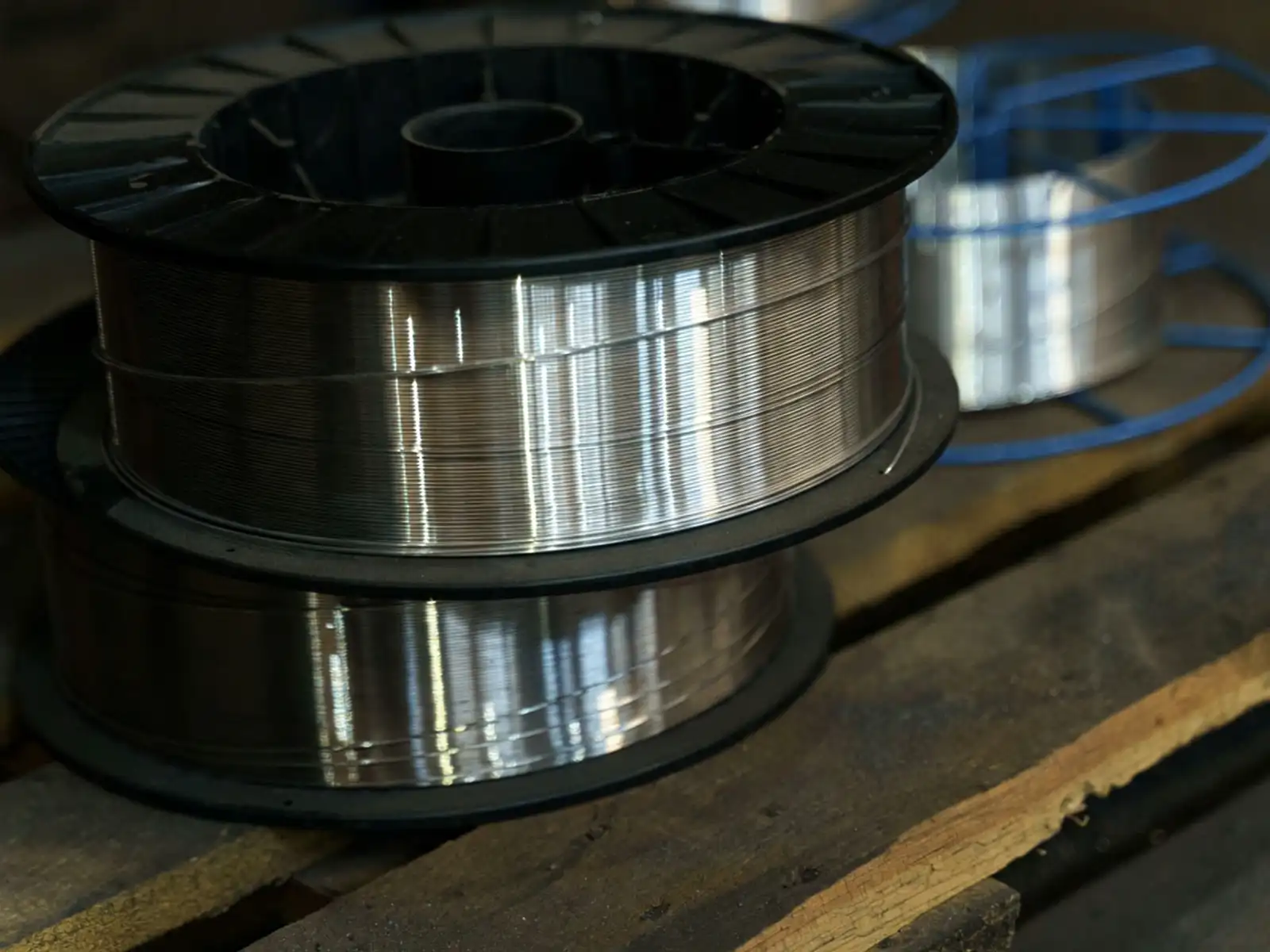
As the grade with the highest purity among the industrial pure titanium series, GR1 titanium wire shows unique advantages in ductility, welding performance and corrosion resistance compared with other titanium wire grades such as GR2 and GR5. GR1 titanium has a purity of ≥ 99.5% and an oxygen content of ≤ 0.18%, making it the material of choice for applications requiring deep cold processing and biomedical applications. In comparison, GR2 has slightly higher strength but reduced plasticity. Although GR5 (Ti-6Al-4V) has high strength, it is difficult to process and expensive. In the fields of marine engineering, medical equipment and precision electronics, GR1 titanium wire has become an ideal choice for balancing performance and cost due to its excellent formability and biocompatibility. It is especially suitable for precision application scenarios with ultra-fine specifications (0.06-0.3mm).
1. What Are the Differences in Analysis of Industrial Pure Titanium Grade System: Essential Differences Between GR1-GR4?
(1) What Should You Know About Gradient Control Logic for Chemical Components?
Industrial pure titanium is divided into four grades according to impurity content. The content of interstitial elements such as oxygen, iron, carbon, and nitrogen directly determines the material properties. The oxygen content of GR1 titanium wire is controlled below 0.18%, and the iron content is ≤ 0.20%. This ultra-low impurity design allows it to maintain the purest titanium lattice structure. The oxygen content of GR2 is increased to 0.25%, the strength increases by about 15% but the elongation decreases. As impurities increase, the tensile strength of GR3 and GR4 can reach more than 550MPa, but they lose their deep cold working ability.
(2) What Should You Know About Stepwise Distribution of Mechanical Properties?
The tensile strength of annealed GR1 titanium wire is ≥ 240MPa, the yield strength is ≥ 170MPa, and the elongation remains above 20%. This “low strength and high toughness” characteristic enables it to withstand complex drawing, weaving and bending operations. The strength of GR2 is increased to 450MPa, which is suitable for structural applications. In contrast, semi-rigid GR1 can reach a strength of 380-480MPa after special processing, while retaining an elongation of more than 12%, achieving an optimized balance between strength and plasticity.
(3) What Are the Differences in Differences in Processing Technology Adaptability?
Vacuum melting combined with a multi-pass cold drawing process allows GR1 titanium wire to stably produce ultra-fine specifications of φ0.06mm, with tolerances controlled within ± 0.005mm. Its low hardness (140-180HV) reduces mold wear and is less prone to cracks during the cold drawing process of the roll mold. Due to the increased hardness of GR2 and higher grades, the wire breakage rate increases significantly during the production of ultra-fine specifications, and the minimum diameter is usually limited to more than 0.2mm.
2. What Are the Differences in Comparison of Performance Dimensions Between GR1 Titanium Wire and Titanium Alloy Wire?
(1) What Are the Differences in the Core Difference Between Pure Titanium and Ti-6Al-4V (GR5)?
Performance indicators | GR1 pure titanium wire | GR5 titanium alloy wire | Difference description |
Tensile strength (MPa) | 240-480 | ≥ 895 | Alloy strength increased by 160% |
Elongation (%) | 20-30 | 10-15 | Pure titanium has obvious plasticity advantages |
Density (g/cm³) | 4.51 | 4.43 | The alloy is slightly lighter but the difference is minor |
Thermal conductivity [W/(m·K)] | 15.2 | 6.7 | Pure titanium has better thermal conductivity |
Resistant to seawater corrosion | Excellent (passivation film self-healing) | Good (influence of alloy elements) | Pure titanium is more suitable for marine environments |
biocompatibility | medical grade standards | Orthopedic implant grade | Pure titanium has no allergy risk |
Price (relative value) | 1.0 | 2.8-3.5 | Alloy costs 3 times more |
(2) What Should You Know About Actual Performance of Cold Working Properties?
GR1 titanium wire can achieve 180° repeated bending without breaking at a diameter of 0.5mm. This extreme plasticity makes it an ideal material for precision springs and medical sutures. Although titanium alloy wire has high strength, the deformation rate needs to be strictly controlled during cold working. If it is too fast, it will easily produce adiabatic shear bands and lead to fracture. In the weaving application of electronic shielding covers, GR1 titanium wire can withstand ± 30% tensile deformation, while GR5 alloy wire may crack if the deformation exceeds 8%.
(3) What Should You Know About Welding Process Suitability Analysis?
Pure titanium ERTi-1 welding wire (based on GR1 composition) has good molten pool fluidity in argon arc welding, the weld shape is beautiful, and the joint elongation can reach more than 85% of the base metal. Titanium alloy welding wire requires more stringent protection measures, and stress relief annealing is required after welding. In chemical container welding, the corrosion resistance of GR1 wire welds is almost the same as that of the base metal, while alloy welds may cause micro-corrosion hazards due to element segregation.
3. Why Is Precise Matching of Application Scenarios: Cross-border Choices From Marine to Medical Important?
(1) What Should You Know About Corrosion Resistance Verification in Marine Engineering?
In a seawater environment with a chloride ion concentration as high as 19, 000ppm, the thickness of the TiO2 passivation film spontaneously formed on the surface of GR1 titanium wire is about 5-10nm, and the corrosion rate is <0.005mm/year, which is much better than 316L stainless steel. The deep-sea detector uses a cable sheath braided with φ1.2mm GR1 titanium wire, which has served for 10 years under the pressure of a water depth of 6, 000 meters without pitting corrosion. In contrast, in the crevice corrosion test of GR5 alloy wire, local galvanic corrosion is prone to occur in the aluminum element-enriched area.
Material type | Corrosion depth after 1000h seawater immersion (um) | Salt spray test (5000h) surface condition | Applicable salinity range |
GR1 titanium wire | <0.5 | No rust, maintain metal luster | 0-6% salinity |
GR2 titanium wire | 0.8-1.2 | Slight discoloration, no pitting | 0-5% salinity |
316L stainless steel wire | 15-25 | Densely covered with rust spots and partial peeling | <3% salinity |
(2) What Should You Know About Biosafety Requirements for Medical Devices?
The GR1 titanium wire, which complies with ISO 5832-2 standards, passed the L929 fibroblast cell culture verification test after implantation into the human body, with a 72-hour survival rate of >95%. Its bright products with surface roughness Ra≤ 0.4um have the highest tissue compatibility score when used in the manufacture of pacemaker leads and dental correction archwires. Vanadium in titanium alloys has controversial potential cytotoxicity, and EU medical device regulations have strict restrictions on its use.
(3) Why Is Application of Non-magnetic Properties in Precision Electronics Important?
The magnetic susceptibility of GR1 titanium wire is only 3.2×10⁻⁶ emu/g. It is a weak paramagnetic material and does not produce image artifacts in the 1.5T magnetic field of MRI equipment. When used to manufacture elastic components of acceleration sensors, the resistance temperature coefficient of φ0.1mm ultra-fine titanium wire is 0.0038/ C, and its temperature drift performance is better than that of phosphor copper wire. The sample grid for electron microscopy is woven with pickled GR1 titanium wire, and there is no magnetic deflection under 200kV electron beam bombardment.
4. How Should Material Selection Decision Model: Optimal Balance Between Cost and Performance?
(1) What Should You Know About Full Life Cycle Costing?
When chemical companies purchase φ2.0mm titanium wire to make filters, the initial cost of GR1 material is $45/kg, and that of GR5 alloy is $135/kg. However, based on the comprehensive processing loss rate (GR1 is 8% and GR5 is 18%), service life (GR1 is in a dilute sulfuric acid environment for 15 years, GR5 requires protective coating for only 8 years) and maintenance frequency, the ten-year comprehensive cost of GR1 titanium wire is only 62% of GR5.
(2) What Should You Know About Feasibility Boundary of Processing Technology?
Application process | GR1 titanium wire reachable parameters | GR5 alloy wire restrictions | Recommended choice |
Ultra-fine drawing | Minimum φ0.06mm | Minimum φ0.2mm | GR1 |
Precision weaving | 120 mesh/inch | 60 mesh/inch | GR1 |
deep bend | R=0.5D | R=3D | GR1 |
High strength structure | Requires heat treatment to strengthen | Use directly | GR5 |
biological implant | No risk of allergies | Requires surface modification | GR1 |
(3) What Should You Know About Industry-specific Performance Weighting?
In the aerospace field, strength is more important than anything else. GR5 titanium alloy wire occupies 90% of the market share, and GR1 is only used for non-load-bearing parts such as sealing gaskets. Biocompatibility is given priority in the medical device industry, and GR1 titanium wire accounts for 75% of the market. In the field of chemical anti-corrosion, considering corrosion resistance and cost, GR1 and GR2 are used in combination, accounting for 45% and 40% respectively. The electronics industry pursues ultimate precision, and almost all specifications below φ0.08mm use GR1 materials.
5. What Should You Know About Future Technology Trends: the Evolution Direction of Ultra-refined and Functionalized?
(1) What Should You Know About Manufacturing Breakthroughs in Extreme Dimensions?
Using the Italian Danieli continuous rolling line and the precision roller die cold drawing process, stable mass production of φ0.06mm GR1 titanium wire has been achieved, and the weight of a single disc exceeds 100kg without intermediate welding. Vacuum annealing technology controls the grain size to 15-25um, allowing the ultra-fine titanium wire to maintain high strength (480MPa) while still achieving an elongation of 12%. The next generation goal is to achieve a φ0.03mm specification and apply it to flexible electrodes for wearable medical devices.
(2) What Should You Know About Surface Functional Modification Technology?
The anodizing treatment generates a 20-50nm thick colored TiO2 layer on the surface of the GR1 titanium wire to achieve decorative effects such as space gray and silver white, and the hardness is increased to HV 350-400. The porous ceramic layer formed by micro-arc oxidation technology has a thickness of 5-15 um, which increases the bone cell attachment rate by 40% when used in orthopedic implants. Laser surface texturing creates micron-level grooves, and the joint fatigue strength of welded titanium wires is increased by 25%.
(3) What Should You Know About Intelligent Production Quality Control?
The online laser caliper monitors the titanium wire diameter in real time with an accuracy of ± 0.002mm. Together with the adaptive tension control system, the diameter fluctuation of a single disk of 3000 meters of titanium wire is ≤ 0.008mm. The production line with an automation rate of more than 90% uses closed-loop control of 1000+ process points to ensure that the annealing temperature deviation is <± 3℃ and the drawing speed fluctuation is <1%. The blockchain traceability system records the smelting batch, rolling parameters and testing data of each roll of titanium wire, meeting the full quality traceability requirements of aerospace.
6. What Is the Conclusion?
GR1 titanium wire has established differentiated advantages in ductility, corrosion resistance and biocompatibility through extreme purity control and precision processing technology. Compared with high-strength titanium alloys, it shows better performance-price ratio in the fields of medical, marine and precision electronics. With the advancement of ultra-fine manufacturing technology and surface functionalization, GR1 titanium wire is opening up new application spaces from wearable devices to deep-sea engineering, becoming an irreplaceable key material in high-end manufacturing.
FAQ
Q1: How to choose between GR1 titanium wire and GR2 titanium wire in practical applications?
GR1 is suitable for scenes that require deep cold processing, such as precision woven mesh (more than 120 mesh), medical sutures and ultra-fine springs. Its elongation rate is about 10-20% higher than GR2. GR2 has higher strength and is suitable for structural welding and general anti-corrosion equipment. The cost is 15-20% lower than GR1. GR2 is often used in chemical pipelines and heat exchangers.
Q2: Why do medical devices prefer to use GR1 instead of stronger titanium alloys?
Medical implants need to pass a full set of ISO 10993 biocompatibility tests. The purity of GR1 titanium is ≥ 99.5%. It is free of potential allergenic elements such as vanadium and aluminum. The pass rate of cytotoxicity and genotoxicity tests is close to 100%. Although titanium alloys have high strength, EU MDR regulations have strict limits on vanadium content, and the surface passivation film is not as stable as pure titanium.
Q3: What are the main technical difficulties in the production of ultra-fine titanium wire (0.06-0.1mm)?
The main challenges include: control of the wire breakage rate during the drawing process (needs to remain <2%), fluctuations in dimensional accuracy caused by die wear, and oxidation control during annealing. The use of roller die cold drawing instead of traditional die drawing can reduce surface defects. The vacuum annealing furnace combined with the rapid cooling system can maintain grain refinement, and with online inspection, a tolerance of ± 0.005mm can be achieved.
How Should Looking for a Reliable Titanium Wire Supplier?
As a professional manufacturer, Titanium Valley (Baoji Titanium Valley Titanium Nickel Zirconium Material Processing Co., Ltd.) is equipped with a Danieli production line with an annual output of 5, 000 tons of high-precision titanium wire, and provides full-specification customization services of φ0.06-10mm. Contact us for technical support and sample testing: sales@titaniumvalleys.com
References
- National Standards of the People’s Republic of China. GB/T 3620.1-2016 Titanium and titanium alloy grades and chemical compositions [S]. Beijing: China Standards Press, 2016.
- National Standards of the People’s Republic of China. GB/T 13810-2017 Titanium and titanium alloy processed materials for surgical implants[S]. Beijing: China Standards Press, 2017.
- Wang Huaming, Li Yan, Zhang Qiang. Research on cold working properties of industrial pure titanium [J]. Rare Metal Materials and Engineering, 2019, 48(5): 1523-1528.
- Li Yan, Chen Zhigang, Liu Wei. Research on the corrosion behavior of titanium wire in marine environment [J]. Materials Protection, 2020, 53(10): 45-49.