
What Are the Differences in Comparison Between Gr5 Titanium Foil and Pure Titanium Foil, Analysis of Differences in Performance, Strength and Application Fields?
- Gr5 Titanium Foil
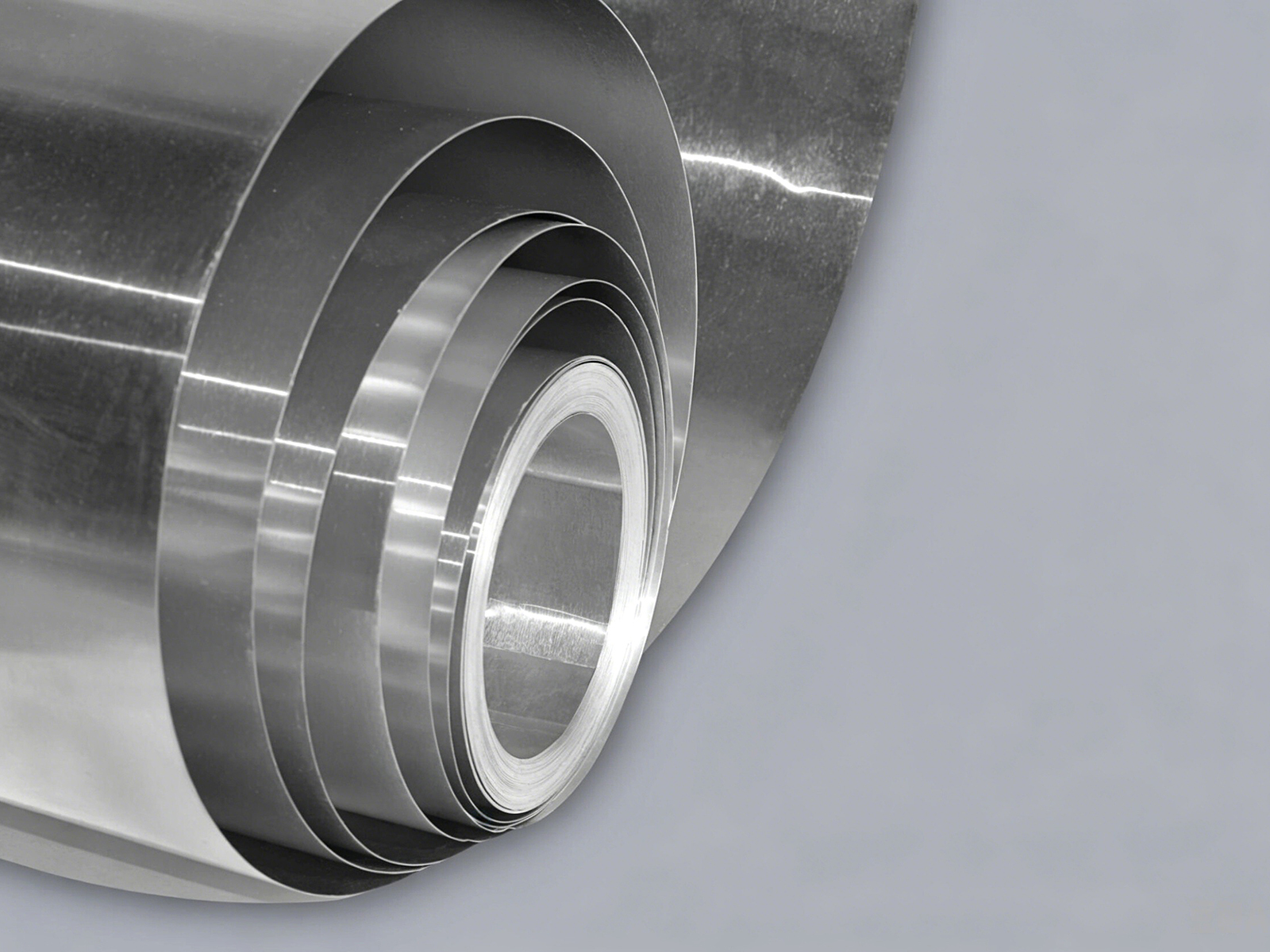
In high-end manufacturing and aerospace, choosing the right titanium material is crucial. As an α+β dual-phase titanium alloy, Gr5 titanium foil (Ti-6Al-4V) has achieved a qualitative leap in strength compared to industrial pure titanium such as Gr1/Gr2/Gr4 – tensile strength ≥ 895MPa, yield strength ≥ 825MPa, far exceeding the 345-550MPa range of pure titanium. Although pure titanium foil has excellent ductility and corrosion resistance, its performance is limited under high load and high temperature environments. Gr5 titanium foil combines lightweight (density 4.43g/cm³) and high specific strength, and can serve stably for a long time at 300℃. It has become the first choice material for aviation structural parts, new energy battery heat dissipation and precision electronic shielding. Understanding the differences between the two can help engineers make optimal decisions between cost, performance and processability.
1. What Are the Differences in Material Composition and Microstructure, the Essential Difference Between Dual-phase Alloy and Pure Titanium?
(1) What Should You Know About Alloying Design Logic of Gr5 Titanium Foil?
Gr5 titanium foil creates a unique α+β dual-phase structure by adding 5.5-6.75% aluminum and 3.5-4.5% vanadium. Aluminum, as an α-stabilizing element, improves the high-temperature strength and oxidation resistance of the material; vanadium, as a β-stabilizing element, enhances room temperature plasticity and fracture toughness. This synergistic effect enables the material to form a uniform lamellar α-phase and β-phase mixed structure in the annealed state, with a tensile strength of up to 930-1100MPa while maintaining an elongation of ≥ 10%. In contrast, although the single α-phase structure of pure titanium foil has fine grains, it lacks a strengthening mechanism and has an obvious strength ceiling.
(2) Why Is Purity Advantages and Limitations of Pure Titanium Foil Important?
The titanium content of Gr1/Gr2 titanium foil is ≥ 99.5%, and the oxygen content is strictly controlled within 0.18-0.25%, showing excellent cold working ductility. The elongation of Gr1 foil can reach more than 24%, which is suitable for deep drawing and complex forming; although Gr4 increases the strength to 550MPa by increasing the oxygen content, it still cannot meet the aviation-grade load-bearing requirements. The microstructure of pure titanium foil is an equiaxed alpha phase, with clean grain boundaries and low dislocation density, which determines its irreplaceability in the fields of chemical anti-corrosion and biomedical treatment. However, it has shortcomings in terms of structural bearing capacity.
(3) What Should You Know About Differential Effects of Heat Treatment on Tissue Properties?
Gr5 titanium foil needs to undergo vacuum annealing at 730-850℃ (conventional α+β annealing). If β annealing is used, the temperature can reach 850-950℃, but the cooling rate needs to be strictly controlled to avoid tissue coarsening. The cooling rate directly affects the degree of β phase transformation. Too fast cooling will form the martensite α’ phase, resulting in increased brittleness, while furnace cooling will obtain the best toughness match. The annealing temperature of pure titanium foil is relatively low (650-750℃). The main purpose is to eliminate processing stress and restore plasticity, and the structural changes are relatively simple. This difference in heat treatment requires that Gr5 foil production must be equipped with a continuous vacuum annealing furnace and a precise atmosphere control system, while the process window of pure titanium foil is more tolerant.
2. What Are the Differences in Comprehensive Comparison of Mechanical Properties, Quantitative Analysis of Strength, Toughness and Fatigue Limits?
(1) What Are the Differences in Order of Magnitude Difference in Static Strength Indicators?
Performance indicators | Gr5 titanium foil (Ti-6Al-4V) | Gr2 titanium foil | Gr4 titanium foil | Performance improvement ratio |
tensile strength | ≥ 895 MPa (930-1100 MPa) | 345 MPa | 550 MPa | Gr5 is 160% higher than Gr2 |
Yield strength | ≥ 825MPa | 275 MPa | 485 MPa | Gr5 is 70% higher than Gr4 |
Elongation | ≥ 10% | ≥ 20% | ≥ 15% | Gr2 has better ductility |
hardness | HB 270-330 | HB 120-150 | HB 200-220 | Gr5 is 50% harder |
It can be seen from the data that the strength-to-weight ratio of Gr5 titanium foil reaches more than 200 kN·m/kg, which means that under the same load-bearing conditions, its weight is only 40-50% of Gr2 titanium foil. If Gr5 foil is used as the aerospace honeycomb core material, 30% of the weight can be reduced while maintaining stiffness, which directly translates into an increase in aircraft range or load.
(2) What Should You Know About High Temperature Performance and Creep Resistance?
Gr5 titanium foil can still maintain 80-85% of its room temperature strength in an environment of 300℃. This is due to the oxide film formed by the aluminum element that prevents oxygen embrittlement. Actual tests show that its creep rate under 350℃ and 200MPa stress is 10⁻⁸/hour, which meets the needs of aeroengine nacelle thermal insulation components. On the other hand, the strength of Gr2 pure titanium foil drops sharply after exceeding 200℃, and oxygen elements diffuse inward to form a brittle layer, which is not suitable for continuous heat exposure conditions. This difference makes Gr5 the necessary material for turbocharger heat sinks and hydrogen fuel cell bipolar plates.
(3) What Should You Know About Fatigue Life and Fracture Toughness Performance?
Aerospace structural parts often face 10⁶-10⁸ cyclic loads. The fatigue strength ratio of Gr5 titanium foil can reach 0.55 (fatigue limit/tensile strength) and can withstand more than 10⁷ cycles under a stress amplitude of 500MPa. The existence of β phase effectively hinders crack propagation, and the fracture toughness KIC reaches 55-75 MPa·m½. Although pure titanium foil has good initial toughness, its low strength results in a low stress threshold for fatigue crack initiation, making it more likely to fail in a vibration environment. This explains why helicopter rotor skins and satellite solar panel brackets generally use Gr5 instead of pure titanium.
3. What Should You Know About Processing Formability and Process Adaptability, Technical Barriers From Rolling to Precision Slitting?
(1) What Should You Know About Cold Rolling Deformation Resistance and Plate Shape Control Difficulty?
Process parameters | Gr5 titanium foil | Gr2 titanium foil | Description of process differences |
cold rolling pass | 15-20 passes (0.8mm→0.03mm, intermediate annealing is required every time the cumulative deformation reaches 60%) | 10-15 passes (intermediate annealing is also required) | Gr5 requires more intermediate annealing |
rolling force | 1200-1500 kN (0.1mm thick) | 600-800 kN | Gr5 rolling force is 80% higher |
Edge crack control | Requires 20-roll finishing mill + precise tension control | Conventional 4-high rolling mill can meet | Gr5 has strict requirements on equipment |
Thickness tolerance | ± 0.001 mm (requires laser thickness measurement) | ± 0.005 mm | Gr5 has stricter precision control |
The high deformation resistance of Gr5 foil requires the use of a 20-roller Sendzimir rolling mill (roller body length 750mm). Through three-level force transmission of work rolls, intermediate rolls, and back-up rolls, the unit pressure is dispersed to less than 800MPa to avoid surface indentations. At the same time, it is necessary to cooperate with a multi-pass small reduction strategy (reduction rate of each pass ≤ 15%), and perform vacuum annealing to restore plasticity when the cumulative deformation reaches 60%. For pure titanium foil, a traditional 4-roll rolling mill can be used to complete the thinning of 0.5mm → 0.05mm in one annealing, and the production efficiency is 40% higher.
(2) What Should You Know About Precision Slitting and Edge Quality Control?
The slitting of ultra-thin wide Gr5 titanium foil (0.03mm×670mm) is the core process bottleneck. High-strength materials tend to produce tear-shaped edges when sheared, and the burr height can reach 50 um, which will pierce the battery separator or affect the electromagnetic shielding effect. The solution includes: using carbide disc cutters (hardness HRC62 or above), controlling the cutter gap to 3-5% of the material thickness, and combining it with a linear speed of 60-80m/min and a constant tension winding system. Due to its good plasticity, pure titanium foil exhibits ductile fracture during slitting. It is relatively easy to control edge quality and has a longer tool life.
(3) What Are the Differences in Adaptability Differences Between Welding and Joining Processes?
The β phase of Gr5 titanium foil is easily transformed into a coarse α phase during the welding thermal cycle, resulting in a 15-20% reduction in the strength of the heat affected zone. It is recommended to use laser welding (power density 10⁶ W/cm²) or electron beam welding with a welding speed ≥ 1m/min to reduce heat input. After welding, stress relief annealing at 540℃ is required for 2 hours to eliminate welding residual stress and restore structural uniformity. Pure titanium foil has excellent weldability. Both TIG welding and resistance spot welding can obtain joints as strong as the base metal, which makes it more advantageous in the manufacturing of chemical containers. It is worth noting that dissimilar connections between Gr5 foil and stainless steel or aluminum alloys require diffusion welding or friction stir welding to avoid the formation of brittle intermetallic compounds.
4. Why Is Application Field Mapping, How to Choose the Appropriate Grade According to Working Conditions Important?
(1) What Should You Know About Differentiated Deployment in the Aerospace Field?
Gr5 titanium foil dominates the scene:
The honeycomb sandwich core material of commercial aircraft fuselage (Boeing 787 uses Gr5 foil with a thickness of 0.05-0.1mm) can withstand ± 3g maneuvering load and requires a specific strength >180 kN·m/kg. The engine nozzle regulator works in an alternating environment of 600℃ instantaneous high temperature and -55℃ low temperature. The thermal fatigue performance of Gr5 far exceeds that of pure titanium. The satellite solar wing support arm needs to withstand the impact of space debris. According to relevant research data, the penetration resistance of 0.15mm thick Gr5 foil is about 2.3 times that of Gr2.
Pure titanium foil applicable scenarios:
The liquid hydrogen tank lining (made of Gr1 foil) utilizes its -253℃ low temperature toughness and hydrogen embrittlement resistance. The rocket fairing acoustic damping layer uses the high damping properties of Gr2 foil (loss factor 0.012) to reduce noise by 10dB. These working conditions do not require high strength, and the cost advantage of pure titanium (the price is 60% of Gr5) and processing convenience are more attractive.
(2) What Should You Know About Precise Matching of New Energy and Electronics Industry?
Battery system cooling components:
The heat dissipation foil on the top cover of the power battery pack needs to take into account thermal conductivity, strength (withstand 10kPa coolant pressure) and lightweight. The thermal conductivity of pure titanium is about 17 W/m·K, and that of Gr5 is about 7.5 W/m·K. The difference between the two is more than double, and the difference is significant. The 0.1mm thick Gr5 foil can control the weight of the heat dissipation module to 55% of traditional aluminum parts, while the corrosion resistance ensures a 10-year life cycle. Although Gr2 foil has better thermal conductivity than Gr5, its insufficient strength requires the thickness to be increased to 0.15mm, which in turn loses the weight advantage.
Electromagnetic shielding application areas:
The 5G base station radio frequency module shielding cover (frequency band 3-6GHz) requires shielding efficiency >80dB, and the 0.03mm ultra-thin titanium foil is formed into a complex cavity through stamping. The high ductility of Gr2 foil allows the forming limit angle to reach 90°, and the defect rate is <2%; although Gr5 foil has high strength, it is easy to crack during forming and requires a warm forming process (200-300℃), which increases the cost by 30%. Pure titanium is more cost-effective in this scenario.
(3) What Should You Know About Corrosion Resistance Considerations in Chemical and Marine Engineering?
Extremely corrosive environment:
The anode foil (thickness 0.5mm) of the chlor-alkali industrial electrolytic cell is immersed in 80℃ and 30% NaOH solution for a long time. The corrosion rate of the Gr2 titanium foil is <0.005mm/year and does not need to be replaced for 10 years. Although Gr5 foil has higher strength, the aluminum-vanadium alloy element has the risk of selective corrosion in strong alkali, and the pitting corrosion potential is reduced by 150mV. For such working conditions, Gr1 or Gr2 pure titanium is preferred.
High stress corrosion coexistence:
Deep sea oil production platform riser protection sleeves face the dual challenges of 5, 000-meter water depth (50MPa static pressure) and hydrogen sulfide corrosion. The high yield strength of the 0.3mm thick Gr5 foil ensures that buckling instability does not occur. At the same time, the stability of the passivation film is better than that of pure titanium in a chloride ion + H₂S environment. At this time, the 15% cost premium of Gr5 can be recovered by extending the maintenance cycle (8 years vs 5 years).
5. Why Is Cost-effectiveness and Supply Chain Considerations, a Full Life Cycle Value Assessment Framework Important?
(1) What Should You Know About Raw Material and Processing Cost Structure Analysis?
cost elements | Gr5 titanium foil | Gr2 titanium foil | Source of cost variance |
Titanium sponge price | $28/kg (containing aluminum vanadium master alloy) | $22/kg | Alloying increases raw material cost by 27% |
Rolling energy consumption | 450 kWh/ton | 280kWh/ton | High-strength materials require more passes and annealing |
Tool wear | $15/km cutting length | $6/km | Carbide tools wear quickly |
Yield | 82% (edge cracks and plate defects) | 91% | The narrow process window of Gr5 leads to high scrap rate |
Comprehensive unit price | $180-220/kg (0.05mm thick) | $110-140/kg | Gr5 premium 60-80% |
Key insight: Although Gr5 has a high unit price, its higher specific strength means a 40-50% reduction in usage in applications that require load bearing. If the aerospace honeycomb core uses Gr5 foil of 0.05mm×1000m², it only costs 22kg ($4400), while the Gr2 foil requires 0.08mm×1000m² of 35kg ($4550). The actual cost is the same or even lower.
(2) What Are the Differences in Whole Life Cycle Maintenance Cost Comparison?
Analysis of the 10-year service life of the power battery heat dissipation component shows that the initial investment for the Gr5 foil solution is $12, 000 (materials + processing), and the Gr2 solution is $8, 500. However, Gr2 needs to increase the supporting structure by 30% due to insufficient strength, and the vehicle weight increases by 15kg. Calculated based on an increase in energy consumption of 0.3kWh per 100 kilometers, an additional 2800kWh ($560) of electric energy will be consumed in 10 years. Adding 2 structural reinforcement maintenance ($1200×2), the total cost reaches $11260. The full-cycle cost of the Gr5 solution is reduced by 6.5%, while improving product competitiveness.
(3) What Should You Know About Supply Chain Stability and Technical Barriers?
Globally, the stable mass production capabilities of 0.03-0.8mm wide Gr5 titanium foil are concentrated in a few manufacturers. The 20-roll finishing production line built by Titanium Valley with an investment of $36.2M has overcome the three major problems of high-strength foil plate shape control, thickness uniformity, and batch stability. The annual production capacity of 3, 000 tons can meet the needs of 10 leading aviation manufacturers. In contrast, pure titanium foil has sufficient production capacity but serious homogeneity, with price fluctuations of ± 25%. For high-end customers who require long-term stable supply, establishing strategic cooperation with Gr5 foil suppliers with full-process process control capabilities can avoid supply chain risks.
6. What Is the Conclusion?
The essence of the choice between Gr5 titanium foil and pure titanium foil is the art of balancing performance requirements and cost constraints. With its ultra-high strength of ≥ 895MPa, 300℃ high temperature stability and excellent fatigue performance, Gr5 is irreplaceable in aviation load-bearing structures and new energy high-load components; pure titanium foil dominates the fields of chemical anti-corrosion and deep processing and forming with its excellent ductility, low cost and excellent corrosion resistance. Engineers need to comprehensively evaluate stress levels, operating temperatures, corrosive environments and life cycle costs to make optimal decisions. As the demand for lightweight and high reliability escalates, suppliers that master Gr5 foil precision processing technology will occupy the high ground of the industry chain.
FAQ
Q1: Can Gr5 titanium foil replace stainless steel in chemical equipment?
A: In the environment of strong oxidizing acids (such as nitric acid, aqua regia), the corrosion resistance of Gr5 titanium foil is better than that of 316L stainless steel. However, the risk of stress corrosion cracking needs to be evaluated when strong alkali or high chloride ions + stress coexist. It is recommended to verify the applicability of specific working conditions through immersion experiments, and at the same time consider whether the 60% cost premium of Gr5 can be offset by the extended service life.
Q2: Why can the minimum thickness of Gr5 titanium foil only be 0.03mm?
A: Limited by the high deformation resistance (2.5 times that of pure titanium) and low ductility of Ti-6Al-4V alloy, when the thickness continues to be reduced to less than 0.02mm, the edge crack rate exceeds 15% and the economy is lost. Pure titanium foil can be stably produced to 0.01mm due to the excellent plasticity of its single-phase structure. If thinner specifications are required, it is recommended to use Gr2 titanium foil or evaluate thin film processes such as physical vapor deposition (PVD).
Q3: How to verify whether Gr5 titanium foil meets aviation grade standards?
A: A complete material report is required to verify that the chemical composition complies with ASTM B265 Grade 5 (Al: 5.5-6.75%, V: 3.5-4.5%), and the mechanical properties meet tensile strength ≥ 895MPa and elongation ≥ 10%. It is also important to check the ultrasonic flaw detection report (defect <φ0.5mm), grain size (ASTM grade 8-10) and hydrogen content ≤ 125ppm. Top suppliers such as Titanium Valley can provide AMS 4911 certification and FAA-approved third-party testing documents.
How Should Get Professional Gr5 Titanium Foil Supplier Support Now?
Baoji Titanium Valley is the world’s leading manufacturer and supplier of high-end titanium foil. Our 3, 000-ton annual production capacity production line can stably supply Gr5 titanium foil in specifications of 0.03-0.8mm×350-670mm, with a thickness tolerance of ± 0.001mm, meeting the stringent standards of aerospace and precision electronics. Welcome to contact our technical team to obtain customized material solutions and third-party testing reports: sales@titaniumvalleys.com
References
- Zhang Xiaoming, Zhao Yongqing. Research on preparation and properties of titanium alloy materials[M]. Beijing: Chemical Industry Press, 2015.
- Li Zhi, Wang Jianping. Comparative analysis of properties of industrial pure titanium and titanium alloys [J]. Rare Metal Materials and Engineering, 2018, 47(3): 865-870.
- Liu Wei, Chen Jun. Titanium alloy heat treatment process and microstructure evolution[J]. Metal Heat Treatment, 2019, 44(6): 12-17.
- Zhou Feng, Zheng Jie, et al. Development and application of titanium alloys for aerospace[J]. Materials Herald, 2020, 34(S1): 234-238.