
What Are the Characteristics of Gr2 Titanium Wire?
- Gr2 Titanium Wire
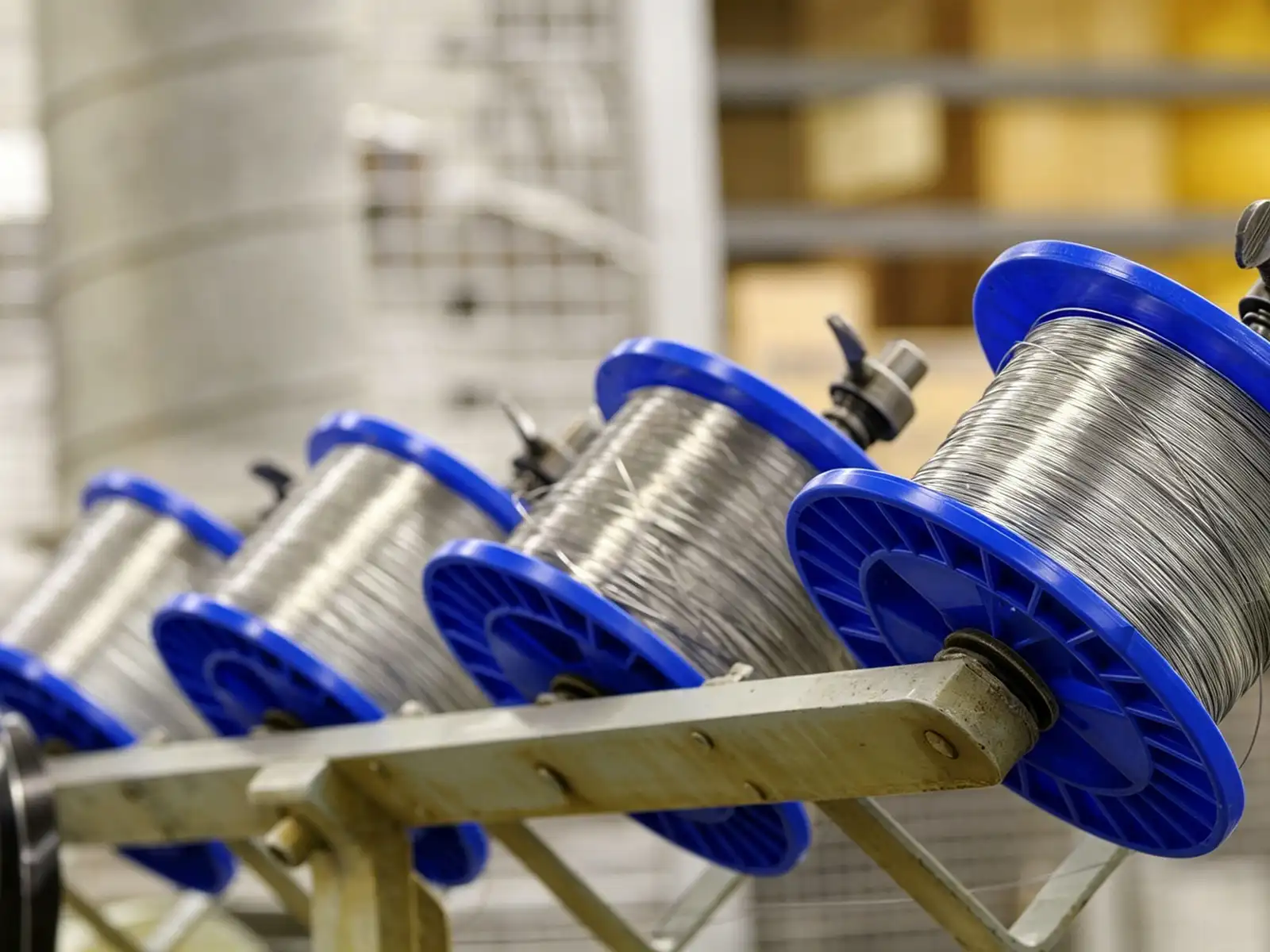
Gr2 titanium wire, as the most widely used industrial pure titanium wire, combines excellent overall performance. Its titanium purity (mass fraction) reaches over 99.2%, the tensile strength in annealed condition is 400-500 MPa, and elongation is ≥ 18%, while also possessing outstanding corrosion resistance and good processing plasticity. This material has a density of only 4.51 g/cm³, about 60% that of stainless steel, and can maintain stable mechanical properties (such as tensile strength and elongation without significant degradation) within a temperature range of -253℃ to 300℃. Its surface can form a dense oxide film, showing excellent corrosion resistance in seawater, salt spray, and most acidic and alkaline media, while remaining non-magnetic and biocompatible, making it an ideal choice for chemical corrosion protection, marine engineering, medical devices, and precision electronics.
1. What Should You Know About the Core Physical Properties and Material Composition of Gr2 Titanium Wire?
(1) What Should You Know About Standardized Chemical Composition and Purity Control?
Gr2 titanium wire follows the ASTM B863 international standard, and its chemical composition is strictly controlled to ensure stable performance. The titanium content (mass fraction) is maintained above 99.2%, oxygen content ≤ 0.25%, iron content ≤ 0.30%, carbon ≤ 0.08%, nitrogen ≤ 0.03%, and hydrogen ≤ 0.015%. This precise composition allows the material to maintain high purity while achieving a moderate strength level through the reasonable distribution of interstitial elements.
(2) What Should You Know About Basic Physical Performance Parameters?
With a material density of 4.51 g/cm³, titanium wire offers a significant advantage in lightweight performance, with a weight that is only 57% that of steel at the same strength. Its melting point as high as 1668℃ ensures structural stability in high-temperature environments. The thermal expansion coefficient is 8.6×10⁻⁶/ C, close to that of alumina ceramic (about 8.5×10⁻⁶/ C), with a moderate thermal conductivity of 15.2 W/(m·K) and an electrical resistivity of approximately 0.57 uOhm.m. These characteristics make titanium wire perform excellently in applications such as heat exchangers and electrode materials.
(3) What Should You Know About Crystal Structure and Microstructure?
Gr2 titanium wire adopts a multi-pass cold drawing combined with segmented annealing process, forming a uniform and refined grain structure. The hexagonal close-packed lattice of α-phase titanium provides the material with good plastic deformation capability. Through the roller die cold drawing process, the dislocation density inside the material is optimally controlled, and the yield-to-tensile strength ratio is increased to the 0.65-0.75 range, ensuring both manufacturability and structural load-bearing requirements.
Table 1: Comparison of Main Physical Properties of Gr2 Titanium Wire
Performance parameters | Gr2 Titanium Wire | 304 stainless steel | Pure nickel wire |
Density (g/cm³) | 4.51 | 7.93 | 8.90 |
Tensile Strength (MPa) | 400-500 (annealed state) | 520-720 | 480-650 |
Elongation (%) | ≥ 18 | ≥ 40 | ≥ 30 |
Corrosion Resistance (Seawater/Salt Spray) | Excellent | Good | Excellent (avoid oxidative media) |
Magnetic | Non-magnetic | Weak magnetic | Weak magnetic |
2. What Should You Know About Analysis of Mechanical Properties and Machinability?
(1) What Should You Know About Strength Performance Under Different Conditions?
Annealed (M) titanium wire has a tensile strength of 400-500 MPa, a yield strength of 275-420 MPa, and an elongation of 15-20%, suitable for applications requiring deep deformation. The half-hard (Y2) state increases strength to 480-620 MPa, with elongation reduced to 8-12%, balancing strength and toughness. The hard (Y) state can reach 550-750 MPa, mainly used for elastic components and load-bearing structures. This multi-state supply strategy meets a full range of needs, from welding to fasteners.
(2) What Should You Know About Dimensional Control in Precision Machining?
Using an automated cold drawing system, the wire diameter tolerance is controlled within ± 0.02mm, roundness deviation ≤ 0.15mm (for φ6.5mm specifications), and straightness reaches a level of 2‰. This level of precision is crucial for the wire feeding stability of automated welding equipment. The precision straightening process eliminates residual stress, allowing titanium wire to maintain excellent dimensional stability during secondary processing such as laser cutting and weaving into mesh.
(3) What Are the Differences in Differences in Hot and Cold Working Characteristics?
During cold processing, Gr2 titanium wire exhibits a moderate rate of work hardening, with hardness increasing by approximately HV20-30 for every 10% of cold deformation. With intermediate annealing treatment, ultrafine wire can be produced from φ6.5mm to φ0.1mm. The hot processing temperature window is 800-950℃, which is much lower than the melting point (1668℃), mainly for the following reasons: at this temperature, the α→β phase transformation of titanium is completed, the material’s plasticity is significantly improved, and the oxidation rate is controllable, which can prevent grain coarsening and oxygen embrittlement. The formation of the oxide layer must be controlled during hot processing. Surface lubrication coating technology effectively solves mold adhesion issues, increasing the continuous production yield of finished products to over 92%.
Table 2: Comparison of Mechanical Properties of Gr2 Titanium Wires in Different States
State | Tensile Strength (MPa) | Yield Strength (MPa) | Elongation (%) | Hardness HV | Typical Applications |
Annealed state (M) | 400-500 | 275-420 | 15-20 | 140-200 | Welding wire, deep-processed parts |
Semi-rigid state (Y2) | 480-620 | 380-520 | 8-12 | 180-240 | Springs, mesh sieves |
Hard State (Y) | 550-750 | 450-650 | 5-8 | 220-300 | Fasteners, shafts |
3. What Should You Know About Corrosion Resistance and Environmental Adaptability?
(1) What Should You Know About Oxide Film Protection Mechanism?
The surface of titanium wire instantly forms a dense TiO2 oxide film with a thickness of about 1-10 nm in the air. This passivation film has self-healing properties. When the film is damaged, it can quickly regenerate in an oxygen-containing environment. This oxide film remains stable in the pH range of 2-12, keeping the corrosion rate of titanium wire in most industrial media below 0.01 mm/year, which is far superior to the 0.1-0.5 mm/year level of 316L stainless steel.
(2) What Should You Know About Corrosion Resistance Performance in Special Environments?
A 480-hour salt spray test was conducted on Grade 2 titanium wire in a 3.5% sodium chloride solution according to ASTM B117, and no visible corrosion was observed on the surface. In a seawater environment, it exhibits excellent resistance to pitting and crevice corrosion, making it suitable for marine platform mooring systems and seawater desalination equipment. When exposed to oxidizing acids such as 10% sulfuric acid and 30% nitric acid, the titanium wire remains inert at room temperature. However, it should be noted that rapid corrosion occurs in fuming sulfuric acid, concentrated hydrochloric acid, and hydrofluoric acid.
(3) What Should You Know About Extreme Temperature Environmental Stability?
At the low-temperature end, titanium wire does not undergo brittle transition in environments of liquid hydrogen (-253℃) and liquid oxygen (-183℃); its impact toughness slightly improves, making it a preferred material for reinforcing cryogenic containers. At the high-temperature end, it can serve long-term below 300℃, with a slow rate of oxidation weight gain; the short-term heat resistance can reach up to 450℃ (such as in the heat-affected zone during brief welding), but oxygen content must be controlled to prevent oxygen embrittlement. When the temperature exceeds 300℃, the material’s strength gradually decreases, so prolonged exposure is not recommended to maintain structural reliability. This wide temperature adaptability covers the full spectrum of applications from aerospace to cryogenic equipment.
4. What Should You Know About Surface Treatment Processes and Functional Customization?
(1) What Should You Know About Standard Surface Condition Type?
The pickled surface is treated with a nitric acid-hydrofluoric acid mixture to remove scale and surface impurities, forming a silver-white matte appearance with a roughness of Ra 0.8-1.6 um, suitable for welding and chemical pipelines. The bright surface undergoes multiple precision drawing processes using specialized wire-drawing dies, reducing the surface roughness to Ra 0.2-0.4 um, giving a metallic luster and meeting the cleanliness requirements of electronic components and medical devices.
(2) What Should You Know About Functional Coating Technology?
The lubricating coating uses a composite system of polytetrafluoroethylene or molybdenum disulfide, reducing the friction coefficient in subsequent cold forging processes to below 0.08 and extending mold life by three times. Anodizing treatment can produce a 5-25 um colored oxide film on the surface. This oxide film has a porous structure, and decorative effects (such as space gray or champagne gold) can be achieved by controlling the thickness. At the same time, due to the increased density of the film, the surface hardness can reach HV 300-400. This treatment is in high demand in the fields of eyeglass frames and consumer electronics.
(3) What Should You Know About Ultra-clean Surface Preparation?
Medical-grade titanium wire needs to go through ultrasonic cleaning, plasma cleaning, and vacuum packaging processes. The surface residual carbon content is controlled below 50 ppm, and particle contamination reaches ISO 14644-1 Class 5 level. This ultra-clean surface ensures the biocompatibility of implantable devices and the sterility requirements of surgical instruments, certified through ISO 10993 biological evaluation.
Table 3: Performance Characteristics of Different Surface Treatments
Surface condition | Roughness Ra (um) | Hardness HV | Main Advantages | Applicable Scenarios |
pickled surface | 0.8-1.6 | 140-200 | High cleanliness, good weldability | Chemical equipment, welding materials |
Bright surface | 0.2-0.4 | 160-220 | High gloss, precise dimensions | Electronic components, medical devices |
Lubricating coating | 0.6-1.2 | 150-210 | Low friction, anti-stick mold | Cold-forged parts, fasteners |
Anodizing | 0.4-0.8 | 300-400 | Highly decorative and wear-resistant | Eyeglass frames, 3℃ housings |
5. Why Is Industry Application Scenarios and Performance Matching Important?
(1) Why Is Chemical and Marine Engineering Applications Important?
In the chlor-alkali industry, Gr2 titanium wires are woven into anode baskets and have served in saturated brine electrolysis cells for over 15 years without replacement, reducing costs by 40% compared to nickel-based alloys. The pressure-resistant hull ribs of deep-sea submersibles are wound from φ3.0mm titanium wires, meeting the strength requirements for depths of 6, 000 meters while improving endurance by reducing weight by 20%. After using titanium wires in the support frameworks of seawater reverse osmosis desalination units, the maintenance cycle has been extended from 18 months to 60 months.
(2) What Should You Know About Medical Devices and Biomaterials?
Locking screws for orthopedic implants such as intramedullary nails are cold-headed from φ2.0mm titanium wire, with a shear strength of 680MPa, and do not release metal ions in the human body. Orthodontic archwires for dental use utilize semi-hard φ0.6mm specifications, maintaining constant rebound force and not causing allergic reactions. For the guidewire parts of minimally invasive surgical instruments, the flexibility of titanium wire and its X-ray transparency allow precise positioning. All these applications require medical-grade certification according to ASTM F136 and ISO 5832-2.
(3) What Should You Know About Electronics and Precision Instruments Field?
The spring components in smartphone vibration motors use φ0.3mm ultra-fine titanium wires, with a fatigue life exceeding 10⁷ cycles, and being non-magnetic avoids interference with electronic compasses. The electrostatic shielding mesh of semiconductor manufacturing equipment uses woven titanium wire mesh, which does not release contaminants at a processing temperature of 300℃ (measured volatile organic compound (VOC) emission <0.1 μg/g, particle concentration <10 particles/m³). The resonant cavity support structure of high-frequency filters uses the low thermal expansion characteristics of titanium wire to ensure frequency stability. The welding of lithium battery tabs uses φ1.2mm ERTi-2 welding wire, with weld spot resistance below 0.5 mΩ, and has passed safety certification through the nail penetration test.
(4) What Should You Know About Aerospace and Defense Equipment?
The locking titanium wires of aero-engine blades must withstand high-temperature gas erosion and centrifugal loads. Gr2 material can be used normally below 300℃, but the temperature in the engine blade area can reach 800℃, far exceeding the long-term service limit of titanium wires. Therefore, in actual applications, Gr2 titanium wires are mainly used in the outer parts of the engine or in non-high-temperature areas (such as accessory brackets and pipeline fixtures), while fasteners in high-temperature areas usually use nickel-based high-temperature alloys or titanium-based high-temperature alloys (such as TC4, Ti-6242). The deployment mechanism of a satellite’s solar sail uses shape-memory-treated titanium wires, which maintain reliable operation in temperature cycles of -100℃ to 150℃ in space. In parachute systems, the core material of suspension ropes, when woven with φ1.5mm titanium wires, can reach a single-strand tensile strength of 12kN, and their weight is only 45% that of steel wires, improving the thrust-to-weight ratio of the spacecraft.
6. What Is the Conclusion?
Gr2 titanium wire, with a high purity of 99.2% (mass fraction), annealed strength of 400-500 MPa, excellent corrosion resistance, and a lightweight advantage of 4.51 g/cm³, occupies a core position in the industrial pure titanium system. Its wide temperature stability from -253℃ to 300℃, non-magnetic biocompatibility, and full range of specifications from φ0.1mm to φ10.0mm make it the preferred material for chemical corrosion protection, marine engineering, medical implants, precision electronics, and other fields. Through advanced continuous rolling and precision drawing processes, combined with diversified surface treatment technologies, Gr2 titanium wire continuously meets the global high-end manufacturing industry’s comprehensive requirements for reliability, economy, and performance.
FAQ
Q1: What is the main difference between Gr2 titanium wire and Gr1 titanium wire?
The oxygen content of Gr2 titanium wire (0.25%) is higher than that of Gr1 (0.18%), which allows its annealed tensile strength to reach 400-500 MPa, about 15% higher than Gr1, while still maintaining good elongation. Gr2 is the most cost-effective choice for industrial applications, whereas Gr1 is more suitable for deep drawing situations that require extreme formability.
Q2: What key points should be noted when welding titanium wire?
Titanium wire welding must be carried out under argon or vacuum protection to avoid embrittlement caused by high-temperature oxidation. The welding current should be 20-30% lower than that for stainless steel, and the interlayer temperature should be controlled below 150℃. When using ERTi-2 welding wire, it is necessary to ensure that the surfaces of the base material and welding wire are free of oil, and protective gas should be supplied simultaneously to the back of the weld to prevent root oxidation and discoloration.
Q3: How to choose the appropriate titanium wire diameter and condition for a specific application?
For chemical pipeline welding, it is recommended to use φ2.0-3.0mm annealed welding wire to ensure penetration and toughness; spring components should use φ0.5-2.0mm semi-hard wire to balance elasticity and fatigue life; cold-forged fasteners require φ4.0-6.0mm hard rods to ensure thread strength. Medical implants are preferably in annealed condition for subsequent precision machining, and electronic shielding meshes use ultra-fine φ0.1-0.3mm bright wire to ensure weaving accuracy.
What Should You Know About Contact Us Immediately?
Baoji Titanium Valley Titanium-Nickel-Zirconium Material Processing Co., Ltd. (Titanium Valley), as a professional manufacturer of Gr2 titanium wire, relies on precision cold drawing production lines, continuous annealing furnaces, and a full-process quality traceability system, and can provide Gr2 titanium wire in full specifications of φ0.1-10.0 mm, with a diameter tolerance of ± 0.02 mm. The supply conditions include annealed (M), half-hard (Y2), and hard (Y) states. Surface treatments include pickling, brightening, lubricating coating, and anodizing, among other options, meeting the stringent requirements of chemical anti-corrosion, marine engineering, medical devices, precision electronics, and aerospace fields.
We provide complete material certificates that comply with international standards such as ASTM B863, ASTM F136, ISO 5832-2, and EN 10204-3.1, including per-batch measured chemical composition values, mechanical property curves, and surface quality inspection records. Whether you need bulk supply of standard specification welding wire or customized solutions for specific strength conditions and surface functions, our technical team can provide comprehensive support from material selection advice, welding parameter guidance to batch traceability. You are welcome to contact us via email at sales@titaniumvalleys.com to confirm specific requirements, obtain product samples, technical documentation, and detailed quotations.
References
- Zhao Yongqing, Qu Henglei. Science and Engineering of Titanium Alloy Materials [M]. Beijing: Chemical Industry Press, 2020.
- Li Miaoqian, Wang Kelu. Study on Cold Drawing Process and Microstructure Properties of Industrial Pure Titanium Wire [J]. Rare Metal Materials and Engineering, 2019, 48(6): 1823-1829.
- Wu Yunfei, Chen Zhiqiang. Application of Titanium and Titanium Alloys in Marine Engineering [J]. Materials Review, 2021, 35(3): 03156-03162.
- Zhang Hao, Li Hong. Progress in Surface Treatment Technology of Medical Pure Titanium Wire [J]. Journal of Biomedical Engineering, 2020, 37(4): 678-684.
- Liu Baochang, Yang Xiaodong. Current Status and Development Trends of Titanium Alloy Applications in Aero Engines[J]. Aviation Manufacturing Technology, 2019, 62(20): 34-42.