
What Are the Characteristics of Gr2 Titanium Foil?
- Gr2 titanium foil
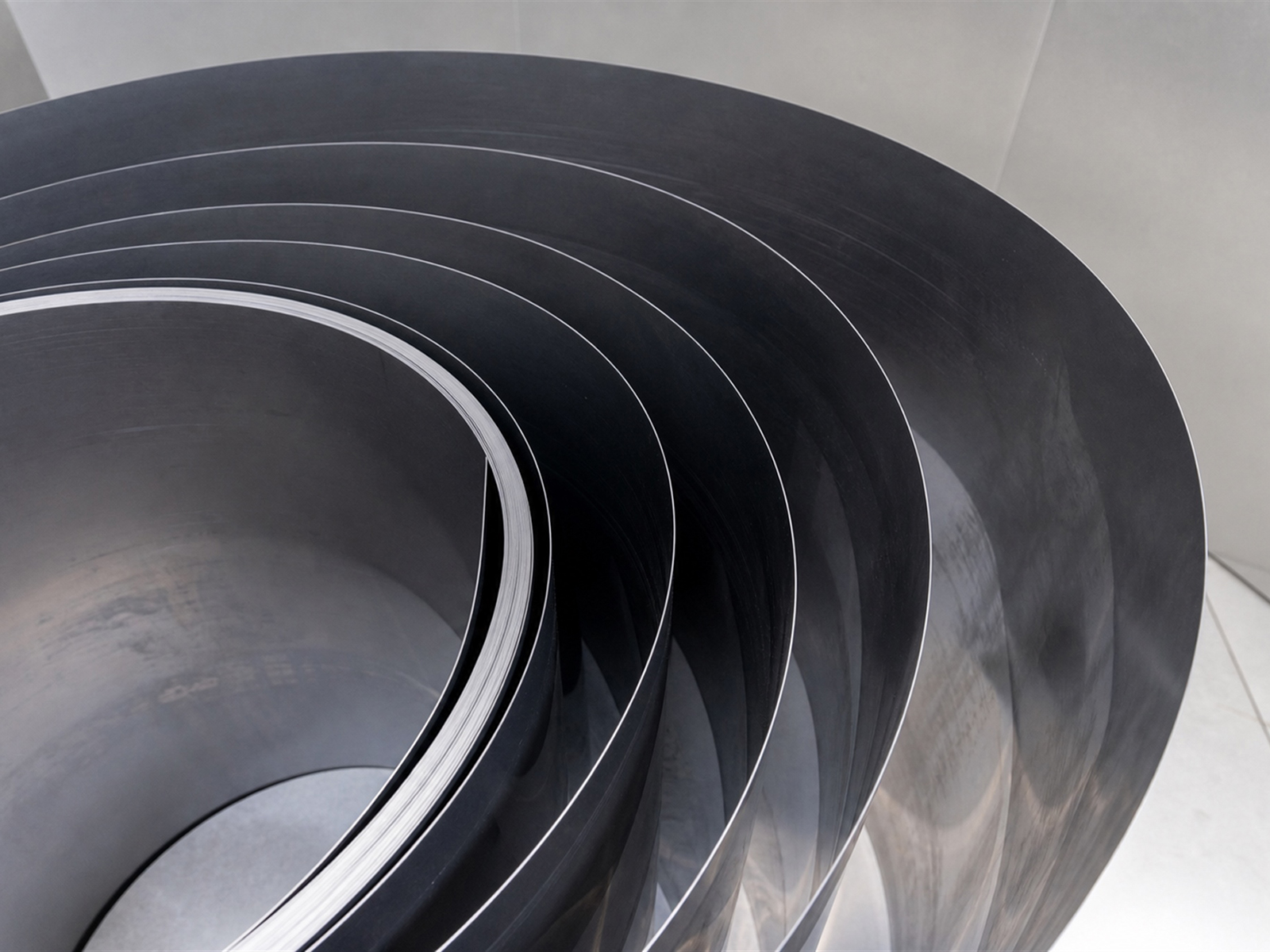
Gr2 titanium foil, as the most widely used grade in industrial pure titanium, combines excellent corrosion resistance, good formability, and moderate mechanical strength. The oxygen content of this material is controlled within 0.25%, which not only maintains the chemical stability of pure titanium but also provides sufficient structural strength. It is widely used in chemical equipment, medical devices, battery manufacturing, and the electronics industry. Compared with Gr1 grade, Gr2 titanium foil has slightly higher strength and hardness, while compared with Gr3 and Gr4, its processing performance is superior and cost control is more advantageous. This balanced performance makes Gr2 titanium foil the preferred material in the precision manufacturing industry, especially in applications that require a combination of corrosion resistance, formability, and cost-effectiveness.
1. What Should You Know About the Material Nature and Chemical Composition Characteristics of Gr2 Titanium Foil?
(1) What Should You Know About Purity Control and the Mechanism of the Influence of Impurity Elements?
The chemical composition of Gr2 titanium foil is strictly controlled, with titanium content (excluding interstitial elements) usually not less than 99.2%, and oxygen content maintained in the range of 0.18-0.25%. Oxygen, as an interstitial solid solution strengthening element, directly affects the balance between the material’s strength and ductility. Iron content is limited to below 0.30%, carbon content does not exceed 0.08%, and nitrogen content is controlled within 0.03%. The precise proportion of these trace elements determines the final performance of the titanium foil. Excessive oxygen content can lead to increased material brittleness, while an appropriate oxygen content can increase tensile strength to the range of 345-483 MPa while maintaining at least 20% elongation. It should be noted that different standards (such as ASTM B265, GB/T 3621) have slight differences in the upper and lower limits of Gr2 titanium’s tensile strength, with some sources recording 345-485 MPa. In engineering applications, it is recommended to select parameters according to the specific standard.
(2) What Should You Know About the Determining Role of Crystal Structure in Performance?
Gr2 titanium foil exhibits a hexagonal close-packed crystal structure at room temperature, which gives the material anisotropic characteristics. The grain size is usually controlled within the range of 10-50 micrometers, and fine, uniform grains are beneficial for improving the formability of the foil. The texture formed during cold rolling affects the mechanical response of the foil in different directions. An optimized annealing process can effectively regulate grain morphology and orientation distribution, allowing the material to demonstrate superior stability during processing such as stamping and bending.
(3) What Should You Know About Self-passivation Mechanism of Surface Oxide Film?
When titanium foil is exposed to air, it instantly forms a dense oxide film 2-7 nanometers thick. This TiO2 thin film has excellent self-healing ability. Even if the surface is mechanically damaged, the oxide film can quickly regenerate in an oxygen-containing environment. This passive passivation characteristic allows Gr2 titanium foil to exhibit outstanding resistance in corrosive media such as chlorides, nitric acid, and sulfuric acid, with a corrosion rate typically below 0.05 mm/year, far superior to stainless steel materials.
2. What Should You Know About Analysis of Mechanical Performance and Machinability?
(1) What Should You Know About Synergistic Properties of Strength and Toughness?
The yield strength of Gr2 titanium foil ranges from 275 to 410 MPa, and the tensile strength reaches 345 to 483 MPa. This strength level meets the load-bearing requirements of most structural components. The material’s fracture toughness is approximately 60-80 MPa·m½, showing good resistance to crack propagation in thin-walled applications. Its density is only 4.51 g/cm³, providing a significant advantage in specific strength, and it is highly valuable in aerospace lightweight design.
Table 1: Comparison of Mechanical Properties Between Gr2 Titanium Foil and Common Metal Materials
Material Type | Density (g/cm³) | Tensile Strength (MPa) | Yield Strength (MPa) | Elongation (%) | Specific strength (kN·m/kg) |
Gr2 Titanium Foil | 4.51 | 345-483 | 275-410 | ≥ 20 | 76-107 |
304 stainless steel | 7.93 | 515-720 | 205-310 | ≥ 40 | 64-91 |
6061 aluminum alloy | 2.70 | 290-310 | 240-275 | ≥ 12 | 107-115 |
Nickel 200 | 8.89 | 380-550 | 100-250 | ≥ 40 | 43-62 |
Note: Specific strength is the ratio of tensile strength to density. The high value of Gr2 titanium foil (107 kN·m/kg) coincides with the low value of 6061 aluminum alloy (107 kN·m/kg), indicating that there is an overlap between the two in this indicator range, and application selection should be comprehensively judged based on specific strength requirements.
(2) What Should You Know About Process Window for Molding Performance?
Gr2 titanium foil has good cold work plasticity and can undergo various forming operations such as deep drawing, stretching, and bending. The material’s strain hardening index is about 0.15-0.20, and the hardening rate during processing is moderate, which is conducive to multi-pass forming processes. The minimum bending radius can reach 2-3 times the material thickness, showing excellent adaptability in the manufacturing of precision electronic device housings. The Vickers hardness of annealed titanium foil is about 120-200 HV, suitable for precision punching and etching processing.
(3) What Should You Know About Fatigue Performance and Service Life Evaluation?
Gr2 titanium foil exhibits stable fatigue resistance under alternating stress, with a fatigue strength of about 50-60% of the tensile strength at 10⁷ cycles. Surface quality has a significant impact on fatigue performance, and by optimizing rolling processes and surface treatments, fatigue life can be increased by more than 30%. In vibration environments or applications with cyclic loads, such as fuel cell bipolar plates and medical implants, this fatigue characteristic ensures long-term reliability of the products.
3. Why Is the Deep Mechanism and Application Boundaries of Corrosion Resistance Important?
(1) What Should You Know About Corrosion Resistance Performance in Various Media Environments?
Gr2 titanium foil exhibits excellent corrosion resistance in oxidative acids, reductive acids, and salt solutions. It shows good corrosion resistance in nitric acid, chromic acid, and hypochlorous acid solutions from room temperature to boiling, but the corrosion rate may significantly increase in boiling concentrated nitric acid, with a risk of damage to the passive film, requiring cautious use. It remains in good condition even after being soaked in seawater for decades. Across a wide pH range of 2-12, the material’s corrosion rate remains at an extremely low level. This comprehensive corrosion resistance makes titanium foil an ideal choice for chemical anti-corrosion and marine engineering.
(2) What Should You Know About Critical Temperature and Concentration Limiting Conditions?
Although Gr2 titanium foil has excellent corrosion resistance, caution is still required under certain extreme conditions. In hydrochloric acid solutions with concentrations above 10%, elevated temperatures can accelerate corrosion; in anhydrous or concentrated sulfuric acid environments, temperatures above 80℃ may trigger violent reactions. Hydrofluoric acid is highly corrosive to titanium and can damage the protective film even at low concentrations. In high-temperature, high-pressure environments containing chloride ions, the risk of stress corrosion cracking needs to be mitigated through alloying or surface treatment.
Table 2: Suitable conditions for Gr2 titanium foil in typical corrosive media
corrosive medium | Maximum Safe Temperature (C) | Maximum Safe Concentration (%) | Corrosion rate (mm/year) | Application field |
Nitric acid | 100 | 70 | <0.01 | Chemical equipment lining |
Sulfuric acid | 80 | 20 | <0.05 | Pickling equipment |
Sodium hydroxide | 100 | 50 | <0.02 | Alkaline electrolyzer |
seawater | 100 | – | <0.005 | Marine Engineering |
Chloride solution | 100 | Saturated | <0.03 | Salt chemical equipment |
Note: Titanium has good corrosion resistance in seawater and can be safely used below 100℃. In practical applications, there is generally no definite upper temperature limit. The values listed in the table are commonly used as reference values for engineering design and are not absolute safety limits.
(3) What Should You Know About Characteristics of Electrochemical Corrosion Behavior?
Gr2 titanium foil exhibits passivation characteristics in electrochemical corrosion systems, with a self-corrosion potential of approximately -0.5 to -0.2 V (vs SCE) and a wide passivation range. It can serve as an ideal anode material in cathodic protection systems, with a relatively low oxygen evolution overpotential. There is a risk of galvanic corrosion when in contact with stainless steel or copper alloys, which requires isolation protection through insulating gaskets or coatings. In environments containing chloride ions, its susceptibility to pitting is much lower than that of stainless steel, and it maintains an extremely low passive current density.
4. Why Is Physical Performance Characteristics and Functional Extension Applications Important?
(1) What Should You Know About Thermal Performance Parameters and Their Engineering Significance?
The thermal conductivity of Gr2 titanium foil is about 16-17 W/(m·K), lower than copper and aluminum but higher than stainless steel. The coefficient of linear expansion is 8.6×10⁻⁶/K, which matches well with some glass and ceramic materials, making it suitable for reliable joining of dissimilar materials. It has a melting point as high as 1668℃ and can maintain structural stability during long-term use below 600℃. The specific heat capacity is about 0.52 kJ/(kg·K), which needs to be considered for heat transfer efficiency optimization in heat exchanger design.
(2) Why Is Electromagnetic Properties and Shielding Applications Important?
Titanium foil has good electrical conductivity, with a resistivity of about 54 μΩ·cm. Although it is not as good as copper or aluminum, it meets the requirements of most electrical contact applications. The material’s relative magnetic permeability is close to 1, classifying it as a non-magnetic material, and it does not cause interference in magnetic resonance imaging equipment and precision magnetic measurement instruments. In electromagnetic shielding applications, titanium foil with a thickness of 0.05-0.1 mm can effectively attenuate radio frequency electromagnetic waves, with a shielding effectiveness of 40-60 dB.
(3) Why Is Biocompatibility and Medical Application Value Important?
Gr2 titanium foil has no toxic reactions to human tissues, and cytotoxicity tests show a cell survival rate of over 95%. Its surface oxide film does not trigger immune rejection and can form good osseointegration with bone tissue. It does not release metal ions in body fluids, avoiding allergic and inflammatory reactions. These biological properties make titanium foil widely used in pacemaker housings, artificial joint components, and dental restorative materials. It should be noted that in the field of medical implants, Ti-6Al-4V (Gr5) and its ultra-low interstitial version (ELI) are more commonly used for load-bearing components, such as hip stems and bone plates, due to their higher strength; Gr2 titanium foil is mainly suitable for non-load-bearing or low-stress implants, such as craniofacial fixation plates, vascular clips, and some stents, and does not dominate the entire medical titanium materials market.
5. What Should You Know About Key Points of Ultra-Thin Specification Manufacturing Technology and Quality Control?
(1) What Should You Know About Cold Rolling Process Path and Technological Breakthroughs?
Producing ultra-thin titanium foil with a thickness of 0.01-0.10mm requires overcoming technical challenges such as work hardening, edge cracking, and plate shape control. Baoji Titanium Valley, through its investment in automated foil production lines, has successfully addressed several key technical challenges. By using multi-pass reversible cold rolling technology, the single-pass reduction rate is precisely controlled at 15-25%, with cumulative deformation exceeding 95%. The intermediate annealing process uses vacuum or protective atmosphere to avoid oxidation and hydrogen embrittlement risks, and the grain size control precision reaches ± 5 microns.
(2) What Should You Know About Surface Quality and Dimensional Accuracy Assurance?
The surface roughness requirement for ultra-thin titanium foil is Ra≤ 0.4um, achieved through precision grinding of rollers and optimizing the rolling oil film thickness. Thickness tolerance control should be graded according to the thickness range: for ultra-thin foils of 0.01-0.03mm, the tolerance should be controlled within ± 0.003mm; for 0.03-0.10mm specifications, it can be relaxed to ± 0.005mm; for 0.10-0.50mm specifications, it is usually ± 0.008-0.010mm. A laser thickness gauge is used for real-time monitoring and closed-loop feedback adjustment. The flatness index requirement is I unit ≤ 8, eliminating wave and warp defects through roll bending technology and tension distribution optimization. Edge quality control uses high-precision cutting and chamfering to ensure edges are free of burrs and microcracks.
Table 3: Technical Specifications and Application Matching of Gr2 Titanium Foil with Different Thicknesses
Thickness range (mm) | Width capacity (mm) | Thickness tolerance (mm) | Surface Roughness Ra (um) | Main application areas |
0.01-0.03 | ≤ 300 | ± 0.003 | ≤ 0.3 | Lithium battery current collector, flexible circuit |
0.03-0.05 | ≤ 600 | ± 0.005 | ≤ 0.4 | Fuel cell bipolar plate, electromagnetic shielding |
0.05-0.10 | ≤ 1000 | ± 0.008 | ≤ 0.5 | Chemical diaphragm, medical device casing |
0.10-0.50 | ≤ 1200 | ± 0.010 | ≤ 0.6 | Heat exchanger, electroplating anode |
(3) What Should You Know About Full-process Quality Control System?
From the inspection of sponge titanium raw materials upon entering the factory to the shipment of finished foil products, a quality traceability system covering key control points is established. Spectral analyzers are used to verify the chemical composition of each batch of material, ultrasonic testing detects internal defects, and X-ray diffraction analyzes the crystal structure. Mechanical performance tests cover tensile, hardness, bending, and fatigue tests, while corrosion resistance evaluation includes salt spray tests and electrochemical testing. A digital quality archive is established to achieve a complete record of each roll of foil from raw material batch number to process parameters, ensuring that the product meets the relevant standards for aerospace and medical devices.
6. What Should You Know About Conclusion?
Gr2 titanium foil, with its balanced mechanical properties, excellent corrosion resistance, and superior processing adaptability, has become an important material in high-end manufacturing. From the lightweight current collectors in lithium batteries to the corrosion-resistant bipolar plates in fuel cells, from the biocompatible interfaces in medical implants to the electromagnetic shielding layers in precision electronic devices, this material continuously drives technological innovation and industrial upgrading. With breakthroughs in ultra-thin manufacturing technology and the establishment of production capacity, the application boundaries of Gr2 titanium foil are expected to continue expanding.
FAQ
Q1: How should Gr2 titanium foil and Gr1 titanium foil be selected in practical applications?
The strength of Gr2 titanium foil is about 15-20% higher than Gr1, making it suitable for applications that require load-bearing structural functions, such as fuel cell bipolar plates and medical device casings. Gr1 titanium foil has better ductility, making it suitable for deep drawing of complex shapes or products that require extreme forming performance. Both have similar corrosion resistance, with the choice mainly based on a balance between strength requirements and processing difficulty.
Q2: What advantages does ultra-thin titanium foil have over copper and aluminum foil in lithium battery applications?
The corrosion resistance of titanium foil far exceeds that of copper and aluminum materials, and it does not dissolve or produce dendrite growth in an electrolyte environment, significantly improving battery safety and cycle life. Its chemical stability makes batteries more reliable under high temperature and overcharge conditions, making it especially suitable for power batteries and energy storage systems. The disadvantage of its density can be partially offset through structural optimization.
Q3: How can the quality of the surface oxide film on Gr2 titanium foil be determined?
A qualified oxide film should exhibit a uniform silver-gray or light yellow color, with no obvious color differences or spots on the surface. The film density can be tested through electrochemical impedance spectroscopy, and the impedance value should be greater than 10⁵ Ω·cm². Water contact angle tests indicate moderate hydrophilicity, with angles in the range of 60-80 degrees. After scratching and soaking in salt water, the re-passivation speed should be observed; a high-quality film recovers its protective property within 24 hours.
What Should You Know About Contact Us Immediately?
Baoji Titanium Valley Titanium Nickel Zirconium Materials Processing Co., Ltd. (Titanium Valley), as a professional Gr2 titanium foil manufacturer, leverages its precision foil rolling production line, vacuum annealing furnace, and full-process digital quality traceability system to provide customized Gr2 titanium foils with thicknesses ranging from 0.01 to 0.50 mm and widths up to 1200 mm. The thickness tolerance is accurate to ± 0.003 mm, surface roughness Ra 0.3-0.6 um, and the surface finish includes bright, matte, and ground treatments, meeting the diverse needs of fields such as new energy batteries, chemical corrosion protection, medical devices, and electromagnetic shielding.
We provide complete material certificates that comply with international standards such as ASTM B265, GB/T 3621, and EN 10204-3.1, including actual measured values of chemical composition for each batch, tensile curves, metallographic structures, and non-destructive testing records. Whether you need bulk supply of ultra-thin specifications, or customized solutions for specific forming processes and corrosion-resistant conditions, our technical team can offer comprehensive support from material selection advice, forming parameter optimization, to batch traceability. You are welcome to contact us via email at sales@titaniumvalleys.com to confirm specific requirements, obtain product samples, technical data packages, and detailed quotation information.
References
- Zhao Yongqing, Qu Henglei. Microstructure, Properties, and Processing Technology of Industrial Pure Titanium [M]. Beijing: Metallurgical Industry Press, 2019.
- Yao Zekun, Zhu Zhishou, Wang Xinnan. Cold rolling process and microstructure-performance control of titanium alloy foil [J]. Rare Metal Materials and Engineering, 2018, 47(6): 1823-1829.
- Jiang Guiping, Zhang Baochang. Research Progress on the Corrosion Resistance of Titanium and Titanium Alloys [J]. Corrosion Science and Protection Technology, 2017, 29(3): 281-288.
- China Nonferrous Metals Industry Association. Titanium and Titanium Alloy Grades and Chemical Composition: GB/T 3620.1-2016[S]. Beijing: China Standards Press, 2016.
- Liu Jiansheng, Li Xuefeng. Design of Rolling Process and Quality Control System for Ultra-Thin Titanium Foil [J]. Nonferrous Metals Processing, 2020, 49(4): 33-38.