
What Are the Characteristics of Nickel 200 Nickel Wire?
- Nickel 200 Nickel Wire
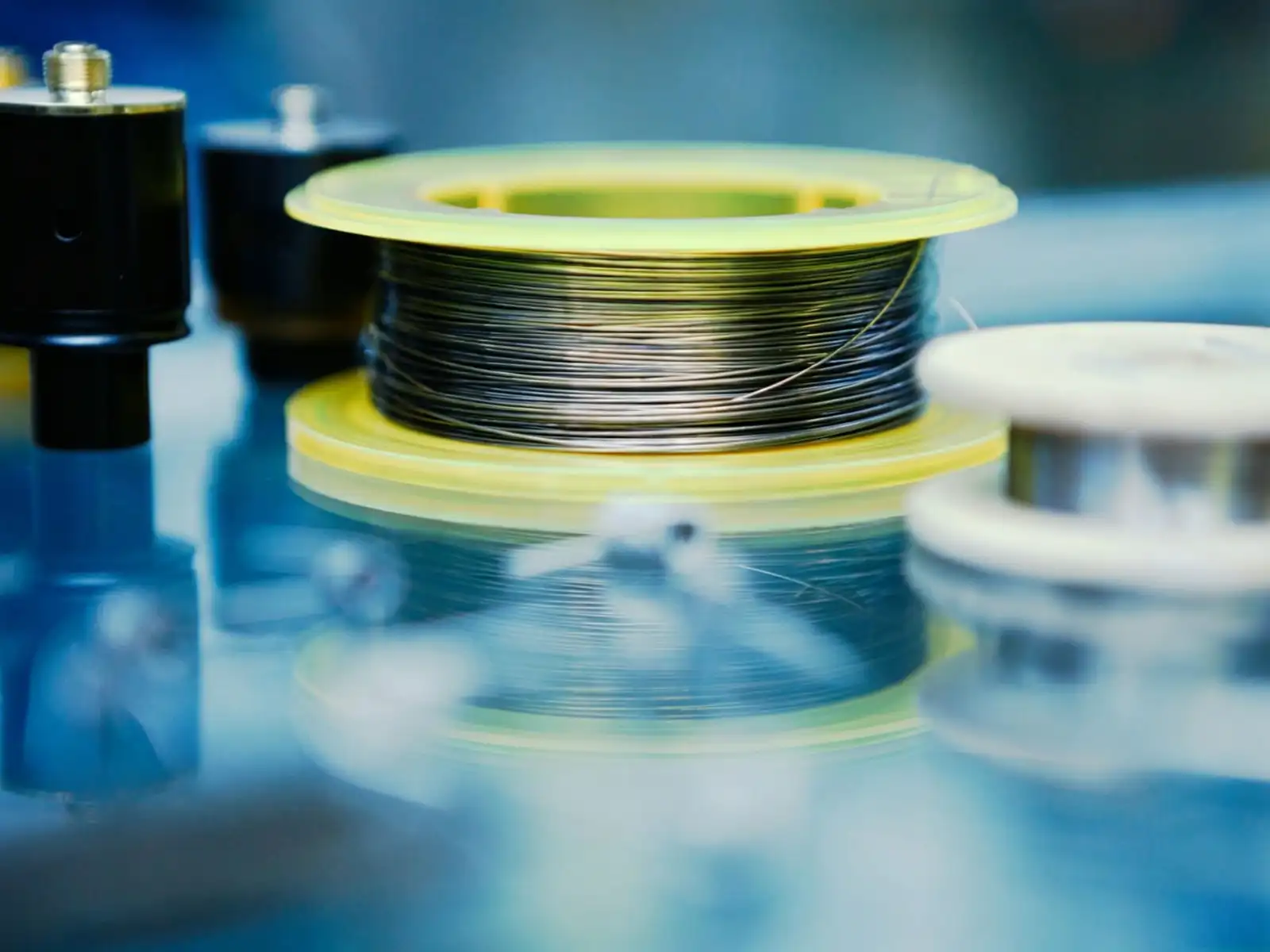
Nickel 200 nickel wire, as a high-purity industrial nickel material, demonstrates excellent overall performance due to its nickel content of over 99.5%. This material is widely favored in the chemical, electronics, medical, and high-temperature fields, mainly because of its outstanding resistance to alkaline corrosion, excellent electrical and thermal conductivity, good plastic processing performance, and complete non-magnetic properties. Its physical properties are stable, with a density of 8.90 g/cm³, a melting point of 1453-1455℃, and a resistivity of 6.84×10⁻⁸ Ω·m. These characteristics make Nickel 200 nickel wire an ideal choice to replace ordinary metal materials, especially suitable for long-term service under harsh conditions.
1. Why Is Chemical Composition and Purity Advantages of Nickel 200 Nickel Wire Important?
(1) What Should You Know About Ultra-high Purity Ensures Material Performance?
The core competitiveness of Nickel 200 wire lies in its extremely high nickel purity. According to ASTM B161 and related international standards, the total content of nickel and cobalt in this material is not less than 99.5%, and impurity elements are strictly controlled at very low levels. This high-purity characteristic ensures that the material does not introduce contamination when in contact with chemical media, making it particularly suitable for industries with strict requirements for material cleanliness, such as food, pharmaceuticals, and semiconductors.
(2) What Should You Know About Precise Control of Alloy Elements?
Most impurity elements such as iron, copper, manganese, and silicon in the material are controlled below 0.10%, carbon content does not exceed 0.10%, sulfur content ≤ 0.005%, and phosphorus content ≤ 0.002%. This precise composition management not only enhances the material’s corrosion resistance but also optimizes weldability, avoiding the risk of embrittlement under high-temperature conditions.
(3) What Should You Know About Batch Stability and Traceability?
Professional smelting processes combined with a full-process quality monitoring system ensure that the chemical composition of each batch of Nickel 200 wire is highly consistent. Manufacturers usually provide EN 10204 3.1 material certificates, fully recording the spectrochemical analysis data of each melt, providing reliable evidence for downstream users’ quality management.
element | Ni+Co | Fe | Cu | Mn | Si | C | S | P |
Content (wt%) | ≥ 99.5 | ≤ 0.10 | ≤ 0.10 | ≤ 0.05 | ≤ 0.05 | ≤ 0.10 | ≤ 0.005 | ≤ 0.002 |
2. What Should You Know About Analysis of Mechanical Properties and Physical Characteristics?
(1) What Should You Know About Excellent Strength-toughness Balance?
The tensile strength of soft Nickel 200 wire reaches over 350 MPa, with a typical yield strength of ≥ 105 MPa and an elongation exceeding 30%. This perfect combination of strength and plasticity allows the material to withstand certain mechanical loads while maintaining good cold bending performance. The hardness ranges from 85-95 HB, and the moderate hardness value ensures that the material is neither too soft to deform nor too hard to process.
(2) What Should You Know About Stable Thermophysical Properties?
The material has a density of 8.90 g/cm³, slightly higher than carbon steel but lower than copper, effectively reducing structural weight while maintaining strength. Its melting point range of 1453-1455℃ provides excellent high-temperature stability, and its thermal conductivity at room temperature is 70 W/(m·K), ensuring rapid heat transfer. These characteristics make Nickel 200 wire an ideal material for heat exchangers and heating elements.
(3) Why Is Electrical Characteristics Advantages Important?
The low-resistance characteristic with a resistivity of 6.84×10⁻⁸ Ω·m allows it to exhibit excellent performance in applications such as battery tabs, conductive leads, and electrolytic plating anodes. Compared with 304 stainless steel, Nickel 200 nickel wire has about 40% higher conductivity, which can significantly reduce energy loss and improve the efficiency of electrochemical reactions.
Performance indicators | Numerical value | Application Advantages |
Tensile strength | ≥ 350 MPa | Strong load-bearing capacity |
Elongation | ≥ 30% | Good machinability |
Density | 8.90 g/cm³ | Moderate weight |
Thermal conductivity (room temperature) | 70 W/(m·K) | High heat transfer efficiency |
Resistivity | 6.84×10⁻⁸ Ω·m | Excellent conductivity |
3. What Should You Know About In-depth Analysis of Corrosion Resistance Performance?
(1) What Should You Know About Outstanding Performance in a Strong Alkaline Environment?
Nickel 200 wires exhibit excellent corrosion resistance in strong alkaline solutions such as sodium hydroxide and potassium hydroxide, with corrosion rates much lower than stainless steel materials (for example, 304 stainless steel has an annual corrosion rate of less than 0.05 mm under 30% NaOH at 90℃). This makes it the preferred material for chlor-alkali industry electrolyzer anodes, alkaline solution filter screens, and caustic soda evaporator components. Even when operating long-term in a high-temperature alkaline environment of 30% NaOH at 90℃, the material surface can maintain a stable protective oxide film.
(2) What Should You Know About Tolerance of Restorative Media?
In reducing acid solutions such as hydrochloric acid and hydrofluoric acid, Nickel 200 nickel wire exhibits good stability, making it particularly suitable for reducing conditions like deoxygenated water and degassed media. The material also has reliable resistance to seawater and salt spray environments, effectively extending the service life when applied in marine engineering equipment.
(3) What Should You Know About Applicable Boundaries of Corrosion Resistance?
It should be noted that Nickel 200 wire is not suitable for high-temperature oxidizing acids (such as concentrated nitric acid) environments, and there is a risk of sulfur embrittlement in high-temperature sulfur-containing atmospheres (long-term exposure above 315℃). Strong oxidizing chlorides may also cause pitting failure. Precisely understanding the applicable boundaries of the material is a key prerequisite for ensuring engineering safety.
4. What Should You Know About Machinability and Specification Diversity?
(1) What Should You Know About Cold Working and Heat Treatment Processes?
Nickel 200 nickel wire has excellent cold drawing formability and can be processed to ultra-fine specifications of φ0.05mm through multiple drawing passes. The material is not sensitive to work hardening, and its plasticity recovers well after annealing. The heat treatment temperature is usually controlled between 700-900℃, which can both relieve internal stress and avoid abnormal grain growth.
(2) How Should Selection of Surface Treatment Process?
According to application requirements, Nickel 200 wire can be provided in a variety of surface finishes, including bright finish, semi-bright finish, pickled finish, and polished finish. The bright finish is suitable for electronic component leads, the pickled finish facilitates subsequent soldering, and the polished finish meets the cleanliness requirements of medical devices. Surface treatment not only enhances aesthetics but also directly affects the material’s corrosion resistance and conductive contact performance.
(3) What Should You Know About Dimensional Accuracy and Shape Customization?
The modern production line can achieve full size coverage from φ0.05mm to φ200mm. The diameter tolerance for fine wire (φ0.05-4mm) can be controlled within ± 0.005mm, medium wire (φ5-30mm) within ± 0.01mm, and coarse wire (φ31-200mm) within ± 0.02mm. Straightness is ≤ 1mm/m (refer to GB/T 1234). In addition to conventional round wire, custom shapes such as square and hexagonal wire can also be produced. Lengths from 300mm to 6000mm can be cut as required to meet the continuous feeding needs of automated production lines.
Specification Type | Size range | Tolerance accuracy | Application scenario |
Fine thread | φ0.05-4mm | ± 0.005mm | Precision electronics, medical |
China Silk | φ5-30mm | ± 0.01mm | Conventional industrial applications |
Coarse thread | φ31-200mm | ± 0.02mm | Structural components, shafts |
5. Why Is Industry Application Scenarios and Value Realization Important?
(1) What Should You Know About Core Materials of the Chemical and Chlor-alkali Industries?
In the chlor-alkali electrolysis process, Nickel 200 nickel wire, used as an anode material, can effectively resist corrosion from high-concentration sodium chloride solution. Compared with traditional graphite anodes (under conditions of 1500 A/m² current density and 90℃), its service life is extended by 3-5 times, significantly reducing equipment maintenance frequency and production downtime losses. The material’s low electrical resistance characteristics can also save 8%~12% of electrolysis energy consumption, creating considerable economic benefits for enterprises.
(2) What Should You Know About Key Components of Electronics and Battery Manufacturing?
In lithium battery manufacturing, Nickel 200 nickel wire is widely used for tab welding and conductive connections. Its excellent conductivity ensures the battery’s low internal resistance characteristic, and being completely non-magnetic avoids electromagnetic interference with electronic devices. The semiconductor industry uses its high purity characteristics to manufacture lead frames, ensuring the reliability of chip packaging.
(3) What Should You Know About the Safe Choice for Medical Devices?
Applications of Nickel 200 wire in the medical device field include medical guidewires, cardiovascular stent springs, and endoscope components, which require extremely high biocompatibility and corrosion resistance. The material’s non-toxic, non-magnetic, and body fluid corrosion-resistant properties perfectly meet these requirements, and it has good processing performance, making it easy to fabricate complex microstructures.
(4) What Should You Know About Reliable Protection Under High-temperature Conditions?
In applications such as vacuum furnace heating elements, high-temperature furnace supports, and heat treatment fixtures, Nickel 200 wire demonstrates stable high-temperature mechanical properties and oxidation resistance. The material can maintain structural stability for a long time in environments below 600℃, avoiding production losses caused by frequent replacements.
6. What Is the Conclusion?
Nickel 200 nickel wire, with its high purity, excellent resistance to alkaline corrosion, good electrical and thermal conductivity, non-magnetic nature, and outstanding machinability, has become an irreplaceable key material in the chemical, electronics, medical, and high-temperature industries. Accurately understanding its performance limits and reasonably selecting its specifications and surface conditions can maximize the material’s value, bringing significant economic benefits and competitive advantages to enterprises.
FAQ
Q1: What is the difference between Nickel 200 wire and Nickel 201?
Nickel 201 is a low-carbon version (carbon content ≤ 0.02%), with better resistance to graphitization in high-temperature environments above 315℃, while Nickel 200 offers a higher cost-performance ratio in the normal to medium temperature range (≤ 315℃). The choice should be made based on the actual working temperature.
Q2: How can the quality of Nickel 200 wire be determined?
It is necessary to check the chemical composition report, mechanical property test data, and surface quality. High-quality products should provide furnace batch number traceability, spectral testing certification, have no surface oxidation or cracks, meet the standard requirements for diameter tolerance, and possess authoritative third-party testing certification.
Q3: Can Nickel 200 wire be used for welding applications?
Absolutely. This material has good welding performance and can be welded using various processes such as TIG and MIG. It is recommended to perform pickling treatment before welding (for example, a 10% sulfuric acid solution, with careful control of the pickling time) to remove surface oxides. During welding, using pure nickel welding wire as the filler material can achieve weld quality comparable to that of the base material.
7. What Should You Know About Call to Action?
Baoji Titanium Valley Titanium Nickel Zirconium Materials Processing Co., Ltd. is a manufacturer and supplier mainly of Nickel 200 nickel wire, equipped with Italian Daniel continuous rolling production lines, with an annual nickel wire production capacity of over 20, 000 tons. We offer full-size customization, various surface treatments, and EN 10204 3.1 material certificates, providing high-quality materials for the aerospace, medical electronics, and chemical industries. For inquiries, please contact: sales@titaniumvalleys.com
References
- Chen Rong, Li Wei. Handbook of Nickel and Nickel Alloy Materials [M]. Beijing: Metallurgical Industry Press, 2020.
- Zhang Ming, Wang Qiang. Corrosion Behavior and Protection Technology of Industrial Pure Nickel [J]. Chinese Journal of Corrosion and Protection, 2019, 39(5): 401-410.
- Liu Wei, Zhao Gang. Progress in the Preparation Technology of High-Purity Nickel Wire for Electronic Materials [J]. Rare Metal Materials and Engineering, 2021, 50(3): 987-994.
- National Technical Committee for Standardization of Non-ferrous Metals. GB/T 1234-2012 High Resistance Electric Heating Alloys [S]. Beijing: China Standards Press, 2012.