
What Are the Main Characteristics of GR1 Titanium Rods?
- Gr1 Titanium Rods
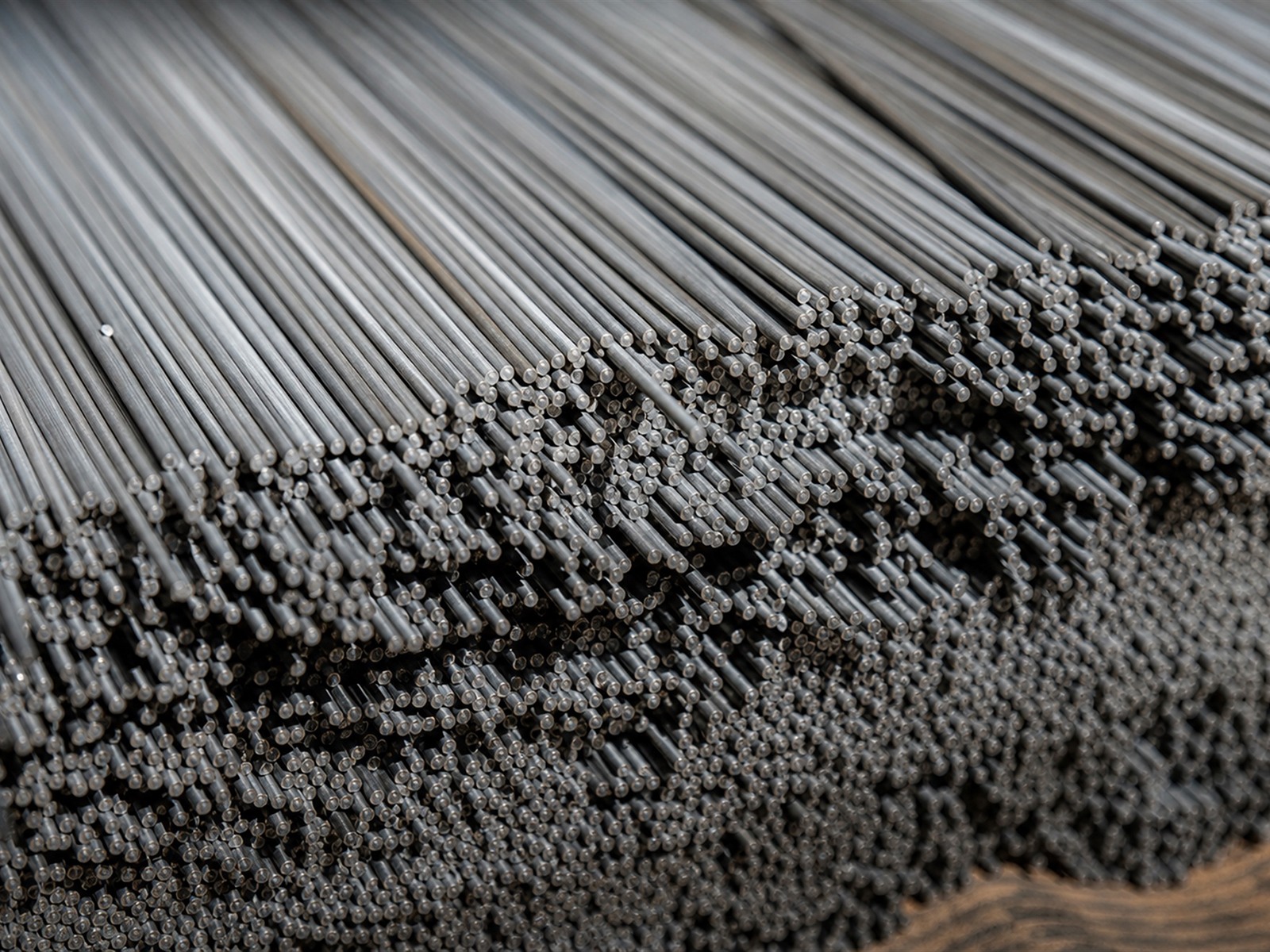
GR1 titanium rods, as the purest industrial titanium material, have a titanium content of ≥ 99.30% and belong to α-type commercially pure titanium. Their core characteristics include: excellent ductility (elongation ≥ 24%), outstanding corrosion resistance (able to withstand seawater, acids, bases, and chloride ion corrosion), lightweight advantage (density only 56% that of steel), non-magnetic properties, and good biocompatibility. These features make GR1 titanium rods an ideal material for chemical corrosion protection, medical devices, marine engineering, and precision electronics. Compared to high-strength titanium alloys, GR1 titanium rods have lower strength (tensile strength 240-345 MPa), but their excellent machinability and weldability give them unique value in applications requiring complex forming and corrosion protection.
1. What Should You Know About the Material Purity and Chemical Stability of GR1 Titanium Bars?
(1) What Should You Know About Ultra-high Purity Component Composition?
The titanium content of GR1 titanium bars is ≥ 99.30%, making it the highest purity grade among commercially pure titanium. Impurity elements are strictly controlled: iron ≤ 0.20%, oxygen ≤ 0.18%, carbon ≤ 0.08%, nitrogen ≤ 0.03%, hydrogen ≤ 0.015%. This ultra-low impurity composition ensures the chemical stability of the material, and the absence of alloying elements prevents micro-galvanic corrosion when in contact with strongly corrosive media. The production process uses high-purity titanium sponge as raw material, which is remelted in a vacuum arc furnace two or more times to produce titanium ingots, effectively reducing the content of gas and metal impurities.
(2) What Should You Know About the Natural Protective Mechanism of the Surface Oxide Film?
When titanium is exposed to air or an oxidizing environment, a dense TiO2 oxide film (about 1-10 nanometers thick) forms rapidly on its surface. This passivation layer has a self-healing ability, allowing it to quickly regenerate in an oxidizing environment even if scratched. The stability of the oxide film enables GR1 titanium rods to maintain excellent protective performance across a wide pH range of 0.5 to 13. Even in 10% sulfuric acid, 30% nitric acid, or boiling chloride solutions, the corrosion rate remains below 0.1 mm/year, far surpassing the corrosion resistance of stainless steel.
(3) What Should You Know About Process Adaptability Brought by Non-alloying?
Unlike titanium alloys that require strict heat treatment and aging control, GR1 titanium bars, as pure titanium materials, have a simple and stable microstructure, consisting of a single α-phase structure. This characteristic allows them to avoid embrittlement or performance fluctuations caused by phase transformation during cold working, hot working, and welding processes. Annealing treatment (at 600-750℃) can relieve processing stress without the need for complex aging treatments. For components requiring forming processes such as bending, deep drawing, and spinning, GR1 titanium bars demonstrate good process stability and product yield.
2. Why Is Excellent Physical Performance and Lightweight Value Important?
(1) What Should You Know About Analysis of Density and Strength-to-Weight Ratio?
Material Type | Density (g/cm³) | Tensile Strength (MPa) | Specific strength (MPa·cm³/g) |
GR1 Titanium Rod | 4.51 | 240-345 | 53.2-76.5 |
316 stainless steel | 8.00 | 515-620 | 64.4-77.5 |
Aluminum Alloy 6061 | 2.70 | 124-290 | 45.9-107.4 |
Although the absolute strength of GR1 titanium rods is lower than that of stainless steel, their density is only 56% of steel, making weight reduction significant in the aerospace and mobile device fields. A GR1 titanium rod with a diameter of 50mm and a length of 3000mm weighs about 26.6 kilograms, while a stainless steel rod of the same specifications weighs 47.1 kilograms, achieving a weight reduction of 43.5%. This lightweight characteristic can reduce transportation costs, lower energy consumption, and enhance the operational flexibility of equipment.
(2) What Should You Know About Thermal Physical Properties and Operational Adaptability?
The melting point of GR1 titanium rods reaches 1660℃, much higher than aluminum alloys (660℃) and copper alloys (1085℃), making them suitable for medium- to high-temperature conditions of 300-500℃. Its coefficient of thermal expansion is 8.6×10⁻⁶/ C (20-100℃), about 50% that of stainless steel, providing better dimensional stability in environments with temperature fluctuations. The low thermal conductivity (15.24 W/m·K) allows it to act as a corrosion-resistant conduit in heat exchangers, helping to slow heat loss and reduce the risk of scaling.
(3) Why Is Specialized Value of Non-magnetic Properties Important?
The relative magnetic permeability of GR1 titanium rods is slightly greater than 1 (μr ≈ 1.00005), classifying them as paramagnetic materials, which do not cause significant interference with magnetic fields. This property is crucial in nuclear magnetic resonance equipment, precision electronic instruments, magnetic sensor mounts, and semiconductor manufacturing equipment. At the same time, being non-magnetic also means that they do not produce eddy current losses or hysteresis heating in strong magnetic field environments, ensuring the safety of equipment operation and measurement accuracy.
3. What Should You Know About Excellent Mechanical Properties and Formability?
(1) What Should You Know About Ductility and Plastic Forming Ability?
The elongation of GR1 titanium bars is ≥ 24%, ranking first among commercially pure titanium, and the reduction of area can reach over 30%. This high ductility allows it to withstand severe cold working deformation, making it suitable for complex forming processes such as deep drawing, stretching, and flaring. During cold drawing, the reduction in cross-sectional area can reach 60%-70% without cracking, and the cold bending radius can be as small as twice the diameter of the bar. Compared with GR2 or GR5 titanium alloys, GR1 titanium bars have less springback during bending, better surface quality, and reduced mold wear and processing scrap rate.
(2) What Should You Know About Welding Performance and Joint Quality?
Welding method | Applicable Diameter Range | Joint Strength Coefficient | Main applications |
TIG Argon Arc Welding | φ4-φ50mm | 0.85-0.95 | Pipeline connection, frame structure |
Electron beam welding | φ10-φ200mm | 0.90-0.98 | Vacuum containers, aerospace components |
Laser welding | φ6-φ30mm | 0.88-0.96 | Precision components, medical devices |
GR1 titanium rods can achieve high-quality welding without preheating, with dense weld microstructure and good plasticity, without occurrences of hot cracking or cold brittleness. Argon protection (front, back, and trailing shield) is required during welding to avoid weld embrittlement caused by oxygen and nitrogen contamination. The tensile strength of the welded joint can reach 85%-95% of the base material, and both bending tests and impact toughness meet standard requirements, satisfying the needs of pressure vessels and structural components.
(3) What Should You Know About Key Points of Machining Process?
The machinability of GR1 titanium rods is between that of stainless steel and copper alloys, and the following characteristics should be noted: The low thermal conductivity results in high temperatures in the cutting zone, requiring the use of high-flow coolant; its high chemical reactivity can cause adhesion to the tool material, so carbide or ceramic tools are recommended; the cutting speed should be controlled at 30-60 m/min, with a feed rate of 0.1-0.3 mm/rev. Turning, milling, and drilling can all achieve a surface roughness of Ra≤ 3.2. For parts requiring high precision, grinding or polishing processes can be used to ultimately achieve Ra≤ 0.8 or even a mirror finish.
4. What Should You Know About Comprehensive Corrosion Resistance Performance?
(1) What Should You Know About Tolerance to Strong Acid and Strong Base Environments?
GR1 titanium bars exhibit excellent stability in a variety of corrosive media. They are almost non-corrosive in nitric acid, chromic acid, hypochlorous acid, and wet chlorine at room temperature, with a corrosion rate of less than 0.1 mm/year in sulfuric acid and hydrochloric acid solutions with concentrations below 10%. In alkaline environments (such as 30% sodium hydroxide solution at 100℃), their corrosion resistance is superior to that of nickel-based alloys. Their performance in organic acids (such as acetic acid, citric acid, oxalic acid) is particularly outstanding; for example, under boiling conditions in 10% acetic acid, the corrosion rate is less than 0.01 mm/year. Even at high temperatures, they can operate safely for long periods, making them suitable for key equipment such as reaction vessels, agitators, and transfer pipelines in the pharmaceutical, food, and fine chemical industries.
(2) What Should You Know About Stress Corrosion Resistance of Seawater and Chlorides?
The marine environment contains high concentrations of chloride ions (approximately 19, 000 ppm), making ordinary stainless steel prone to pitting and stress corrosion cracking. GR1 titanium rods exhibit complete immunity in natural seawater, artificial seawater, and salt spray environments, and even sensitive areas such as crevices and welds do not experience localized corrosion. Long-term immersion tests (over 5 years) show that the increase in corrosion depth tends to zero, and the surface oxide film remains intact. This characteristic makes it the preferred material for seawater desalination devices, offshore platforms, ship components, and coastal chemical facilities.
(3) What Should You Know About the Applicable Range of Oxidative and Reductive Media?
corrosive medium | Concentration/Temperature | Annual corrosion rate (mm/a) | Application Example |
Nitric acid | 65%/Boiling | <0.01 | Nitric acid storage tank agitator shaft |
Sodium chloride | Saturated/80℃ | <0.001 | Salt Electrolysis Anode Fixtures |
hydrogen peroxide | 30% / 50℃ | <0.005 | Bleaching Equipment Bracket |
Sodium hypochlorite | 10% / room temperature | <0.002 | Disinfection pool piping system |
GR1 titanium bars can resist corrosion from strongly oxidizing media and also remain stable in certain reducing environments. However, it should be noted that their corrosion resistance decreases in anhydrous or deoxidized strongly reducing acids (such as hot concentrated hydrochloric acid or concentrated sulfuric acid); in such cases, high-grade titanium alloyed with palladium or molybdenum should be chosen.
5. What Should You Know About Diverse Product Specifications and Surface Treatment Forms?
(1) What Should You Know About Market Coverage of Size Specifications?
The standard stock specifications of GR1 titanium rods cover φ8-φ200mm. Small-diameter cold-drawn polished rods (φ4-φ30mm) are suitable for precision shafts and mold cores, with tolerances controllable within ± 0.05-± 0.2mm (H7/H8 grade). Large-diameter forged rods (φ100-φ300mm) are mainly used for blanks of large flanges in marine engineering, chemical vessel heads, and aerospace structural components. Special-shaped specifications include square rods (6×6mm to 80×80mm), hexagonal rods, and imperial sizes (1/4″, 1/2″, 1″, 2″, 3″), meeting the needs of the international market and standard part processing. In terms of length, annealed rods can be supplied in 300-3000mm, and hot-processed or cold-processed rods can reach 300-6000mm, supporting custom or multiple-length cutting.
(2) What Are the Differences in Functional Differences of Surface States?
Black bar (hot-rolled/forged state): The surface retains mill scale and forging marks, with relatively high roughness, suitable for blanks that require a large amount of material to be removed by subsequent turning or milling. Tolerances are quite loose (e.g., φ50 ± 1.0mm), cost is the lowest, and it is suitable for mass production.
Turned bars (hot working, precision turning): After removing the oxide scale, the metal shows its natural color. Surface roughness Ra ≈ 3.2-6.3 um, dimensional tolerance ± 0.3-± 0.5 mm. Can be used directly for welding assembly or as semi-finished parts, balancing cost and quality.
Polishing rod (cold drawn/cold rolled, fine polished): Surface is bright and mirror-like, Ra ≤ 1.6 um, dimensional accuracy reaches H7/H8 level (tolerance ± 0.05-± 0.2 mm). Suitable for medical implant blanks, precision sensor shafts, and non-magnetic parts of electronic devices, can be assembled without secondary processing.
Pickled rods: The scale is removed with a nitric acid-hydrofluoric acid mixture to reveal a clean metal surface without mechanical processing marks. Especially suitable for occasions that require welding or direct contact with corrosive media, preventing electrochemical corrosion caused by surface contamination.
(3) What Should You Know About Heat Treatment Conditions and Performance Regulation?
GR1 titanium bars are available in three conditions: annealed (M), hot-worked (R), and cold-worked (Y). The annealed condition has a uniform structure and the best plasticity, making it suitable for deep processing and forming; the cold-worked condition increases strength by about 15%-20% but slightly reduces plasticity, making it suitable for load-bearing components; the hot-worked condition preserves forging lines, providing excellent toughness and fatigue performance. By performing stress-relief annealing (at 480-600℃ for 2 hours), residual stresses from processing can be further eliminated, improving dimensional stability. It should be noted that annealing (600-750℃) is mainly used to fully soften the material, whereas stress-relief annealing (480-600℃) only releases internal stress without significantly changing the structure, and the two should be clearly distinguished in practical applications.
6. Why Is Practical Cases in Typical Application Areas Important?
(1) What Should You Know About Core Components of Chemical Anti-corrosion Equipment?
GR1 titanium rods are mainly used in the chemical industry to manufacture heat exchanger tube sheets, reactor agitator shafts, pump shafts, valve stems, and fasteners. A large chlor-alkali company used GR1 titanium rods to make anodic hooks and connecting rods for electrolytic cells, which ran continuously for 5 years in a 70℃, 30% sodium chloride electrolyte environment without signs of corrosion, while the original stainless steel parts needed replacement every 18 months. Another nitric acid production plant changed the material of tank agitator shafts from nickel-based alloys to GR1 titanium rods, reducing the cost per piece by about 40% (compared to imported nickel-based alloy options) and extending the maintenance cycle by three times.
(2) What Should You Know About Marine Engineering and Shipbuilding?
The condenser tube sheets, evaporator support rods, seawater pump shafts, and valve stems of seawater desalination devices generally use GR1 titanium rods. The seawater circulation system of a certain offshore drilling platform uses flanges and bolts made of GR1 titanium rods, and during a 10-year service period, no pitting or stress corrosion occurred, saving maintenance costs by 60% compared to the copper-nickel alloy solution. Non-magnetic sensor brackets and sonar equipment mounts in ship propulsion systems also often use GR1 titanium rods, which meet corrosion resistance requirements while avoiding magnetic interference.
(3) What Should You Know About Medical Devices and the Field of Biomedicine?
The high purity and biocompatibility of GR1 titanium rods make them ideal billets for orthopedic implants, dental implants, and surgical instruments. A medical device manufacturer uses φ10-φ20mm polished GR1 titanium rods to process intramedullary nails, bone plate screws, and maxillofacial reconstruction scaffolds, with products certified by ISO 13485 and the FDA. Precision tools such as surgical forceps handles and micro-tweezer gripping rods also use cold-drawn GR1 titanium rods, which are lightweight, resistant to high-temperature and high-pressure sterilization, non-magnetic, non-toxic, and will not trigger allergic reactions in patients.
(4) What Should You Know About Electronic Semiconductors and Vacuum Technology?
GR1 titanium rods are widely used for internal support rods in semiconductor process chambers, hanger shafts in vacuum coating equipment, and non-magnetic connectors in precision instruments. A photovoltaic equipment company uses φ30mm GR1 titanium rods to make diffusion furnace support frames, which operate stably at high temperatures of 1000℃ and in corrosive atmospheres, with a lifespan five times that of quartz ceramics. Sample stage positioning shafts of electron microscopes and calibration fixtures for magnetic sensors are also specified to use GR1 titanium rods to ensure extremely low magnetic interference and long-term dimensional accuracy.
(5) What Should You Know About Food, Pharmaceutical, and Clean Engineering?
The agitator shaft of the pharmaceutical reaction kettle, the push rod of the aseptic filling machine, and the temperature probe sleeve of the food-grade storage tank are all made from GR1 titanium rods. A dairy factory replaced the support of the heating coil in its pasteurizer with GR1 titanium rods, avoiding corrosion of stainless steel and metal ion contamination in the acidic whey environment, significantly improving product quality. Pharmaceutical companies are also gradually replacing the fixed shafts of CIP (clean-in-place) system spray balls and the brackets of aseptic air filters with GR1 titanium rods to meet GMP standards and long-term stability requirements.
7. What Is the Conclusion?
GR1 titanium bars, with their ultra-high purity, excellent ductility, comprehensive corrosion resistance (covering seawater, acids and bases, chlorides, organic acids, and various other media), lightweight advantage, and non-magnetic biocompatibility, have become an indispensable key material in modern industry. Their extensive applications in chemical corrosion protection, marine engineering, medical devices, electronic precision, and clean production fields demonstrate the perfect match between material properties and operational requirements. Choosing GR1 titanium bar products that meet the ASTM B348 standard (the standard for titanium and titanium alloy bars set by the American Society for Testing and Materials, specifying chemical composition, mechanical properties, and dimensional tolerance), with uniform microstructure and precise dimensions, can significantly improve equipment reliability, reduce full lifecycle costs, and promote technological upgrades of products.
FAQ
Q1: What is the main difference between GR1 titanium bars and GR2 titanium bars?
GR1 titanium rods have lower oxygen content (≤ 0.18%), higher purity, and better ductility, making them suitable for complex forming and deep drawing processes. GR2 titanium rods have slightly higher strength but slightly lower plasticity, with both having similar corrosion resistance. When extreme machinability and biocompatibility are required, GR1 is preferred.
Q2: Can GR1 titanium bars be used for high-strength load-bearing structures?
GR1 titanium rods are suitable for medium to low stress conditions. If high load, impact, or high-speed rotation needs to be withstood, it is recommended to choose high-strength titanium alloys such as GR5 (Ti-6Al-4V). GR1 is more suitable for applications where corrosion resistance and lightweight are the main requirements.
Q3: How can the surface cleanliness and material authenticity of GR1 titanium rods be ensured?
Regular manufacturers provide material certificates (MTC) and chemical composition test reports, and the surface has undergone ultrasonic cleaning and acid pickling passivation treatment. When purchasing, it is necessary to request the supplier to provide a conformity statement to ASTM B348 standards, and the authenticity of the material and mechanical properties can be verified through spectroscopic analysis and tensile testing.
How Should Choose a Professional GR1 Titanium Rod Supplier to Help Your Engineering Succeed?
Baoji Titanium Valley Titanium Nickel Zirconium Material Processing Co., Ltd. (Titanium Valley), as a professional GR1 titanium rod manufacturer and supplier, has an advanced Italian Danieli rolling production line, with an annual production capacity of over 20, 000 tons. We offer titanium rods in full specifications of φ4-φ300mm, supporting customized processing and fast global delivery. For product details or technical support, please contact: sales@titaniumvalleys.com
References
- Li Xiaohong, Wang Jianhua. Corrosion Behavior and Protection Technology of Industrial Pure Titanium Materials. Beijing: Chemical Industry Press, 2019.
- Zhang Ming, Liu Zhiqiang. Titanium and Titanium Alloy Processing Technology. Xi’an: Northwestern Polytechnical University Press, 2020.
- Chen Gang, Zhao Yongqing. Medical Titanium Alloy Materials and Applications. Shanghai: Shanghai Science and Technology Press, 2018.
- Wang Zhendong, Yang Rui. Application and Case Analysis of Titanium Alloys in Chemical Corrosion Protection. Corrosion Science and Protection Technology, 2020, 32(5): 421-428.
- Li Jun, Huang Hao. Comparative Study of Domestic and International Titanium Material Standards Systems. Titanium Industry Progress, 2019, 36(3): 12-18.