
What Is a Gr2 Titanium Rod? What Are Its Uses?
- Gr2 Titanium Rod
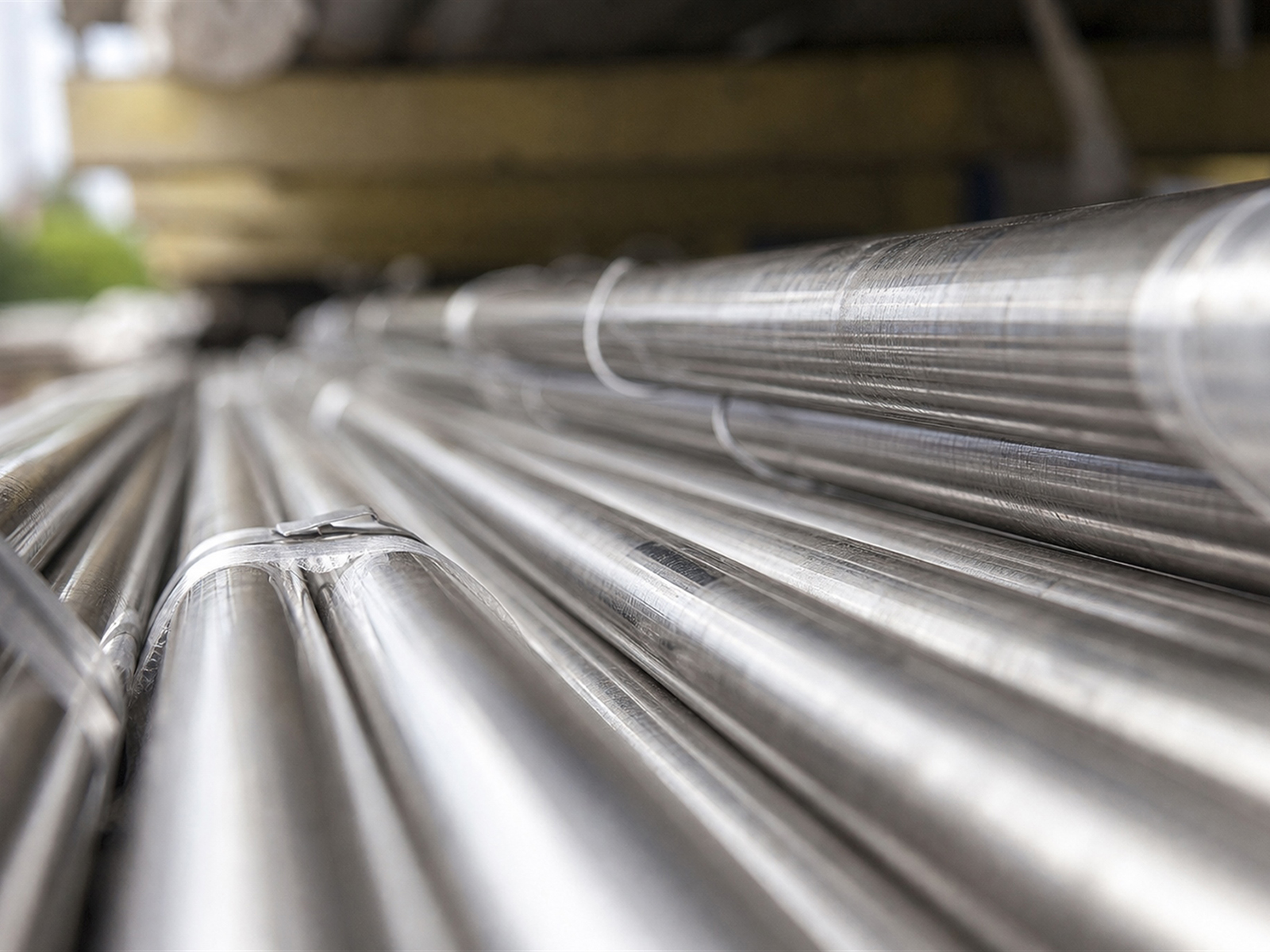
Gr2 titanium rod is a type of commercially pure titanium bar, widely recognized in the industry as one of the most cost-effective titanium alloy materials. It is made from high-purity titanium sponge through processes such as vacuum melting, forging or rolling, annealing, and pickling, with a titanium content of ≥ 99.2%, and its strength is controlled by adjusting the oxygen content. This material maintains the excellent corrosion resistance of pure titanium while achieving a tensile strength of ≥ 340 MPa, which is over 20% higher than Gr1. Gr2 titanium rods are widely used in chemical corrosion protection, marine engineering, medical devices, environmental protection equipment, and other fields, and are particularly suitable for medium-load scenarios that require a balance of strength and corrosion resistance. Its lightweight, non-magnetic properties, and good biocompatibility make it an ideal alternative to stainless steel and carbon steel, effectively reducing equipment weight, extending service life, and lowering maintenance costs.
1. Why Is Material Characteristics and Technical Advantages of Gr2 Titanium Rod Important?
(1) What Should You Know About Balanced Design of Purity and Composition?
The chemical composition of Gr2 titanium bars is precisely controlled, with titanium content ≥ 99.2%, oxygen content ≤ 0.25%, iron content ≤ 0.30%, nitrogen content ≤ 0.03%, carbon content ≤ 0.08%, and hydrogen content ≤ 0.015%. This composition ratio has been extensively validated in industrial practice and is considered the optimal combination. Oxygen, as an interstitial strengthening element, can be added in appropriate amounts to increase material strength without significantly reducing toughness. Compared with Gr1 (oxygen content ≤ 0.18%), Gr2 achieves higher mechanical performance by increasing oxygen content while maintaining the essential characteristics of pure titanium.
(2) What Should You Know About Mechanical Performance Meets the Requirements of Various Working Conditions?
The tensile strength of Gr2 titanium rods is ≥ 340 MPa (in compliance with ASTM B348 standard), yield strength is ≥ 275 MPa, and elongation is ≥ 20%. These data reveal the practical value of the material. In chemical equipment, components such as stirrer shafts and reactor supports need to withstand both continuous mechanical loads and corrosive media. The strength level of Gr2 is sufficient to cope with these medium-strength conditions, while good ductility ensures that parts will not suddenly break when deformed under stress. In practical applications, heat exchanger tube sheets made from Gr2 titanium rods can have a service life 3-5 times that of stainless steel.
(3) Why Is Systemic Value Brought by Lightweighting Important?
Gr2 titanium rods, with a density of only 4.51 g/cm³, are equivalent to 57% of the weight of 316L stainless steel. This characteristic is extremely valuable in marine engineering. Using Gr2 titanium rods to replace 316L stainless steel in seawater desalination equipment can reduce the structural weight of the equipment by more than 40% (based on replacing 316L), directly lowering ship load and reducing fuel consumption. In the medical device field, surgical instruments made from Gr2 titanium rods significantly reduce hand fatigue for doctors during long surgeries. Lightweighting is not just physical weight reduction but also a key factor in improving system efficiency.
Performance indicators | Gr2 Titanium Rod | 316L stainless steel | Carbon steel |
Density (g/cm³) | 4.51 | 7.98 | 7.85 |
Tensile Strength (MPa) | ≥ 340 | ≥ 485 | ≥ 400 |
Seawater Corrosion Rate (mm/year) | <0.01 | 0.05-0.1 | >0.5 |
Relative cost coefficient | 1.0 | 0.3 | 0.1 |
Service life (years) | 15-25 | 5-8 | 2-4 |
Description: 316L stainless steel has a tensile strength ≥ 485MPa, according to GB/T 3280-2015 standard. The relative cost coefficient refers to the comparison of initial procurement costs, with a full life-cycle analysis provided later.
2. What Should You Know About Production Process and Quality Control of Gr2 Titanium Rods?
(1) What Should You Know About Vacuum Melting Ensures Material Purity?
The production of Gr2 titanium bars begins with the selection of high-purity titanium sponge. The raw material is melted at least twice in a vacuum arc furnace, and this process is crucial. The vacuum environment (vacuum level ≤ 0.1 Pa) effectively prevents titanium from reacting with gases such as oxygen and nitrogen at high temperatures, avoiding the formation of impurities like oxides and nitrides. After each melting, the ingot needs to be flipped and melted again to ensure uniform composition. This repeated melting process makes the internal structure of the ingot dense and ensures that impurity elements are evenly distributed, laying the foundation for subsequent processing.
(2) What Should You Know About Forging and Rolling Shape the Material Structure?
The ingot is gradually deformed into a bar shape through high-temperature forging (temperature 800-950℃) or hot rolling. During the forging process, the grains are refined, internal pores are welded, and the material’s anisotropy is reduced. For large-diameter titanium bars with a diameter ≥ 100mm, free forging or die forging is usually used, and through multiple upsetting and drawing operations, the material structure becomes more uniform. Small-diameter titanium bars with a diameter ≤ 30mm can use the cold drawing process, where the bar dimensions are precisely adjusted through drawing dies at room temperature, greatly improving surface finish.
(3) What Should You Know About Heat Treatment and Surface Treatment Improve Quality?
Annealing is a key step in the production of Gr2 titanium bars. The bars are held at a temperature range of 600-750℃ for 2-4 hours, then cooled in the furnace or air-cooled. This process eliminates machining stresses, stabilizes the material structure, and improves plasticity and toughness. The pickling process removes surface oxide scale and contaminants, usually using a mixed solution of hydrofluoric acid and nitric acid (HF: HNO3=1: 3-5), giving the surface a uniform silvery metallic luster. Precision grinding or turning further enhances dimensional accuracy, keeping the diameter tolerance within ± 0.1mm.
3. Why Is Core Applications of Gr2 Titanium Rods in the Industrial Field Important?
(1) What Should You Know About Preferred Materials for Chemical Anti-corrosion Equipment?
The chemical industry is the largest application market for Gr2 titanium bars. In the chlor-alkali industry, electrolysis cell anodes and cathode hangers made from Gr2 titanium bars can operate stably for long periods in high-concentration chlorine and alkaline environments. In the pharmaceutical industry, after using Gr2 titanium bars for reaction vessel stirrer shafts and reactor lining bolts, the equipment maintenance cycle decreased from twice a year to once every three years. In the hydrometallurgical field, key components of acidic extraction equipment such as pipelines, flanges, and pump bodies processed from Gr2 titanium bars resist corrosion from strong media like sulfuric acid, hydrochloric acid, and aqua regia, extending the equipment’s lifespan to more than five times that of stainless steel.
(2) What Should You Know About Reliable Support for Ocean Engineering?
The high salinity, high humidity, and chloride ion enrichment characteristics of the marine environment place stringent demands on materials. The evaporator tube sheets and condenser pipes in seawater desalination units are made of Gr2 titanium rods, and their surfaces remain intact even after 10 years of operation in a 60℃ seawater environment. Corrosion-resistant structural components on offshore platforms and subsea pipeline connection flanges use Gr2 titanium rods, which can withstand seawater erosion and microbial corrosion. In the shipbuilding industry, critical components such as propeller shafts and rudder stocks use Gr2 titanium rods instead of copper alloys, not only reducing weight by 30% but also doubling their service life.
(3) What Should You Know About the Safe Choice for Medical Devices?
The biocompatibility of Gr2 titanium rods makes them a benchmark for medical-grade materials. Orthopedic implants such as bone plates, bone screws, and intramedullary nails are processed from Gr2 titanium rods; once implanted in the body, they do not trigger rejection reactions and can integrate well with bone tissue. Dental implants use abutments made from Gr2 titanium rods, which remain stable in the oral environment for long periods and do not release metal ions. Surgical instruments such as needle holders, scissors, and tweezers are made from Gr2 titanium rods, making them lightweight, durable, and capable of repeated high-temperature sterilization. Structural supports for medical equipment and non-magnetic components in MRI rooms also extensively use Gr2 titanium rods.
Application field | Typical component | Main Advantages | Alternative materials |
Chemical corrosion protection | Heat exchanger, agitator shaft, tower internals | Resistant to strong acids and alkalis, long service life | 316L stainless steel, Hastelloy |
Marine Engineering | Seawater pipelines, flanges, pump valves | Resistant to seawater corrosion and chloride ions | Duplex stainless steel, copper-nickel alloy |
Medical devices | Orthopedic implants and surgical instruments | Biocompatible, non-magnetic | Medical stainless steel, cobalt-chromium alloy |
Environmental protection equipment | Desulfurization tower components, electrolytic cell | Corrosion-resistant, low maintenance | Fiberglass, nickel-based alloy |
4. How Should Gr2 Titanium Rod Specification Selection and Procurement Guide?
(1) What Should You Know About Common Specifications and Shape Classification?
The diameter range of Gr2 titanium bars on the market covers φ4mm to φ300mm, meeting different application needs. φ8-φ200mm are standard stock specifications, suitable for bulk purchases and quick delivery. Small-sized cold-drawn polished bars of φ4-φ30mm have a surface roughness of Ra≤ 0.8um and high dimensional accuracy, suitable for precision machining of shafts, pins, fasteners, and other components. Large-sized forged bars of φ100-φ300mm are mainly custom-made, used to manufacture large flanges, thick plate blanks, and the like. In addition to round bars, there are also square bars (6×6 to 80×80mm) and hexagonal bars, which facilitate positioning and clamping during subsequent machining.
(2) What Should You Know About Length Specifications and Delivery Conditions?
The length of Gr2 titanium rods is generally in the range of 300-6000mm. Annealed rods (M state) are mostly 300-3000mm in length and are usually delivered in random lengths, suitable for occasions where length requirements are not strict. Hot-worked rods (R state) or cold-worked rods (Y state) can be provided in lengths of 300-6000mm to meet the one-time cutting needs of large equipment. When supplying in fixed or multiple lengths, a tolerance of 20mm is allowed, and a 5mm machining allowance should be reserved at each cut. When purchasing, the delivery state should be specified clearly. Annealed materials have good plasticity and are easy to process, while cold-worked materials have high strength but lower plasticity.
(3) What Should You Know About Surface Quality and Inspection Standards?
The surface conditions of Gr2 titanium rods are divided into three types: turned surface, polished surface, and pickled surface. The turned surface has a surface roughness of Ra 1.6-3.2 um, suitable for general machining. The polished surface is treated with precision grinding, with a surface roughness of Ra ≤ 0.8 um and dimensional accuracy of ± 0.05 mm, used for manufacturing high-precision components. The pickled surface retains the natural state after the removal of oxide scale, presenting a matte silvery-white appearance, suitable for welding or subsequent surface treatments. All rods must undergo ultrasonic testing (UT) to ensure no internal cracks, inclusions, or other defects. When purchasing, suppliers should be required to provide a material test certificate (MTC), indicating key data such as chemical composition and mechanical properties.
Diameter range | Applicable processing methods | Typical Applications | Delivery Status |
φ4-φ30mm | Cold drawing and polishing | Precision shafts, pins, screws | Cold-worked/annealed state |
φ30-φ100mm | Hot rolling and turning | Valve stem, pump shaft, flange blank | Annealed state |
φ100-φ300mm | Free forging | Large flanges, thick plate billets | Annealed state, bright finish |
5. What Should You Know About Comparative Analysis of Gr2 Titanium Rod and Other Materials?
(1) What Should You Know About Economic Evaluation of Replacing Stainless Steel?
316L stainless steel is a commonly used material in chemical equipment, but it is prone to pitting and stress corrosion cracking in chloride environments. A chemical company’s chlor-alkali electrolyzer originally used 316L stainless steel for the anodes, with an average service life of 18 months, requiring frequent replacements and causing significant downtime losses. After switching to Gr2 titanium rods, the anode service life was extended to over 8 years. Although the initial procurement cost was higher, a comprehensive calculation of the total lifecycle cost (including equipment downtime, labor for replacement, production losses, and other factors) showed that the Gr2 titanium rod solution reduced costs by 45% compared to the 316L stainless steel solution. In a seawater desalination project, heat exchangers made from Gr2 titanium rods had an initial investment 30% higher than stainless steel, but required no replacement over a 15-year operation period, with maintenance costs almost zero, resulting in a lower total ownership cost.
(2) What Are the Differences in Performance Improvement Compared to Gr1 Pure Titanium?
Gr1 titanium rods are commercially pure titanium with the highest purity, an oxygen content of ≤ 0.18%, and a tensile strength of ≥ 240MPa, making them suitable for applications requiring extremely high plasticity, such as deep drawing. However, the low strength of Gr1 limits its use in load-bearing components. Gr2 increases strength to ≥ 340MPa by appropriately increasing the oxygen content, meeting a wider range of industrial needs. In terms of cost, Gr2 is only 10-15% more expensive than Gr1, but its performance improvement exceeds 40%, providing a significant cost-performance advantage. A precision instrument manufacturing company originally used Gr1 titanium rods to manufacture sensor housings, but due to insufficient strength, the deformation rate reached as high as 8%. After switching to Gr2 titanium rods, the deformation rate dropped to below 1.5%, and product yield increased significantly.
(3) Why Is Application Boundary with High-strength Titanium Alloy Important?
High-strength titanium alloys such as Gr5 (Ti-6Al-4V) have a tensile strength of ≥ 895MPa, making them suitable for extreme conditions like aerospace. However, high-strength titanium alloys are difficult to process, expensive, and have poor weldability. Gr2 titanium rods, on the other hand, balance processing convenience and cost control, and can be manufactured using conventional welding, cold bending, and machining without special heat treatment. In non-aerospace fields, such as chemical, marine, and medical industries, the strength of Gr2 fully meets usage requirements, and using high-strength titanium alloys would instead result in resource waste. Comparative tests by a shipping company showed that rudder shafts made of Gr2 titanium rods have a safety factor of 3.5 times in actual sea conditions, far exceeding design requirements, without the need to upgrade to high-strength titanium alloys.
6. What Is the Conclusion?
Gr2 titanium rods, with their balanced strength and corrosion resistance, excellent machinability, and outstanding cost-performance ratio, have become the most widely used titanium material in the industrial field. They effectively replace stainless steel and carbon steel, demonstrating exceptional long-term value in industries such as chemical, marine, and medical. With continuous optimization of manufacturing processes and ongoing expansion of application areas, Gr2 titanium rods will play an increasingly important role in global industrial upgrading and green transformation.
FAQ
Q1: Up to what temperature can Gr2 titanium rods be used?
Gr2 titanium rods can operate stably for long periods below 300℃, maintaining more than 80% of their strength, making them suitable for medium-temperature equipment such as chemical heat exchangers. They can withstand high temperatures of 400℃ for short periods, but prolonged high temperatures will accelerate oxidation. In terms of low temperature, Gr2 titanium rods still maintain good toughness in a -253℃ liquid hydrogen environment, without experiencing low-temperature brittleness, making them suitable for low-temperature storage tanks and pipeline applications.
Q2: How is the welding performance of Gr2 titanium rods?
Gr2 titanium rods have excellent weldability and can be welded using conventional welding processes such as argon arc welding and laser welding. During welding, a protective atmosphere is required to prevent oxidation, and back-side argon protection can achieve high-quality welds. No heat treatment is needed after welding, the strength of the welded joints can reach more than 90% of the base material, and corrosion resistance is not reduced, making it suitable for on-site installation and mass production.
Q3: How to identify the authenticity of Gr2 titanium rods?
The surface of standard Gr2 titanium rods should appear uniformly silver-white or light yellow, without obvious oxidation colors. A preliminary assessment can be made using a spark test, where titanium produces short, white sparks. Authoritative identification requires chemical composition analysis, confirming titanium content ≥ 99.2% and oxygen content in the range of 0.18-0.25%. When purchasing, suppliers should be required to provide material certificates and third-party test reports that comply with ASTM B348 standards.
How Should Looking for Reliable Gr2 Titanium Rod Suppliers?
Baoji Titanium Valley Titanium Nickel Zirconium Material Processing Co., Ltd., as a professional titanium manufacturer, owns an Italian Danieli rolling production line, with an annual output of over 20, 000 tons of titanium bars and wires. We provide high-quality Gr2 titanium bars that meet international standards such as ASTM B348 and AMS 4902, with complete specifications and support for customized processing. For product inquiries or to obtain a quote, please contact us: sales@titaniumvalleys.com
References
- Zhao Yongqing, Ge Peng. Titanium Alloy Materials Science and Engineering [M]. Beijing: National Defense Industry Press, 2020.
- Li Miaoquan, Zhang Yonggang. Microstructure, Properties, and Applications of Commercially Pure Titanium [J]. Rare Metal Materials and Engineering, 2018, 47(3): 891-899.
- Liu Zhiguo, Chen Jun. Study on the Mechanical Properties and Corrosion Behavior of Industrial Pure Titanium Gr2 [J]. Materials Review, 2019, 33(6): 112-117.
- Wang Xiangdong, Hao Fang. Application and Progress of Titanium and Titanium Alloys in Chemical Equipment [J]. Chemical Equipment and Piping, 2020, 57(4): 45-50.