
What Is a Gr4 Titanium Rod and Its Application Areas?
- Gr4 Titanium Rod
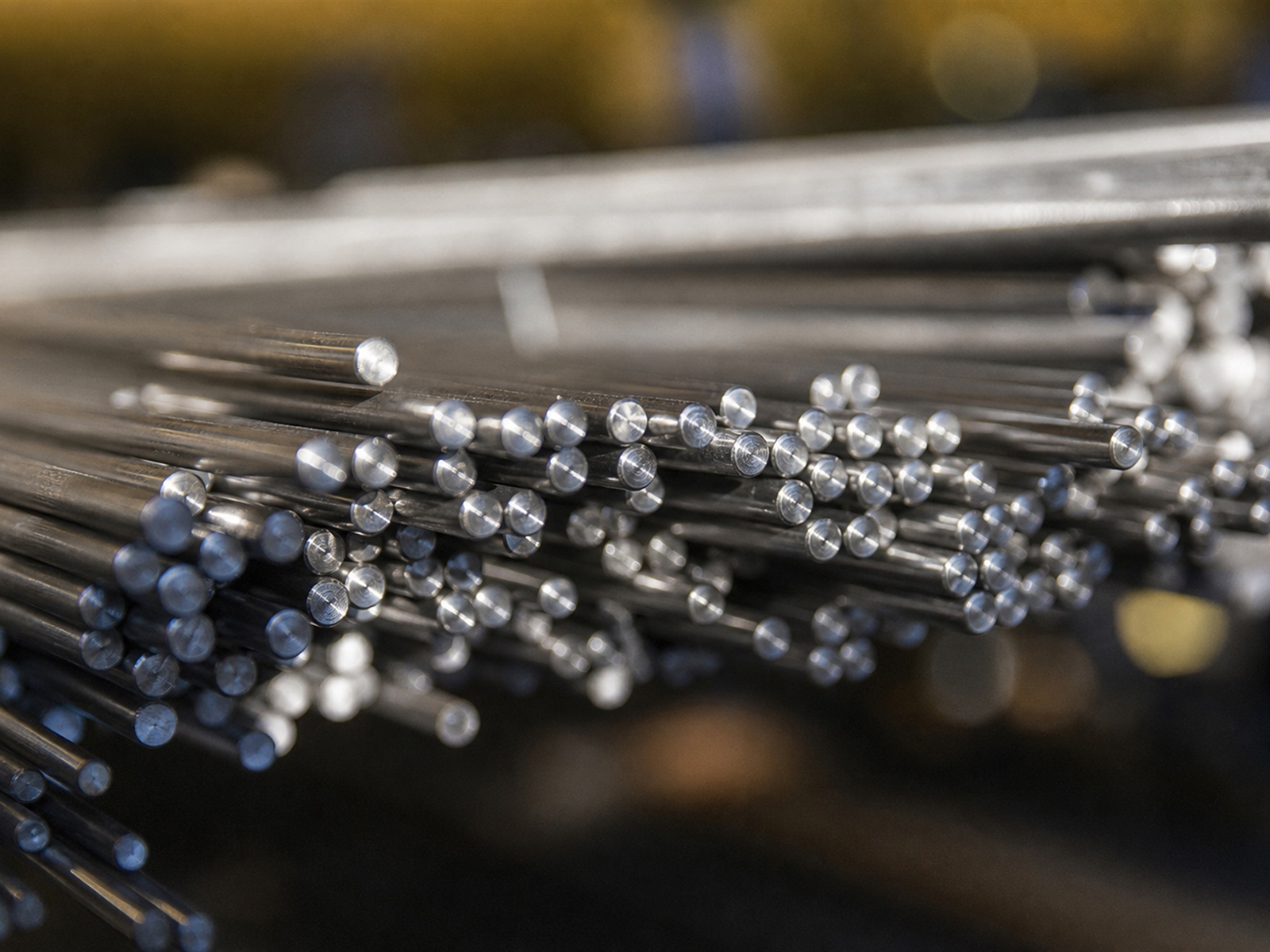
Gr4 titanium rods are the highest strength grade among commercially pure titanium, belonging to alpha-type single-phase titanium alloys. They contain no alloying elements but possess excellent mechanical properties. Their tensile strength can reach over 550 MPa, with a density of only 4.51 g/cm³, about 57% that of steel, while also exhibiting outstanding corrosion resistance and biocompatibility. This material is widely used in aerospace, medical devices, chemical corrosion protection, marine engineering, and precision electronics. As a high-strength option among industrial pure titanium, Gr4 titanium rods are manufactured through processes such as vacuum arc melting, hot rolling and forging, and annealing, featuring uniform structure, precise dimensions, and clean surfaces, and can maintain stable performance under high-load environments and long-term service conditions.
1. What Should You Know About Material Properties and Technical Parameters?
(1) What Should You Know About Chemical Composition and Purity Control?
The titanium content of Gr4 titanium bars is determined based on elemental analysis, with oxygen content controlled within ≤ 0.40%. This oxygen content is higher than that of Gr1 and Gr2, which is a key factor in its increased strength. Iron content is ≤ 0.50%, carbon content is ≤ 0.08%, nitrogen content is ≤ 0.03%, and hydrogen content is ≤ 0.015%. This composition ensures that the material achieves higher mechanical strength while maintaining good ductility. Through two or more vacuum arc remelting processes, impurity levels can be reduced to extremely low levels, making the grain structure more uniform and significantly improving the material’s fatigue life and machining stability.
(2) What Should You Know About Mechanical Properties and Structural Stability?
According to the ASTM B348 standard, the tensile strength of Gr4 titanium rods is usually above 550 MPa, with a yield strength of about 380-450 MPa and an elongation of ≥ 15%, demonstrating a balance of strength and toughness. Its hardness value is about 140-160 HV, making it suitable for machining under medium to high loads. The elastic modulus is about 105 GPa, which is lower than that of steel, but offers a clear advantage in weight-reduction design. The material maintains stable mechanical properties within the temperature range of -100℃ to 300℃, has a low coefficient of thermal expansion, excellent dimensional stability, and is suitable for long-term use in precision structural components.
Performance indicators | Gr4 Titanium Rod Values | Ordinary carbon steel | 304 stainless steel |
Tensile Strength (MPa) | ≥ 550 | 400-500 | 515-620 |
Density (g/cm³) | 4.51 | 7.85 | 7.93 |
Corrosion resistance | Excellent (over 30 years in a marine environment) | Difference (2-5 years) | Good (8-12 years) |
Magnetic | None | have | weak magnetism |
Specific strength (kN·m/kg) | 107-122 | 51-64 | 65-78 |
(3) What Should You Know About Processing Technology and Surface Quality?
After being shaped through hot rolling, forging, or cold drawing processes, Gr4 titanium bars undergo stress-relief annealing treatment to eliminate internal residual stress and ensure uniform microstructure. Subsequently, rough turning is performed to remove excess material, followed by pickling to remove the surface oxide layer. Finally, precision turning or grinding is carried out to achieve precise dimensional tolerances, with surface roughness controllable within Ra 0.8-1.6 um. On this basis, ultrasonic cleaning is used to remove oil and particles, followed by vacuum annealing to enhance material purity. Each batch of products undergoes ultrasonic flaw detection and eddy current testing to ensure no internal defects, meeting the requirements of ASTM B348 and AMS 4904 standards, guaranteeing that dimensional accuracy and surface cleanliness meet high-end manufacturing demands.
2. Why Is Medical and Biomedical Applications Important?
(1) What Should You Know About Orthopedic Implants and Surgical Instruments?
Gr4 titanium rods, due to their excellent biocompatibility and mechanical strength, have become a commonly used material for orthopedic implants. Their density is close to that of human bone, and implantation does not cause stress shielding effects, which is conducive to the healing and regeneration of bone tissue. The material surface does not release harmful metal ions, and long-term implantation carries no risk of allergic reactions or rejection. Orthopedic fixation devices such as screws, bone plates, and intramedullary nails are processed from Gr4 titanium rods, which can both withstand the loads generated by human activity and be examined by MRI and CT without producing artifacts, providing convenience for postoperative diagnosis.
(2) Why Is Dental Restoration and Maxillofacial Surgery Applications Important?
Dental implants have extremely high requirements for the biocompatibility, corrosion resistance, and machining precision of the materials. Gr4 titanium rods can be machined into implant roots, abutments, and frameworks, and after their surfaces are treated with sandblasting or acid etching, they can promote the adhesion and growth of bone cells. The material does not corrode in the environment of oral saliva, nor does it release ions due to changes in the pH of food. Maxillofacial repair plates, cranial patches, and other instruments are also made from Gr4 titanium rods, and their lightweight design reduces the burden on patients, while the non-magnetic properties prevent interference with medical examination equipment.
(3) What Should You Know About Surgical Instruments and Minimally Invasive Devices?
Precision tools such as surgical scalpel handles, forceps, and needle holders have strict requirements for material strength, wear resistance, and sterilization stability. Surgical instruments made from Gr4 titanium rods are lightweight, preventing fatigue for doctors during long operations, and can be repeatedly sterilized with high-temperature, high-pressure steam without deformation. Minimally invasive surgical instruments, such as laparoscopic probes and endoscope brackets, require materials with high toughness and precise machining performance. Gr4 titanium rods can meet the manufacturing requirements for small diameters and complex structures, ensuring the reliability and safety of instruments during in-body operations.
3. Why Is Aerospace and High-End Manufacturing Applications Important?
(1) What Should You Know About Aircraft Structural Components and Fastener Systems?
The aerospace field imposes extremely stringent requirements on materials for specific strength, fatigue resistance, and high-temperature stability. Gr4 titanium bars can be processed into structural components such as aircraft fuselage frames, landing gear parts, and fastening bolts. Their lightweight characteristics effectively reduce the weight of the aircraft, improving fuel efficiency and payload capacity. The material can maintain stable performance both in high-altitude low-temperature conditions and in high-temperature areas near the engine, with excellent resistance to fatigue crack propagation, meeting the operational conditions of long-term cyclic loading. Fastening systems made from Gr4 titanium bars can reduce stress concentration at connection points, enhancing the reliability of the overall aircraft structure.
(2) What Should You Know About High-temperature Engine Components and Brackets?
High-temperature components such as the compressor blades, turbine disk mounts, and combustion chamber fasteners of aero engines require materials with excellent thermal stability and oxidation resistance. Gr4 titanium rods have stable mechanical properties below 300℃ and a low thermal expansion coefficient, allowing them to be used in combination with other alloy materials. Bracket-type components are forged from Gr4 titanium rods, which can withstand engine vibrations and thermal stress while achieving lightweight design, reducing the overall engine weight, and improving the thrust-to-weight ratio and combustion efficiency.
(3) What Should You Know About Precise Structures of Satellites and Probes?
Precision components such as satellite structural frames, antenna brackets, and solar panel frameworks have extremely high requirements for material dimensional stability and space environment resistance. Gr4 titanium bars, after precision grinding and ultrasonic cleaning, have a high surface cleanliness, avoiding molecular contamination in the space environment. The material’s non-magnetic properties do not interfere with satellite navigation and communication systems, and the low-density design helps reduce launch costs. Components of deep space probes, such as sample collection devices and robotic arm joints, are made from Gr4 titanium bars, allowing them to operate stably over long periods in extreme temperature variations and radiation environments.
4. Why Is Chemical and Marine Engineering Applications Important?
(1) What Should You Know About Chemical Reactor and Storage Tank Components?
In the chemical industry, strong acids, strong bases, and oxidizing media place extremely high demands on the corrosion resistance of materials. Gr4 titanium rods can be processed into key components such as reactor linings, stirring shafts, and heating coils, serving for long periods in strongly corrosive media like sulfuric acid, hydrochloric acid, and nitric acid without corrosion perforation. The dense oxide film formed on the material surface has self-passivating ability, allowing it to quickly repair even local scratches, ensuring the long-term safe operation of equipment. Components such as tank nozzles and valve stems made from Gr4 titanium rods reduce maintenance frequency and lower downtime and maintenance costs.
(2) What Should You Know About Seawater Desalination and Offshore Platform Equipment?
Components such as evaporator tube bundles, condenser tube sheets, and high-pressure pump shafts in seawater desalination equipment are in long-term contact with high-salinity seawater, and traditional steels are prone to pitting and stress corrosion cracking. Gr4 titanium rods have extremely strong resistance to chloride ions, do not undergo stress corrosion in seawater environments, and can have a service life of over 30 years. Submersible pump shafts, hoist winch pins, and mooring chain connectors on offshore oil platforms are forged from Gr4 titanium rods, capable of withstanding both mechanical impact and corrosion in marine environments, ensuring the safety of offshore operations.
Environment type | corrosive medium | Carbon steel lifespan | 304 stainless steel lifespan | Gr4 Titanium Rod Lifespan |
Marine environment | 3.5% NaCl | 2-5 years | 8-12 years | More than 30 years |
Strong acidic environment | 10% H2SO4 | 1-3 years | 5-8 years | More than 25 years |
Alkaline environment | 10% NaOH | 3-6 years | 10-15 years | More than 30 years |
(3) What Should You Know About Environmental Protection Water Treatment and Desulfurization Equipment?
Equipment such as desulfurization towers in coal-fired power plants, aeration pipes in sewage treatment plants, and chlorinated wastewater pipelines face complex corrosive environments. Components made from Gr4 titanium rods, such as spray pipes, stirring blades, and filter mesh frames, can operate stably in corrosive environments containing chlorine, sulfur, and fluorine. The material does not fail due to temperature changes or fluctuations in medium concentration, reducing the frequency of equipment replacement. The long service life of environmental protection equipment lowers maintenance costs and resource consumption, meeting the requirements of sustainable development and carbon neutrality strategies.
5. What Should You Know About Key Points of Procurement and Quality Control?
(1) What Should You Know About Material Standards and Certification System?
When purchasing Gr4 titanium bars, it is necessary to explicitly require suppliers to provide materials that meet international standards such as ASTM B348, AMS 4904, and ISO 5832-2. The Material Test Certificate (MTC) should include complete data on chemical composition analysis, mechanical property testing, and grain size inspection. The non-destructive testing (NDT) report from a third-party testing agency should cover ultrasonic testing and eddy current detection results to ensure there are no internal cracks, inclusions, or delamination defects in the material. The supplier’s quality management system should be certified by ISO 9001, AS9100, etc., to ensure full traceability of the production process.
(2) What Should You Know About Dimensional Accuracy and Surface Quality Inspection?
Diameter tolerance should be controlled within ± 0.05 mm, straightness deviation ≤ 1 mm/m, and surface roughness Ra value should be selected between 0.8-3.2 um according to application requirements. The surface must be free of defects such as cracks, peeling, pitting, and oxidation color differences. Precision machined parts need to check end face parallelism, roundness, and concentricity to ensure smooth subsequent machining. For large-scale procurement, hardness, grain size, and metallographic structure should be randomly inspected to verify batch stability of the material and consistency of the process, preventing production risks caused by material fluctuations.
(3) What Should You Know About Supply Chain Management and Inventory Optimization?
Gr4 titanium bars, as an industrial pure titanium grade with strong versatility, can be used uniformly in various scenarios such as chemical corrosion protection, marine engineering, and mechanical structures, simplifying procurement categories and reducing inventory backlog. Choosing suppliers with stable production capacity and fast delivery capabilities can reduce the risk of raw material shortages. Establishing long-term cooperative relationships can provide the advantages of bulk purchasing prices and customized service support. Inventory management should implement lean control according to production plans to avoid excessive stock tying up funds, while ensuring timely supply for key projects, thereby improving the responsiveness and flexibility of the supply chain.
6. What Is the Conclusion?
Gr4 titanium bars, with their combination of high strength, excellent corrosion resistance, lightweight, and non-magnetic properties, have become key materials in aerospace, medical devices, chemical corrosion protection, marine engineering, and precision electronics. Their stable mechanical properties and processing adaptability can meet the demands of high-load environments and long-term service, effectively reducing equipment maintenance costs and total lifecycle expenses. With the global carbon neutrality strategy and the upgrading of high-end manufacturing, the application prospects of Gr4 titanium bars will be even broader.
FAQ
Q1: What are the performance differences between Gr4 titanium rods and Gr2 titanium rods?
Gr4 titanium rods have a higher oxygen content, with a tensile strength of over 550 MPa, about 30-40% higher than Gr2, making them suitable for applications requiring higher mechanical strength, such as aerospace fasteners and high-load chemical equipment; meanwhile, Gr2 titanium rods have better ductility, making them suitable for cold forming.
Q2: Can Gr4 titanium rods be welded, and what is their welding performance?
Gr4 titanium rods have good welding performance and can be welded using TIG or plasma welding processes. The surface must be thoroughly cleaned before welding, and argon protection is required during welding to prevent oxidation. The weld strength can reach 85-95% of the base material, making it suitable for the manufacture of complex structural components.
Q3: How to choose the appropriate diameter and surface condition of a Gr4 titanium rod?
Choose according to the machining process and application scenario: for turning machining, select a polished rod (Ra 0.8-1.6 um); for forged blanks, select a turned and polished rod (Ra 3.2 um); medical devices require ultrasonic cleaning and vacuum annealing treatment to ensure surface cleanliness meets biomedical requirements.
What Should You Know About Contact Us Immediately?
As a professional manufacturer and supplier of Gr4 titanium bars, Titanium Valley relies on advanced vacuum melting, precision forging, and a full-process nondestructive testing system to ensure that every batch of products meets international standards such as ASTM B348 and AMS 4904. We can provide customized titanium bars with a diameter tolerance of ± 0.05 mm and a surface roughness of Ra 0.8-1.6 um, which are widely used in high-end fields such as aerospace, medical devices, chemical corrosion protection, and marine engineering. Whether you need standard Gr4 titanium bars or customized material solutions for special working conditions, our technical team can provide comprehensive support from material selection advice and processing guidance to batch traceability. You are welcome to contact us via email at sales@titaniumvalleys.com to obtain product samples, material test certificates (MTC), nondestructive testing reports (NDT), and detailed quotation information.
References
- Wang Xiangdong, Lu Fusheng, Jia Qiao, et al. (2012). Titanium and Titanium Alloy Materials and Their Applications. Beijing: Chemical Industry Press.
- Zhang Xiyan, Zhao Yongqing, Bai Chenguang. (2005). Titanium Alloys and Applications. Beijing: Chemical Industry Press.
- Li Liang, Sun Jian, Li Jinshan. (2014). Research Progress on the Microstructure and Properties of Industrial Pure Titanium. Materials Review, 28(5), 95-99.
- Liu Wei, Yang Rui. (2016). Application and Development Trends of Titanium Alloys in the Aerospace Field. Rare Metal Materials and Engineering, 45(2), 555-560.