
What Is Gr1 Titanium Rod and Its Uses?
- Gr1 Titanium Rod
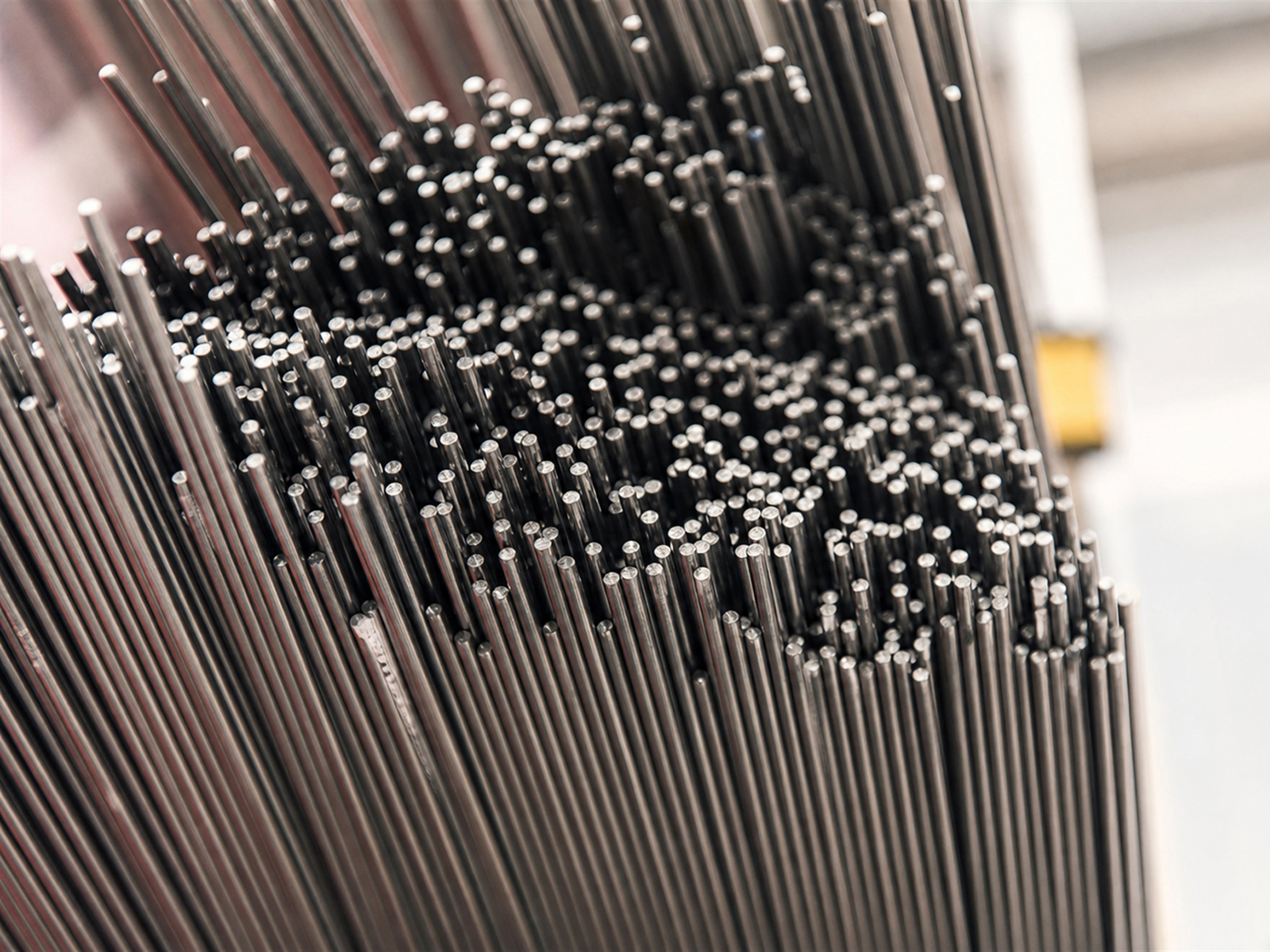
Gr1 titanium rods are high-purity industrial materials made from Grade 1 pure titanium, with a titanium content ≥ 99.5%, meeting the ASTM B348 standard. As the highest-purity grade among commercially pure titanium, Gr1 titanium rods possess excellent ductility, outstanding corrosion resistance, and good biocompatibility. This material is formed through vacuum arc melting, hot rolling, or forging, and after processes such as annealing and pickling, it is widely used in chemical corrosion protection, marine engineering, medical devices, aerospace, precision electronics, and other fields. Its density is only 4.51 g/cm³, about 40% lighter than ordinary steel, and it is non-magnetic, heat-resistant, and capable of long-term stable operation in harsh environments such as acids, alkalis, seawater, and chloride ions.
1. What Should You Know About Material Properties and Classification of Gr1 Titanium Rods?
(1) Why Is Chemical Composition and Purity Advantages Important?
The chemical composition of Gr1 titanium rods is strictly controlled, with a titanium content of no less than 99.5%, and impurity elements of iron ≤ 0.20%, oxygen ≤ 0.18%, carbon ≤ 0.08%, nitrogen ≤ 0.03%, and hydrogen ≤ 0.015%. This ultra-low impurity content ensures the chemical stability and processing consistency of the material. Compared with other grades of pure titanium, Gr1 has the lowest impurity content, avoiding the formation of intermetallic compounds, thereby providing the purest titanium matrix. This high-purity characteristic makes it the preferred material for applications requiring strict material specifications, such as medical implants, food processing equipment, and laboratory instruments.
(2) What Should You Know About Physical Performance?
Gr1 titanium rods exhibit a unique combination of physical properties. With a density of 4.51 g/cm³, they are an ideal choice for lightweight designs, and a melting point of approximately 1660℃ ensures dimensional stability in high-temperature environments. The material’s non-magnetic characteristics eliminate the risk of magnetic interference with precision instruments, medical devices, and electronic components. Its low and stable coefficient of thermal expansion allows for good dimensional accuracy in fluctuating temperature conditions. Although the naturally formed dense oxide film on the surface is only a few nanometers thick, it provides lasting corrosion protection. This oxide film has self-healing capabilities, quickly regenerating even if scratched.
(3) What Should You Know About Mechanical Properties and Machining Characteristics?
Performance indicators | Numerical range | Application significance |
Tensile strength | 240-345 MPa | Suitable for medium and low load structural components |
Yield Strength | 170-240 MPa | Ensure that the parts are not easily deformed |
Elongation | ≥ 20% | Good cold formability |
Section shrinkage rate | ≥ 30% | Supports deep stretching and complex bending |
The plasticity of Gr1 titanium bars is the most prominent among all pure titanium grades, allowing for various forming processes such as cold bending, deep drawing, and stamping. Good welding performance supports various welding methods, including TIG welding and electron beam welding, with weld strength reaching over 90% of the base material. The fatigue performance is stable, and under cyclic stress, cracks are not easily propagated, making it suitable for manufacturing components that require long-term reciprocating motion.
(4) What Should You Know About Classification of Different Surface Conditions?
Black Rod (Hot-Rolled/Forged)
The surface retains the oxide layer, appearing dark gray to black, with relatively high roughness and surface texture formed after forging. Specifications are usually above φ20mm, with larger tolerances (e.g., φ50± 1.0mm). Titanium bars in this condition have the lowest cost and are suitable for subsequent turning and milling processes. The surface roughness is relatively high but does not affect the internal material performance.
Turning Bar (Turning Machined State)
After lathe processing to remove the oxide scale, the surface shows a metallic luster, with a roughness Ra of approximately 3.2-6.3 um. Suitable for diameters above φ10mm, with tolerance controlled within ± 0.3 to ± 0.5 mm, it can be used directly for assembly and welding. This condition is the most widely used in mechanical processing and structural part manufacturing.
Polishing Rod (Cold Drawn/Polished State)
Processed by cold drawing and precision polishing, the surface has high smoothness, Ra≤ 1.6um, and dimensional accuracy reaches H7/H8 level (tolerance ± 0.05 to ± 0.2mm). Common specifications are φ4-φ50mm, used for high-precision applications such as precision shafts, mold parts, and non-magnetic components.
Pickling rod
Chemical pickling is used to remove the oxide layer, exposing the natural silvery-white color of titanium, with no mechanical machining marks on the surface. This condition is particularly suitable for chemical corrosion-resistant equipment and components that require welding, ensuring the surface is free from metal contamination and the welding quality is more reliable.
2. Why Is Core Technological Advantages of Gr1 Titanium Rod Important?
(1) What Should You Know About Excellent Corrosion Resistance Mechanism?
The corrosion resistance of Gr1 titanium rods comes from the spontaneously formed TiO2 passive film on the surface. This oxide layer forms instantly in air and remains stable in acidic, alkaline, and chlorine-containing environments. The corrosion rate in seawater is less than 0.01 mm/year, far superior to the 0.1-1 mm/year of 316 stainless steel. It has good resistance to oxidizing acids such as nitric acid, chromic acid, and hypochlorous acid, but limited resistance to reducing acids like 10% sulfuric acid and 20% hydrochloric acid. Temperature (usually below 60℃) and concentration must be strictly controlled, otherwise corrosion will accelerate significantly. In chloride environments, it does not experience pitting or stress corrosion cracking, which are common failure modes for stainless steel materials.
(2) What Should You Know About Biocompatibility and Safety?
The biocompatibility of Gr1 titanium rods has been extensively clinically validated. The material itself is non-toxic, non-allergenic, and non-carcinogenic, and will not trigger an immune rejection response when implanted into the human body. The surface oxide film of titanium is highly inert, which helps the bone tissue to integrate with the implant. This osseointegration property makes it a standard material for orthopedic implants. In the oral environment, it can withstand the erosion of saliva and foods with acidic or alkaline properties, without releasing metal ions that could contaminate body fluids. Medical-grade Gr1 titanium rods also need to pass the ISO 10993 series of biological evaluation tests to ensure long-term compatibility with human tissues.
(3) What Should You Know About Machining Adaptability Analysis?
Processing method | Applicability | Key parameters |
Turning (machining) | Excellent | Cutting speed 30-60 m/min, using carbide tools |
Milling machining | Good | Speed 800-1500 rpm, sufficient coolant |
Drilling | Medium | Low speed and large feed to prevent tool sticking |
Cold bending forming | Excellent | Bending radius ≥ 3 times the diameter, sufficient elongation |
Welding processing | Excellent | Argon protection to avoid oxidative contamination |
Polishing and grinding | Excellent | Achievable mirror finish Ra ≤ 0.4 um |
There are several key points to pay attention to when machining Gr1 titanium rods: built-up edge may occur during cutting, so sharp tools and sufficient cooling are required; low thermal conductivity leads to high local temperatures, so cutting parameters must be controlled; high chemical activity means it easily absorbs oxygen, nitrogen, and hydrogen at high temperatures, and welding must be done under argon protection. Proper process parameters can effectively improve machining efficiency and surface quality.
(4) Why Is Long Service Life and Economic Advantages Important?
The service life of Gr1 titanium rods in harsh environments is 5-10 times that of carbon steel and 2-3 times that of stainless steel. Although the initial procurement cost is relatively high (about 3-5 times that of stainless steel), the total lifecycle cost is significantly reduced. In most chemical engineering conditions, using titanium can reduce the frequency of shutdown maintenance and prevent medium leakage and safety incidents caused by corrosion. In marine environments, titanium is almost maintenance-free, saving the repeated coating costs of anti-corrosion layers. The long-term stability of medical implants reduces the risk of secondary surgeries. The energy savings brought by lightweight design are also an implicit benefit.
3. Why Is Industrial Application Scenarios of Gr1 Titanium Rods Important?
(1) Why Is Core Applications in the Field of Chemical Anti-corrosion Important?
The chemical industry is the largest application market for Gr1 titanium bars. In heat exchangers, titanium tube sheets, tie rods, and bolts can withstand long-term corrosion from acidic and alkaline media, with a service life of over 20 years. The agitator shafts and supports of reaction kettles are made of Gr1 titanium bars, preventing metal ion contamination of the products. Titanium hanging fixtures and electrode rods in plating and anodizing equipment take advantage of their conductivity and corrosion resistance. Electrolyzer components in the chlor-alkali industry, extraction equipment in hydrometallurgy, and pipeline systems in pesticide synthesis units all extensively use Gr1 titanium materials.
Typical application case: The stirring shaft of a fermenter in a pharmaceutical company was originally made of 316L stainless steel, and needed to be replaced 2-3 times a year due to corrosion. After switching to Gr1 titanium rod, it operated continuously for 5 years without significant corrosion, while also avoiding the risk of metal ion contamination of the medicine, and passed FDA certification review.
(2) What Should You Know About Marine Engineering and Seawater Desalination?
The high salinity, high humidity, and biofouling conditions of the marine environment place stringent demands on materials. Seawater pipelines, valves, and pump components made from Gr1 titanium rods require virtually no maintenance over a 30-year service life. Using titanium for the evaporators and condensers of seawater desalination plants can significantly improve heat exchange efficiency and equipment lifespan. Fasteners, brackets, and monitoring instrument housings on offshore platforms are processed from Gr1 titanium rods to prevent structural failure caused by corrosion. Shaft components in ship propulsion systems and protective devices for submarine cables are also important application areas.
(3) What Should You Know About Precision Manufacturing of Medical Devices?
Types of medical applications | Typical product | Performance requirements |
Orthopedic implants | Intramedullary nail, bone plate, spinal fixation rod | Biocompatibility, mechanical strength, X-ray transmittance |
Dental materials | Implant abutment, orthodontic wire | Corrosion-resistant, hypoallergenic, and machinable |
Surgical instruments | Scalpel handle, tweezers, clamps | Lightweight, sterilizable, non-magnetic |
Medical equipment structural components | MRI gantry, support arm | Non-ferromagnetic, high strength, precise dimensions |
Medical-grade Gr1 titanium rods need to meet higher purity standards and surface quality. Titanium rods used in orthopedic implants have surfaces specially treated to enhance bone integration. Dental implants require extremely strict diameter tolerances (± 0.02mm) and need cold-drawn and polished titanium rods. The handles of surgical instruments take advantage of titanium’s lightweight properties to reduce operator fatigue. Its non-magnetic characteristics make it the only choice for equipment in strong magnetic field environments such as MRI.
(4) Why Is Lightweight Applications in Aerospace Important?
The aerospace field pursues extreme weight control. Although Gr1 titanium rods have lower strength than alloy titanium, they are still valuable for non-load-bearing structural components. Aircraft hydraulic fittings, instrument brackets, and cabin interior parts are processed from Gr1 titanium rods, meeting the need for lightweight design while providing good corrosion resistance. Satellite and spacecraft antenna support rods and solar panel frames utilize its thermal stability and low coefficient of thermal expansion. Auxiliary pipelines and sensor housings of rocket engines operating at the edge of high-temperature gas environments require titanium’s high-temperature resistance.
(5) What Should You Know About Electronics and Precision Instrument Manufacturing?
In the electronics industry, vacuum coating equipment and semiconductor process chambers use connecting rods and support shafts made of Gr1 titanium bars, taking advantage of their non-magnetic and low outgassing properties. Internal structural components of precision balances and analytical instruments require materials that remain stable and do not interfere with measurements, making Gr1 titanium bars an ideal choice. High-end housings and decorative parts of 3℃ electronic products use titanium to convey a sense of quality. Electrode tabs and conveyor rollers in lithium battery production equipment use titanium to avoid contamination of the battery cells.
(6) What Should You Know About Food and Pharmaceutical Equipment?
Components made from Gr1 titanium bars are used for stirring shafts, conveying pipelines, and tank linings in the food industry to ensure that metal migration does not occur when in contact with food, complying with FDA and EU food contact material regulations. Titanium parts in fermentation and filling equipment for beer, dairy products, and juice resist corrosion from cleaning agents and disinfectants. Cleanroom equipment, bioreactors, and purification systems in the pharmaceutical industry have very high material purity requirements, and Gr1 titanium bars meet the material standards of GMP.
4. How Should Selection and Quality Control of Gr1 Titanium Rods?
(1) How Should Selection Recommendation?
When selecting Gr1 titanium bar specifications, it is necessary to comprehensively consider factors such as the usage environment, processing methods, and cost budget. The diameters of round bars range widely from φ4mm to φ300mm. Small-diameter cold-drawn and polished bars (φ4-φ30mm) are suitable for precision machining, medium-diameter turned and polished bars (φ10-φ100mm) are general-purpose specifications, and large-diameter forged bars (φ100-φ300mm) are used for heavy equipment. The lengths are generally in the range of 300-6000mm. Annealed state (M state) bars have shorter lengths but stable performance, while hot-worked state (R state) bars can provide longer sizes. Special shapes such as square bars and hexagonal bars are suitable for reducing subsequent machining.
Typical selection reference: For chemical pipeline flanges, use φ20-50mm turned bars; for medical devices, use φ6-20mm polished bars; for marine fasteners, use φ10-30mm pickled bars; for stirring shafts, use φ50-150mm black surface bars for subsequent turning.
(2) What Should You Know About Standard System and Certification Requirements?
The production and inspection of Gr1 titanium bars follow multiple international standards. ASTM B348 is the most authoritative standard for titanium and titanium alloy bars in the United States, specifying in detail the chemical composition, mechanical properties, dimensional tolerances, and inspection methods. AMS 4901 is the corresponding standard in the aerospace field, with stricter requirements. Europe implements the EN standard, and Japan uses the JIS standard; although the grade names are different, the performance indicators are basically equivalent. ISO 5832-2 is a specialized standard for titanium used in medical implants.
In terms of quality certification, suppliers should provide material test certificates (MTC), chemical composition analysis reports, mechanical performance test reports, ultrasonic flaw detection reports, and other documents. Medical-grade products require FDA registration, CE certification, and ISO 13485 quality system certification. Titanium bars for aerospace applications require AS9100 certification. Certification from third-party testing organizations such as SGS and TÜV enhances product credibility.
(3) What Should You Know About Inspection Test Method?
Chemical Composition Testing: The content of each element is determined using a spectrometer, while oxygen, nitrogen, and hydrogen are detected by inert gas fusion followed by infrared/thermal conductivity methods. Sampling should be taken from the center of the rod end face to represent the overall composition.
Mechanical performance testing: Prepare tensile specimens according to the standard, and determine tensile strength, yield strength, and elongation on a universal testing machine. Specimens of different diameters have different sizes and need to be converted. There are differences in performance indicators between the annealed state and the processed state.
Ultrasonic testing: Detects internal defects such as cracks, inclusions, and porosity. Inspection standards usually require no defects exceeding an equivalent of φ1.5mm. Titanium bars for medical and aerospace applications require higher inspection levels.
Surface Quality Inspection: Visually check the surface for defects such as cracks, scratches, and pitting. Use a gloss meter and polishing rod to measure roughness, and a pickling rod to check uniformity.
Dimension Measurement: Use calipers, micrometers, and projectors to measure parameters such as diameter, roundness, and straightness to ensure compliance with tolerance requirements.
(4) What Should You Know About Storage and Usage Precautions?
Although Gr1 titanium bars are corrosion-resistant, improper storage may still affect their performance. They should be stored in a dry and ventilated environment, avoiding contact with acids, bases, and organic solvents. Store separately from dissimilar metals such as steel to prevent galvanic corrosion and cross-contamination. For long-term storage, apply anti-rust oil or wrap with plastic film. Before processing, clean off surface oil and dust using ethanol or acetone, avoiding cleaning agents containing chlorides.
Pollution control during processing is crucial. The cutting fluid must not contain harmful elements such as chlorine or sulfur; it is recommended to use plant oil-based or synthetic ester cutting fluids. Tool materials should be selected from cemented carbide or ceramics, avoiding high-speed steel tools that can stick to titanium. The welding environment requires argon protection, and argon should also be passed to the back to prevent oxidation. Heat treatment temperature must be strictly controlled within the annealing range of 540-650℃; exceeding 800℃ can cause hydrogen absorption and embrittlement.
5. What Are the Differences in Comparison and Selection of Gr1 Titanium Rod with Other Materials?
(1) What Are the Differences in Comparison of Gr1 with Other Pure Titanium Grades?
Commercially pure titanium is divided into four grades, Gr1 to Gr4, mainly differing in impurity content and strength level. Gr1 has the lowest oxygen content (≤ 0.18%), the highest elongation (≥ 20%), and the lowest strength (240-345 MPa); Gr2 has an oxygen content ≤ 0.25% and is the most widely used general-purpose grade; Gr3 and Gr4 have higher oxygen content, with increased strength but reduced plasticity.
Selection principles: Choose Gr1 when deep stretching, complex bending, or extreme forming is required; choose the more cost-effective Gr2 for general structural components and pipelines; choose Gr4 for high-strength fasteners. For medical implants, Gr1 is preferred to ensure biocompatibility, and chemical equipment can select grades based on stress levels.
(2) What Are the Differences in Comparison Between Gr1 Titanium Rod and Stainless Steel?
316L stainless steel is a common material for chemical corrosion resistance, but it is significantly inferior compared to Gr1 titanium bars. In chloride environments, stainless steel is prone to pitting and stress corrosion cracking, whereas titanium has complete corrosion resistance. In seawater, stainless steel needs to be replaced regularly, while titanium can last for decades. In terms of weight, titanium is about 40% lighter than stainless steel, which is significant for mobile equipment and aerospace. The advantage of stainless steel lies in its low cost, high strength, and ease of processing.
Economic analysis: For short-term projects and low-corrosion environments, stainless steel is preferred; for long-term operation, high-corrosion environments, and strong lightweight requirements, titanium is more economical; titanium must be used for medical implants.
(3) What Are the Differences in Comparison Between Gr1 Titanium Rod and Titanium Alloy?
Titanium alloys such as Ti-6Al-4V (TC4/Gr5) significantly increase strength (over 900MPa) by adding alloying elements like aluminum and vanadium, but at the expense of some corrosion resistance and biocompatibility. Gr1 pure titanium has lower strength but optimal ductility and corrosion resistance. Titanium alloys are suitable for high-stress load-bearing components such as aircraft landing gear and engine discs, while Gr1 titanium rods are suitable for corrosion-resistant, biomedical, and precision machining applications.
Application limits: Structural load-bearing components must use titanium alloy, while non-load-bearing corrosion-resistant components are more economical to use pure titanium. Medical implants are selected based on the location; bone plates and screws can use alloy, while parts in contact with soft tissue should use pure titanium.
(4) What Should You Know About Scenarios Where Gr1 Titanium Rods Are Not Applicable?
Although Gr1 titanium rods have excellent performance, there are scenarios where they are not suitable. High-stress bearing structures such as engine main shafts, high-speed rotating components, and heavy-duty gears require higher-strength materials. The efficiency of high-speed cutting is lower than that of steel, making the machining of large quantities of parts costly. Corrosion intensifies under high-temperature, high-concentration conditions of reducing acids (such as concentrated sulfuric acid and concentrated hydrochloric acid). Contact with active metals like aluminum and magnesium can easily lead to galvanic corrosion. For price-sensitive projects, if the corrosive environment is not harsh, using stainless steel or carbon steel is more economical.
6. What Is the Conclusion?
Gr1 titanium rods, thanks to their high-purity composition, excellent corrosion resistance, superior biocompatibility, and lightweight characteristics, occupy an irreplaceable position in fields such as chemical corrosion protection, marine engineering, medical devices, and precision electronics. Although the initial investment is relatively high, the advantages in terms of lifecycle economy, safety, and reliability are significant. With advancements in manufacturing technology and cost reductions, the application scope of Gr1 titanium rods will continue to expand, becoming a key material for high-end equipment manufacturing and the upgrading of emerging industries.
FAQ
Q1: How high a temperature can a Gr1 titanium rod withstand?
The melting point of Gr1 titanium bars is about 1660℃, but the recommended actual usage temperature should not exceed 300℃. Exceeding this temperature can cause titanium to accelerate the absorption of oxygen, nitrogen, and hydrogen, leading to embrittlement. Under the protection of an inert atmosphere, it can withstand higher temperatures for a short period. Chemical equipment typically operates below 150℃, within which the performance of Gr1 titanium bars is completely stable and reliable.
Q2: Can Gr1 titanium rods be welded? How is the welding strength?
Gr1 titanium rods have excellent welding performance and can be welded using TIG welding, plasma welding, electron beam welding, and other methods. Welding must be carried out under argon protection, with argon passing over both the front and back sides to prevent oxidation. The weld strength can reach more than 90% of the base material, and the corrosion resistance of the welded joint is comparable to that of the base material. Titanium welded structures are widely used in medical and chemical equipment.
Q3: How to distinguish Gr1 titanium bars from titanium bars of other grades?
It is difficult to distinguish by appearance alone, mainly relying on material certification and chemical composition analysis. The key indicators for Gr1 are titanium content ≥ 99.5% and oxygen content ≤ 0.18%. In mechanical performance tests, an elongation ≥ 20% and tensile strength of 240-345 MPa are characteristic ranges for Gr1. Reputable suppliers will print the grade on the product and provide a quality certificate and third-party inspection report that comply with ASTM B348 standards.
7. What Should You Know About Looking for Reliable Gr1 Titanium Rod Manufacturers?
Baoji Titanium Valley, as a professional processor of titanium, nickel, and zirconium materials, is equipped with an Italian Danieli rolling production line, producing over 20, 000 tons of high-quality titanium bars annually. We provide Gr1 titanium bars that meet ASTM B348 standards, supporting customized diameters, lengths, and surface conditions, with full-process quality control and complete inspection reports available. Whether for chemical equipment, medical devices, or aerospace applications, we can provide professional material supply services.
Contact us: sales@titaniumvalleys.com
References
- Zhang Ting’an, Liu Yan. Titanium and Titanium Alloy Processing Technology [M]. Beijing: Metallurgical Industry Press, 2020.
- Zhao Yongqing, Qu Henglei, Zhou Wei. Medical Titanium Alloy Materials [M]. Beijing: Science Press, 2019.
- Li Xingwu, Chen Kanghua. Corrosion Behavior and Protection Technology of Industrial Pure Titanium [J]. Corrosion and Protection, 2021, 42(6): 1-8.
- Wang Baofeng, Song Yueqing. Progress in the Application of Titanium Alloys in Marine Engineering [J]. Materials Review, 2022, 36(3): 45-52.