
What Are the Main Industrial Uses of Nickel 201 Foil?
- Nickel 201 Foil
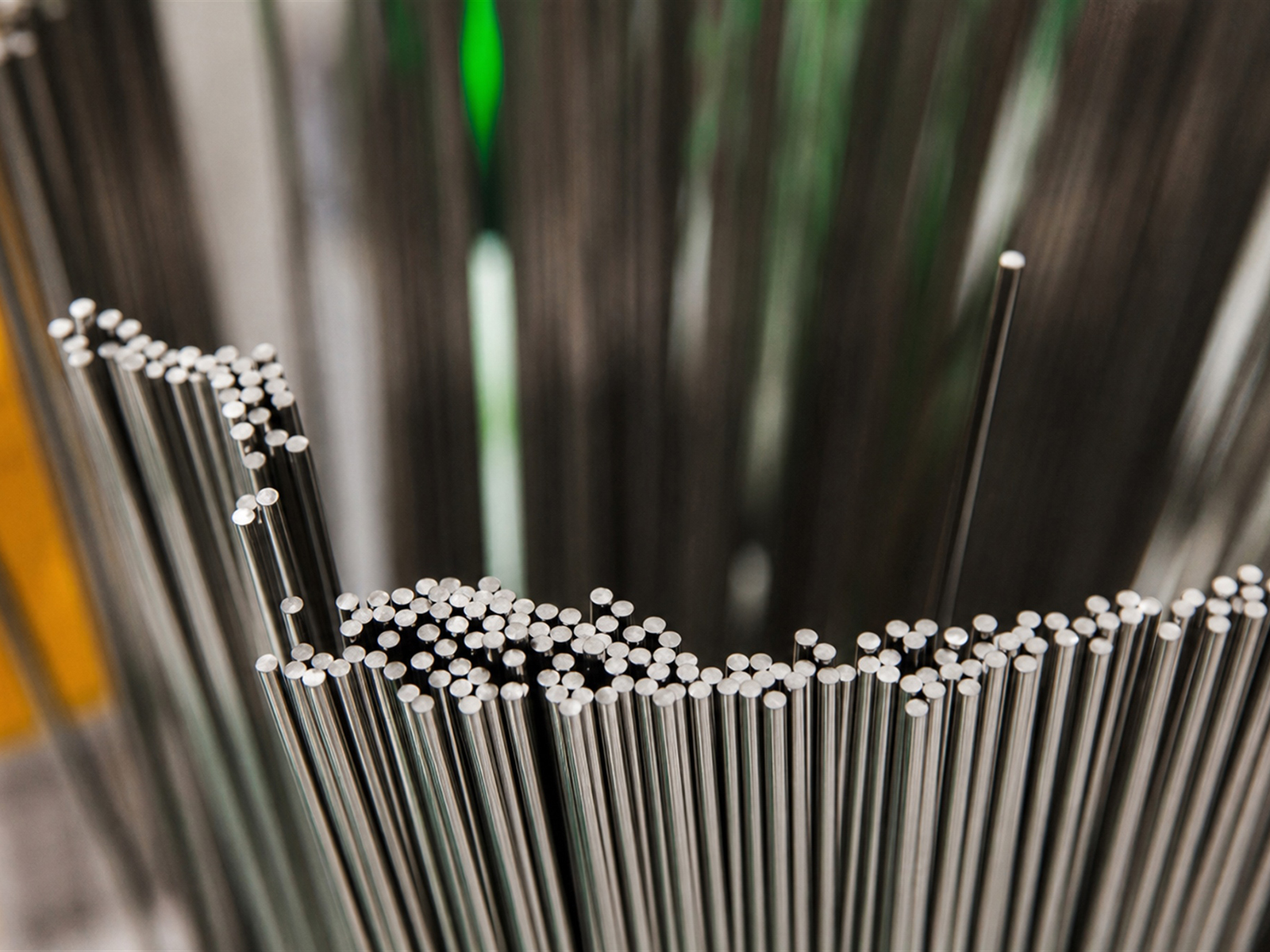
Nickel 201 foil, as a low-carbon, high-purity nickel material, plays a vital role in modern industry. Its main industrial uses are concentrated in new energy battery manufacturing, chemical electrolysis equipment, electronic communication shielding, high-temperature heating systems and precision manufacturing. Thanks to its excellent electrical conductivity, excellent corrosion resistance and structural stability in high-temperature environments, Nickel 201 foil has become the material of choice for many high-end industrial applications. Especially in highly alkaline environments and high-temperature working conditions, its low-carbon design (C≤0.02%) effectively prevents graphitization embrittlement, ensures long-term reliable operation of the equipment, and provides a solid guarantee for enterprises to reduce maintenance costs and improve production efficiency.
1. How Is Key Applications in the New Energy Battery Industry?
(1) What Should You Know About Battery Tabs and Current Collector Materials?
Nickel 201 foil is mainly used as tab material and current collector structure in power batteries and energy storage batteries. Because its conductivity is as high as 12.8 MS/m, it can effectively reduce the internal resistance of the battery and reduce energy loss. During the high current charge and discharge process, nickel 201 foil exhibits excellent thermal stability, and no obvious performance degradation will occur even in an environment where the continuous operating temperature reaches 80-120℃. Compared with traditional copper foil or aluminum foil, nickel 201 has better corrosion resistance and can resist long-term corrosion by electrolyte.
(2) What Should You Know About Connector and Conductive Structure Design?
In battery module assembly, nickel 201 ultra-thin foil (0.03-0.1mm) is widely used to make connecting sheets and conductive bridge structures. Its good ductility allows the material to manufacture complex-shaped conductive parts through precision stamping and laser welding processes. The thickness tolerance is controlled at an accuracy level of +/-0.001mm, ensuring consistency in mass production. This high-precision feature is crucial for automated production lines, which can significantly improve production efficiency and reduce the rate of defective products.
(3) What Are the Improved Battery Safety Performance?
The low-carbon composition design of nickel 201 foil makes it difficult for carbon particles to precipitate in high-temperature environments, avoiding the risk of short circuits inside the battery. In thermal runaway tests, battery modules using nickel 201 foil showed better thermal management performance. The material’s antioxidant capacity remains stable below 600℃, providing additional safety for the battery system. The elongation of more than 40% in the annealed state makes the material less likely to break when impacted or deformed, further enhancing the mechanical reliability of the battery.
Performance indicators | Nickel 201 Foil | copper foil | aluminum foil |
Conductivity (MS/m) | 12.8 | 58 | 37 |
Alkali corrosion resistance | Excellent | Poor | Difference |
High temperature stability (≤600℃) | excellent | Difference | Poor |
Elongation (%) | ≥40 | ≥15 | ≥20 |
2. How Is Corrosion-resistant Applications in the Chemical and Electrolytic Industries?
(1) What Should You Know About Electrode Materials in Strongly Alkaline Environments?
Nickel 201 foil shows unparalleled corrosion resistance advantages in strong alkaline environments such as chlor-alkali industry, caustic soda production and electrolysis of water for hydrogen production. In a sodium hydroxide solution with a concentration of up to 50%, the corrosion rate of nickel 201 is less than 0.02-0.1 mm/year, which is much better than ordinary stainless steel materials. Its low-carbon characteristics ensure that catalyst contamination problems caused by carbon precipitation will not occur during high-temperature electrolysis (usually 80-110℃), which is crucial for maintaining electrolysis efficiency and product purity.
(2) What Should You Know About Electrolyzer and Reactor Components?
In electrolysis equipment manufacturing, nickel 201 foil is processed into various shapes of electrode plates, diaphragm support structures and conductive connectors. The ultra-wide specification (can be customized) with a width of up to 670mm makes the design of large electrolyzers more flexible, reduces the number of welded joints, and reduces potential corrosion risk points. The continuous annealing process (temperature control +/-5℃) ensures the uniformity of the material structure, maintains consistent electrochemical performance across the entire electrode surface, and avoids local overheating or corrosion acceleration.
(3) What Should You Know About Chemical Pipeline and Container Lining?
For piping systems and tanks handling corrosive media, Nickel 201 foil provides long-lasting protection as a lining material. Through gluing or brazing technology, 0.1-0.3mm thick nickel 201 foil is bonded to the surface of carbon steel or stainless steel substrates, which not only ensures structural strength but also provides excellent anti-corrosion properties. This composite structure has a service life of more than 20 years in sulfuric acid and various organic acid environments (except hydrochloric acid), significantly reducing equipment replacement and maintenance costs.
3. What Should You Know About Electromagnetic Shielding Function in the Field of Electronic Communications?
(1) What Should You Know About High Frequency Signal Shielding Materials?
In 5G communication equipment and precision electronic instruments, nickel 201 ultra-thin foil (0.005-0.03mm) is used as an electromagnetic interference (EMI) shielding layer. Nickel 201 is a ferromagnetic material with high magnetic permeability (about 100-600). It can still achieve effective shielding through magnetic loss and eddy current loss in the high frequency band, and the attenuation can reach 60-80dB. Compared with traditional copper foil shielding materials, nickel 201 is not prone to oxidation and discoloration in humid environments, maintaining long-term and stable shielding performance. The surface dyne value is stable at 44 mN/m, ensuring good adhesion to other media materials.
(2) What Should You Know About Flexible Circuit Board Substrate?
In flexible printed circuit board (FPC) manufacturing, nickel 201 foil is widely used as a conductive layer and support structure. Its good processability supports precision etching and laser cutting processes, enabling the production of fine circuit patterns with line widths/spaces up to 20um. The material’s low thermal expansion coefficient (13×10⁻⁶/K) matches well with commonly used polyimide substrates and is not prone to warping deformation during temperature cycle tests. The material in the annealed state has excellent bending properties and can withstand more than 100, 000 dynamic bends without breaking at a thickness of 0.1mm and a bending radius R=0.5mm.
(3) What Should You Know About Precision Connectors and Contacts?
In the manufacturing of high-reliability electronic connectors, nickel 201 foil is stamped and surface treated to form various types of springs, contacts and reed structures. The tensile strength of the material in the cold working state (Y state) can reach 500-600MPa, providing sufficient contact pressure and elastic recovery force. Compared with nickel-plated brass materials, integral nickel 201 parts avoid the risk of plating peeling off and ensure the stability of contact resistance in long-term use. In the plugging and unplugging life test, the nickel 201 contacts can withstand more than 5, 000 mechanical operations without performance degradation.
Application areas | Typical thickness(mm) | key performance requirements | Nickel 201 Advantages |
EMI shielding | 0.01-0.03 | High shielding effectiveness/corrosion resistance | Ferromagnetic properties/long-term stability |
Flexible circuit | 0.005-0.02 | Fine processing/bending properties | Low thermal expansion/high elongation |
connector | 0.1-0.3 | Elasticity/conductivity | Overall pure nickel/high strength |
4. How Is High Temperature Equipment and Heating System Applications?
(1) What Should You Know About Vacuum Furnace Heating Elements?
Nickel 201 foil has unique advantages as heating elements and radiation screens in vacuum heat treatment furnaces and high-temperature experimental furnaces. Its operating temperature can reach 600℃, and it can even withstand high temperatures of 800℃ for a short period of time in vacuum or inert atmosphere. The low-carbon composition design prevents the material from graphitization embrittlement during long-term high-temperature service, avoiding the grain boundary embrittlement problem that is prone to occur in ordinary nickel 200 above 315℃. This is especially important for equipment that requires frequent heating and cooling cycles, significantly extending the service life of the heating element.
(2) What Should You Know About Heat Exchanger and Cooling Structure?
In the aerospace and power electronics fields, nickel 201 foil is processed into various fins, corrugated plates and honeycomb structures for efficient heat exchange systems. The thermal conductivity of the material is 90.7 W/(m·K). Although it is not as good as copper and aluminum, it has obvious advantages in corrosive atmospheres or high temperature environments. Through precision rolling and forming processes, a compact heat exchanger with a thickness of 0.05mm and a fin spacing of only 1-2mm can be manufactured, greatly increasing the heat exchange area per unit volume. The good welding performance of the material supports connection methods such as brazing and diffusion welding, ensuring the sealing and reliability of the heat exchanger.
(3) What Should You Know About High Temperature Sensor Protective Cover?
In industrial furnace and engine testing, thermocouples and temperature sensors require protective sleeves against high temperatures and corrosive atmospheres. Nickel 201 thin-wall tubing (coiled and welded from foil) provides a lightweight, responsive protective structure. The wall thickness of 0.1-0.2mm not only ensures sufficient mechanical strength, but also minimizes thermal inertia, and the temperature measurement response time can be shortened to the second level. The corrosion resistance of the material in complex flue gas environments containing sulfur and chlorine ensures the long-term stable operation of the sensor under harsh working conditions.
5. What Should You Know About Precision Manufacturing and Special Technology Fields?
(1) How Is Ultra-thin Film Sheet and Separator Applications?
In pressure sensors, valves and pumps, nickel 201 ultra-thin foil (0.01-0.05mm) is processed into elastic diaphragms and sealing diaphragms. The excellent fatigue properties of the material allow the diaphragm to withstand more than one million pressure pulsation cycles. The yield strength of the annealed material is moderate (about 150-200MPa), which not only ensures sufficient stiffness but also has good deformation ability. In hygienic equipment in the chemical and pharmaceutical industries, the high purity characteristics of nickel 201 (Ni≥99.0%) and easy-to-clean surface avoid the risk of product contamination.
(2) What Should You Know About Precision Stamping and Microforming?
Precision stamped metal tiny parts are used extensively in the manufacturing of electronic, medical and optical devices. The uniform structure and stable mechanical properties of nickel 201 foil make it an ideal stamping material. Complex parts with characteristic dimensions less than 0.1mm can be efficiently produced through continuous dies or precision progressive dies. The material has a moderate cold work hardening rate and is not prone to cracks or wrinkles during the multi-station stamping process. On the automated production line, wide-width roll materials (350-670mm) are combined with high-speed punching machines, and the production efficiency can reach hundreds of pieces per minute.
(3) What Should You Know About Welding and Connection Process Adaptation?
Nickel 201 foil supports a variety of joining processes, including resistance welding, laser welding, soldering and gluing. In the connection of dissimilar materials, nickel 201 can be used as an intermediate transition layer to alleviate the stress concentration problem caused by the difference in thermal expansion coefficients of different materials. Ultrasonic metal welding technology is particularly suitable for thin foil materials (for example, the joint strength can reach more than 90% of the base metal when 0.1mm thick), and no filling material is required during the welding process. High surface cleanliness (after ultrasonic and alkali cleaning) ensures the reliability of welding and bonding and reduces surface treatment procedures.
Manufacturing process | Applicable thickness (mm) | Process characteristics | Typical applications |
Precision stamping | 0.03-0.3 | High speed/high precision | Electronic parts/shrapnel |
laser cutting | 0.01-0.5 | Contactless/delicate | Complex patterns/prototypes |
laser welding | 0.05-0.8 | Large aspect ratio/small distortion | Sealed components/batteries |
brazing | 0.1-0.5 | Multi-layer composite/large area | Heat exchanger/honeycomb structure |
6. What Is the Conclusion?
Nickel 201 foil plays an irreplaceable role in many industrial fields such as new energy, chemicals, electronics, high-temperature equipment and precision manufacturing due to its low-carbon and high-purity material properties, excellent corrosion resistance and excellent high-temperature stability. With industrial upgrading and technological progress, the demand for high-performance metal foils continues to grow, and nickel 201 foils have broad market prospects.
FAQ
Q1: What are the main differences between nickel 201 foil and nickel 200 foil?
Nickel 201 has a lower carbon content (C≤0.02%), while Nickel 200 has a carbon content of C≤0.15%. This makes nickel 201 more resistant to graphitization and embrittlement in high-temperature environments above 315℃, making it suitable for long-term high-temperature service conditions, while nickel 200 is more suitable for room temperature or medium-low temperature application scenarios.
Q2: Can Nickel 201 foil be used in food and pharmaceutical equipment?
Can. Nickel 201 has high purity (Ni≥99.0%) and excellent corrosion resistance, meeting the requirements of sanitary applications. Its surface is highly clean after ultrasonic and alkali cleaning treatment and will not cause contamination to the product. It is suitable for use in pharmaceutical reactors, food processing equipment and clean pipeline systems.
Q3: How to choose the appropriate thickness of nickel 201 foil?
The selection is based on application requirements: 0.01-0.1mm is recommended for battery tabs and EMI shielding; 0.1-0.3mm is suitable for chemical electrodes and connectors; 0.3-0.8mm is recommended for structural parts and heat exchanger fins. Factors such as mechanical strength, electrical conductivity, cost and processing technology need to be comprehensively considered.
7. What Should You Know About It Is Crucial to Choose a Professional Nickel 201 Foil Supplier?
As a leading nickel foil manufacturer, Baoji Titanium Valley Titanium Nickel Zirconium Material Processing Co., Ltd. has advanced 20-roll finishing equipment and a complete quality management system. It can stably supply high-quality nickel 201 foil materials with specifications of 0.03-0.8mm, with an annual production capacity of 3, 000 tons. For more product information or customized processing services, please contact us: sales@titaniumvalleys. com
References
- Li Minghua, Wang Jianguo. Research on the application of pure nickel and nickel alloy materials in the chemical industry [J]. Chinese Journal of Nonferrous Metals, 2021.
- Chen Guoliang, et al. Handbook of Nickel-based Alloy Materials[M]. Beijing: Machinery Industry Press, 2005.
- Zhang Xiaodong, Liu Chunlei. Research on the structural stability of low carbon nickel in high temperature environment[J]. Materials Engineering, 2020.
- Guo Jianting. High-temperature alloy materials science[M]. Beijing: Science Press, 2010.